

Super User
Togo’s anti-corruption body gets CFA300 million from government for its operations
The Togolese government has allocated the High Authority for Prevention and Fight against Corruption and Related offenses (HAPLUCIA) a budget of CFA300 million under the amended finance law passed in November 2017.
Established by the law n°2015-006 of July 28, 2015, HAPLUCIA exists to promote and boost prevention and fight against corruption and related offenses in administrations, public entities, private companies and non-State institutions.
The budget allocated will help the institution settle last details in regards to equipment and become operational.
Togo’s first agropole to cost CFA63 billion
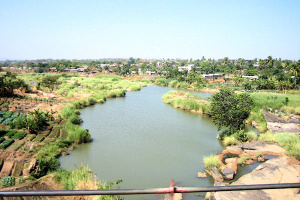
Togo’s government will invest FCFA63 billion in the creation of its first agropole in the Kara basin, Northern Togo.
The initiative is one of the major projects falling under the New Agricultural Policy Note which was drawn and adopted in December 2016 by the government.
It aims to boost agriculture’s trade balance by 25%, tackle food insecurity and reduce poverty rate in rural areas to 27% by 2026.
In this framework, the country has already raised CFA6 billion and secured a commitment from the African Development Bank (AfDB) for CFA15 billion.
ANPGF to provide financial support to Togolese startups

From now on, Togolese startups will be able to receive loans from the national agency for the promotion and guarantee of funding for SMEs and SMIs (ANPGF).
The state-agency whose stones were laid in 2008 by the government wishes to play a catalytic role in the development of SMEs and SMIs, solving the issues that they often face.
“Our vision is to regroup all banks around our agency so as to offer full support to SMEs and start-ups”, said Naka de Souza, managing director ANPGF.
In Togo, if startups fail to take off, it is mainly due to the lack of financing. Banks’ distrust regarding these businesses hampers Togo’s sustainable development. This despite the fact that they are a key component in the race towards full employment and a major vector for innovation-based inclusive growth.
Fiacre E. Kakpo
In Togo, 75% of businesses operate in the informal sector
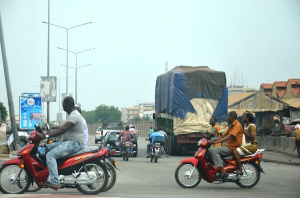
According to the latest results of a survey conducted by the National Employment Agency (ANPE) and GIZ, covering six cities in Togo, 75% of the population surveyed (18,000 individuals) operate in the informal sector.
The study which covers the towns of Tsévié, Kpalimé, Atakpamé, Sokodé, Kara and Dapaong revealed that 94.3% of the targeted population operates alone while 4.3% have at least one employee.
Businesses investigated involved mainly clothing, sewing, hairdressing, food and bike repairs.
These statistics, though covering only part of the country, reflect the challenges faced by the State to have an annual budget without resorting to external financing.
“This picture is full of meaning and is quite clear”, said Edmond Comlan Amoussou, ANPE’s managing director.
According to the official, the next phase will consist in implementing the professional training program (PROFOPEJ) financed by the German cooperation. This phase will serve as standing ground to establish strategies related to training and job research.
Fiacre E. Kakpo
Togo: Government to draw national plan to boost pubic administration’s performance
Togo’s public administration has many shortcomings including: insufficient labor, inadequacy between profiles and positions occupied, aging staff or low skills. This was revealed by a study released on December 12, 2017, by the Togolese government.
In addition to the above-mentioned challenges, the study also mentions the absence of skills and human resources management.
Looking at the study, the government plans to put in place a national plan to boost public administration, making it more performant and more responsive to populations’ needs.
This will involve the better training of civil servants all over the territory. Also, endowment of the national school of administration (ENA) will be scaled up.
Presently, Togo’s public administration counts about 60,000 civil servants, 21% being women. Among these workers, about 13,000 will retire in the coming years. The government’s plan will thus also help anticipate these exits.
Togo vows to end corruption

The Togo revenue authority (OTR) and the High Authority for the Prevention and Fight against Corruption and Related offences (HAPLUCIA) reasserted their determination to eradicate corruption at an exchange meeting between actors involved in this battle, last December 9th, on the international Anti-Corruption day.
Kodzo Adedze, interim commissioner general of the OTR, said that by celebrating this day with the HAPLUCIA, the goal was to inform populations and economic operators about the negative impacts of corruption and its related offences, namely, bribes, embezzlement, illegal direct award of contracts. “Corruption threatens economic operators and public treasury”, the official deplored.
To achieve the zero-corruption target in Togo, Adedze insisted on the need to take action collectively and develop a set of measures, both in the institutional and regulatory frameworks. “We must all fight this threat, if we want our country to emerge”, he said.
As for Wiyao Essohana, president of the HAPLUCIA, he mentioned two ways that his institution adopted to fight corruption: prevention, through sensitization, for the general public to be aware of corruption, its impacts, and for it to avoid the practice; control, through the collection of complaints, investigate those and provide reports to the public prosecutor.
According to a report of the World Customs Organization (WCO) released in 2017, the annual financial impact related to corruption amounts to more than a trillion dollars.
Togo: Tariffs for technical inspection of cars and bikes reduced

Since last December 8, tariffs for technical inspection were reduced with immediate effect.
According to a statement of the Société Togolaise des Plaques – Contrôles des Engins et Véhicules Automobiles (SOTOPLA-CEVA), tariffs revised are:
- For light vehicles used as taxi and passenger transport vehicles, CFA1500 (tax included) per quarter instead of CFA2200.
- For light private and administrative cars, CFA4000 (tax included) per semester instead of CFA4700.
- For heavy vehicles, tractors and trailers for all usage, CFA4500 (tax included) per semester instead of CFA5200.
- For taxi-bikes, CFA1500 (tax included) per semester instead of CFA2200.
- For private and administrative bikes, CFA2500 (tax included) per year instead of CFA3200.
Note that all thetariffs were reduced by CFA700 which correspond to fees of stickers which were until now compulsory for bikes and car drivers.
Over the past two years, Togo has improved its share in WAEMU’s exports
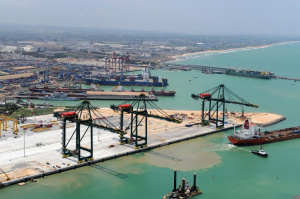
In 2016, Togo’s share in WAEMU’s total good exports (outside member-States) soared by 0.9% compared to the previous year. This was revealed in the BCEAO’s latest report on external trade within the community.
According to the report, Togo was more resilient to the drop in global commodity prices than its neighbor Benin whose good exports plunged significantly since 2014. It also fared better than Côte d’Ivoire and Burkina Faso whose exports have been up and down over the past two years. From 3.6% in 2014, Togo’s share in the union’s exports rose to 3.8% in 2015, then 4.7% in 2016.
2016’s performance results from a rise in cement and clinker sales which have more than doubled (+105%). The same goes for oil products which soared by 45%.
Also behind the rise was the significant increase in palm oil exports which grew 45-fold following their crumbling in 2015.
However, regionally, exports of cotton, cocoa, oil products, coffee and even phosphate which is Togo’s main export, have slumped both in regards to volumes and value.
Indeed, WAEMU’s cotton exports slumped by 1.1% while cocoa’s and oil products’ decreased by 9.4% and 22% respectively.
Overall, Togo’s free-on-board (FOB) exports rose by nearly 15% compared to 2015 and 30% against 2014. Meanwhile, its cost-insurance-freight (CIF) imports slumped slightly by 0.2% in 2016 and 13% compared to 2014.
With such dynamism, Togo reduced its share in the union’s trade balance deficit, recording its second best performance in a decade.
Fiacre E. Kakpo
Launching of a mission to establish certification standards for construction companies
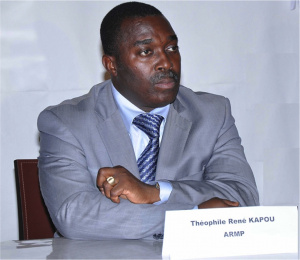
Explaining why he often excludes local construction firms from call to tenders for construction projects, René Kapou, managing director of the Public Markets Regulatory Authority (ARMP), said that in the absence of an assessment and certification framework within the construction sector, he cannot prejudge of their ability to carry out the projects.
To tackle this challenge, which is denounced by the firms themselves, a mission to establish certification standards for construction companies in Togo is underway.
Subsequently, the country will have a certification and assessment framework for companies operating in the construction sector and also these firms will be classified based on their size, performances and references.
The goal of the mission which was launched in Lomé is to provide public authorities with a tool that will help overcome challenges recorded when developing construction projects.