
Togo First
Togo to Conduct Fourth Demographic and Health Survey in 2025
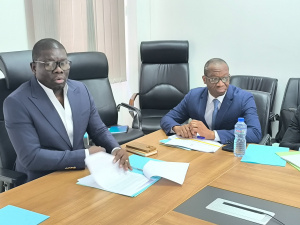
The Togolese Ministry of Health announced that Togo is gearing up for its 4th Demographic and Health Survey (EDST-IV) this year. The EDST-IV steering committee held its first meeting on January 28. It recorded the participation of the Ministry of Planning and various technical and financial partners and was led by the Minister of Health and Public Hygiene, Prof. Tchin Darre.
The EDST-IV is part of the International Demographic Health Surveys (DHS) program and will be overseen by the National Statistics Institute, the INSEED. The survey aims to gather reliable and current data on key health indicators, including maternal and child health, healthcare access, vaccination rates, and disease prevalence.
This fourth survey follows earlier editions conducted in 1988, 1998, and 2013-2014. The results will help shape public health policies and development strategies in Togo.
Ayi Renaud Dossavi
Chad Seeks Togo's Backing for AfDB Presidency
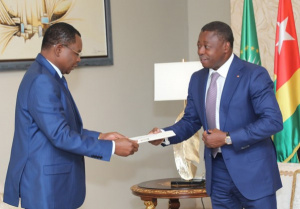
Chad is actively seeking support from Togo for its candidacy for the presidency of the African Development Bank (AfDB). On January 28, 2025, Chad's Prime Minister, Allamaye Halina, met with President Faure Gnassingbé in Lomé on January 28 to discuss this matter.
Halina conveyed a message from Chad's leaders, expressing confidence that Togo's diplomatic influence could help secure support for Chad's bid. "Chad has presented a candidate for the presidency of the AfDB and naturally, President Mahamat Idriss Déby Itno is counting on the support and leadership of his brother Faure Gnassingbé," Halina said after the meeting.
Chad's candidacy already has backing from the Economic and Monetary Community of Central Africa (CEMAC) and the Economic Community of Central African States (ECCAS). However, gaining support from the Economic Community of West African States (ECOWAS) would further strengthen its position. N'Djamena believes Togo can play a crucial role in influencing its West African partners.
The outgoing AfDB president, Akinwumi Adesina of Nigeria, has been in office since September 2015. His term ends this year, with the next president to be elected by the AfDB's Board of Governors on May 29, 2025, during its Annual Meeting in Abidjan, Côte d'Ivoire.
Esaïe Edoh
Togo: Government Starts Reviewing 2024 Agricultural Campaign
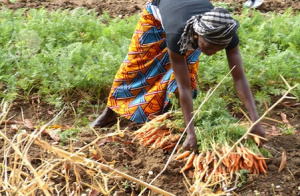
The Togolese Ministry of Agriculture and Rural Development is reviewing the 2024 agricultural season and preparing for the coming season. In this framework, the ministry launched a series of meetings across the country’s prefectures last Monday, January 27. The first meeting occurred in the maritime region. It gathered farmers, agricultural experts, and ministry officials who reviewed successes and challenges from the past season.
In the Zio, Vo, and Lacs prefectures, farmers pointed out several problems. While some farming practices have improved production, they still struggle with climate issues and poor infrastructure. Farmers are most concerned about the droughts that hurt their harvests and productivity. To overcome this, the farmers recommended improving mechanization and irrigation systems to better handle climate issues.
Faced with these concerns, the government wants to work more closely with agricultural stakeholders. It aims to improve existing mechanisms to modernize and transform national agriculture.
These meetings will continue in other areas and follow recommendations from the first Forum of Agricultural Producers of Togo (FOPAT) held in 2023. The goal is to keep communication open between authorities and farmers to adapt public policies to their needs.
This article was initially published in French by Esaïe Edoh
Edited in English by Ola Schad Akinocho
Togo to Check Road Hauliers' TPU Payments Starting February 1
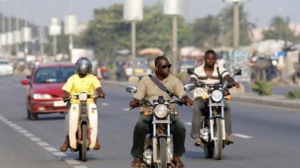
Starting February 1, 2025, Togo's tax office, the Togolese Revenue Office (OTR), will check if road hauliers have paid the Unique Professional Tax (TPU). These checks will focus on payments for the fourth quarter of 2024.
OTR agents will be stationed on major roads to ensure that transport operators have paid this tax, often called "quarter." With just a few days left before these checks start, the OTR reminds transport companies that they still need to make their TPU payments for the last quarter of 2024. They encourage industry workers to follow the rules in article 57 of the Book of Tax Procedures.
The TPU is a flat-rate tax paid quarterly, based on estimated sales for each type of vehicle. To make it fair, the tax office has created a fee schedule that considers the type of transport, vehicle size, and weight.
Esaïe Edoh
WAMU Banking Commission Imposes Sanctions on a Togolese Bank for Money Laundering
The Banking Commission of the West African Monetary Union (WAMU) has sanctioned a Togolese bank for failing to meet its anti-money laundering standards. During the Commission’s 144th session on December 16, 2024, regulators singled out the lender for infringing its legal and regulatory requirements.
The undisclosed bank was criticized for weaknesses in tackling money laundering and financing of terrorism (AML/CFT). It was thus fined CFA151 million after an inspection.
Last year, another bank in Togo and one of its executives were also sanctioned for financial irregularities.
Togo is not alone in facing sanctions; a bank in Senegal was fined CFA300 million, and an institution in Benin received a penalty of CFA38 million.
Ayi Renaud Dossavi
Togo : Dogta-Lafiè Hospital Opens New Annex in Kara
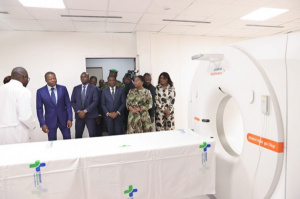
The Dogta-Lafiè reference hospital, which opened in Lomé in April 2023, has now launched an annex in Kara, northern Togo. President Faure Essozimna Gnassingbé inaugurated the new facility on January 24.
This annex aims to enhance healthcare services for the northern region of Togo. It aligns with the national strategy to achieve universal health coverage by 2030. Minister of Health and Public Hygiene, Tchin Darre, stated that the center's construction supports the goal of providing quality healthcare to all citizens, regardless of their location.
The Kara annex offers various services, including medical imaging, radiology, hemodialysis, ophthalmology, and dental care. It features advanced equipment such as a high-field 1.5 Tesla MRI, the first of its kind in Togo, which will help diagnose complex conditions like brain and heart issues.
Additionally, the center has a digitized X-ray system designed for cancer-related examinations. The opening of this hospital is part of broader efforts to strengthen Togo's healthcare system, which includes rehabilitating Lomé and Kara University Hospitals and constructing mother-and-child hospitals.
Esaïe Edoh
Togo: Food Resilience Program Benefits Over 500,000 People Within Two Years
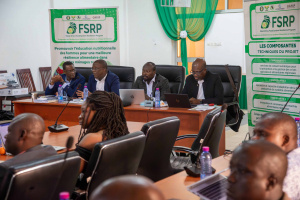
Two years into launching, the West African Food System Resilience Program (FSRP-Togo) has benefited over 500,000 people (509,438 by the end of December 2024). That is 85% of the program’s end target.
Women made up 34% of last year’s beneficiaries. The figures were shared in Lomé during a mid-term review of the program held from January 20 to 24. During the session, participants assessed the program’s achievements, challenges, and adjusted strategies for greater impact.
Backed by the World Bank, the FSRP-Togo has a budget of CFA50 billion. It focuses on three main areas: climate-smart agriculture, strengthening value chains and regional trade, and managing agricultural risks. The program aims to improve agricultural productivity while enhancing resilience against climate and economic challenges. It provides training, equipment, and fertilizer donations to farmers across Togo.
For 2025, the Annual Work Plan and Budget (AWPB) aims to add 130,000 new beneficiaries to meet or exceed the final target.
This article was initially published in French by Ayi Renaud Dossavi
Edited in English by Ola Schad Akinocho
Togo: CFA44 Billion Already Borrowed on Umoa-Securities in 2025
Togo has borrowed a total of CFA44 billion this year on the West African Monetary Union (WAMU) financial market, with CFA22 billion raised in the latest issue, on January 24. The Togolese treasury raised the funds via fungible bills (BATs) and fungible bonds (OATs). It initially targeted CFA20 billion.
Investor interest was robust, with bids reaching CFA46 billion and a coverage rate of 234.16%. The Togolese Treasury successfully obtained CFA7 billion from 364-day BATs and CFA15 billion from three-year OATs, which carry an annual interest rate of 6.25%.
For the upcoming year, Togo plans to raise a total of CFA332 billion to support its national budget, estimated at CFA2,397 billion.
This article was initially published in French by Esaïe Edoh
Edited in English by Ola Schad Akinocho
Togo Launches AFR100 Project to Support Local Producers
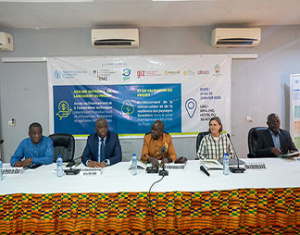
This week, Togo kicked off two projects to restore damaged forest areas and improve life for local communities. The "AFR100-Togo" project, funded by the German Ministry for Economic Cooperation and Development (BMZ), and the "GEF-8" project, supported by the Global Environment Facility, were introduced at a workshop in Kpalimé on January 21 and 22, 2025.
Covering the period 2024-2027, AFR100-Togo has a $5 million budget. It aims to provide financing and technical help to small-scale forestry and agricultural producers.
Meanwhile, the GEF-8 project focuses on preserving and strengthening sub-humid forest ecosystems across 270,300 hectares of native forests and 55,000 hectares of agroforests.
Dr. Amah Atutonu, Director of Forest Resources at the Ministry of the Environment and Forest Resources (MERF), said "These two projects support the government's efforts to restore forest ecosystems and help local communities through income-generating activities."
The goal is to achieve 26% forest cover by 2030. Togo is committed to restoring 1.4 million hectares of deforested and degraded land as part of the African Union's African Forest Landscape Restoration Initiative.
The projects are carried out with the FAO, GIZ, and local stakeholders.
This article was initially published in French by Ayi Renaud Dossavi
Edited in English by Ola Schad Akinocho
Togo: Adiwale Partners Invests $24 Million in ENKO Education

Enko Education, a firm running a network of international schools across several African countries, has secured $24 million in funding from Africa Capitalworks (ACW) and the Adiwale Fund. This investment will support Enko's expansion strategy.
"Thanks to ACW and Adiwale's investment, we will be able to focus our growth strategy on school acquisitions," said Éric Pignot, co-founder and CEO of Enko.
Jean-Marc Savi de Tové, Managing Partner at Adiwale, emphasized: "Our support will help the group consolidate the fragmented K12 school market on the continent by developing the largest network of African International Schools. We are proud to contribute to this ambitious educational project, combining economic performance and social impact." The Adiwale Fund already holds a minority stake in Enko.
Among the recent additions to the Enko group is Cours Lumière, an international school in Togo that joined the network in May 2024.
Enko aims to triple its student enrollment from 10,000 to 20,000 by 2029 with this new investment. Currently, Enko operates in 10 countries with a network of 16 schools.
This article was initially published in French by Ayi Renaud Dossavi
Edited in English by Ange Jason Quenum