
Togo First
India, Burkina Faso, and Côte d’Ivoire Were Togo’s Top Export Destinations in Q3 2024
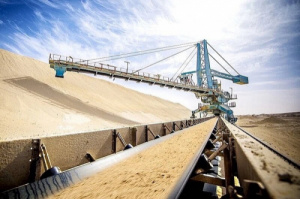
India was Togo’s top export destination in Q3 2024, with 20.1% of total exports valued at CFA42.9 billion.
According to Togo’s Statistics Institute, INSEED, Burkina Faso came second, with 13.7% of exports, valued at CFA29.2 billion. Côte d'Ivoire followed with 9.6% and CFA20.4 billion, in share and value.
This trend highlights Togo's strong connections with its neighboring countries, being a transshipment point for various subregional partners.
Togo’s top 10 customers accounted for 81.4% of its export value. These include Mali, France, Ghana, and Benin. Togolese exports stood at CFA213 billion in Q3 2024. They primarily comprised rock phosphates and derivatives, petroleum oils, and plastic bags.
Ayi Renaud Dossavi
BOAD Secures $535 Million Guarantee for Green Initiatives in West Africa

The Multilateral Investment Guarantee Agency (MIGA), part of the World Bank Group, announced on November 25 a €506 million ($535 million) guarantee to support sustainable development in West Africa through the West African Development Bank (BOAD). This funding will back loans from Société Générale (France) and HSBC (UK) to BOAD for projects focused on energy transition and climate adaptation in eight countries within the West African Economic and Monetary Union (WAEMU), including Togo.
Sustainable climate projects
The MIGA's guarantee allows BOAD to allocate 50% of the loan to climate finance, with 30% specifically for adaptation initiatives over the next five years. These projects will cover resilient infrastructure, renewable energy, green housing, and agriculture adapted to climate risks.
Strengthening the resilience of BOAD member countries
As the region's financing institution, the BOAD is a key advocate of economic integration and sustainability in West Africa. "This guarantee product represents a particularly innovative initiative. It will actively support the financing of projects with a strong environmental and social impact, demonstrating our commitment to sustainable development and social responsibility," said BOAD President, Serge Ekue.
On MIGA's side, Hiroshi Matano, Executive Vice President of MIGA stated that "this project reflects our commitment to supporting climate change financing in low-income countries and addressing key development challenges. We are convinced that our guarantee will catalyze further investments in the transition to a green economy and create new green jobs.”
This new facility should enable the Lomé-based development bank to allocate more resources to green projects amid a financing gap and growing climate challenges in public discussions.
Ayi Renaud Dossavi
Togo: UNDP Provides IT Equipment to Support Savanes Region
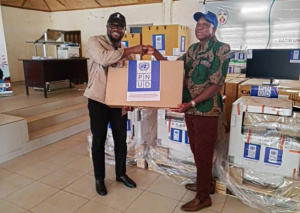
The United Nations Development Program (UNDP) has provided the Savanes region in Togo with CFA87 million worth of IT equipment. The donation is part of the Conflict Prevention and Violent Extremism Support Program (CIPLEV) formalized on November 26 in Mango.
The equipment, which includes computers, printers, and scanners, aims to make the region’s civil registry services more efficient. Indeed, with better tools, communal authorities can respond more effectively to the population’s administrative needs.
This is one of many similar initiatives undertaken by the UNDP, such as the Emergency Program for the Savanes Region (PURS) and the COSO program. According to Kouassi Giscard, UNDP Resident Representative in Togo, the projects reflect the UN's commitment to working with the Togolese government to establish a modern, reliable, and inclusive civil registry system.
Giscard added the recent donation aims to help the Savanes administration provide quality services and foster peace and sustainable development in the region.
Esaïe Edoh
Togo: Mali Guest of Honor of 19th International Fair of Lomé
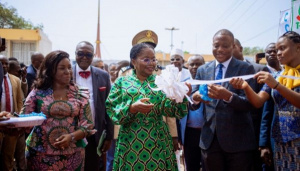
The 19th edition of the International Fair of Lomé (FIL) kicked off on November 22, 2024, for two weeks. This year, the fair which is dedicated to trade, innovation, and economic exchange is held at the Centre Togolais des Expositions et Foires (CETEF). Mali is the guest of honor for this edition.
Togolese Prime Minister Victoire Dogbé chaired the opening ceremony, with other government officials, economic operators, and visitors from diverse backgrounds.
Mali's presence at this trade event is significant. It is represented by a large delegation of economic operators eager to showcase the richness and diversity of their country's products. The Malian pavilion highlights handcrafted textiles, shea butter, artistic creations, and agricultural produce.
In his address, Massoudou Cissé, spokesman for Mali's economic operators at the fair, noted that Mali’s selection as a guest of honor reflects the Togolese authorities' commitment to strengthening the friendship and cooperation between the two nations while promoting economic opportunities.
This year, a highlight of the fair is the Mali Economic Day, which aims to provide a platform for discussions and opportunities for investors and entrepreneurs to forge partnerships with Togolese counterparts.
Alongside this one-day event, several conferences are scheduled to focus on themes such as the interconnectivity of African markets and capacity-building for small and medium-sized enterprises (SMEs).
Kayi Mivedor-Sambiani, Togo's Minister of Trade, emphasized that the FIL presents a unique opportunity for economic operators to meet and exchange ideas. Organizers anticipate over 1,000 exhibitors and half a million visitors throughout the event.
Esaïe Edoh
Togo Holds First National Week of Protected Areas
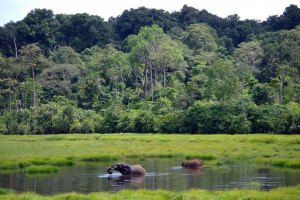
Togo holds its first National Week of Protected Areas (SNAP). Started on November 26, the event ends on November 28. Held in Afito, in the Yoto Prefecture, 70 km northeast of Lomé, the capital, the SNAP aims to underscore the significance of protected areas and the vital role that local communities play in their sustainable management.
Themed “Local Communities at the Heart of the Sustainable Management of Protected Areas in Togo,” the event focuses on raising awareness among the Togolese populace regarding environmental issues, especially regarding how these natural spaces contribute to Togo’s socioeconomic development.
Participants are covering key topics related to protected areas, such as the current state of floristic and faunal diversity in these regions, their ecological, social, and economic importance, and the impact of community and communal forestry on conserving forest resources.
Togo currently boasts 83 protected areas, established between 1938 and 1958. These areas span 793,300 hectares or about 14% of the national territory. According to the Ministry of Environment, many of these areas currently face significant challenges, including increased human encroachment and pressure.
The ongoing event complements various recent actions taken by Togolese authorities to tackle these challenges. Such initiatives include the launch of the Gestion intégrée des Périphéries des Aires Protégées du Togo (GIPAP) project. Funded by the European Union with a budget of CFA19 billion, the GIPAP aims to preserve and enhance natural landscapes, particularly those within the Fazao-Malfakassa and Abdoulaye complexes.
The GIDAP, a five-year program, seeks to align conservation efforts with local community needs while promoting innovative approaches to sustainable development.
Esaïe Edoh
Togo: Microfinance Sector Record Growth in Q2 2024
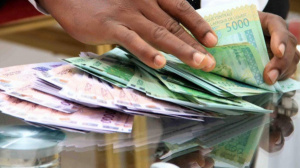
Togolese microfinance institutions (SFDs) loaned CFA4.2 billion more in Q2 2024 or 1.2% than they did in the previous quarter.
According to the Central Bank of West African States (BCEAO), which disclosed the data, Togo recorded the second-highest absolute growth within the West African Economic and Monetary Union (WAEMU) in H1 2024. Senegal came first, with loans surging by CFA42.1 billion from Q1 to Q2. After Togo came Côte d'Ivoire (CFA+2.8 billion), Benin (CFA+910.9 million, +0.4%), and Niger (CFA+350.5 million).
Overall, SFDs active in the WAEMU loaned out CFA2,561.2 billion in H1 2024. Over this period, Togolese SFDs recorded outstanding of nearly CFA400 billion (CFA395.697 billion), up by 13.3% from H1 2023.
Deposits Also on the Rise
Similarly, deposits collected by Togolese SFDs increased by CFA8.9 billion (+2.2% between Q1 and Q2 2024), sustaining the regional trend. According to the BCEAO, savings are predominantly held by men, but women and groups are beginning to play a more significant role in deposit mobilization.
Ayi Renaud Dossavi
Togolese Startups Engage in Cape Town's Technology Immersion Program
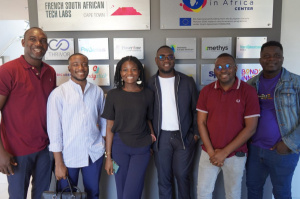
A dozen Togolese startups are in Cape Town, South Africa, for the "Soft Landing" immersion program. The program began on November 25 and will end on December 2. It aims to provide Togolese entrepreneurs with insights into South Africa's technological and economic landscape, a crucial hub for businesses seeking opportunities across Africa.
Participating companies include Anaxar, Aviocole, Edole, Klumer, Kondjigbale, Robaloto, Semoa, Silimi, and Trankyl, all of which operate in sectors such as Fintech, HealthTech, and business networking. On their first day in Cape Town, the entrepreneurs visited Methys French South African Tech Labs—a prominent technology space—and WESGRO, the agency dedicated to promoting trade, tourism, and investment in Cape Town and the Western Cape.
The Togolese entrepreneurs had valuable discussions with representatives from the European Union and international startups, exploring opportunities for enhancing Africa's tech ecosystem. The immersion trip is supported by Agence Togo Digital and the German Cooperation (GIZ).
Ayi Renaud Dossavi
Faure Gnassingbé Meets Ecobank CEO Jeremy Awori to Discuss Financing Opportunities
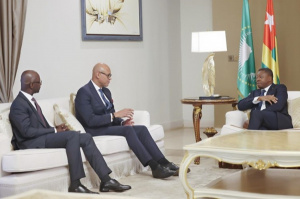
In Togo, President Faure Gnassingbé met with Jeremy Awori, the CEO of Ecobank, on Monday, November 25, 2024. They discussed the bank's operations and its impact on the Togolese economy.
"Our head office [Ecobank Transnational Incorporated] covers 35 countries across Africa and is based here in Lomé, Togo. It's essential to update the Head of State on our company and explore partnership opportunities to support Togo's development," Awori said after their meeting.
Supporting the Togolese economy
The leaders focused on initiatives to boost Togo's economic growth in areas like agriculture, entrepreneurship, infrastructure, and green energy.
"We are discussing opportunities for financing SMEs, agriculture, infrastructure projects, and green energy initiatives that can drive future economic growth," Awori stated. "We have a plan under his leadership as President, and we will follow that as we progress," he added, referencing the government's Togo 2025 roadmap and its key projects.
Togo: Lomé to Host First West African Energy Cooperation Summit Next Week

From December 3 to 5, 2024, Lomé will host the first West African Energy Cooperation Summit (WA-ECS). Organized by EnergyNet Limited with the Togolese government and support from the World Bank, the three-day event will gather experts, policymakers, and investors under the theme “Stimulating West Africa's Growth through Strategic Partnerships in the Energy Sector.”
The summit will feature sponsors like African Trade and Investment Development Insurance (ATIDI), EDF, AMEA Power, Kekeli Efficient Power, and ContourGlobal. Some of the key projects that will be covered at the summit include the West Africa Energy Pool, The solar farms project in Mauritania, Togo, and Mali, and the Nigeria-Morocco gas pipeline.
The event will foster partnerships that support industrialization, agriculture, and other vital sectors in the region. It will also help local companies enhance their technical skills and access innovative financial solutions.
Mainly, the participants will cover topics such as attracting investment for energy infrastructure, cross-border collaboration, regional integration, and deploying renewable energies to meet 2030 targets. The strategic role of gas in the region's energy future will also be highlighted. “Improved energy availability is essential to boost industrialization, agriculture, and other sectors, including mining. This will contribute to the country's sustainable development,” said Abdoulaye Sylla, Managing Director of EnergyNet Limited. He added that “organizing such an event will position Togo as a key player in discussions about the future.”
Register to the Summit
Ayi Renaud Dossavi
Togo's Minister Mila Aziablé Visits Kuwait for Update on Kara Water Supply Project
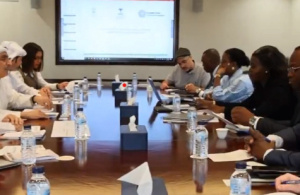
Togo's Minister of Water and Sanitation, Mila Aziablé, traveled to Kuwait on November 24, 2024. She is there to discuss the drinking water supply project for Kara, a town 414 km north of Lomé, with officials from the Kuwait Fund for Arab Economic Development (KFAED).
The project, funded with CFA12 billion from KFAED, aims to provide water for the local population by increasing daily water production from 7,500 m³ to 17,500 m³. This will help meet the area's water needs by mobilizing an extra 10,000 m³ per day from nearby springs.
In addition to the Kara project, discussions will cover other initiatives to ensure sustainable access to drinking water for Togolese citizens. These talks are part of a broader strategy to attract new investments from KFAED, supporting Togo's ambition to achieve universal drinking water access by 2030.
Data from the Ministry of Water and Village Hydraulics shows that Togo's drinking water coverage has improved significantly, up from 47.66% in 2014 to 69% by the end of 2023.
Esaïe Edoh