
Togo First
Togo considers new ways to boost women entrepreneurship

During a meeting held this week, the ministry of trade, representatives of the African Development Bank (AfDB), and a group of Togolese businesswomen (Nana Benz) agreed on a few measures to take to improve women-led entrepreneurship in the country. These include ways to boost women’s access to financing, boost their capabilities for entrepreneurship, secure logistics, receive cash transfers, and tackle unfair competition.
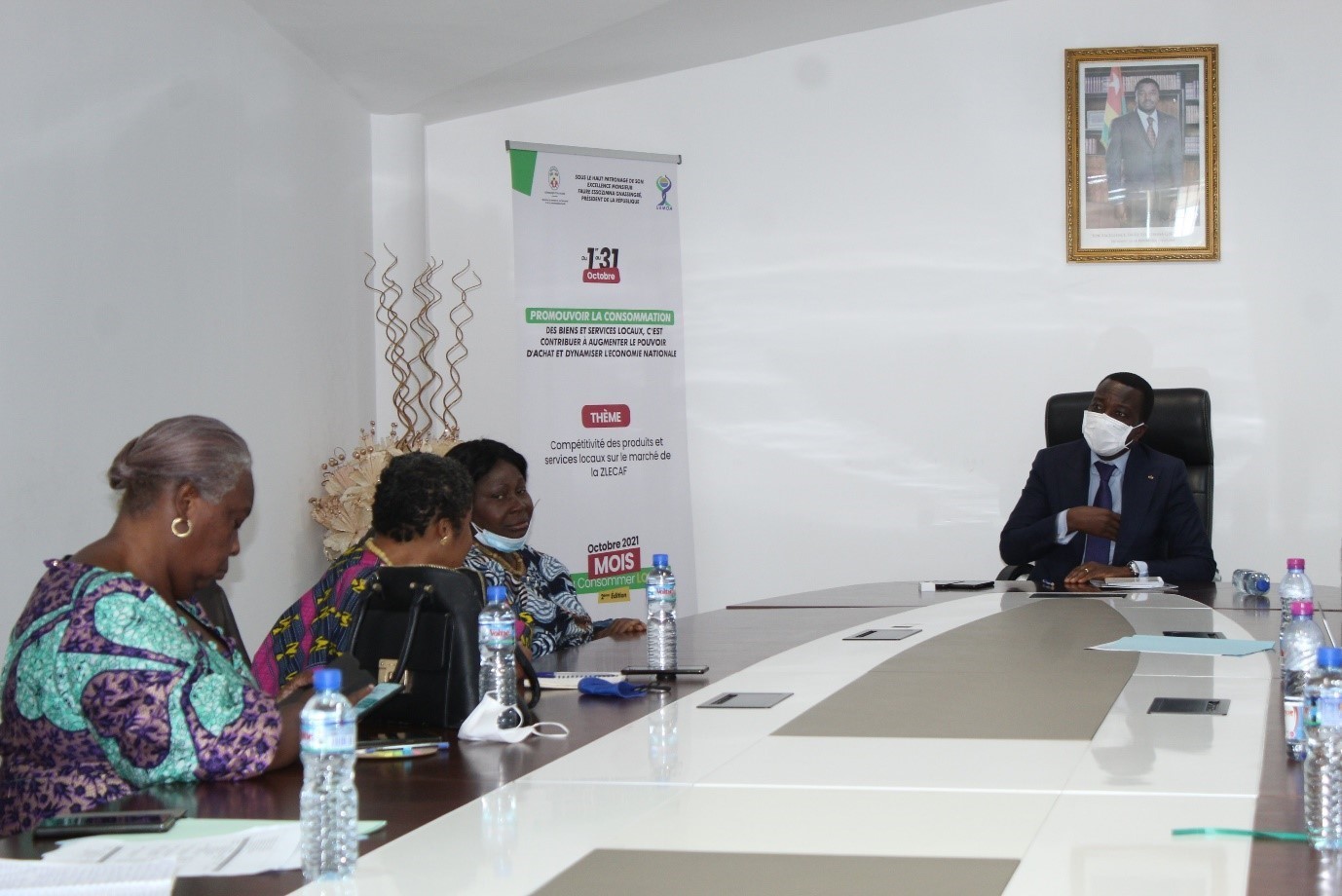
The roundtable has given participants the chance to review women's entrepreneurship and identify real needs the sector has, as well as ways to support its growth.
Participants concluded that “even if there remain issues impeding the creation and management of businesses by women, numbers (confirmed in 2019) point to an improvement in the contribution of women to business creation.” According to Togo’s Business Formality Center (CFE), the number of businesses established by women rose from 2,701 in 2018 to 3,426 in 2020 (+27%).
One of the key conclusions of the meeting is the potential creation of a museum for the “Nana Benz” businesswomen.
Esaïe Edoh
Togo makes a reappearance on the UMOA securities market, seeks CFA50 billion this month
Togo will attempt to raise CFA50 billion on the regional money market, UMOA Securities, throughout this month. It will issue recovery bonds with a nominal value of CFA10,000.
The issue - the first this quarter, given that Lomé canceled those scheduled in October - is set to close on November 19. The securities issued will mature over 180 months (15 years), and they have an interest rate of 6.3% per annum. The proceeds should enable Togo to finance its post-Covid recovery strategy.
So far into the year, the Togolese State has secured CFA502 billion on the UMOA securities market, via 19 issues. In 2020, the country carried out 23 issues, raising CFA623 billion.
Esaïe Edoh
Cooperation: the Togolese minister for investment promotion visits Rwanda
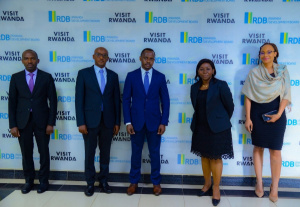
The Togolese minister for investment promotion, Rose Kayi Mivedor, is currently in Rwanda where she is meeting local officials and investment actors.
Midevor on Tuesday met with Béata Habyarimana, the Rwandan minister of trade and industry. The two officials talked about common interest topics.
The following day, the Togolese minister visited the Rwanda Development Board (RDB), which is a government institution that brings together all public institutions in charge of attracting, retaining, and facilitating investment in Rwanda.
Togo, it should be emphasized, was inspired by Rwanda’s RDB to establish its tax revenue authority (OTR).
The two countries inked a deal on the liberalization of air transport services across the continent in 2018. This deal enabled Rwandair (Rwanda’s public airline) and Asky Airlines (based in Lomé), to connect Kigali and Lomé with direct flights.
Esaïe Edoh
Coris bank to soon launch its e-currency in Togo

Coris Bank International (CBI) will soon launch in Togo its e-currency, Coris Money, sources close to the group told Togo First.
The app, which is being tested in Burkina Faso, since 2018, will allow the Togolese people - with or without an account at CBI Togo - to withdraw and deposit cash, make local and international transfers and pay their bills.
Ahead of the app’s launch, the bank’s management is recruiting sales agents. In the same framework, the lender was recently appointed the chief of digital banking.
Present in Togo since 2015, Idrissa Nassa’s bank is growing rapidly. In 2020, it generated a total balance sheet of CFA309.9 billion against CFA205.38 billion in 2019, up by 50.9%. Over the same period, the number of bank accounts soared from 12,171 to 18,994 (+56.1%).
Esaïe Edoh
Togolese government seeks a consultant to coordinate its 2025 development roadmap

The Togolese ministry of economy and finance seeks an expert to coordinate the 2025 government roadmap, and adjust it to the African Union’s 2030 and 2063 objectives.
According to the related tender notice, the selected consultant will among others draw a schedule for all activities that fall under the roadmap’s coordination. They will also advise, support, monitor, and contribute to the preparation of technical documents needed for the coordination, as well as write reports for the implementation of SDGs and the 2030 Agenda.
The consultant will provide strategic advice to the cabinets of the President of Togo, the Prime Minister, the Minister of Economy and Finance, and the Minister of Planning and Cooperation, to ensure the optimal execution of the 2025 government roadmap.
The coordination is backed by the African Development Bank (AfDB), which finances part of the initiative, and the Projet d’Appui ciblé à l’exécution du plan national de développement (PAE-PND).
The selected consultant will provide its services over five months and they should start in February 2022, according to the ministry of economy and finance.
Cowpea: Gvt’ introduces two new varieties to boost national output
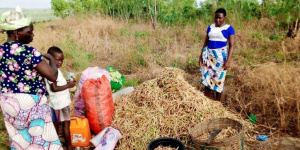
To improve the nation’s cowpea output for the 2021-2022 season, the Togolese government has supplied new Striga-resistant varieties to farmers.
Provided by the Togolese Institute for Agricultural Research (ITRA), the newly-introduced varieties are the Nafi Sam and Wang-Kai varieties. With a cycle of 80 days, these varieties mature earlier than the old ones.
The Ministry of Agriculture said cowpea is a popular staple food in the country; its leaves, green pods, and dry seeds are eaten and sold throughout the territory.
Togo produced 383,664 t of cowpea in the 2020-2021 season, according to the Directorate of Agricultural Statistics, Information Technology, and Documentation (DSID).
Esaïe Edoh
Togo: Ministry of Health reports cholera cases in the maritime region
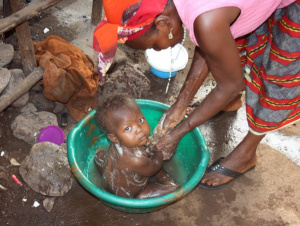
Two cholera cases were recently detected in the south of Togo, in the Lakes II municipality (Maritime Region). This was revealed in a press release issued by the Ministry of Health and Public Hygiene.
After reassuring the population that “appropriate measures have been quickly taken to contain the public health emergency,” the ministry recommended vigilance and adequate hygiene measures, such as regularly washing hands with soap, protecting food from flies and dust, and washing fruits and vegetables before consumption.
The public authority also said anyone suffering from severe diarrhea, with or without vomiting, should be quickly taken to the nearest health center for appropriate treatment.
Cholera, a deadly disease, is transmitted via contaminated food - especially food handled with dirty hands. It often spreads during heavy rainfall periods.
Togo-Benin: New border checkpoint under construction in Kémérida (Northern Togo)
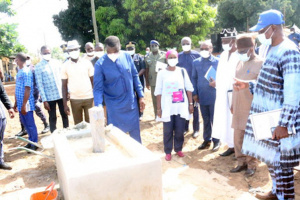
A new checkpoint is being built in Kémérida (northern Togo), a town located in the Binah prefecture and bordering Benin. The project was launched last week by the Togolese Ministry of Security and Civil Protection.
The first stone was laid by Yark Damehane, who heads the ministry of security, in the presence of representatives of the German Embassy in Togo, and the International Office for Migration (IOM), which financed the project.
Damehane said the checkpoint part aligns with efforts to improve border security in the Gulf of Guinea and make border communities living in the area more resilient.
The official added that this particular project should facilitate the work of security forces operating at the border, enabling them to better monitor migration flows, and defend against terrorists and extremists.
Lastly, the checkpoint’s construction aligns with the government’s 2020-2025 roadmap, specifically its first axis which aims to boost inclusion, social harmony, and foster peace, Damehane stressed.
The checkpoint is scheduled to be ready in six months.
NSIA Togo lands contract to provide health insurance to municipal councilors

The Togolese government announced that henceforth, all city councilors in the country will have health insurance financed by the State. The concerned officials will benefit from the measure in exchange for a financial contribution that matches their capacities, the Presidency’s official website noted.
According to the same source, NSIA Group won the tender to deploy the project. The latter was officially launched last Friday, by the minister of territorial administration and decentralization, Payadowa Boukpessi. The insurance recipients received a health passport on this occasion.
“We would like to sincerely thank the Head of State for this act of solidarity towards the local elects. Through this gesture, the President of the Republic just guaranteed us social security in regards to health,” said Koamy Gomado, Mayor of Golfe 1 and Vice-President of Faîtière des communes du Togo (FCT).
In detail, this social security provides two insurance policies to all local elected officials of the 117 municipalities, namely health insurance and individual accident insurance.
The first of the two policies covers 750 municipal councilors who do not yet have health insurance, and the second guarantees the reimbursement of medical expenses to treat injuries sustained in an accident and, in the worst-case scenario, the payment of a capital sum to the insured or his or her beneficiaries in the event of disability or death.
In addition, the NSIA group individual accident insurance covers all 1,527 councilors who are insured for a capital of 5 million CFA francs in case of death or disability following an accident and 500,000 CFA francs for medical expenses.
As a reminder, the move is part of the universal health insurance process, which has been underway in Togo for several months.
Ayi Renaud Dossavi
Covid-19: Togo has received 3.5 million vaccine doses since March 2021
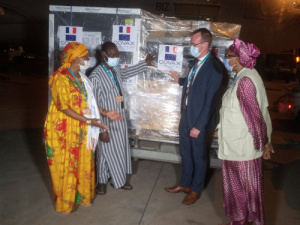
Togo received 199,800 new doses of Astrazeneca vaccines from France last Saturday, Nov 6. The new provision brings the total number of vaccines that the country has received since it launched its vaccination campaign last March to 3.5 million doses. The information was disclosed by the Togolese health authorities.
In detail, Togo has received a total of 800,000 doses of Astrazeneca vaccines since March 2021. They were provided under France’s Covax initiative. A few weeks back, it should be recalled, Emmanuel Macron promised that his country would give out, by the end of the year, 60 million doses of vaccines to help developing nations tackle the pandemic.
Now that Togo has enough doses, more than one million according to its health authorities, it is planning new strategies to deploy vaccination teams across the country.
Togo, data from the Financial Times indicates, is WAEMU’s most vaccinated member State.
Esaïe Edoh