

Togo First
World Bank appoints Antonius Verheijen as Togo resident representative
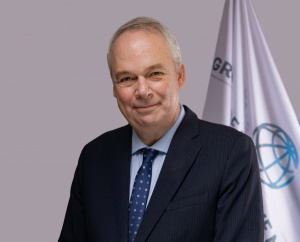
The World Bank Group has appointed Antonius (Tony) Verheijen as its new resident representative in Togo, it said on Sunday.
Verheijen replaces Fily Sissoko, who served in the role from July 2022 until his recent appointment as a division director overseeing several countries in Southern Africa and the Indian Ocean, Togofirst.com reported.
Verheijen will oversee the World Bank Group’s operations in Togo, bringing together the work of the World Bank, its private-sector arm IFC, and the Multilateral Investment Guarantee Agency (MIGA), which were previously managed separately.
“I am very excited to begin my new assignment and to represent the entire World Bank Group,” Verheijen said, adding that the unified role would strengthen support for economic opportunities and jobs, particularly for Togolese youth.
He will also help advance the Country Partnership Framework for 2025–2029, which focuses on priorities including energy, agriculture, governance and private-sector development.
The Group’s active portfolio in Togo totals $1.49 billion across 18 national and regional projects, while the IFC invested and helped mobilize about $320 million between 2020 and 2025.
Verheijen, who is Dutch, has more than 20 years of experience at the World Bank Group across Asia, Europe and Africa, including senior roles in Côte d’Ivoire.
Ayi Renaud Dossavi
Francophone African meteorologists meet in Togo to share climate index methods
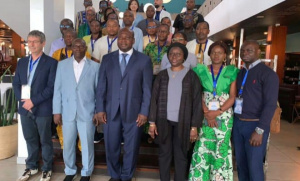
Meteorology experts from across French-speaking Africa opened a regional meeting in Lomé on Monday, Feb. 2, 2026.
The five-day session is co-organized by the World Meteorological Organization (WMO) and Togo’s National Meteorological Agency (ANAMET). It focuses on climate data management and the calculation of climate indices to support meteorologists and hydrologists with reliable scientific information.
Participants include experts from the national meteorological and hydrological services of Comoros, Madagascar, Burkina Faso, Cameroon, Rwanda, Guinea, and Togo. They are sharing approaches to analyzing and interpreting climate indices, with the aim of improving their practical use and helping inform public policy and decision-making.
According to ANAMET Director General Latifou Issaou, access to high-quality climate information has become a strategic asset.
“In the face of these challenges, the availability, quality, and effective use of scientific climate information are essential for decision-making,” Issaou said. “This applies not only to government authorities but also to local communities, farmers, and natural resource managers. It is therefore crucial to build the capacity of technical services, particularly in data analysis and quality control.”
Togo is presented as a model within the Francophone region.
“Togo has made notable progress in strengthening staff expertise. Its experience will be shared with the other participating countries,” said Mariane Diop Kane, a representative of the WMO regional office.
At the end of the meeting, organizers expect the technical work and exchange of experience to contribute to lasting improvements in institutional capacity and to strengthen regional cooperation in climatological services.
Togo sets 2026 legal interest rate at 5.36% as five-year climb eases
Togo has set its legal interest rate for the 2026 calendar year at 5.3637%, according to a decree adopted after a Council of Ministers meeting on Tuesday, Feb. 2, 2026.
The measure is in line with WAEMU regulations, with the rate determined by the Central Bank of West African States (BCEAO) and communicated to the Togolese authorities.
While the new level marks a slight decline from 2025, when the rate peaked at 5.5% across the WAEMU region, it still reflects the broader upward movement seen in recent years.
After dropping to 4% in 2022, the legal interest rate began climbing again, reaching 4.2205% in 2023 and 5.0336% in 2024 before hitting its high point last year. Over the 2022–2026 period, the cumulative increase now exceeds 130 basis points.
The legal interest rate applies to late payments when no specific rate has been contractually agreed between parties. It serves as compensation for creditors and is frequently used as a benchmark in commercial, financial, and administrative disputes.
For businesses, the rate continues to increase the cost of payment delays and reinforces the need for stronger contractual discipline. Togolese authorities said the adjustment helps ensure fairness in financial relations and strengthens legal certainty.
Although slightly lower than last year’s peak, the 2026 figure remains consistent with the regional trajectory set by the BCEAO.
Ayi Renaud Dossavi
Togo budgets 23 billion CFA francs for 2026 rural roads amid funding drop
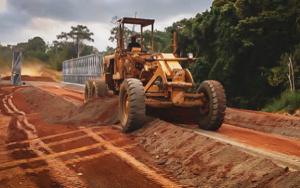
The Togolese government has earmarked a provisional budget of CFA23 billion for rural road development in the 2026 fiscal year. The funding will enable the ministry responsible for rural roads to continue projects aimed at improving infrastructure in rural areas.
The allocation is down 28% from CFA32 billion in 2025, marking a second consecutive annual cut. In 2025, funding had already dropped by 39% compared with 2024, when the budget was projected at CFA53 billion. Togolese authorities have not provided an official explanation.
Togo has launched several initiatives, including a plan to build 21 modular bridges across the country’s five regions. Progress on these structures varies, officials said. The government is also pursuing a large-scale program to construct and rehabilitate rural roads.
With this budget, the government plans mainly to continue and complete ongoing projects. The goal is to improve rural communities’ access to basic socio-economic services and facilitate the transport of agricultural products to markets.
Esaïe Edoh
Maternal health service use rises in three regions under Togo’s WEZOU program
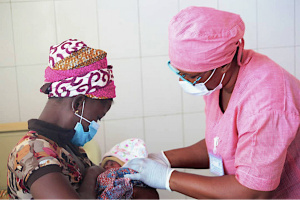
A survey carried out in January points to a “very encouraging” performance of Togo’s WEZOU program in three regions of the country: Centrale, Kara, and Savanes.
The survey shows a shaped increase in the use of health facilities during pregnancy and a significant decline in home births, according to the Ministry of Health. The authorities also say the program is now well established in public health centers, with care-seeking behavior increasingly “well ingrained” among beneficiaries.
These findings stem from a supervision mission conducted from January 18 to 24, 2026, during which 18 health facilities were visited across the Savanes, Kara, and Centrale regions.
The WEZOU program covers a range of maternal health services, including prenatal consultations, laboratory tests, ultrasounds, and essential medicines before and after childbirth. The aim is to reduce out-of-pocket health expenses for households and encourage greater use of maternal care services in both urban and rural areas.
As of the end of September 2024, more than 600,000 women had been enrolled in the program, according to official data. Over the same period, more than 3.2 million services were delivered, including over 360,000 childbirths conducted under the scheme.
The supervision mission also identified weaknesses in billing procedures and data transmission. Regional feedback meetings were held to strengthen the program’s operational management. The health minister called for tighter control of these processes to improve the scheme’s overall efficiency.
Authorities view the mission’s findings as a foundation for further consolidating the WEZOU program, in line with the country’s universal health coverage goals and the gradual rollout of national health insurance.
R.E.D
University of Kara launches urban sanitation study in Togo’s secondary cities
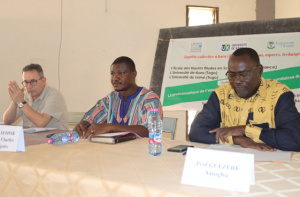
The University of Kara has launched a scientific survey on urban sanitation in Togo, with a focus on the city of Kara. The research work began on February 2, and will run through February 16, bringing together faculty researchers, master’s students, and doctoral candidates.
The study examines sanitation challenges in Togo’s secondary cities, using Kara as a case study. It assesses current practices, existing infrastructure, and associated public health and environmental constraints amid rapid urban growth.
Participants will carry out methodological work, urban immersion exercises, and field surveys across the city of Kara and its surrounding areas. The objective is to generate empirical data on local sanitation dynamics and urban management challenges.
The survey is part of an academic partnership involving the University of Kara, the University of Lomé, and France’s School for Advanced Studies in the Social Sciences (EHESS). The cooperation seeks to strengthen applied research on urban issues in West Africa.
Ludovic Amara
Sandra Ablamba Johnson Recognized for Policy Leadership at Togo Top Impact 2026

The eighth edition of Togo Top Impact concluded on Saturday, Jan. 31, 2026, in Lomé, awarding the Grand Prize of Excellence to Sandra Ablamba Johnson, Minister and Secretary General of the Presidency of the Council.
The award recognizes a career defined by impact, consistency, and a strong ability to shape public policy. In this regard, the jury highlighted Sandra Ablamba Johnson’s role in coordinating government policies and overseeing cross-cutting reforms within the executive. Her work has contributed to stronger governance mechanisms, improved coordination among public administrations, and greater emphasis on the effectiveness of government action.
This recognition comes as the country continues its economic and institutional reform efforts, particularly to improve the business environment, with stated objectives of performance, accountability, and more coherent public action.
Sandra Ablamba Ahoéfavi Johnson: An Economist by Training
Sandra Ablamba Ahoéfavi Johnson is an economist by training. She holds a doctorate in economics as well as a Diploma of Specialized Higher Studies (DESS) from the University of Lomé. She also completed training in economic programming and financial policy at the International Monetary Fund Institute in Washington, and in labour economics at the International Labour Organization Academy in Turin.
She began her career in the Togolese public administration at the Ministry of Economy and Finance, before moving to the Ministry of Development Planning and Cooperation. In 2012, she joined the Presidency of the Republic as a senior economist.
She later served as an advisor to the President in charge of improving the business environment. In that capacity, she coordinated reforms aimed at enhancing the country’s economic attractiveness and contributed to Togo’s improved standing in international rankings. Appointed Minister and Secretary General of the Presidency of the Republic in September 2020, she has since held a central role within the executive.
In total, the 2026 edition of Togo Top Impact honored around twenty personalities and initiatives from the public sector, the private sector, and civil society. The title of Personality of the Year was awarded to Alexandre de Souza, director-general of the Togolese Center for Exhibitions and Fairs, for his leadership of CETEF. Other distinctions highlighted achievements in management, entrepreneurship, innovation, culture, and social action.
Richard Folly: Togo is Positioning Itself as Africa’s Strategic Geospatial Hub

From satellite data and AI to drones and precision farming, geospatial tech is no longer just for specialists. Today, it’s a vital tool for sovereignty and economic growth across Africa. In Togo, the sector is hitting its stride as private startups and public policy begin to align.
Speaking with Togo First, Richard Folly, CEO of African Geospace, dives into the tech transforming the continent. He discusses how AI is revolutionizing data analysis, how geodata is de-risking agriculture and finance, and the big question: should African nations launch their own satellites or team up?
Drawing on his experience at NASA, Folly outlines what it will take for African startups to thrive and how the continent can move from using global tech to creating it.
Togo First: You were recently featured in a BBC Africa article regarding an international leadership and cooperation program. Could you tell us more about it?
Richard Folly: Absolutely. It’s the Czechia-Africa Cooperation Programme. It’s essentially an exchange and training initiative for young African leaders, designed to build stronger links between emerging talent across Africa and the Czech Republic.
Although the country may not yet be widely known on the continent, it has a strong industrial and technological base, with expertise ranging from rail and automotive engineering to more advanced sectors like aerospace.
The programme aims to immerse participants in this ecosystem, offering exposure to Czech industrial capabilities as well as governance and policy approaches.
In practice, we took part in high-level simulations of European decision-making processes and explored complex issues such as data governance, semiconductor policy, access to clean water, and environmental protection. We also had in-depth discussions with officials at the Czech Ministry of Foreign Affairs, which helped us better understand their foreign policy priorities and current initiatives across Africa.
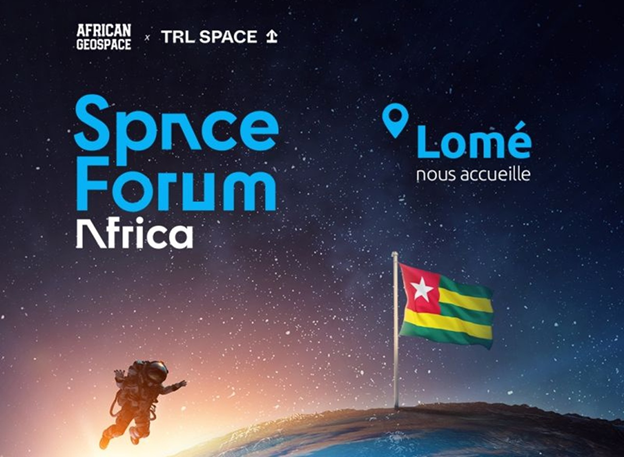
Overall, it was a valuable deep dive into both institutional policymaking and advanced technology, alongside a cohort of about twenty fellow African participants.
Togo First: How does this program intersect with your work in data and geospatial technology?
Richard Folly: For me, the link is very clear. My company, African Geospace, is already collaborating with a Czech aerospace firm called TRL Space. In fact, they were in Lomé last April, where we co-hosted a forum focused on space and geospatial technologies.
Taking part in this programme and traveling to the Czech Republic really felt like bringing everything full circle. It aligns perfectly with the mission we’ve been building. We want to foster technological cooperation and create a cycle of knowledge exchange around data, space technologies, and their practical applications for Africa.
Togo First: On that note, what is the current landscape of geospatial data in Togo?
Richard Folly: We’ve made significant strides. To put things in perspective, the groundwork really began back in 2013 with the launch of OpenStreetMap Togo, an open-source initiative that I helped start to produce and share free geographic data.
Since then, a real ecosystem has taken shape. We now have civic tech efforts like OpenStreetMap, alongside private sector actors such as African Geospace that are actively using geospatial data for commercial applications.
On the government side, we’re also seeing a clear rise in technical capacity. Several ministries are increasingly focusing on satellite data and training young professionals to analyze it. A prime example is the PRISE project, the Census of Socio-Economic Infrastructure, which led to the creation of two national geoportals. These platforms have become essential tools for public policy and data-driven decision-making.
Without a skilled local workforce to drive these efforts, even the strongest international partnerships risk remaining isolated projects rather than leading to long-term national ownership
Overall, through grassroots initiatives, private enterprise, and key government projects, Togo is clearly positioning itself as a strategic hub for geospatial data.
Togo First: Looking at the continent as a whole, what is the current state of the geodata and geospatial industry in Africa?
Richard Folly: Across Africa, we’re seeing a real surge in geospatial initiatives. One thing that stands out, though, is that English-speaking countries tend to be a bit further ahead than French-speaking ones, which is something we also see in other areas of tech.
Overall, the sector is growing quickly. There are roughly 20,000 geospatial professionals on the continent today, and the market is expected to top $22 billion by 2026. Strong regional leaders are emerging, and more national companies are entering the space, both in the public and private sectors.
It’s also worth remembering that geospatial data goes hand in hand with the space industry. That’s why the launch of the African Space Agency in Cairo last April was such an important step. It helps connect African space companies with European partners and makes it easier to build consortia that can take on major projects across the continent.
At the same time, the EU and the African Union have a structured partnership with around $100 million in funding, and a significant part of that is directed toward space and geospatial programmes. All of this is contributing to the steady development of a more connected and competitive African geospatial market.

Togo First: When we look at the progress made by countries like Rwanda, Nigeria, Egypt, Morocco, and more recently Senegal, especially in satellite investment, digital infrastructure, and precision agriculture, is Togo moving in the right direction? In your view, what three strategic priorities are needed to close the gap?
Richard Folly: I do think Togo is in a good position to catch up. When there is strong political commitment, the resources and momentum usually follow.
If I had to highlight three key priorities, the first is clearly education and capacity building. Everything we’ve talked about, whether it’s satellites, big data, or AI, ultimately depends on people.
Without a skilled local workforce to drive these efforts, even the strongest international partnerships risk remaining isolated projects rather than leading to long-term national ownership. That’s why investing in large-scale training is essential, from geospatial data analysis all the way to highly specialized engineering roles in the space sector.
Togo First: Is there currently a shortage of specialized talent, such as geomatics experts or geospatial data scientists?
Richard Folly: Yes, and the sector really breaks down into two main areas. First, you have the applications side. These are the data scientists and analysts who work with geospatial information, interpret it, and turn it into practical use cases. In that area, Togo already has some skilled professionals, including within several government ministries.
The second area is the more technical and industrial side, which involves designing, building, and eventually launching satellites. That’s where the gap is much larger.
Even though the data comes from space, the expertise needed to develop and maintain that kind of infrastructure is still very limited locally. We do have Togolese professionals in the diaspora working in these fields, but within the country, the skills base is still not strong enough.
That’s why training efforts need to cover the full value chain, from aerospace engineering all the way through to data analysis and applications.
Togo First: Beyond training and education, what other key areas should Togo focus on?
Richard Folly: The second priority is cooperation, both within the region and internationally. Working with more advanced African countries, as well as partners in Europe or the United States, allows us to move much faster. There’s no need to start from scratch. By building on the experience of those who have already made progress, we can save time and strengthen the effectiveness of our public policies.
The third priority is having a clear sense of national focus. Togo needs to decide where space and geospatial technologies can have the greatest impact.
Agriculture is an obvious example. These tools can significantly improve productivity while also supporting more sustainable environmental practices.
Another critical area is security and defense. Our sub-region is facing growing security pressures, and Togo is no longer completely insulated. Satellite technologies can play an important role in monitoring land and maritime borders, detecting illicit activities, and anticipating potential threats.
Once you concentrate on these core sectors, other applications naturally follow, including disaster risk management, more resilient urban development, and sustainable land-use planning.
Togo First: The business model for geodata still seems unclear in many African countries. What are the most realistic pathways to profitability today?
Richard Folly: The opportunities are significant, and we’re starting to see a few models that are clearly emerging.
The most common and straightforward one is SaaS, meaning subscription-based platforms powered by satellite data. Users pay to access sector-specific services for agriculture, environmental monitoring, climate tracking, and similar applications.
That’s exactly what we’re developing at African Geospace. We’re preparing to launch an agriculture-focused platform in the first quarter of 2026. It’s designed for three main user groups: farmers, insurance companies, and policymakers. Each of them will be able to access climate and geospatial insights tailored to their needs, whether that’s improving farm management, assessing risk, or shaping agricultural policy.
A second model is more institutional and revolves around business-to-government services. In this case, satellite data is turned into actionable indicators for public agencies or organizations working on disaster risk management. These projects are usually structured through service contracts, licensing, or annual agreements rather than individual subscriptions.
To move faster, we need public institutions that can provide clear frameworks and support the sector’s development.
Finally, there is an industrial pathway. Africa has a large pool of young technical talent. With the right training, these professionals can contribute to manufacturing, testing, or quality control for space mission components on behalf of international partners. We’ve seen similar models work in other technology industries, and it represents strong medium-term growth potential.
Togo First: How do you see the geospatial ecosystem evolving in Togo and across Africa over the next five to ten years?
Richard Folly: The ecosystem is already emerging, and it’s only going to become more active and more structured in the coming years.
First, we’re seeing the growing role of civil society, especially through civic tech initiatives like OpenStreetMap. These communities now have a strong presence across Africa, and they play a key role in training, awareness, and making geospatial tools more accessible.
At the same time, the private sector is expanding quickly. Companies like African Geospace, along with other African firms, will continue to grow, largely supported by international cooperation. This is not a space where countries or companies can work in isolation. Progress depends on stronger partnerships, more collaboration, and deeper integration into global networks, including with European partners.
But the role of the state remains essential. In many African countries, the legal and regulatory environment for space and geospatial technologies is still unclear. That uncertainty slows innovation because stakeholders often don’t know what standards, responsibilities, or rules apply. To move faster, we need public institutions that can provide clear frameworks and support the sector’s development.
That’s why I have long argued for the creation of national space councils or national space agencies. The African Space Agency can provide coordination at the continental level, but it will only be truly effective if strong national counterparts exist on the ground. Without local structures, it becomes difficult to implement projects and mobilize resources, even when funding is available.
In the end, the future of the sector will depend on four key forces: private companies, civil society, public institutions, and investors. How well these actors work together will shape Africa’s trajectory in this strategic field.
Interview by Fiacre Enagnon Kakpo
Togo launches regional governance capacity-building program
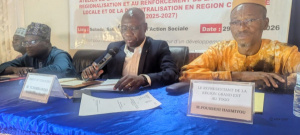
A program to support regionalization and strengthen local governance was launched late last week in Sokodé, in Togo’s Centrale Region. Running from 2025 to 2027, the initiative aims to build the institutional and technical capacity of regional and municipal authorities as Togo accelerates its decentralization process.
The program is being implemented in partnership with the umbrella association of Togolese municipalities (FCT), under a decentralized cooperation framework linking the Centrale Region with France’s Grand Est Region.
The launch workshop presented the program’s strategic priorities, planned activities, and expected outcomes. It also helped clarify the roles of local authorities and technical partners, while improving coordination between the regional council and municipalities. Discussions focused on aligning actions with local needs and the implementation timeline.
The initiative also seeks to strengthen regional development planning, boost local revenue mobilization, and improve municipal financial management. The experience of Lacs 1 municipality, particularly its efforts to digitize tax collection, was shared as an example of good practice.
Implemented by GESCOD-Togo, the program is funded by France’s Ministry for Europe and Foreign Affairs.
R.E. D
Lutheran World Relief seeks consultant to support Togo’s PROFIT program

The PROFIT project in Togo aims to strengthen coordination with the country’s public institutions. The project is implemented by Lutheran World Relief with support from the United States Department of Agriculture.
This comes after Lutheran World Relief recently announced a recruitment call for a consultant to lead engagement with the public sector.
The consultant’s mission will focus on coordinating stakeholders, strengthening institutional capacity, and supporting the development of strategic and regulatory frameworks for three targeted value chains: cassava, chili peppers, and okra. The goal is to improve the governance of these value chains and enhance the institutional environment for horticulture.
Launched in 2024 in partnership with the Ministry of Agriculture, the PROFIT project is aligned with the government’s agricultural strategy. Ultimately, the program aims to reach 25,000 producers, organize 1,000 cooperatives, and produce more than 230,000 tons in total across approximately 51,000 hectares.