
Togo First
For the second consecutive year, Togo recorded WAEMU’s best formal banking penetration rate
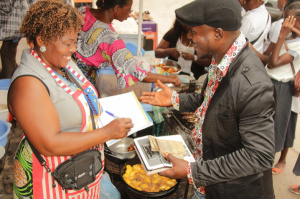
In 2019, Togo’s formal banking penetration rate stood at 25.1%, against 26.6% the year before. This means the country was, for the second consecutive year, WAEMU’s best performer in terms of adults with an account in banks, post offices, national saving funds, or the treasury.
Last year, right after Togo were Benin (24.8%), Burkina Faso (23.2%), and Guinea Bissau (20.3%). At the far end of the ranking was Niger with a strict bancarisation rate of 6.8%.
Regarding the enlarged bancarisation rate (which integrates the proportion of the population having an account in microfinance institutions with the formal banking penetration rate), Togo also had the highest in the WAEMU, knowingly 78.5% (far beyond the average in the region - 39.7%). It was therefore ahead of countries like Benin (72.2%), Senegal (52%), and Burkina Faso (43.4%).
Year-to-year, the regional average for this indicator grew by 1.4 percentage points (from 38.3% in 2018 to 39.7% in 2019).
Relative to financial inclusion, Togo with a rate of 72.3% was behind Ivory Coast and Benin (respectively first and second on this indicator with 77.9% and 77.8%). However, it did better than Burkina Faso (70.9%) and Senegal (70%).
Séna Akoda
Insurers generated CFA60 billion of revenues in 2019

In the past four years, the Togolese insurance market recorded a 25% increase in generated revenues. From CFA48 billion in 2015, they rose to CFA60 billion (after standing at CFA58 billion two years before).
Considering that very few people are insured in Togo (20%-30% of the population according to the national insurance office), there is still much room for improvement in the sector.
The Togolese insurance market is dominated by foreign companies. Indeed, out of 12 firms operating in the industry, only four are Togolese. The latter include GTA Assurance-Vie, GTA C2A - IARDT (recently acquired by Banque Centrale Populaire, a Moroccan conglomerate), Fidelia Assurance, and La Citoyenne Vie.
In the life insurance segment, GTA has the biggest turnover (CFA11.7 billion) and thus comes ahead of Senegalese Sunu Vie (CFA7.4 billion), and Ivorian NSIA Vie (CFA3.5 billion).
In the non-life segment, the Moroccan group Saham has the largest share of the market (with a turnover of CFA10.5 billion in 2019). It is followed by GTA IARDT (6.7 billion), and Sunu (6.3 billion).
Séna Akoda
Togolese authorities look to adopt a national policy to improve road safety
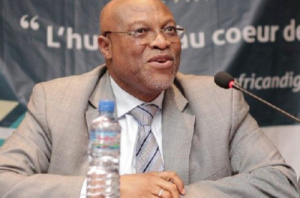
Due to the resurgence of road accidents in the country, Togolese authorities plan to draw a national policy for road safety.
This was disclosed on November 4 by the Minister of road, air and railway transport, Affoh Atcha-Dedji, in a ministers’ council.
“The road safety policy will mainly integrate an approach focused on the following: management, infrastructure, vehicles (vehicle quality), people and emergency support,” the minister said.
In the first half of 2020, 22,627 road accidents were recorded, including 241 deadly ones and 3,734 where people were injured.
Séna Akoda
The covid-19 response will be more decentralized in Grand Lomé
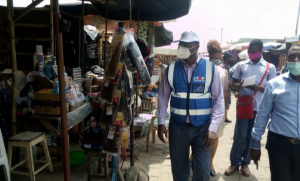
In the Greater Lomé region, the main outbreak center of the pandemic in Togo, authorities will fight the virus in a more decentralized manner. According to the national coordination in charge of the Covid-19 response (CNGR), this will help deal with the pandemic swiftly and rapidly.
Starting from November 10, a deconcentration plan will be launched by deploying a rapid intervention team and another to keep track of domiciled asymptomatic cases in every health unit in municipal districts.
The new approach also includes the decentralization of testing. Four private health centers will be able to test individuals for a fee approved by the government.
Additionally, a unit in charge of travelers will be deployed in every public health center.
At present, the country has confirmed 2,381 cases, including 1,691 recoveries, 57 deaths, and 633 active cases. Most of the recent cases were identified in the Golfe and Agoè prefectures.
BOAD finances mostly infrastructures, energy, and rural development projects
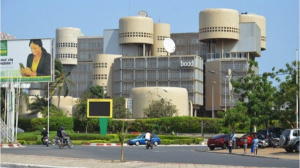
More than 75% of the funds disbursed by the Banque Ouest Africaine de Développement (BOAD) go into road projects, access to energy, and rural development.
According to Serge Ekué, the new president of the bank dedicated to the member states of the West African Economic and Monetary Union (WAEMU), this is due to the “importance of these sectors on economic growth and social development.”
Energy, especially, is considered vital by the Bank for development in the WAEMU states. One of the recent initiatives of the BOAD in Togo’s power sector is a CFA25 billion investment to set up the Kékéli Efficient Power plant. The BOAD and Oragroup are financial co-arrangers of the project.
From 1976 to December 31, 2019, the BOAD disbursed CFA3,710 billion for the WAEMU states. Out of this amount, Togo secured CFA465 billion.
Séna Akoda
National Social Security Fund (CNSS) resumes a regular collection of social contributions

The national social security fund (CNSS) has resumed the normal collection of social contributions since last Monday. The CNSS released a statement to disclose the information.
The institution had enacted in August 2020, exceptional measures such as suspending the calculation of surcharges for late payments of social contribution from April to July 2020, or the remission of surcharges for the late payment of social contribution arrears. These measures were taken to reduce pressure on businesses affected by the coronavirus health crisis.
In detail, the informal sector benefited from a 100% remission of late payment surcharges. As for SME/SMIs, they had to pay only 25% of surcharges due. Large companies, for their part, received a 50% discount on late payment penalties for social security contributions.
Like actors of the informal sector, hotels, restaurants, bars, schools, hospitals, and pharmacies benefited from a full remission.
All the measures, according to projections, should create a shortfall of more than 3.3 billion FCFA to the institution headed by Ingrid Awadé.
Séna Akoda
Cina Lawson among keynote speakers for the 2020 Africa Fintech Summit

The Togolese Minister of the digital economy and digital transformation, Cina Lawson, will be a keynote speaker at the Africa Fintech Summit which will take place next week. Lawson will give a keynote address on the second day of the three-day virtual event (November 9, 10, and 12).
The summit will gather many actors from Africa and the world who will discuss financing technologies and financial inclusion in Africa.
As a minister, Cina Lawson is leading Togo through “a profound transition to an inclusive digital economy. She is also diversifying private participation in the telecommunications sector, spearheading regulatory reforms for data protection and electronic transactions, setting up an innovation hub, and driving initiatives to deploy high-speed fiber broadband that links key institutions.”
Besides her, other major actors that will take part in the event include Admassu Tadesse, President and CEO of Trade and Development Bank (TDB), and around 60 top executives from companies like MFS Africa, Jumia, DPO Group, Y-Combinator, Yoco, AMOLE, DHL Logistics, Flutterwave, EFG Hermes, and Citigroup.
It is important to highlight the participation of Twitter CEO, Jack Dorsey, who will give a keynote speech on the final day of the event. Dorsey will speak on the correlation between decentralized finance, cryptocurrencies, and financial inclusion in Africa.
Ayi Renaud Dossavi
Zourehatou KASSAH-TRAORE
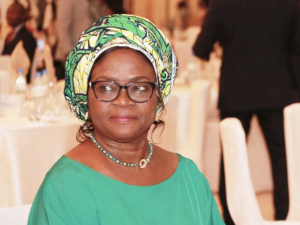
After spending several years as the head of the National Directorate for Public Procurements Control (DNCMP), Zourehatou Kassah-Traoré is the current Minister of Transport and Infrastructure.
Yiva Kodjo BADOHU

An eminent and influential business figure in Togo, Yiva Kodjo BADOHU has made a fortune by selling frozen and deep-frozen products. The CEO of Togo Food was also vice president of the chamber of commerce and industry (CCIT).
Now president of the Incentive Mechanism for Agricultural Financing (MIFA), Yiva Badohu believes that "the greatest challenge for the country is to feed the population and the future lies in the production and processing of agricultural products."
He thus works to push more young people to hop on to the entrepreneurship wagon, especially in the agricultural sector.
Yao TOYO

CEO of the Jonction de Croissance Agricole au Togo (JCAT), Yao TOYO produces and exports organic Soya to the European Union (EU). His company, founded in 2011, contributes significantly to this bludgeoning market (Togo is the world's leading exporter to the EU). After modest beginnings, JCAT reported a turnover of 6 billion FCFA in 2019; a performance driven by the PAEIJ-SP, which is a project aimed at boosting youth employment and integration in promising sectors.
The businessman and politician (he is the deputy mayor of the Ogou 1 municipality) is presently working to finish building a 6,000-ton store to accelerate the local processing of soybeans.