
Togo First
Togo: Gozem is now operational in Kara
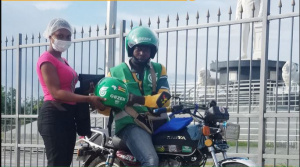
After Lomé, where it started operations in 2018, Gozem is expanding to Kara, northern Togo.
Initially, only the firm’s zemidjan (moto-taxi) service will be available in the city. Other offers such as taxis, tricycles (for people and goods) should follow later.
Gozem is an uber-like startup founded by Nigerian Emeka Ajene. It operates through an app available on the Google Play Store and the Apple App Store. Besides Togo, the firm is also present in Benin.
Séna Akoda
Turkey will increase its investments in Togo, in support of the latter’s PND
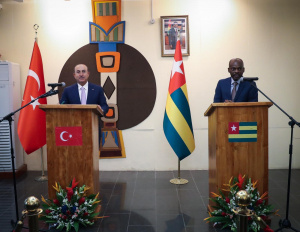
Turkey’s minister of foreign affairs, Mevlüt Çavuşoğlu, is currently in Lomé.
The official’s visit aligns with the Asian nation’s will to boost its bilateral -diplomatic and economic- relations with Togo. In this framework, Ankara announced it would increase its investments in Togo in response to Lomé’s desire to build new partnerships with Turkish private businesses, in line with the Togolese national development plan.
Other major outcomes of the meeting between Çavuşoğlu and Togolese authorities include the decision to open a Turkish embassy in Togo, and the upcoming entry of Turkish Airlines in the Togolese air transport industry. In addition to these, the two parties signed three bilateral agreements.
The first, a memorandum of understanding, concerns the establishment of a system to handle discussions between the two countries’ respective ministries of foreign affairs. The second agreement is for the mutual visa exemption for diplomatic passport holders from both nations. With this agreement, Turkey joined countries like Morocco, Brazil, Gabon, and the Central African Republic with whom Togo has a similar deal.
The third agreement, another memorandum of understanding, concerns cooperation between the ministry of foreign affairs in Togo and the Diplomatic Academy of Turkey.
WASCAL set to build biogas production laboratory at the University of Lomé
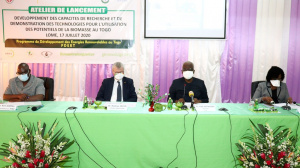
The West African Science Service Centre on Climate Change and Adapted Land Use (WASCAL) plans to set up at the University of Lomé a state-of-the-art biogas production unit.
A virtual workshop was held last week at the WASCAL’s headquarters, which is located at the university. The meeting focused on laying foundations for the project, which falls under the Programme de développement des énergies renouvelables in Togo (renewable energy development project in Togo) - PDERT.
The session was officially opened by Prof. Koffi Akpagana, the minister of higher education and research. At the occasion, the official declared that “this project will contribute to the vision of the Togolese government to increase the share of renewables in the energy mix and leveraging their potential while preserving the environment, with a strong desire to save energy and achieve energy efficiency.”
This is a new milestone achieved after the release in February 2019 of a study conducted by the University of Lomé which revealed that Togo’s biomass potential could substantially help develop renewable energies. The projected biogas laboratory thus aims to experiment on the use of this source of energy in the country.
Togo, let’s recall, wants to achieve universal electricity coverage by 2030, with renewables making up half of its energy mix by then. In this framework, the country has initiated multiple clean power projects; most of them however involve solar energy.
Ayi Renaud Dossavi
Togo could lose as much as XOF200 billion of tax revenues by the end of 2020
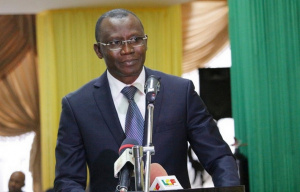
Togo could lose as much as XOF200 billion of tax revenues by the end of 2020. The information was relayed by the country’s minister of finance, Sani Yaya, who indicated on the same occasion that Togo was already recording a deficit of XOF35 billion in its tax income.
The official attributes the negative forecast to the cancellation of many taxes and customs duties in support of private businesses that struggle as a result of the Covid-19 pandemic.
To mitigate the potential losses and accelerate economic recovery, Togolese authorities are encouraging banks to finance the private sector, notably through the lines of credit extended by the BCEAO in this regard. Still, to speed up recovery, Sani Yaya urged the lenders to lower their interest rates, in consideration of the pandemic which is taking a heavy toll on the economy.
Let’s recall that on the government’s side, various steps have been taken to help populations cope with the crisis. These include a money transfer initiative, free water and electricity for the poorest, and free water at public wells.
Séna Akoda
Petrolegate scandal: Is the truth about to be uncovered?
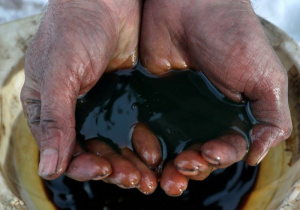
Togo’s minister of trade has recently ordered audits to “uncover the truth” about the alleged financial scandal involving the committee in charge of monitoring fluctuations in prices of petroleum products - the CSFPP.
The news, reported by Komlan Kondo who is the new coordinator of the CSFPP, comes after the dismissal of his predecessor, Francis Sossa Adjakly.
The Petrolegate scandal, also known as “Affaire Adjalaky” (the Adjalaky Affair), was exposed by L’Alternative, an investigative newspaper close to the opposition. At the center of this scandal are Francis and Fabrice Adjaky (father and son respectively) who allegedly embezzled up to XOF500 billion during the years they were in charge of the State’s external orders for petroleum products. In the related story, Vitol - one of the world’s largest energy companies - was cited many times; Fabrice Adjakly (the son) was an agent of the firm in Togo.
According to Komlan Konda, the new coordinator of the CSFPP, “if there was indeed financial wrongdoing, the culprits will be prosecuted according to the law.”
Fabrice Adjaly denied the accusation and sued the newspapers for defamation. He demands a financial compensation of XOF5 million and the destruction of the story -which was released in paper and digital version.
Fiacre E. Kakpo
Togolese government seeks firms to audit accounts of State companies in 2020, 2021, and 2022

For the years 2020, 2021, and 2022, the ministry of economy and finance is hiring firms to audit the accounts of businesses, public companies, funds, or independent institutions that benefit from state subsidies. The related tender will close on August 14, 2020.
The audit is to check if the funds provided by the States to the aforementioned parties were used as intended.
Firms eligible to submit their bids to the tender must be accredited by the Togolese government and must have been regularly featured on the board of the National Order of Chartered and Accredited Accountants in Togo (ONECCA-Togo).
Séna Akoda
Asphalting of the Katchamba-Sadori road in northern Togo set to begin this semester
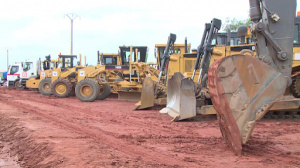
Works to asphalt the 30km-long national road N°17 from Katchamba (in the Kara region) to Sadori (in the Savanes region) are scheduled to commence this semester. The news was disclosed by the minister of infrastructure and transport, Zouréhatou Kassa-Traoré.
Financed by the Banque Ouest Africaine de Développement (BOAD), with XOF20 billion, the project will ease traffic along the axis and open up the western side of the regions concerned. The regional bank said, as a result of the initiative, travel time on the road will be reduced by 66% while operating costs for vehicles using it will fall by at least 60%.
In all, the project should be completed in 18 months. In its framework, public authorities have launched an international tender for construction firms willing to take on the project.
Séna Akoda
AFD donates €10 million to Togo to improve access to drinking water
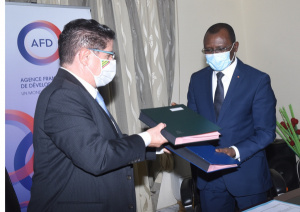
Togo just received €10 million (XOF6.5 billion) to build and rehabilitate infrastructures that supply drinking water, in line with its PASCOO project. The latter aims at improving sanitary conditions in rural areas and schools across the country.
The donation made by the French Development Agency (AFD) will be dedicated to the Savanes and Kara regions. The related agreement was inked on July 16, 2020, between the Togolese minister of economy and finance, Sani Yaya, and Marc Vizy, France’s ambassador to Togo.
In detail, the money will be used to “set up 400 new boreholes with manual pumps, rehabilitate 200 old ones, and build 200 public latrines,” said the minister before adding that the financing “will help implement priorities set under the third axis of the national development plan (PND 2018-2022) which focuses on enhancing social development and inclusion mechanisms.”
Let’s recall that the PASCOO has already enabled the construction of 344 manual boreholes and 100 public latrines, and the rehabilitation of 136 broken boreholes in the Savanes region.
Ayi Renaud Dossavi
Covid-19 pandemic stabilizes in Togo
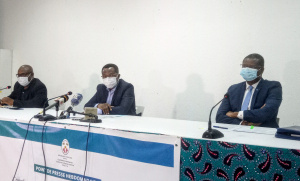
The latest updates on the Covid-19 in Togo reflect relative stability in the contagion rate and improvements regarding recoveries. The figures were disclosed on July 15 during the weekly press conference of the national team that coordinates the response to the pandemic (CNGR).
“Last week, from July 1 to 7, we confirmed 39 new cases and 65 recoveries. This week, from July to 14, we confirmed 42 cases and 61 recoveries, and still 15 deaths,” reported the CNGR’s head, Col. Djibril Mohaman.
Therefore, until yesterday, the number of confirmed cases was 731, against 528 recoveries (72%). Looking at these figures, there is a stabilization in their progress. While the CNGR has expressed satisfaction regarding this development, it urged populations to follow safety measures even more rigorously to prevent the spread of the virus.
Economy slowly reopens
The current conditions thus seem to favor the reopening of the economy and “restrictive measures are being lifted gradually.”
For example, authorities are taking steps to reopen the airport and borders. This is after allowing primary, secondary, and tertiary schools to resume partially.
What about religious venues?
Meanwhile, the government is thinking of allowing a small number of religious venues to resume activities and then monitor how the leaders and worshippers will behave regarding the respect of safety measures.
“There are around 9,000 religious venues across the country, all denominations combined. Letting all of them reopen would be challenging given the situation,” declared Lt. Colonel Bediani Béléï, who is in charge of religion.
“If everything is fine and the disease is stabilized, and if people understand the importance of following safety measures to contain its spread,” Béléï continued, the size of the sample of these religious venues will be gradually increased until they all resume their activities.
Ayi Renaud Dossavi
Togo’s Chamber of trade and industry starts setting up an incubator for industrial businesses
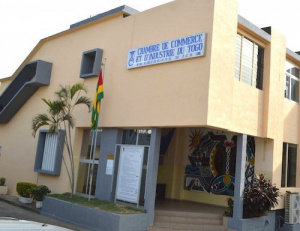
On July 15, 2020, the Togolese Chamber of Trade and Industry (CCIT) launched a project to open an incubator of industrial businesses.
The project carried out in partnership with the International Federation of Consular Chambers for Africa (FICA) aims to support Togolese SMEs and SMIs and foster local processing and products. The incubator will be situated in the Agbelouve industrial area (62 km from Lomé).
According to Germain Meba, president of the CCIT, the project aligns with the country’s national development plan while adding: “We will make sure that industrial businesses are more innovative.”
After the Covid-19 crisis
More importantly, the new project was designed to tackle challenges that may arise post-Covid-19. “Despite current difficulties,” the CCIT declared, “we are thinking about the situation after the Covid-19. So we must put in place mechanisms enabling businesses to better start their activities.”
The incubator in this framework should be “essential to the growth of the Togolese economy.”