
Togo First
The Fish port of Lomé has resumed activities
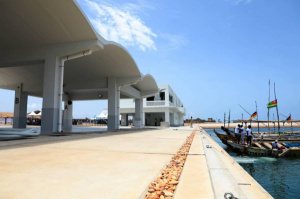
The fish port of Lomé which was under rehabilitation restarted operations last Thursday.
Located in Gbétsogbé (east of Lomé), rehabilitation works were covered by a large grant (XOF14.4 billion) from the Japan International Cooperation Agency (JICA) and about XOF6 billion provided by the Togolese State.
The facility's rehabilitation aims to "improve livelihood of people, their earnings especially, by improving fish quality and cutting down post-harvest losses," said Damtani Ali, Director of Fishery and Aquaculture.
Overall, authorities plan to consolidate nearly 8,000 jobs through this infrastructure. They also anticipate the creation of about 5,000 new jobs (direct and indirect).
Fishery contributes 4.5% of Togo's agricultural GDP and 1.3% of its GDP.
R.E.D
Togo was the largest West African exporter of organic agricultural products to Europe in 2018
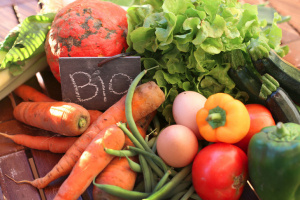
In 2018, Togo was the largest West African exporter of organic agricultural products to Europe.
According to a report disclosing the information, the country sold 22,123t of these products to the Old Continent last year.
This volume places Togo at the fifth position in Africa and 31st worldwide. In West Africa, it comes before Ghana, Côte d'Ivoire, Burkina Faso, Sierra Leone, Senegal, and Benin (respectively 35th, 36th, 40th, 43rd, 53rd, and 61st worldwide).
In Africa, Egypt exported the most organic agricultural products over the period reviewed, 46,736t. It is followed by Tunisia, Uganda, and South Africa.
Worldwide, China was the first (over 115 countries ranked), with 415,243t exported to the EU in 2018.
According to recent data, organic production employs about 37,000 farmers in Togo, which represents 4.83% of Africans active in this sector. Nearly 40,000 hectares (only 1% of cultivated lands) are dedicated to this type of farming.
R.E.D
A new loan is secured for the Kékéli Efficient Power plant project
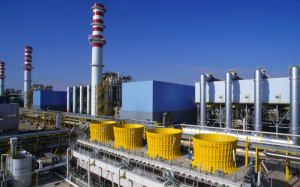
A loan agreement was signed yesterday for the construction of a 65MW combined-cycle Kékéli Efficient power plant.
The document was inked in Lomé by the BOAD, a group of technical and financial partners, and Kékéli Efficient Power (Eranove Group).
This signing is a new milestone towards the realization of the project which will cost XOF64 billon.
Last March, the BOAD announced it would provide Kékéli Efficient Power XOF25 billion in its framework. Three months later, on June 12, Komi Klassou, Togo's Prime Minister, laid the first stone for the infrastructure, on the eve of the first Togo-EU economic forum.
Séna Akoda
Over 100 suspected terrorists arrested near the Togo-Ghana border
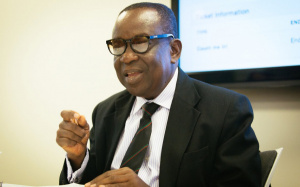
Around 170 suspected terrorists and criminals have recently been arrested near the Togo-Ghana border. The news was disclosed by Ghana's minister for national security, Albert Kan-Dapaah.
Some of the suspects were found with illegal weapons. A total of 108 weapons, including locally-made and foreign single/double-barrelled guns, "without any valid document" were seized.
The arrests fall under a joint security operation between Burkina Faso, Ghana, and Togo, code-named Koudanlgou III. Under its second phase, in May 2018, 202 people, including suspected terrorists were arrested.
“The exercise is aimed at preventing terrorist activities, illegal resource extraction, drug trafficking, dealing in illicit arms, smuggling, among other transnational crimes,” the Ghanaian minister declared.
It is carried out amid a rise of terrorist threats in the region.
EIB backs adhesion of Togo, and two others, to the African Trade Insurance Agency (ATI)
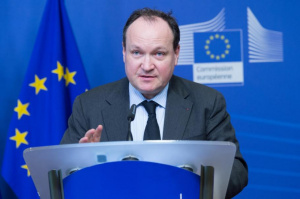
On the sidelines of the Africa Investment Forum held in Johannesburg, the European Investment Bank (EIB) signed with the African Trade Insurance Agency (ATI) agreements for the adhesion of three potential members: Cameroon, Niger, and Togo.
The agreements "will enable these countries to fully benefit from their adhesion to ATI and to greater investments in sectors like agriculture, power, manufacturing, and health," said EIB's deputy president, Ambroise Fayolle. Moreover, "the new cooperation will boost the impact of investment insurance for West Africa's sustainable growth."
According to the EIB, boosting investment insurance will transform both public and private investments in Togo.
The institution, under the new agreements, will cover the countries' integration to the ATI through concessional financing.
Established in 1958, the EIB is the European Union's long term financing institution. It is based in Luxembourg. As for the ATI, it was established in 2001 to provide insurance against political and commercial risks in order to enhance investment and growth in its member States.
R.E.D
CEET urges interested firms to submit their tender for the construction of power networks in Lomé
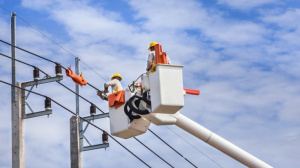
As part of the project to expand Lome's power network, the CEET urges firms interested in building medium and low tension lines, and stations, to submit their proposals latest by January 2020.
The works will be financed by the French Development Agency (AFD), the European Union (EU), and the German Development Bank, KfW.
Additional information is available at the CEET's head office, at the Procurement and Purchase Department to be exact (PDMA).
Let's recall that in 2018, the AFD, the EU, and KfW allocated €47.8 million to Togo for the PEREL. The latter aims to secure and stabilize power supply in Lomé and mitigate the CEET's commercial and technical losses.
Séna Akoda
Privatization of UTB and BTCI to be completed in Q1 2020
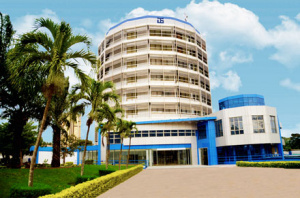
After talks of the direct transfer of the BTCI failed, Togolese public policies launched a tender similar to that of UTB's transfer. The government expects to close the lender's privatization in Q1 2020.
“This would guarantee financial stability and reduce government’s budget expenses,” says the International Monetary Fund which closely follows the process. The institution argues that “profitability could improve after privatization, that is when the government fully renounces its control, or when banks are left to strategic investors.” However, the IMF urges authorities to be transparent in the process.
The continued decline in the overall capital adequacy ratio is partly due to the large capital deficit of the two public banks. Apart from the two lenders, the overall solvency ratio of other banks that operate in the country far exceeds the level required by regulation. Their poor liquidity could also affect the entire system, the Bretton Woods Institution warned.
FDI in Togo should grow by 16% on average every year in 2019-2024, IMF says
Foreign direct investments to Togo should grow by 16% on average per year over the 2019-2024 period. This was forecasted by the International Monetary Fund (IMF).
According to the institution, the figure should reach XOF85.9 billion (up 15.6% compared to last year) this year. By 2024, it should double, reaching about XOF178 billion.
The improvement should, IMF says, be driven by a better business climate as a result of measures implemented under the national development plan. Let's recall that 65% of the latter is to be financed by the private sector.
"Unless socio-political tensions restart, economic recovery should continue. Major public projects (new roads and the expansion of the port and the airport) paired with the permanent improvement of the business climate should spur private and foreign investments in the medium term," the Fund said.
Togo exported 388t of cashew nuts to the EU by end September 2019, up 189% y/y
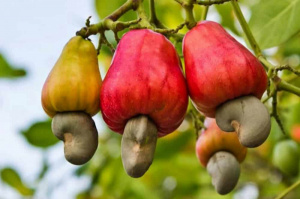
Togo exported 388 tons of cashew to the European Union over the past three quarters. This is a notable improvement compared to 2017 and 2018, where the country exported 118 tons and 134 tons respectively to the EU.
According to Commodafrica which reported the figures citing N'Kalo, while exports to the Old Continent are going up, those to the US have slumped by 24% over the first three quarters of 2019 (from 73t to 55t). Over the same period the year before, the fall was even more important (from 180t to 73t, thus -59%).
Overall, exports to US and the EU totaled 443t at the end of Q3 2019. India, it should be recalled remains one of Togo's largest cashew buyers.
Among West African economies that export cashew to Europe, Côte d'Ivoire leads with 1,591t over the past three quarters (+88%). Others such as Burkina Faso and Benin also recorded major increases (+113% and +259% respectively) in volumes exported to the EU over the period under review.
R.E.D
Benin and Togo sign agreement to establish integrated agricultural markets at their main border
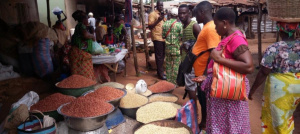
Four to six integrated agricultural markets should soon be established at the Togo-Benin border.
An agreement was signed in this regard last week by Noël Bataka, Togo's minister of agriculture, his counterpart from Benin, Gaston Cossi Dossouhoui, and Lisandro Martin, Regional Director of the International Fund for Agricultural Development (IFAD).
This project is part of the regional integrated program for agricultural markets (PRIMA). The latter aims at supporting primary markets in villages, and assembly markets in cities or border areas. Most agro-food products (plants, animals, and fish) will be sold at the newly established markets.
According to news website 24haubenin, the project between Togo and Benin is estimated at $100 million (half of which is to be provided by IFAD). In detail, $60.8 million will be used to improve market access and entrepreneurship, $26.9 million to adapt household farming to climate change, and $7 million will cover development cost.
R.E.D