

Togo First
Trade: Togo’s share in WAEMU exports fell by 5% average over the past decade
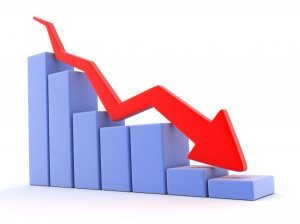
Over the past decade (from 2008 to 2018), Togo’s share of exports in the West African Economic and Monetary Union (WAEMU) slumped by 5% average per year. From 5.6% in 2008, the figure fell to 3.3% at end-2018, its lowest since the 2008 global financial crisis.
Despite the fall, compared to other WAEMU States, Togolese exports have actually risen slightly over the period reviewed.
It should also be noted that from 2008 to 2013, Togo’s share in the Union’s exports grew. However, they started dipping with the 2014 commodity prices crisis. Last year, the same trend was sustained but imports were less affected by the fall in prices of commodities.
The fall of exports was reflected on trade balance which degraded at end-2018, after improving the year before. Trade deficit kept widening in Q1 2019 as imports were more important than exports.
French firm APL picked to steer Carrier Hotel project in Lomé

For the Carrier Hotel which is to be built in Lomé, the government of Togo has decided to trust the position of prime contractor to APL, a French firm with a 30-year experience in the establishment of data centers.
Under the contract, the company will be the prime contractor while the construction will be carried out by a local firm, BTP Centro. CFAO Technologies & Energy will handle the equipment, energy and environment components. In effect, APL will lead, steer and coordinate the project and be in charge of its commissioning as well. It will also make sure it is certified by Uptime Institute and complies with environmental standards, among others.
Let’s note the French firm is also active on another project ongoing in Togo. This is the “Tier III évolutif Tier IV” datacenter (500 m2 of server rooms). For this project, APL provides expertise (through Neutreo, an engineering study office it has acquired) relating to supply of solar power on which the infrastructure will partially run on.
The Carrier Hotel, a co-sharing data hosting center, is financed by the World Bank (nearly XOF12 billion), under the West African Regional Communication and Infrastructure Development Project (WARCIP). This project should improve connectivity (making it safer and more reliable) in Togo, and reducing its cost hence benefiting both SMEs and the public administration. Construction works are expected to last 15 months.
Fiacre E. Kakpo.
SAATM: So far, only 10 countries, Togo included, have taken effective steps to implement the agreement

To date, only 10 African countries have taken effective steps to accelerate the operationalization of the Open Sky Continental project. This is in a context where Africa’s aviation industry remains one of the least performant worldwide, mainly as a result of a protectionist trend recorded across the continent.
To boost African aviation, last year, Togo’s President, Faure Gnassingbé, took major steps to implement the agreement for a single African air transport market (SAATM). Yet, the procedure still delays with only ten countries, out of the 28, (75%-80% of Africa’s air traffic), signing the agreement. Among the signees are Togo, Ethiopia, Ghana and Nigeria. The delay is due mainly to concerns of some adhering countries.
Experts attribute the concerns to some airlines, even in countries that already signed the agreement, fearing more competition.
Big airlines benefit from substantial State subsidies and “they could end smaller local airlines which have no means to compete with them,” declared Sebastian Mikosz, CEO of Kenya Airways, at a recent press conference. In some countries also, taxes have been increased, thus affecting some airlines’ profits.
In the mid-term, Africa’s air traffic is expected to grow more rapidly (+5% yearly) than more mature markets. However, African airlines will barely profit from the boom and should actually, according to the International Air Transport Association (IATA), lose this year $100 million, while globally, the aviation industry is expected to record a profit of $28 billion.
Togo: OTR seeks firm to build an App that will assess state of used vehicles
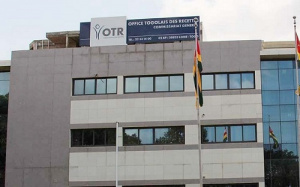
Togo’s Revenue Office seeks a firm that will build it an App to assess the state of used vehicles arriving in the country. An international tender was launched in this regard.
In effect, the hired firm will conduct conceptual study for the App, its development and project, as well as skills transfer subsequently.
Interested companies can apply either individually or in groups. Closing date for submission of applications is September 23, 2019.
The project, let’s indicate, falls under the government’s tax governance support program (PAGFI), financed by the African Development Bank (AfDB).
Ayi Renaud Dossavi
Togo: Authorities initiate workshops to inform young local entrepreneurs about government's measure of setting aside 25% of public contracts for them

On September 2, Togo’s public procurements regulatory organ started in Lomé workshops to equip young Togolese entrepreneurs regarding the government’s measure of setting aside 25% of public procurements for them.
This is measure aiming to allow more young men and women to have access to public procurements while also bolstering their entrepreneurial spirit. This is in a context where unemployment and underemployment highly hamper economic growth.
The measure enabled last year, by December 31st, young Togolese entrepreneurs to capture more than XOF12 billion worth of public contracts. At the time however it should be highlighted, the share of public contracts reserved for the concerned group of people was 20%.
While presently held in Lomé, the ongoing workshops, scheduled to end by September 20th, should also be organized in Atakpamé and Kara. The initiative is backed by the Fund for Support to Youth-led Economic Projects (FAEIJ) and the National Office for Public Contract Control (DNCMP).
Séna Akoda
Decentralization: How are township operations financed in Togo?
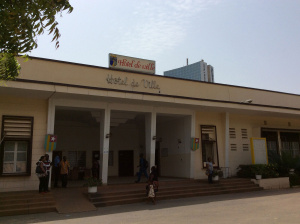
Togo’s Revenue Office (OTR) recently informed decentralization actors and local elects about available fund mobilization instruments for their activities. This was last Saturday, at the Decentralization Night organized by NGO IJD in Lomé.
There are two main tax tools serving these parties. There are namely the housing tax and the TPU. While the first is fully repaid to local communities, 90% of the second is repaid to communities.
Besides these two taxes, there is also the land tax (for both built and unbuilt properties) and patent. For these, 50% of proceeds are returned to communities.
The OTR in addition allows local elects to initiate other taxes, such as a tax for road, tax for festivals and events, all in order to mobilize more funds.
WAEMU: Togo's exports among most diversified in the region

Within the West African and Monetary Union (WAEMU), Togo and Senegal have the most diversified exports. This was disclosed by the West African States Central Bank (BCEAO), in its latest report on external trade.
On the other end, the country with the least diversified exports is Guinea Bissau. Cashew dominates (95%) the country’s exports.
Concerning Togo, its main exports are phosphate, vehicles and clinker. According to the report, the country’s main export destinations at the beginning of 2019 were Burkina Faso, Benin and India.
Overall, the Apex bank noted that exports within the Union have been diversifying more over the past decade (2007-2018).
Ayi Renaud Dossavi
Togo Revenue Authority to set up a XOF970 mln datacenter

Togo Revenue Authority (OTR) plans to build a datacenter for an estimated XOF970 million. This facility will enable the institution in charge of mobilizing tax and customs revenue in Togo to store, process or distribute data remotely.
Planned under the Tax Governance Support Project (PAGFI), the construction of this datacenter will be conducted in two phases. The first, won by the Tunisian business group Tunisie Micro-Informatique (TMI)-IT&NET Services for more than XOF945 million, concerns the supply, installation and commissioning of IT equipment.
The second phase, awarded to Benin’s Computer and Telecom Technologies, following an international call for tenders, will be completed for about XOF23 million.
The execution of the work related to the contract should start in October. First phase is forecasted to last 16 weeks, and phase 2 will last 12 weeks.
Séna Akodaa
A solar bag project gets first award at Logex digital and innovation exhibition

Koffi Edem Agbeko (pictured, right) won first award at the Logex Digital and Innovation Exhibition, held last month in Lomé. A prize that the young man from Atakpamé (161 km from Lomé) won with his solar bag prototype. The systems, capable of powering a 5-watt bulb, aims to provide students in non-electrified areas with access to light.
Projects that won the 2nd and 3rd awards are, respectively, Open Trade by Barry Thierno, and V-LAB by Harold Sehoue and William Ouédraogo. Open Trade is an E-commerce platform, connecting customers and sellers, and which wants to give a better visibility to young entrepreneurs; while V-LAB is a virtual laboratory, which allows the simulation of scientific experiments.
The exhibition is organized by the digital services, cybersecurity and IT equipment company Logex.
Ayi Renaud Dossavi
Business climate: Togolese authorities improve judiciary and legal procedures for business owners

After rising in the previously released Doing Business 2019, Togo now aims to be among the top 100 of the global ranking in the next release. To this end, it implemented various reforms focusing on key indicators.
There is for example the execution of commercial contracts to ease access to allow business owners to access commercial courts more easily. The information was disclosed by the Togolese cell for business ease.
Origin: Law N° 2018-028 of December 10, 2018
The adoption of this law aimed at allowing Togo’s commercial courts better resolve commercial disputes.
Distinct commercial courts depending on conflict’s importance
Subsequently, distinct commercial courts have been put in place, each solving disputes based on amounts involved. For example, a chamber for minor sums, not exceeding XOF1 million has been created. Procedures at this court is simplified and allows no appeal. Fees to submit a case have also been reduced from XOF20,000 to XOF9,000.
Possible to self-represent
For parties involved in minor conflicts (small amounts involved), they are free to hire a lawyer or not. Actually, to speed up processes, previous dismissals serving as delay tactics are suppressed for such conflicts.
A call to mediation and voluntary conciliation
In line with international practices, Togo calls for mediation and voluntary conciliation. For those opting for mediation, they will be reimbursed their case submission fees. This reform intends to avoid parties in conflict to avoid a tedious trial.
A maximum of 100 days!
Still to ensure commercial conflicts are resolved rapidly, the number of hearing referrals has been capped to three, and under no circumstances, should procedures at a commercial court exceed hundred (100) days starting from the day the case is submitted, reads Article 23 of the law n° 2018-028 of December 10, 2018.
Digital operations now possible
In the past, while it was solely used by judges and clerks, the FORSETI digital platform for commercial disputes procedures is now accessible to lawyers and bailiffs. Thus, lawyers can submit complaints, access laws, rules and jurisprudence in place as well as pay fees for their cases online and even follow up remotely.
As for judges and clerks, they can now issue orders online, schedule suits, and randomly assign cases to judges at the chamber of commerce of Lomé’s First Instance Court.
Séna Akoda