
Togo First
Lomé is a trade hub in ECOWAS, according to Ecobank
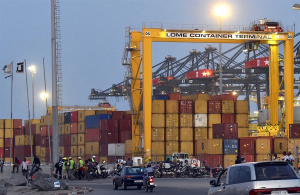
In West Africa, French-speaking countries listed under Ecobank’s WAEMU segment drive trade in the region with main hubs in Abidjan, Cotonou, Dakar and Lomé which is also a financial center. This was revealed in an analysis conducted by the research team of Ecobank Transnational Incorporated (ETI).
“Abidjan, Dakar, Cotonou and Lomé are key commercial hubs, canals for import and export of goods and services, both internationally and regionally,” reads a statement from the bank released on africaficc.
In the latter’s report, Togo is depicted as a major commercial corridor in West Africa. A description attributed mostly to the fact that the country re-exports equipment and consumption goods as well as food products to landlocked nations such as Burkina Faso, Mali and Niger. Ecobank’s report highlights that significant volume of goods, in the informal circuit, pass through Togo to reach landlocked nations but even to its neighbors, Benin and Ghana. These are not reflected in official statistics.
According to these statistics, Togo reexported in 2016 various kinds of imported goods. These include plastics (for $95 million), cars and machinery ($76 million) and beauty products ($49 million), most of which were sent to Ghana and Nigeria.
Ecobank also added that Togo’s exports should generate $1.8 billion this year, against an estimate of $1.6 billion in 2017. The year before that, 2016, they stood at $1.6 billion also.
As for imports, they are forecasted at $2.7 billion in 2018, against $2.5 billion and $2.4 billion in 2017 and 2016 respectively.
Looking at other components of trade balance, which are also expected to improve, Ecobank said current deficit should reduce by 1% to 7.8% of GDP. This figure was at 10% back in 2016 if we may recall.
Fiacre E. Kakpo
Takpapièni solar power plant commissioned
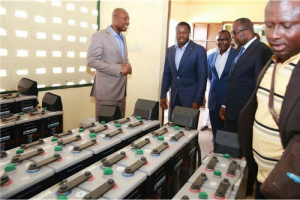
Initially meant to occur last Saturday, the Takpapièni power plant was effectively commissioned on March 6, 2018. Present at the inauguration was the President himself, SEM Faure Essozimna Gnassingbé.
With a production capacity of 100 kWc, the new facility has an 8km-long Low Tension distribution network, equipped with 80 lighting poles and connection meters for users.
This way, just like Assoukoko, Bavou and Kountoum, households and other users will be able to freely connect to this PV plant.
Togolese population should exceed 8 million this year

Togolese population, both inside the country and outside, should exceed 8 million in 2018. This is according to the latest demographic projections of Ecobank’s research team released yesterday on africaficc. The latter is a new website dedicated to forecasts and analyses of economies where the pan-African bank operates.
According to data from Ecobank, given the strong economic growth that Togo recorded over the past five years and bright forecasts announced for this year, GDP per capita should grow by 7% standing at about $660.
This figure was at $615 and $570 in 2017 and 2016, respectively. According to Banque de France, Gini coefficient, which is used to measure inequality in income in a country, was 46% (0.46) end-2016.
Inequality in income perceived by Togolese people, which were numbered at 7.8 million last year, is thus tangible, amid major socio-economic challenges. Indeed, issues like low access to power, water, basic education and more importantly employment for youth prevent the country from leveraging on its demographic growth (which was 2.5% average yearly, over the past few years) to develop economically.
Fiacre E. Kakpo
Energy: PES Togo celebrates 10-year anniversary

In Togo, a firm specialized in solar power production (PES Togo) recently celebrated its 10-year anniversary in the country.
In this framework, it held open houses from February 24 to March 3, 2018. On that occasion, the firm’s Managing Director, Souleman Nana, recalled advantages of renewable energies while reiterating its commitment to their development. Amongst advantages cited, he mentioned that they are eco-friendly.
Still during the open houses, PES Togo showcased some of its products and emphasized on benefits derived from using solar panels for example.
According to the MD, protecting the environment is vital especially considering the threat of global warming. He added that “only solar and other renewables can be substituted to conventional sources of energy, besides hydropower”.
Marc Dederiwè Ably-Bidamon, Bernadette Legzim Balouki and André Johnson, respectively Togo’s ministers of Energy, Trade and Environment, were present at the open houses launching ceremony.
Togolese government committed to improving access to mining information with Mining Governance Development Project

From credible sources, we learnt that the government wishes to boost access to mining-related information, through the Mining Governance Development Project (PDGM).
In this framework, it plans to put in place a team to draw specifications related to the creation and commissioning of an information access system. The latter’s goal is to disseminate information on mining operations and its technical aspects. The system will also provide information on equipment, academic tools and good practices in the mining and related sectors.
The main component of this project consists in developing efficient mechanisms for the collection and release of sector-focused information, to which will be integrated data on extractive industry. Also, steps will be drawn for the establishment of the mining information centre (CIM).
The team in charge of specifications will also suggest partnerships and provide institutional framework for CIM. Finally, it will draw a business plan to insure the latter’s sustainability.
All these fall under the responsibility of the team but first it will proceed to an initial analysis of systems of access to mining information. To this end, involved parties will meet regularly to ease data collection. The first meeting will be held on March 18, at the Directorate-General of Mines and Geology.
Togo : Kloto prefecture to give its tourism sector a boost

Last Friday at Kpalimé, a touristic city located 120km north-east of Lomé, the Association of Kloto’s Civil Society Groups organized a workshop to validate the first draft of the Tourism Development Plan.
The workshop’s main objective is to establish a favorable framework for the development of responsible and quality tourism in order to mitigate impacts on environment, economy and society.
The meeting was financially and technically supported by the German cooperation through the ProDeGoL which is a programme that focuses on decentralization and local governance. Put in place in partnership with the Kpalimé community and prefecture board of Kloto, this was the occasion to get opinions of actors involved in the development of tourism within the prefecture.
According to organizers, drafting the development plan will lead to the creation of a strategy that will help provide authentic and diversified services, based on local tourism. Therefore, it is vital to train professionals of the sector and make sure that this plan can be implemented in the shortest delays, to boost tourism in Togo.
Let’s recall that the Kloto prefecture is located in the Plateau region and is home to Togo’s highest mountain, Mount Agou (986 m). The prefecture’s average altitude is 700 m and its capital is Kpalimé, which is well known for its touristic assets.
Togo : Mobile transactions doubled in value to stand at CFA263bn, in 2016 (BCEAO)

In Togo, value of mobile transactions more than doubled in 2016, from CFA101 billion in 2015 to CFA263 billion, report from BCEAO shows. Recalling that this figure stood at only CFA5.4 billion in 2014, this is a significant improvement mostly driven by the introduction of many innovative services in the country.
Not only did the value of these transactions soar but their volume did as well. Indeed, over the year reviewed, it doubled standing at 20.3 million operations. Also, the number of people registered to mobile payment services rose to 1.44 million. This is somewhat below 4% of the number of accounts created across the sub-region in 2016.
Though Togo, in terms of subscribers, has not yet reached the average of the region, the country is however the best in regards to active accounts. Indeed, about half (49.88%) of accounts opened in 2016 were active within the 90 days before the end of the year (December 31). All over the union, average for this figure was 34.6% at end-December 2016.
According to the sub-region’s central bank, Banque Atlantique Togo and Moov Togo, through a partnership, were the main drivers of the surge in mobile transactions within WAEMU.
The apex bank adds that most transactions included topping mobile wallets, withdrawals, transfers and purchase of credit. These in regards to volume and value, contributed respectively 90.46% and 94.55% of all transactions.
As for direct payments, in terms of volume, they stood at 24 million thus 3.29% of all transactions and amounted to CFA530 billion overall, thus 4.61% of total.
Fiacre E. Kakpo
Togo now steers Regional Academy of Marine Sciences and Technologies (ARSTM)

Togo will be steering the Abidjan-based regional academy of Marine Sciences and Technologies (ARSTM) for the next 12 months. This was decided during the 11th session of ARSTM’s board which just ended in Lomé.
Togo’s minister of transports, Ninsao Gnofam, who will head the entity will have to make sure that all member-States pay their contribution and continue ongoing projects. “Nowadays, with all the attention given to marine economy, I believe that we have to work with my peers from the other countries to tackle the issue of financing for the academy. The goal is to help the institution fully fulfill its role”, said Gnofam.
The recent session was the occasion for ministers of member-States to review the various mechanisms put in place to foster development and ensure that marine economy really participates to inclusive growth across the region.
The regional academy of Marine Sciences and Technologies (ARSTM) is a maritime, port and industrial training institution. It was created in 1987 in Abidjan, Côte d’Ivoire, and covers all 15 countries across West and Central Africa.
Fiacre E. Kakpo
After two successful issuances, Togo records a low performance for its recent issuance on the regional debt market, this year
Unexpectedly, the recent bond issuance of the Togolese government on the regional market did not go so well compared to those of January 26 and February 16, 2018.
Over a targeted CFA20 billion for this operation, Togo’s treasury was able to raise only CFA3.3 billion, thus a coverage rate of 16%. This is one of the market’s weakest performance since the beginning of this year.
Yet, last Friday’s issuance shared the same characteristics as those of Jan 26 which was oversubscribed at 107%. Indeed, nominal value was CFA10000 with interest rate set at 6.25% and maturity period at 3 years.
Now, with the issuance’s outcome, the hope born from the announcement of a political dialogue last January 26, to resolve the crisis that the country has been experiencing since last August, seem to be fading.
Truly, the dialogue has not yielded any tangible results, but there are now many rumors circulating about its outcome. For now, the date at which it will be reopened is unknown.
Additionally, with the meek performance on the regional market, the possibility of an investment from MCC (dependent on the pacific resolution of the crisis which could have reinforced investors’ confidence) has weakened. This situation could last a few weeks more.
Until then, the next issuance of Togolese treasury is planned for mid-March.
Fiacre E. Kakpo
Togo: Société Générale d’Intermédiation (SGI-Togo) goes under restructuring
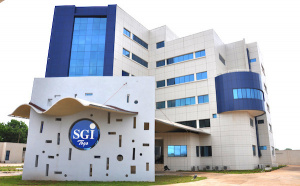
Société Générale d’Intermédiation (SGI-Togo) has started its restructuring, according to local weekly “La Nouvelle Tribune” in its release of March 1, 2018.
According to the newspapers, this operation will directly impact the firm’s management. In detail, the position for deputy managing director will be created. The initiative aims at making the firm’s management more transparent.
Also, the company’s board of administration is looking for a new managing director, to be better positioned in the intermediate finance industry.
This is as the current MD, Mensah K. Assigbi, resigns. However, pending arrival of his replacement, he still heads the firm.
According to the newspapers, the outgoing MD has failed to handle the operation to borrow CFA60 billion via public offering launched by Togo. The transaction was finally handed over to CGF Bourse which is based in Dakar.