José Anyovi, MD of Teolis: “Our goal is to provide quality internet to the Togolese people”
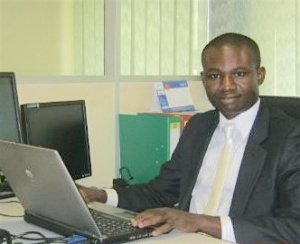
In June last year, Teolis, Togo’s third internet service provider (ISP), spent more than CFA211 million to acquire an operating license. The telecommunications operator however launched its activities in the country only last February 22nd. With a total investment of CFA1 billion since its creation, the new firm seems to be faring well. Its goals in Togo apparently align with that of the government, knowingly connecting the whole Togolese population, both rural and urban, to the rest of the world via broadband over the next decade.
In this interview with Togo First, José Anyovi, Managing Director Teolis, answers some of our questions.
Togo First: What innovations does TEOLIS bring to the Togolese market?
José Anyovi (JA): First, Teolis is a new ISP that acquired a license to operate in Togo. It will thus add much value to the country’s digital economy. Our main objective at Teolis is to provide a reliable, fast and economic internet service, both for professionals and the general public. We want to cover all of Togo and connect Togolese people to the rest of the world. In terms of innovations, we bring a certain diversity with technologies that our firm uses. This would allow all groups of the society to have access to internet services at interesting prices.
We have access to LTE technology which is expanding rapidly nowadays. It is one of the latest technologies in the telecommunication sector. None of the operators actually present in Togo has a license to use this technology.
Togo First: What about Vivendi Africa Group which is just landing in the market…?
JA: Well, Vivendi mostly deals with fiber optic and does not focus on the same sector as us. The technology that Teolis uses targets the general public, and is mostly related to mobile.
Togo First: Why did you decide to be established in Togo?
JA: Teolis is a Togolese company established by Togolese for Togolese people.
Togo First: In Togo, customer service is still a major challenge that needs to be overcome. In this regard, what are presently the means at the disposal of Teolis to improve the quality of customer service?
JA: First, before offering any services, TEOLIS conducts a field study whose results it later releases. After this stage, deployment has to be planned. One of the advantages of TEOLIS is that it provides its major corporate clients monitoring tools.
Another thing is our teams’ reactivity. For example, a proactive team was dispatched to monitor our Network operations center (NOC). It is well equipped to tackle issues when they arise.
Togo First: TEOLIS comes with 4G. A technology that Togolese are not yet used to. What average speed should be expected? At what costs?
JA: Today, we wish under our strategy, to start our deployment with companies and the minimum speed we intend to provide is 4Mo/s. We have two different offers, including the business offer which is fully dedicated and the smart pro offer which is a shared formula.
Togo First: Togo’s government wants to increase Internet’s penetration rate to more than 90% by 2030. How will TEOLIS contribute to the achievement of this goal?
JA : Teolis fully shares the government’s ambition to increase internet’s penetration rate to 90% by 2030, especially since we also target the general public, both in urban and rural areas. The latter is left out in the major transition towards digital terminals. As a result, we mainly wish to focus on rural areas, as we said while launching.
Togo First: But more specifically, in terms of figures, what will your contribution be?
JA : We cannot tell since each operator has a role to play in covering the country. However, for its part, Teolis will focus on the general public as this is currently not fully taken care of.
Togo First: In Togo, mobile represents 99% of internet’s market shares while ISPs capture about 0.66%. What strategies will you leverage on to reach the general public?
JA: Teolis has a progressive expansion plan for the next five years and it will be unveiled at each developmental stage. As for our strategy, we have already revealed it while launching. Teolis Zone will be available soon. It is part of our strategy adressing mobile users.
Togo First :…Teolis Zone ? What is that?
The service will be presented when launched with all necessary details. It is our next offer.
Interview by Fiacre E. Kakpo
Tanko Timati wants to raise CFA250 million by June 2018, to finance its expansion

Tanko Timati, a Togolese firm specialized in processing organic tomatoes into paste, said it intends to expand to 19 African countries by 2025. In this framework, the firm aims to increase its capital by CFA250 million before June 2018, by opening up its capital.
The local company established in 2016 actually eyes a turnover of more than CFA50 million this year.
Proceeds it will get by opening up its capital will initially be used to meet local demand then prepare to enter already set markets.
Ismael Tanko, CEO Tanko Timati, told Togo First in an interview that fundraising has already started with three potential investors. “At the moment, we are in talks with three parties, knowingly two individuals and an institution, to raise the CFA250 million we need to acquire new machinery to boost production and also install a greenhouse that will allow us to be partially autonomous, at least in regards to input supply,” Tanko said.
Afterward, the entrepreneur called out to potential investors so that the fundraising, which should close before the end of Q2 2018, is successful.
Let’s recall that beside Togo, Tanko Timati is also present in Benin, Burkina and Niger.
Fiacre E. Kakpo
Nathalie Kpanté : “If I had the power to change things, I would start with Togo’s educational system… Entrepreneurship is taught since childhood”
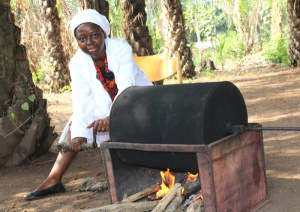
Nathalie Kpanté, 30, entrepreneur and production head at Choco-Togo is one of many young Africans trying to change the face of the continent. After training shortly in Italy, the young woman ventured into chocolate production and is now with Choco-Togo, which has become a source of pride for Togo. She has become one of the major actors of local agribusiness. Given her status, we at Togo First decided to ask her a few questions to which she gladly responded.
Togo First: How did you come up with the “made in Togo” chocolate idea?
Nathalie Kpanté : In 2013, we took part in a training workshop in Italy, on traditional processing of cocoa into chocolate, responsible tourism, fair trade and e-commerce. When we returned, we noticed that no processing had been done since the colonial era, and that almost all our cocoa farmers knew nothing about chocolate. We then started researching and adapting processing methods we learnt during the workshop.
T.F : Don’t you think it is too risky to venture into chocolate production knowing that the population, culturally, is not an effective consumer of this product?
Nathalie Kpanté : Indeed, the risk is very high but taking risks is a quality when you are an entrepreneur.
Many people do not know about chocolate’s qualities. All chocolate products in our market are full of chemicals. Therefore, we inform people about chocolate’s qualities and then offer them products of quality.
By venturing into chocolate production, we were trying to achieve two essential goals : first, we wanted to promote agricultural entrepreneurship and self-employment of youths to reduce unemployment rate which is quite elevated in Togo. The second objective was the empowerment of young girls and women in rural areas.
In Togo, cocoa farming is practiced by families therefore all members of a family work but it is men that own the lands and collect revenues generated by the yield. In this context, women totally depend on their husbands. It is to change this that we select women from rural areas and teach them how cocoa processing is done. Currently, we are training about fifty women and dropout girls from these areas.
T.F : Could you tell us a little about the figures of Chocotogo?
Nathalie Kpanté : Since we started our activities, our turnover was about CFA16 million.
T.F : … What of your profits?
We are still installing our factory so every profit we make is used to buy equipment.
T.F : Did you benefit from any financial support?
We won some contests where monies were provided and also funding from the Agriculture Support Programme –PASA- but we have formal financial support.
T.F : Why did you decide to become an entrepreneur when most young graduates seek jobs in a hibernating market ?
I grew up around entrepreneurs. My parents, though civil servants, have always been entrepreneurs, same for my brothers and sisters. Since my childhood I was introduced to various businesses and I learnt there was no such thing as a “dirty job”. Some have to create employment for others to be employed. Why couldn’t this person be me?
T.F : What are your growth targets in the next 10 years?
In regards to growth, we want to expand our production unit, sell its products regionally and internationally, open a training center for all African youths and improve women, girls and kids’ conditions in cocoa farming areas.
T.F : If you had the power to change things today, what would your priorities be?
If I had the power to change things, I would start with Togo’s educational system. We are conditioned as job seekers. Entrepreneurship is taught since childhood. If we want to change things, we must change what we teach kids who are the “nation’s future” as it is often said.
TF : Looking at the multiple awards you got, both in the country, the continent and outside the continent, what advice could you give to your young brothers and sisters who are hesitating to become entrepreneurs ?
Nathalie Kpanté : Let every youth focus on improving their personality and skills. If one knows who he or she is, what we are capable of and are passionate about, then surely he or she can create wealth and have more impact in their society.
Interview with Fiacre Kakpo and Séna Akoda