
Togo First
Ecobank secures $200M loan from European consortium, its first sustainable development loan
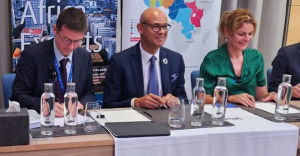
Lomé-based Ecobank Transnational Incorporated (ETI) secured last week a $200 million loan for sustainable development. The Pan African group signed the deal with a European consortium led by Proparco, and including Norfund, DEG, FMO, and EFP.
The agreement was signed in Dubai, on the sidelines of the COP28. It is the Ecobank’s first sustainable development loan.
"The signing of this sustainability-linked loan agreement is another confirmation of the importance Ecobank Group places on sustainability, which for us is both a responsibility and an opportunity. This sustainability-linked loan builds on our success as the first pan-African banking group to issue sustainability-compliant Tier 2 bonds in 2021," said Jeremy Awori, Group CEO of ETI.
The loan will support the group’s strategy to foster sustainable growth and fight climate change in Africa. It is paired with two major climate commitments, namely the disclosure of climate information and the development of a climate strategy. The loan also includes a climate action plan. Proparco, in partnership with German consulting firm IPC, will work closely with ETI's teams to achieve these ambitious goals.
"Proparco is proud to support a long-standing partner that makes the climate agenda a cornerstone of its strategy and operations. ETI is paving the way for the entire African financial sector. This first loan linked to sustainable development granted to a banking group in sub-Saharan Africa is an example to follow," said Françoise Lombard, CEO of Proparco.
Ayi Renaud Dossavi
Togo: Ecobank scoops Bank of the Year award for the fourth consecutive year
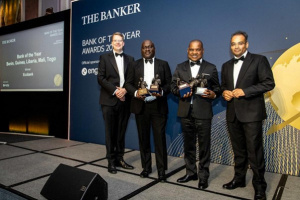
Ecobank is, again, the Bank of the Year in Togo. The lender won the title for the fourth consecutive year, at the Banker Magazine’s Bank of the Year Awards for 2023 which was hosted in London, UK, on November 30.
The lender welcomed the title as proof of its commitment to excellence, reflected through its ability to generate returns, gain strategic advantage, and serve the Togolese market.
"This award is an official recognition of the quality of our comprehensive range of products, services, and solutions. It testifies to our ability to meet the evolving needs and expectations of our customers in the Personal Banking, Commercial Banking, and Corporate and Investment Banking sectors in Togo," said Souleymane Touré, MD of Ecobank Togo.
Touré further noted that Ecobank Togo would "keep leveraging to offer its customers practical, affordable, and innovative solutions."
Besides Togo, Ecobank also won the title of Bank of the Year 2023 in Guinea, Benin, Liberia, and Mali. Meanwhile, Ecobank Zimbabwe won the Global Financial Inclusion Award for 2023.
Esaïe Edoh
UNIDO, Togo explore ways to bolster collaboration
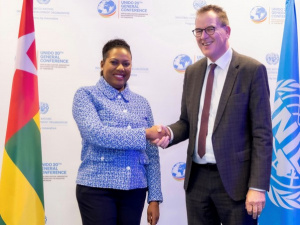
The Togolese Minister for Investment Promotion, Manuella Santos, was in Vienna, Austria, last week. She met with Gerd Müller, Director General UNIDO. Together, they explored ways to reinforce the collaboration between the West African country and the UN’s organization for industrial development.
The meeting took place on the sidelines of the 20th session of the Organization's General Conference. During the conference, the two sides discussed setting up a new country program focusing on agro-industry, as well as the implementation of the Montreal Protocol on industrial substances harmful to the ozone layer.
Müller assured Santos that “the UNIDO will support (Togo) with quality infrastructure”.
Three months before the recent meeting, the organization’s representative in Togo had also made the same claim. This was in Lomé, in a meeting with Togo’s Prime Minister. Also, a few weeks ago, the UN agency facilitated the visit of several German companies to Togo.
The UNIDO’s mission is to promote, stimulate, and accelerate industrial development across its member states.
Over 7,000 cancer cases were officially recorded in Togo last year

Togo recorded more than 7,000 new cancer cases last year. The Ministry of Health unveiled the figure on December 5, 2023, while presenting its cancer register, a tool that should help the country better manage cancer.
On the same day, the ministry launched in Lomé various awareness campaigns on the registration of cancer cases.
"Given the burden that cancer currently represents, it deserves to have dedicated structures and tools to secure data, quality data,” said Prof. Darre Tchin, who lectures at the University of Lomé and holds a degree in anatomy and pathological cytology. "It is depending on this quality data that actions and strategies will be taken to enable our country to better handle cancer cases."
The data will be collected on a population basis and will cover the entire territory in terms of cancer occurrence.
Countering a rise in cases
"The situation calls out to us. Because in 2022 alone, there were just under 8,000 new cases for Togo. These are cases that have been documented, knowing full well that there has been an underestimate," Professor Darre continues.
The new cancer registry also aims to provide comprehensive data.
These initiatives to raise awareness of the new registry come at a time when the number of cancer cases in the region is expected to rise in the medium term. Indeed, according to estimates by the WHO's International Agency for Research on Cancer (IARC), by 2040, Togo is expected to see an increase of over 100% in both the incidence rate of new cancer cases and cancer-related deaths.
According to 2020 data, the most common cancers in women are breast (16.3% of all cases recorded in Togo, all sexes combined) and cervical (8.7% of all cases) cancers; and in men, prostate (9.6% of all cancers recorded this year), non-Hodgkin's lymphoma (5.1%) and stomach cancer.
Ayi Renaud Dossavi
Togo: National Assembly begins review of 2024 finance bill
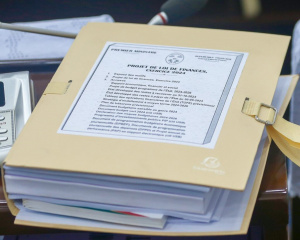
The Finance Committee of Togo’s National Assembly is reviewing the country’s finance bill for 2024. Kicked off on December 6, the review will last a few days.
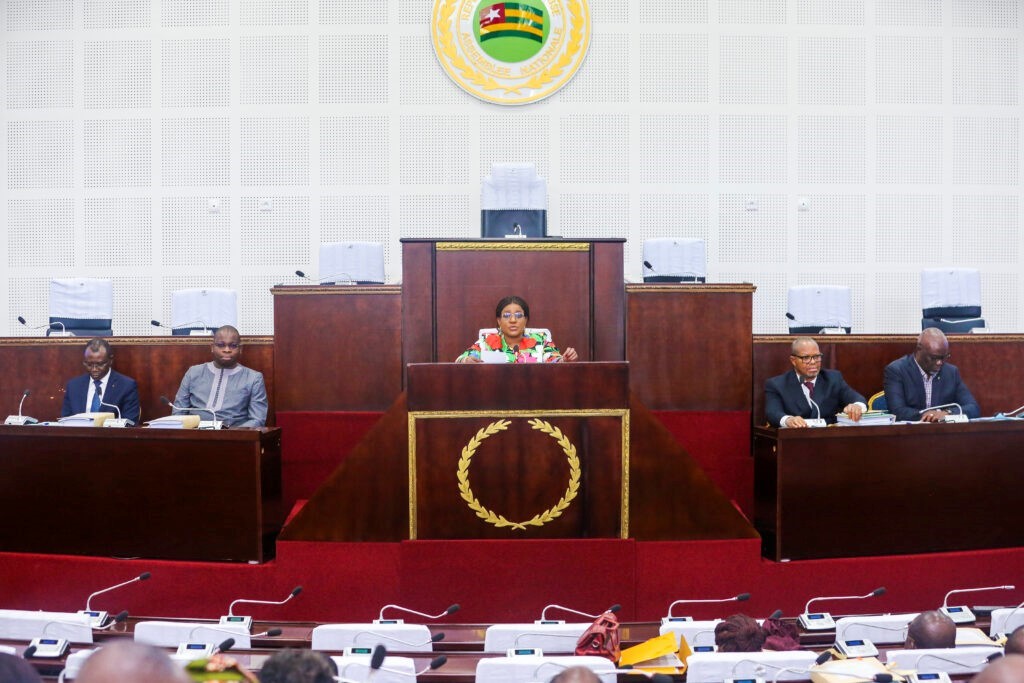
In detail, the Finance Committee is assessing the government’s financial projections to make sure they align with efforts to develop the social, environmental, political, educational, and economic sectors, for the people’s good. Furthermore, measures aimed at optimizing budgetary resource mobilization will be studied; and so will the ministries’ actions to absorb more investment loans.
As part of the examination process, deputies on the Committee may reformulate and amend some tax provisions and suggest ways to improve and consolidate public finances.
During the proceedings, the government will be asked for clarification about the bill under review. And following its examination, deputies should vote on the budget by December 31, 2023.
Togo’s budget for the 2024 fiscal year stands at CFA2,166.1 billion. This is 9.6% more than the CFA1,975.5 billion set in the rectifying finance bill for 2023.
Esaïe Edoh
MCC Compact: Togo could seal the deal before the end of 2024
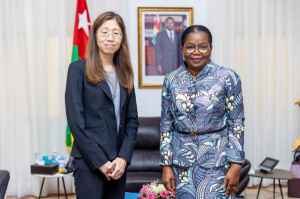
Togo could sign the agreement to launch the Millennium Challenge Corporation (MCC) Compact Program next year. This was disclosed by Kyeh Kim, MCC's Vice President for Operations, in a recent meeting with Togolese Prime Minister Victoire Tomegah Dogbe.
"Our partnership with Togo is excellent, and the team working here is on schedule. Togo is truly a model for other countries in the region. We hope to sign the Compact at the end of next year," the U.S. representative said.
Rachel Hampshire, the new head of the MCC Compact in Togo, also attended the meeting. "I'm convinced we'll succeed," said Hampshire who was officially introduced to PM Tomegah Dobge during the meeting.
Togo secured $12 million from the MCC last April to prepare for the Compact which will focus on key sectors like the energy and digital sectors in Togo.
Ayi Renaud Dossavi
Togo: General assembly of UEMOA Consular Chamber in progress in Lomé

Lomé is hosting the 24th ordinary session of the General Assembly of the UEMOA Regional Consular Chamber, a consultative body that ensures dialogue between UEMOA and the community’s major businesspeople. The meeting began on December 5 and will end on December 7.
Some of the meeting’s goals include taking stock of the implementation of the recommendations of the last Assembly, reviewing various reports, and adopting the institution's 2024 budget.
Also, UEMOA CCR’s chairman will assess progress made during his mandate. "As far as the three years of our mandate are concerned, several reflections and proposals have been put in place. The most emblematic is the question of SME financing, for which we have imagined financing through support from the deposit and consignment funds," declared Daouda Koulibaly, President of the UEMOA CCR.
Under his leadership, the funds allocated to the Consular Chamber increased from CFA400 million to CFA500 million, bolstering the Chamber’s impact in the region.
The ongoing meeting was opened by Rose Kaye Mivedor, Togo's Minister of Trade. On the occasion, the Togolese government representative praised the CCR-UEMOA claiming it is "a successful model which the UEMOA can be proud of" and it is "proof that the private sector is dynamic and remains the main driver of wealth creation and job promotion in our Union".
Mivedor then asked the institution to "keep striving to consolidate its achievements and…to continue working to make our national and regional businesses more resilient to rising shocks."
B2B meetings will be hosted during the ordinary session.
Lomé to host the 9th Pan-African Congress in October 2024
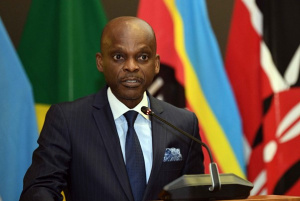
The 9th Pan-African Congress will take place in Lomé, Togo, from October 22 to October 25. The schedule was disclosed yesterday, December 5, in Pretoria, SA, by Togo’s Minister of Foreign Affairs, Robert Dussey.
The congress will bring together Africans from the continent, the diaspora, and Afro-descendants around the theme of the renewal of pan-Africanism and Africa's place in global governance. Ahead of the event, several preparatory meetings will be held in each of the continent's regions.
Preparations for the upcoming Congress were officially launched on May 22, 2023.
Togo: French energy developer Meridiam wins contract to build and operate a 64 MWp solar plant in Sokodé
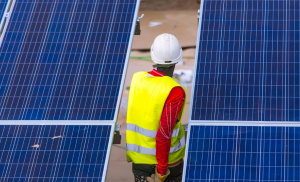
French Group Meridiam will build a 64 MWp photovoltaic solar plant in Sokodé, central Togo. The group sealed the deal with the Togolese government and EDF, on Dec. 4 in Dubai.
Under the agreement, Meridiam will fund, design, build, and operate the plant for 25 years.
During the #COP28, #Meridiam, the Rep. of #Togo and @EDF have recently signed a concession agreement for the design, construction, financing and operation of a 64 MWp photovoltaic solar #powerplant in #Sokodé#SolarEnergy #Sustainabilityhttps://t.co/sAG5AZXCi8 pic.twitter.com/UkmGcyBuLd
— Meridiam (@Meridiam) December 5, 2023
“We are proud to contribute through this project to Togo’s dual ambition of providing all its citizens with universal access to electricity and increasing its production of renewable energy,” declared Thierry Déau, founder of Meridiam.
A statement from Meridiam indicates that construction should commence in mid-2024, and over 200 local jobs will be created during construction and operation.
The plant will be precisely located in Salimde (Tchaoudjo prefecture in Sokodé). This will be Togo’s second solar power plant with Blitta’s.
Meridiam develops and operates over 500 MW of solar, hydro, wind, biomass, and geothermal projects in Africa.
Esaïe Edoh
Decentralization: Golfe 5 municipality sets provisional budget for 2024 at CFA1 billion
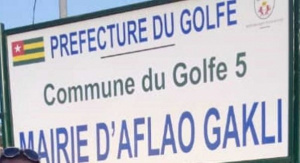
The Golfe 5 municipality of Togo adopted its budget for 2024 yesterday, December 5. The municipality, located in Greater Lomé, plans to spend a little over a billion CFA next year–CFA776 million for operations and CFA317 million for investments.
With the budget, which is provisional, the municipality intends to build and equip basic socio-collective and educational infrastructures, maintain the road network and green spaces, and undertake sanitation actions.
Commenting on the matter, the Golfe 5 mayor, Kossi Agbenyega Aboka, said: "Effective collection strategies will be elaborated and put in place to boost revenues and meet the many expectations of the people".
Esaïe Edoh