

Togo First
Togo: Government considers taxing drilled boreholes

The Togolese government is considering taxing boreholes, in a bid to better manage water resources nationwide. The project was discussed on December 20 at the Council of Ministers. On the occasion, the Minister of Water made a presentation on the Integrated Water Resources Management Fund (Fonds de Gestion Intégrée des Ressources en Eau - Fonds-GIRE).
"The Head of State has instructed the government to carry out a reflection for the case of households that use drilled groundwater, making sure the quality of the water extracted meets standards of quality for drinking and household use, and taking into account the need to rationally use water resources," the government said at the end of the meeting.
Domestic consumption exempted
If implemented, the tax will not apply to domestic use. "Households will not be taxed for their domestic consumption," revealed Yawa Kouigan, Minister of Communication and government spokesperson. However, the authorities will ensure that the water they get is of good quality. To this end, control missions are planned, in the Greater Lomé area especially. The government’s concerns arise amidst a rapid rise in borehole digging in this area; a situation that raised concern about the quality and overexploiting of water resources.
It is worth recalling that a few months ago the Minister of Water and Village Hydraulics, Yark Damehane, mentioned the possibility of setting up a "water police" which would monitor boreholes in Greater Lomé.
GIRE and Tinga Fund management
Another instruction given by President Gnassingbé was to proceed to the “collegial” management of the Fonds-GIRE and the Fonds Tinga (for rural electrification) while maintaining "their sectoral autonomy."
Ayi Renaud Dossavi
Ecobank Togo wins award for Best Treasury Securities Specialist in 2022
Ecobank Togo is the best Treasury Securities Specialist (TSS) on Togolese public securities for the year 2022. UMOA-Titres, the agency that oversees the WAEMU’s stock market, gave the bank the title which it also held in 2018 and 2021.
TSSs are financial institutions authorized to directly interact with the French Treasury to buy and sell government securities, especially bonds or bills.
Last year, 22 TSSs in the WAEMU, including 18 banks and 4 brokering companies, were evaluated. The ranking was based on a 100-point scale, divided between participation in auctions (50 points), presence on the secondary market (35 points), and quality of service (15 points).
Orabank Togo was the second most active entity in Togolese securities in 2022. Coris Burkina and BIIC Financial Services of Benin came right after.
In particular, Orabank Togo, which has a trading room in Lomé, maintained a notable presence on the regional financial market, ranking among the top three investors in almost all UEMOA countries, except Guinea Bissau.
Fiacre E. Kakpo
Togo: Turkey to open a research center at the University of Lomé

Turkey will open a research center at the University of Lomé (UL), Togo. Muteber Kiliç, the Turkish ambassador to Togo, announced the news on December 19, 2023.
The center will help Togolese students know more about Turkey and secure Turkish scholarships. It will also be a place where teaching researchers from both countries collaborate and share their experiences.
Ahead of the opening, teaching, student, and administrative staff mobility programs will be rolled out, according to UL's Director of Cooperation, Joseph Koffi Tsigbe.
The announcement marks the beginning of a relationship between the two countries on the educational front, complementing their growing diplomatic and economic cooperation.
According to the Turkish embassy, trade between Togo and Turkey stood at around $200 million last year, against $128 million in 2021.
Esaïe Edoh
Togo: Investment Minister addresses concerns of Indian businessmen present in the country

The Togolese Minister of Investment Promotion, Manuella Santos, met a group of Indian businesspeople active in the country last Tuesday, December 19. During the meeting, an Investors' Breakfast held in Lomé, the Indians highlighted the issues they face in their activities to the official.
The businessmen complained mainly about the slow process of their applications at the Land Registry, insufficient power supply to run their machines, and slow processing of immigration formalities.

Regarding the first issue relating to application processing at the land registry, Minister Santos told the Indian delegation that the process would soon be digitized. “This,” she emphasized, “will help cut delays and deal with the issue of sluggishness.”
Meanwhile, the Togolese Tax Office (OTR) attributes the delays in processing to an increase in the number of applications since 2021, spurred by lower costs of procedures.
Manuella Santos also noted that the government would take steps to make doing business in Togo easier for foreign investors.
The Investors Breakfasts align with this ambition to protect the interests of foreign businesspeople. The country plans to hold more of these meetings.
Esaïe Edoh
Togo: Ministry of Trade warns, again, against selling fake and expired goods
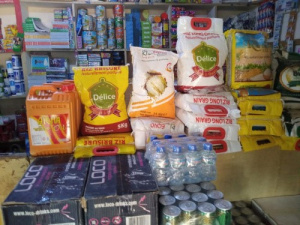
The Ministry of Trade of Togo will soon carry out control missions to check for expired and fake goods that are sold across the country. Ahead of the operations, Rose Mivedor just reminded businesses that selling these products is prohibited.
“The Minister of Commerce brings to the attention of economic operators and consumers that the sale of counterfeit, falsified, and expired products is strictly prohibited,” reads a press release issued on December 20, 2023.
The Ministry of Trade warned that "All offenders will be severely punished under the laws in force," before recalling that abnormal practices can be reported via the 8585 toll-free number.
Esaïe Edoh
Togo: FAO launches new project to bolster the local rice sector
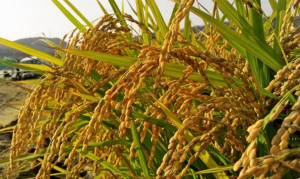
A new project to support Togo’s rice sector was launched on Monday, Dec 18, in Lomé. The initiative, OCOP-TOGO, is backed by the United Nations Food and Agriculture Organization (FAO).
"This project supports the government’s actions to bolster the rice sector. The Togolese State’s goal with this initiative is to ensure food and nutritional security for the Togolese people leveraging the local rice output, and have surpluses set aside for agricultural processing industries", said Konlani Dindiogue, Director of Cabinet at the Ministry of Agriculture, Livestock and Rural Development.
The OCOP-TOGO project will cover zones with high rice production potential, implementing green technologies in these parts of the country. The project aims to help producers and rice parboiling cooperatives adopt green production, green processing, and green marketing while bolstering the capacities, technical and organizational, of players in the sector.
Togo is one of the 28 countries to benefit from the FAO initiative. The West African country was filtered through a call for applications entitled "One country one priority product."
Commenting on Togo’s current performances in the rice sector, Cabinet Director Konlani Dindiogue said "We are currently about 70% dependent. In 2021, for example, the national production of milled rice was around 100,000 tonnes. We only cover 30% of needs. It is urgent to step up the government's actions to achieve these objectives."
For his part, Oyetunde Djiwa, FAO Program Director in Togo, revealed that "Togo wants to reverse the balance of trade in rice, which is imported in large quantities. And for the initiative underway in Togo, it is focusing on rice, supporting producers in sustainable rice production, identifying a few pilot sites where we demonstrate to producers how to improve their production techniques, and finding women on the sites who will process the rice, because today, parboiled rice is in high demand on the Togolese market."
The pilot phase of the OCOP-TOGO is set to end in 2025.
Ayi Renaud Dossavi
Togo: Tax office dematerializes TVM payment and creation of tax I.D. number
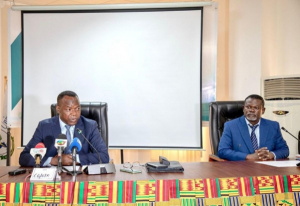
Starting next month, Togolese residents will be able to pay the Motor Vehicle Tax (TVM) and secure their Tax I.D Number (NIF) online. This was announced by Philippe Tchodié, general commissioner of the Togolese Tax Office (OTR), on December 18.
The reform will ease tax payments while reducing costs and delays, according to the OTR. "Now, anyone with a cell phone can get their NIF and this is a major step forward for our tax administration. Also, details relative to tax payment can be checked at all times to settle due payments," said Tchodié.
This is good news for taxpayers but not so much for some intermediaries who used to charge bogus fees to help taxpayers secure their NIF.
Every taxpayer is assigned an NIF, a serial I.D. number, to interact with the OTR. The digital payment of the TVM and the dematerialization of the NIF creation process are part of the OTR’s reforms.
Esaïe Edoh
Togo: CFAO and COFINA launch car loan solutions for SMEs and individuals

In Togo, the mesofinance company COFINA and car seller CFAO MOTORS have a car loan offer targeting individuals and entrepreneurs. The partnership for the “Preferential Rate Loan Offer” was sealed last Friday, December 15.
The solution is the first of a kind for COFINA Togo, the company said.
The partnership aims to help more Togolese entrepreneurs buy a car, by “providing adapted financing solutions, especially for small and medium-sized businesses which often struggle to buy new cars.”
A source at Cofina noted that CFAO MOTORS will contribute its experience in vehicle sales and after-sales services under the partnership. The same source added that the loan specifics will “vary depending on the desired vehicle”. The loans are repayable over 12 to 36 months.
In Togo, various actors have launched initiatives similar to COFINA and CFAO MOTORS’. Ecobank, SUNU Bank, and Bank of Africa (BOA) also offer car loans, in partnership with dealers like Japan Motors, Hyundai, STAM…
However, the monthly installments to repay the loans were criticized by many who claim that many Togolese cannot afford them.
Fiacre Kakpo
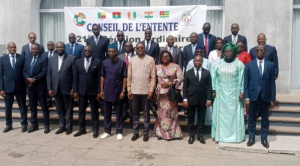
West Africa: Conseil de l’Entente adopts CFA44 billion budget for its 2024-2028 strategic plan
Togo is updating its legal framework for environmental protection. A new bill was adopted to this end on 18 December 2023, at the Council of Ministers.
"The bill adopted enshrines a revision of the 2008 law, to provide the country with an updated legal framework in light of evolving standards, to better meet the challenges of the 2025 government roadmap for sustainable development and provide a springboard for strengthening people's resilience actions," the Council reported.
The new bill takes into consideration elements such as the circular economy, the green economy, the blue economy, carbon credit, and green mobility. The bill will soon be sent to the parliament for review and validation.
Through its adoption, Togo seeks to better align with international commitments, relative to biodiversity, climate change, and the fight against desertification.
Togo recently took part in COP28 in Dubai. There, the West African nation reiterated its commitment to reducing greenhouse gas emissions and reaffirmed its support for public policies aimed at protecting the environment and preserving natural resources.
Ayi Renaud Dossavi
Togo: Council of Ministers adopt new bill to better protect the environment

Togo is updating its legal framework for environmental protection. A new bill was adopted to this end on 18 December 2023, at the Council of Ministers.
"The bill adopted enshrines a revision of the 2008 law, to provide the country with an updated legal framework in light of evolving standards, to better meet the challenges of the 2025 government roadmap for sustainable development and provide a springboard for strengthening people's resilience actions," the Council reported.
The new bill takes into consideration elements such as the circular economy, the green economy, the blue economy, carbon credit, and green mobility. The bill will soon be sent to the parliament for review and validation.
Through its adoption, Togo seeks to better align with international commitments, relative to biodiversity, climate change, and the fight against desertification.
Togo recently took part in COP28 in Dubai. There, the West African nation reiterated its commitment to reducing greenhouse gas emissions and reaffirmed its support for public policies aimed at protecting the environment and preserving natural resources.
Ayi Renaud Dossavi