

Togo First
Eyewear startup Lapaire raises $3M to reach more African countries
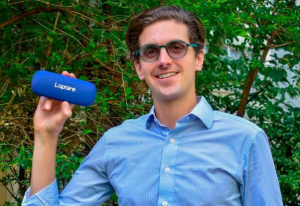
Lapaire, an African eyewear startup present in Togo and five other African countries, recently raised $3 million to further expand across the continent.
For this capital raising, the round was led by impact investment fund Investisseurs & Partenaires (I&P), according to several media including Africa, with participation from AAIC, FINCA Ventures, and Beyond Capital. The deal received advisory support from CrossBoundary, via USAID's Trade and Investment in Africa activity.
Founded in 2018 by Jérôme Lapaire, a Swiss national based in Kenya, Lapaire's mission is to make eyewear more accessible in Africa.
It is worth noting that about 35% of Africans have visual impairments – 80% of which can be corrected with glasses.
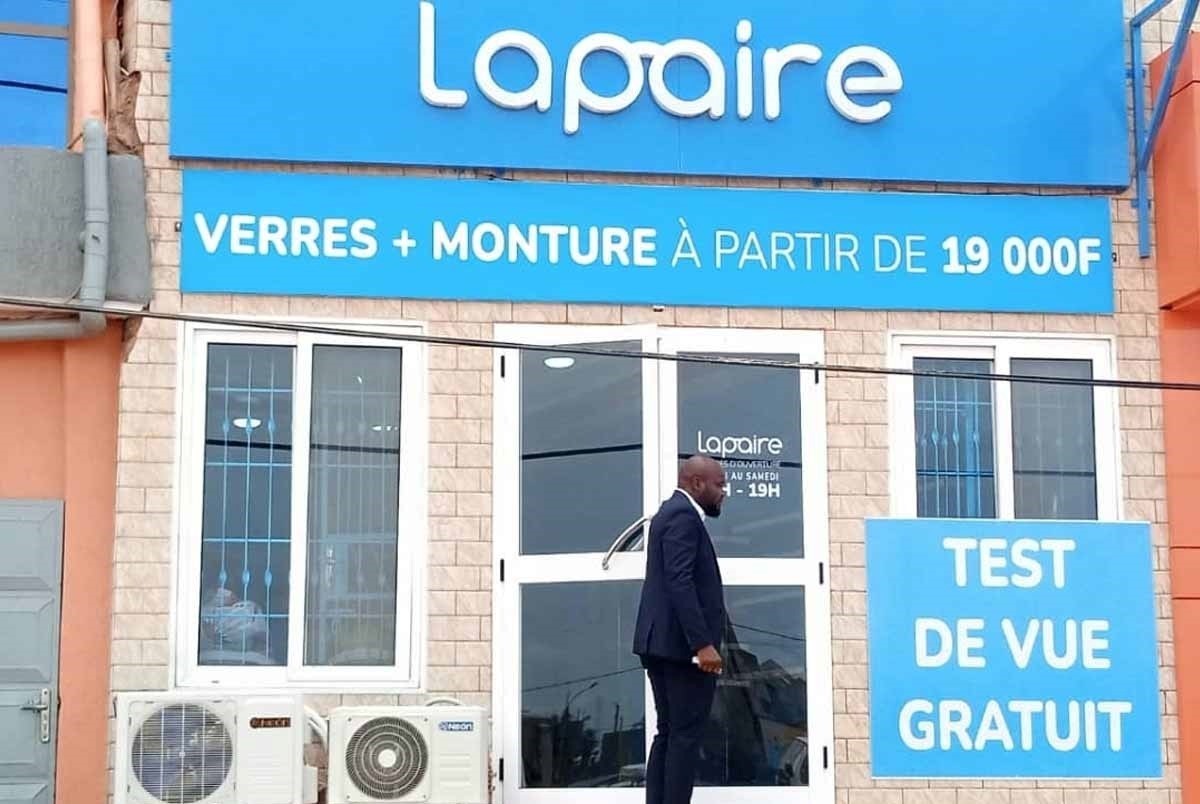
Lapaire has been present in Togo for some years now. It is also present in Côte d'Ivoire, Benin, Burkina Faso, Mali, Kenya, and Uganda. The company provides optical eyewear at affordable rates and offers free sight tests.
Lapaire has 350 employees across 58 eyecare centers. It plans to open 300 more centers over the next two years, reaching a million more people by the end of this year.
To date, the company has offered free eyesight tests to over 350,000 people.
Ayi Renaud Dossavi
Davos Forum: Cina Lawson represents Togo

Togo's Minister for the Digital Economy and Digital Transformation, Cina Lawson, is in Davos, Switzerland. She takes part in the ongoing World Economic Forum which ends January 19, 2024.
Over 2,800 participants are present at the forum this year. This includes about 50 heads of State and governments.
At the forum, Lawson will showcase Togo's achievements in digital transformation. She should also use the opportunity to build new alliances that will help Togo move further on its path to digital transformation.
Held every year, the Davos Forum brings together multinational business leaders, bankers, politicians, and influential intellectuals from around the world. Launched in 1971, it mainly aims to foster global cooperation to tackle political, social and economic issues.
Esaïe Edoh
ECOWAS: EBID set to soon host key investment forum in Lomé

The ECOWAS Bank for Investment and Development (EBID) announced plans to soon host a major forum in Lomé, Togo. The Bank will give more details on the project next week, on January 24.
The ECOWAS Investment Forum (EIF), as the event is called, should take place at the EBID’s headquarters. It would be its first edition.
Themed "Transforming ECOWAS Communities in a Challenging Environment", the EIF 2024 should gather many economic players, including officials, investors, and executives from financial institutions and private firms.
Besides helping materialize deals and decisions that will bolster West African economies, the upcoming forum should also help the EBID raise the money it needs to carry out its five-year strategic plan (2021-2025): $1.48 billion.
Ayi Renaud Dossavi
WAEMU Market: Togo launches its second issue for the year, targets CFA25 billion

Lomé will close its second annual issue on the regional money market, the WAEMU stock market, on January 22. Lomé just launched the operation, a simultaneous issue of fungible treasury bonds and treasury bills. The target: CFA25 billion.
According to the related tender notice, the fungible bills, or BATs, have a nominal value of CFA1 million. They will mature over 91 days and have multiple interest rates. As for the fungible bonds, or OATs, they have a face value of CFA10,000 and an interest rate of 6.15%. They will mature over three years.
Overall, Lomé expects CFA10 billion from the BATs and CFA5 billion from the OATs.
Togo will use the proceeds of the operation -the second this year- to meet its budgetary needs for 2024. The latter stands at CFA2,179 billion, balanced out in revenues and expenditures.
Esaïe Edoh
Togo: U.S. Embassy launches a small grants program

The U.S. Embassy in Togo just launched its Public Diplomacy (PD) Small Grants Program. According to the Embassy’s notice announcing the funding program, the grants extended range from $2,000 to $25,000. The whole package amounts to $60,000.00.
Applicants and their target audiences can come from any of Togo's five regions (and applicants are encouraged to specify their target audience according to criteria such as geographic region, gender, socio-economic status, and age/education level).
The funding program focuses on fostering peace and security, democratic institutions, economic growth and development opportunities; as well as on projects such as academic conferences, professional seminars, artistic workshops, and academic exchanges.
Projects submitted for grants must be launched between January and September 2024.
Togo: Government expects boom in tax earning from patents this year
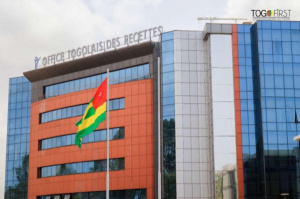
Togo expects its earnings from patent tax to rise by 92.4% in 2024, YoY. Also, the government expects an economic growth of 6.6%.
While Lomé bases its forecast for patent tax revenues on the 2022 and 2023 results, patent fees recorded no major changes in recent months.
By the end of September 2023, the Togolese Tax Office, Office Togolais des Recettes (OTR), had collected CFA12.5 billion, up 45% YoY and 5.5 billion more than expected for the year. In 2022, the tax office collected CFA8.62 billion from January to September, thus 2.6 billion more than its annual target.
Business was good in Togo last year. The government expects things to stay the same and even improve this year. Lomé counts on this momentum, and more efficient tax management, to earn more tax revenues.
Besides, the patent taxing rates were raised for some activities under the 2024 Finance Bill. These include the trade in second-hand vehicles.
Economic observers are cautious about the positive forecasts. They claim meeting the targets strongly depends on global economic conditions and the government's ability to maintain an environment that fosters business growth.
Fiacre E. Kakpo
Togo: Inclusive Finance Fund loaned nearly CFA110 billion over the past decade

Over the past decade, Togo’s Inclusive Finance Fund, the Fonds National de la Finance Inclusive (FNFI) disbursed CFA109.83 billion. The figure covers the period from April 2014 to January 2024. It was made public on January 5.
The loans were extended to around 1.8 million informal business owners. While they received the money through the FNFI’s 13 financing offers, the largest part was allocated via three offers: Accès des Pauvres aux Services Financiers (APSEF), Accès des Agriculteurs aux Services Financiers (AGRISEF) and Accès des Jeunes aux Services Financiers (AJSEF).
Through the APSEF, CFA38 billion (or 34% of all loans granted) were disbursed to fund businesses of vulnerable women and men. The AGRISEF financed small-scale farmers, providing CFA35 billion (32% of the total). The third offer, the AJSEF, backed young craftsmen and apprentices who completed their training. They received CFA16 billion.
The remaining CFA20 billion were granted via the FNFI’s other offers.
The loans were granted through the FNFI’s network of decentralized finance institutions (DFIs).
In regards to debt repayment, the loan recipients paid back 93.5% of what was borrowed over the decade concerned.
The FNFI was created in 2014 to help those who do not or cannot access traditional lending outlets. It does this by bolstering the financial and operational capacities of DFIs. To date, the Fund is in partnership with 21 DFIs.
Esaïe Edoh
Togo: Sokodé to host an art and culture festival next month

The city of Sokodé, located 341 km north of Lomé, will host an art and culture festival, the FACTEM, from February 14 to 18. The event is organized and sponsored by the Ministry of Culture and Tourism. It follows on from the traditional Adossa-Gadao festival, which opened on January 12, 2024.
The FACTEM will celebrate the Togolese culture and help local businesses grow. Thus its theme: “Promoting local product consumption: stakes, challenges, and strategies”. This year’s edition will be the first.
The FAIEJ and Ecobank also sponsor the fair, with many others.
According to Sokodé en Ligne, a local media, the FACTEM will feature exhibitions showcasing Sokodé's cultural riches, including handicrafts, traditional cuisine, and clothing. There will also be interactive workshops and lectures to introduce visitors to the various art and culture forms represented.
Ayi Renaud Dossavi
Hospitality: Togolese government raises VAT back to pre-Covid level as sector recovers

In Togo, the value-added tax in the hospitality sector is back to 18%. The tax had been reduced to 10% during the Covid crisis.
The government set the new tax rate in its 2024 finance bill. Lomé attributes the increase to a strong recovery of the hospitality sector between 2020 and 2022.
Over the period, Togo’s top 10 hotels recorded a turnover surge of 140% -from CFA7.1 billion in 2020 to CFA17 billion in 2022. The authorities attribute the burst to lifted health restrictions, which were introduced during the crisis. With the lifting, hotel activity returned to normalcy, and major events could be held in Lomé, the capital.
For example, the 2 Février, Togo’s top hotel, earned CFA8.7 billion in 2022, against CFA3.6 billion in 2020 (+69%).
The Sarakawa and Onomo hotels, among the country’s best, recorded similar growth.
Besides the growth, the government attributed its decision to raise the tax to its pre-Covid level to the need to re-balance public finances, which were drained amidst the pandemic. The move, they further claim, should ensure fair competition with other sectors, most of which are subjected to an 18% value-added tax.
Fiacre E. Kakpo
Maritime sector: Togo to set up a National Coast Guard Unit to better protect its waters

To better protect its maritime space, Togo recently examined and adopted a draft bill to set up a National Coast Guard Unit.
The task force will constantly monitor the country’s maritime space and better organize the State’s civil action at sea. It will also focus on improving coordination among administrations and cooperation with neighboring countries.
Last May, the country greenlit procedures that allow it to arrest and prosecute vessels and individuals involved in criminal acts at sea. They also support Togo’s actions against piracy and help it tackle new security challenges in the maritime sector.
After the 2016 maritime security summit, Togo stepped up its efforts to protect its waters. In July 2021, the country tried and sentenced nine people for acts of maritime piracy.
Esaïe Edoh