
Togo First
Togo: State-owned incubator Nunya Lab launches program to support MSMEs

Nunya Lab, the State-owned incubator, just launched a program to support local young entrepreneurs and MSMEs in line with the African Continental Free Trade Area (AfCFTA).
Only entrepreneurs and SMEs with an innovative service or product can enroll in the program.
The program will help the incubated validate their product or service, tackle marketing issues, be more competitive, and expand at the global level.
In the program's framework, Nunya Lab encourages the development of MVPs (Minimum Viable Products), simplified versions of products or services that enable their concept, core functionality, and appeal to potential users to be tested quickly.
The deadline for applying to the program is February 13, 2024.
Togo and 11 other African nations launch major pro-volunteering program
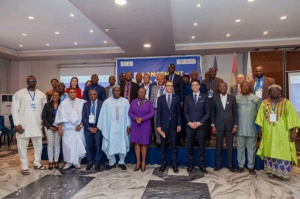
Togo and 11 other African countries just launched, on February 6, a program to foster volunteering across the continent. The program, known as the Development of National Volunteer Ecosystems in Africa (DENVA) was launched in Lomé, Togo.
The Togolese Volunteer Agency, ANVT, and France Volontaires designed the program. Besides facilitating volunteer movement across the 12 partner States, the program will help the volunteers acquire professional experience and contribute to projects that align with the 2030 sustainable development objectives, and in coherence with Agenda 2063.
The launch of this program is a step forward in the promotion of inter-country mobility for African national volunteers, according to ANVT.
"With the launch of the DENVA Program, we are taking another step forward in our commitment to sustainable development and international cooperation," said Omar Agbangba, Managing Director of ANVT.
“Ultimately, the DENVA aims to give rise to a world of mobility, north-south, south-north, south-south, that relies on shared values, compatible frames of reference and fosters dialogue between young people through cross-mobilities,” said Yann Delaunay, Managing Director of France Volontaires.
The DENVA will run for 24 months, focusing on the following areas: support for the deployment of new volunteers, professionalization of the commitment professions, strengthening cooperation between the countries concerned, and advocacy for greater recognition of the partnership.
The countries involved in the initiative are Benin, Cameroon, Chad, Côte d'Ivoire, Democratic Republic of Congo, Ghana, Guinea, Guinea Bissau, Mauritania, Republic of Congo, Senegal and Togo.
Esaïe Edoh
Togo: Government to dedicate CFA1.5 billion more to generic drug purchase
CAMEG Togo, the country’s body for generic drug purchases, will receive CFA1.5 billion from the government. The move, which aligns with Lomé’s Universal Healthcare project (AMU in French) was disclosed by the Minister of Health, Prof. Moustafa Mijiyawa.
The official claimed the additional financing would “broaden the CAMEG’s capacity to secure drugs.” He issued the statement last month, on a nationwide awareness tour on the Universal Healthcare project.
Investing in generic drugs aims to make it easier for people nationwide to get affordable but quality medicine.
For the CAMEG, this decision means it will play a major role in the AMU project. Also, the government has been discussing with other stakeholders to ensure the project’s success. These stakeholders include the National Institute for Health Insurance (INAM), the National Fund for Social Security (CNSS), insurance companies, medical agents, and more.
Ayi Renaud Dossavi
Ministry of Environment gets CFA19 billion provisional budget for 2024

Togo should spend CFA19 billion on local environmental protection projects this year. The figure, a provisional budget, was set under the 2024 finance bill.
Top officials from the Ministry of Environment held a meeting last week in Aneho (30 km East of the capital, Lomé) to discuss the budget and its management.
Participants reviewed the Ministry’s goals for the year and drew strategies to achieve them, in line with the government’s new Public Investment Program (PIP).
Among others, they committed to better communicating their actions, and to setting up a digital database to track existing projects. They also announced they would conduct feasibilities before launching any project.
Last but not least, the ministry will proceed to a mid-progress assessment of projects during the year.
Esaïe Edoh
Organization of American States: Togo joins as a Permanent Observer
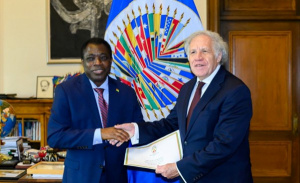
Togo recently joined the Organization of American States (OAS) as a Permanent Observer State. Frederic Hegbe, Togolese Ambassador to the U.S., presented the related credentials to the OAS Secretary General, Luis Almagro, on January 26, 2024.
I received credentials from Ambassador Frédéric Edem Hegbe, Permanent Observer of Togo to the OAS. We discussed Togo’s role as new Permanent Observer and its interest in strengthening ties with OAS Member States, with a particular focus on security and development. pic.twitter.com/8Phxrrx0VO
— Luis Almagro (@Almagro_OEA2015) January 26, 2024
During the meeting, the two diplomats discussed future cooperation between Togo and the OAS. They also identified this cooperation’s priority areas. Ambassador Hegbe then showcased Togo’s major economic sectors–agriculture, mining, and regional trade–and highlighted its advantageous geographic position relative to Sahel countries.
Commenting on the rising insecurity at the sub-regional and global levels, Frederic Hegbe underlined Togo's commitment to a regional and multilateral approach to military cooperation to tackle terrorism. "Our country is committed to a regional and multilateral approach to military cooperation, convinced that pooling our efforts is fundamental to stemming these two phenomena," he said.
In response, OAS Secretary General Luis Almagro said the Organization was proud to welcome Togo onboard as a Permanent Observer State.
Founded in 1948, the OAS covers diplomacy and cooperation in its 35 Member countries. The Organization focuses on tackling economic and social development issues. Thus, its programs aim to reduce poverty, improve education and public health, and foster trade and investment, while striving to resolve conflicts.
Togo joined the Organization to find new investment opportunities, among others. Driven by the same ambition, the West African country has undertaken similar moves with other international organizations in recent years.
Ayi Renaud Dossavi
Togo: Soccer Federation gets CFA3.6 billion budget for 2024, 12% more than in 2023
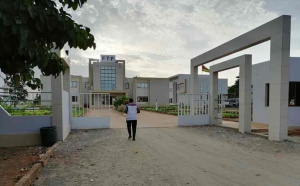
The Soccer Federation of Togo (Fédération Togolaise de Football, FTF) approved its budget for 2024 on February 2024. The budget amounts to CFA3.6 billion.
It is 12% more than the 2023 budget and 22% more than the 2022 budget. The past two budgets stood at CFA3.2 billion and CFA2.7 billion, respectively.
According to the Federation’s executive committee, the 2024 budget will help build sports infrastructure, such as stadiums in big towns.
Part of the money will also serve to organize competitions, such as national championships, youth competitions, and Beach soccer competitions.
The FTF also plans to invest in the training of Togo’s future football players and other stakeholders.
Esaïe Edoh
Universal Power Access: Togo allocates CFA57 billion to the Ministry of Energy for 2024
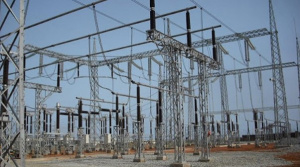
The Ministry of Energy of Togo has been allocated a provisional budget of CFA57 billion under the 2024 finance bill.
With the funds, the Ministry will accelerate existing projects aimed at achieving universal access to power in Togo. In detail, the money will finance the CIZO off-grid project, the PRAVOST (which is the social component of the CIZO), the Tinga project, and various mini-grid projects in rural areas. The financing should also help further expand Blitta’s solar plant and even start developing a PV plant in Sokodé.
According to the latest data, Togo's current electrification rate is 59%.
Esaïe Edoh
Togolese government gives Logistik Unicorp approval to build military clothing factory in Datcha
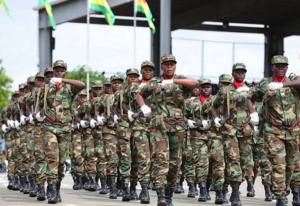
In Togo, the government allowed Canadian firm Logistik Unicorp to build a military and professional clothing factory in Datcha, in the Plateaux region.
The factory will cost the Northern American company $2.2 billion.
The project was first announced in 2019. The plant was supposed to be built at Adetikopé, in the Lomé area. Logistik Unicorp had even set up Logistik Unicorp - Afrique, its African subsidiary under Togolese law, but later dissolved it.
The project was re-launched after the creation of a new subsidiary, Benart Afrique, in August 2023.
The year before that, in January, the firm’s founder, Louis Bibeau, was in Togo. During his stay, he met with Prime Minister Victoire Dogbé and the two discussed the project.
"We're going to set up a factory to produce items... to produce clothing for the Togolese market, but also for neighboring countries. We'll be able to produce everything we offer our Canadian customers, whether it's military, police, or ministerial uniforms. We want to create this hub for local production like we do in Tunisia", Karine Bibeau, Vice President of Customer Experience at Logistik Unicorp, explained to Canadian media.
Logistik Unicorp sees this expansion as a gateway to the sub-Saharan market. The company is counting on the strategic position of the port of Lomé and its proximity to Nigeria, a potential market of over 230 million consumers, to extend its reach.
Fiacre E. Kakpo
Togo: Government set to bail out Union Togolaise de Banque on own funds
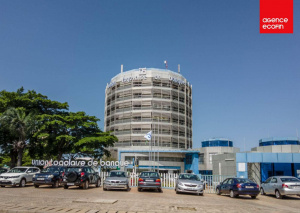
The government of Togo plans to bail out the Union Togolaise de Banque (UTB), a State-owned lender. According to the country’s 2024 finance bill, Lomé will invest CFA13 billion in the rescue mission.
Besides this investment, the government announced a CFA66.9 billion allocation to buy the bank’s branches. Lomé will use some of the money to buy back other infrastructure from UTB and IB Bank, another lender acquired by the State in 2021
UTB is Togo’s last fully-owned State-bank. The bank has been struggling for almost a decade. Its low equity capital kept investors at bay.
The bank’s ordeal is partly due to the composition of its loan portfolio. The latter is highly exposed (around a third of its total loans) to the government and industries that need revamping–notably, the cotton and phosphate industries. Also, the bank’s non-performing loans (NPLs) rate is substantial, which impairs its lending viability.
Between 2018 and 2020, the government hesitated between bailing out and privatizing the bank. The IMF preferred the second option, as it was concerned about the cost of the first for Lomé.
Finally, the government opted for a mix of both options. After some inquiring, Togo First found out that Lomé recently sealed a 42-month $400 million deal with the IMF to save the bank. This deal, however, should deepen the country’s budget deficit by 1.1% of its GDP.
Nevertheless, Lomé believes that the rescue mission will generate revenues in the short and medium terms. However, no details have been released on the amortization schedule for the investment so far. Still, the government is confident its move will consolidate the country's financial sector. A sentiment not shared by all.
It is worth noting that Sunu Bank and Coris Bank positioned themselves last year to take over the UTB. Sunu Bank, however, later withdrew. Coris Bank, according to our sources, is still open to the acquisition.
Fiacre E. Kakpo
PEPFAR: To date, Togo has received about $50M from the U.S. to better fight and treat AIDS
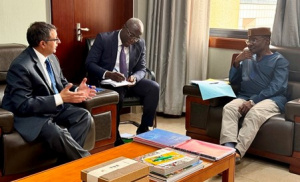
The U.S. has spent close to $50 million to fight and treat AIDS in Togo since 2019. The funds were provided through the U.S. President’s Emergency Plan for AIDS Relief (PEPFAR). To date, the American program has helped provide over 35,000 people with antiretrovirals, as well as improve the level of patient care and viral load suppression in Togo.
Dans cette vidéo, Dr Nirav Shah du @CDCgov salue les succès de la collaboration santé Togo-USA et annonce de nouveaux investissements. Célébrons et visons plus haut! #CDC #PMI @nirav_uscdc @PEPFAR pic.twitter.com/xluQ4gEFT5
— U.S. Embassy Togo (@USEmbassyLome) February 5, 2024
The data was shared last week on the sidelines of a visit to Lomé by Dr. Nirav Shah, Deputy Director of the U.S. Centers for Disease Control and Prevention (CDC). It was Dr. Shah’s first official trip to West Africa.
"I wanted to come to Togo especially to celebrate the public health successes that the US government and the Togolese government have achieved by working together," Shah said during his stay in Lomé.
In the Togolese capital, the U.S. official met with Togo’s Minister of Health, Pr. Moustafa Mijiyawa. They discussed the U.S.-Togo partnership and its prospects.
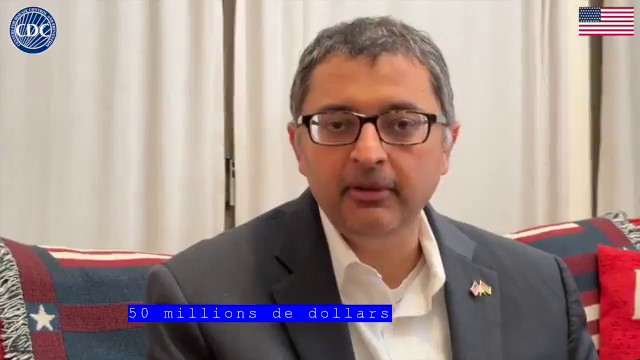
"We are very proud of the progress CDC has made in partnership with the government of Togo. We would also like to congratulate the government of Togo on the progress that has been made in eliminating four neglected tropical diseases (NTDs). This progress is so significant that the World Health Organization recently awarded Togo a bronze medal in recognition of its achievement," added Nirav Shah.
Indeed, the West African country has been recognized by the WHO for having eliminated four NTDs: Guinea worm in 2011, lymphatic filariasis in 2017 (the first country in Africa), Human African Trypanosomiasis (HAT) or sleeping sickness in 2020, and trachoma in 2022. This allowed Togo to secure over $22 million from the USAID.
Another major health area where the U.S. and Togo collaborate is the fight against malaria. Last year, Togo joined the U.S. President’s Malaria Initiative (PMI) and the West African country has received over $20 million in funding through the Initiative for the 2023-2024 period.
Ayi Renaud Dossavi