
Togo First
Datcha Picked to House Togo’s 3rd Public University
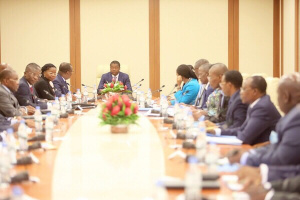
During its last Council of Ministers held on September 27, the Togolese government examined and adopted a decree to build a university in Datcha, Plateaux region (120km from Lomé). This is part of a bigger project to provide each of the five regions of the country with a public university.
The project aims to “improve the quality of higher education and provide training pathways with a vocational, technological, and scientific focus".
Why Datcha?
Datcha was picked for two key reasons, according to Christian Trimua, Minister, Secretary General. The first reason is that people living far from Lomé will no longer need to move to the capital, which means less costs for parents.
Trimua took the example of the University of Kara. "The University of Kara has shown its attractiveness also for those from Lomé who go to Kara regularly and enable a cultural exchange with other fellow citizens."
The second reason is that “its Geographic location strategically reduces costs and allows a teacher who has a weekday class in Lomé to travel to Datcha afterward and extend to Kara without having to make major detours.”
Once completed, the University of Datcha should be Togo’s third public university, after the University of Lomé, created in 1970, and the University of Kara, created in 2003.
Esaïe Edoh
COSO Project: CFA13.3 Billion Spent So Far to Fight Poverty in Northern Togo
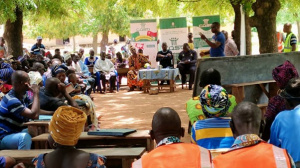
A total of CFA13.3 billion has been spent in northern Togo since June 2022, as part of the COSO social cohesion project. Backed by the World Bank, this project covers all northern regions of the Gulf of Guinea, with the goal of fighting poverty appropriately.
According to the National Agency for Grassroots Development (ANADEB), which steers the project in Togo, it has helped build 50 community facilities, including 43 PV-powered wells, five school buildings, and two community centers.
The agency revealed that more sub-projects were recently validated, including some in the Tone 3 municipal located in the Savanes region. On September 19, the Lotogou Cantonal Development Committee (CCD) held a meeting to decide on the priority infrastructure sub-projects to be carried out in Lotogou district. The whole district, which comprises 18 villages, will get CFA357 million to develop energy, education, agriculture, and social projects.
Meanwhile, CFA33 billion should go to 41 border districts–37 in the Savanes region, two in the Kara region, and two in the Central region.
Besides Togo, the COSO covers the northern part of Benin, Côte d'Ivoire, and Ghana. The project spans five years.
Ayi Renaud Dossavi
Togolese Government Adopts Bill for Administrative Procedure Code
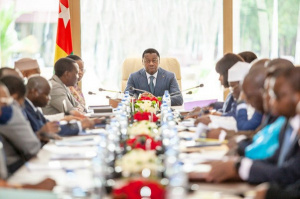
Togo should soon adopt an administrative procedure code. The project made headway at the last Council of Ministers meeting chaired by the Head of State, Faure Gnassingbé, on September 27, 2023.
The Council, last Wednesday, examined and adopted a draft bill on the administrative procedure code.
"Adopting this text is part of the dynamics of the justice modernization program initiated by the Head of State and contributes to the celerity and efficiency of the judicial system in accordance with the objectives of axis 1 and axis 3 of the government roadmap 2020- 2025", the government said.
The code aims to provide a framework and reinforce respect for citizens' rights in their interactions with the administration. It will provide a legal framework for controlling the legality of the acts of national administrations and local authorities. The document will be later submitted to deputies for consideration.
In 2019, Togo proceeded to judicial reorganization, which introduced administrative chambers within courts at all levels. The goal was to let the people have easier access to administrative justice.
China-Togo Trade Reached $2.3 Billion in January-July 2023
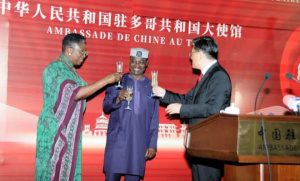
Trade between Togo and China stood at $2.3 billion from January to July 2023, up by 14% compared to the same period in 2022. This was revealed last Tuesday, September 26, by China’s Ambassador to Togo, Chao Weidong.
The Asian diplomat spoke during a reception in Lomé to celebrate the 74th anniversary of the founding of the People's Republic of China. The ceremony was attended by several Togolese officials, including Health Minister Moustafa Mijiyawa, Communication and Media Minister Yawa Kouigan, and former Prime Minister Komi Selom Klassou.
Ambassador Weidong attributed the trade rebound to “more and more Chinese entrepreneurs coming to Togo seeking business opportunities”. Stressing that it was a two-way dynamic, he added that many Togolese entrepreneurs also “went to China to improve cooperation and promote commerce.”
In 2020, when the Covid pandemic broke out, trade between Togo and China dwindled significantly, slightly exceeding CFA2 billion. Since the global economy started recovering, however, the situation has been improving.
Fiacre E. Kakpo
Togo scales down growth forecast from 6.6% to 6.4% for 2023
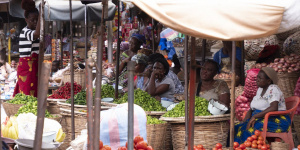
Togo has revised its growth forecast for 2023 to 6.4%, compared with the 6.6% initially anticipated. Sani Yaya, Minister of Economy and Finance, disclosed the new prospect on September 27th.
In contrast with the downscaled growth, the government expects an improvement in its budget deficit, from 8.3% in 2022 to 6.6% this year. “But achieving these results requires overcoming some challenges linked to tighter financing conditions,” emphasized Minister Yaya.
Port and airport activities on the rise
During Q1 2023, activities at the port and airport of Togo improved, driving up trade flows and consolidating receivables from the economy.
Regarding trade, exports rose by CFA52.3 billion year-on-year compared with the first quarter of 2022, while imports shot up by CFA84.9 billion. This did not help the country's trade balance, still in deficit vis-à-vis the rest of the world.
Falling inflation
The inflation rate in Togo slumped from 7.8% at the end of June 2022 to 6.3% at the end of June 2023, a situation attributable to "measures taken by the government to combat high living costs."
There are plans to revise the state budget for this year, with a rectifying finance bill, to respond to state pressures and priorities. For now, Lomé said it wants to "bolster means to fight terrorism" and "keep implementing development policies in line with the priorities of the government's 2020-2025 roadmap."
It is worth noting that Togo had initially adopted a budget of CFA1,950 billion for 2023.
Ayi Renaud Dossavi
Port of Lomé Jumps Two Spots, to 94th Position in Lloyd’s Top 100 Busiest Ports Index
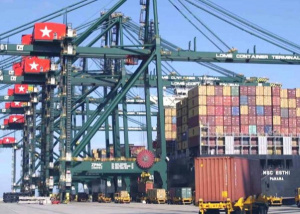
The port of Lomé (PAL) has, again, been ranked in Lloyd’s Top 100 World’s Busiest Ports List, in terms of container traffic. The port ranked 94th, against 96th in 2022. It is the third consecutive year the port has been featured in the index.
Container traffic at the PAL stood at 1.8 million TEUs in 2022, down from 1.9 million TEUs (-6.5%) in 2021. Despite the drop, the infrastructure gained two places on Lloyd’s list.
"There has been a significant drop in traffic for calendar year 2022, but the port of Lomé still holds on to its crown as West African leader. Throughput has fallen back to 1.8 million TEUs from almost 2 million TEUs the previous year. But unfortunately, the other ports evaluated in this ranking led Lomé to climb to a new high of 94th," the ranking's authors noted.
The Togolese port was the only West African port featured in the top 100. Besides the PAL, only three other African ports were featured, namely Morocco’s Tanger Med port, Egypt’s Said port, and South Africa’s Durban port. They respectively ranked 24th (in the world and first in Africa), 48th (2nd in Africa), and 79th (3rd in Africa). The PAL was 94th worldwide, 4th in Africa, and 1st in West Africa.
The several reforms undertaken by the Togolese government, notably to improve costs and streamline procedures in the port area, could explain how the PAL remained in the index, which is otherwise dominated by Chinese ports.
Another factor for the PAL’s performance could be the acquisition of modern handling equipment. For example, the Lomé Container Terminal (LCT) recently acquired two mobile cranes and 10 container trucks to increase its capacity. “The LCT has progressively increased its capacity and continued to equip its terminal to handle the largest ships transiting the region, thus setting itself apart from its regional competitors who have had difficulty keeping pace with the Port of Lomé's development and handling capacities,” authors of LLoyd’s index indicated.
Esaïe Edoh
World Bank Backs Togo’s Government Roadmap and Food Security with Two New Financings, Totaling $170M
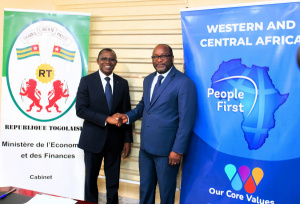
Togo just received new support from the World Bank, through the International Development Association (IDA). The country sealed the deal–a double financing agreement–on September 26, in Lomé. The first financing supports a program fostering sustainable and inclusive development policies, and the second is an additional financing for the West African Food System Resilience Program (FSRP).
Both agreements were inked by Sani Yaya, Togo’s Minister of Economy and Finance, and Fily Sissoko, the World Bank’s Resident Representative. They are worth $150 million (CFA92 billion) and $20 million (CFA12 billion), respectively.
Supporting the Government's Roadmap and Accompanying Key Programs
Approved on September 1, 2023, the first facility supports the government's five-year roadmap for more sustainable and inclusive development, while providing adequate financing for key programs. The package will specifically help stimulate the rural economy, modernize agriculture, improve human capital, and rebuild budgetary space.
"The reform program is strong, and the government has shown strong commitment to its implementation, which is reflected in the increase in this financing representing over 35% of the IDA allocation," said Fily Sissoko. He added that the Bank is currently preparing another financing focusing on an "ambitious reform program." This facility "should be finalized in the next 12 months," according to Sissoko.
Intensifying Government's Response to Food and Nutritional Security Issues
The second facility, of $20 million, is an additional financing for the Food System Resilience Program in West Africa (FSRP) launched two years ago by the World Bank. According to Minister Sani Yaya, the funds will help Lomé enhance short-term food supply and better tackle issues like climate change.
Also, the financing will help bolster Togo’s information system, provide households with improved livestock breeds, enhance animal health, and the use of organic inputs, and support vegetable chains and high nutritional value products, among others.
"These two facilities reflect the excellent relations between Togo and the World Bank," said the Minister of Economy. He then reiterated the government’s commitment to "continue its reforms, despite the triple shock of health, inflation, and security" the country currently faces.
Agence Ecofin Keeps Faure Gnassingbé and Kako Nubukpo in its Top 50 Most Trusted African Personnalities List
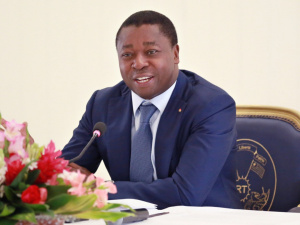
The Agence Ecofin released the second edition of its Top 50 Most Trusted African Personalities ranking on September 26. In this edition, like in the previous one, the Togolese President Faure Gnassingbé and the Togolese economist, Kako Nubukpo, are featured in the ranking.
Gnassingbé and Nubukpo ranked 49th and 37th, respectively, thus losing 4 and 7 places compared to 2022 (they were 45th and 30th).
A morphing List
The survey panel is made up of Agence Ecofin's 88,000 subscribers, and this edition received 684 valid votes. Ten new names were added to the list from the first edition last February, allowing for a partial renewal.
"We drew up the list of 50 personalities from the first Ecofin Barometer conducted in February 2023, adding 10 alternative names. We then invited our 88,000 subscribers to select the 5 personalities they trust most from these 60. The selection was based on the responses of 684 voters. Multiple votes were eliminated," wrote Agence Ecofin.
Key Actors
The top three most trusted personalities on the ranking are Senegalese writer Fatou Diome (3rd), Cameroonian Journalist, Alain Foka (2nd), and Aliko Dangote (1st). Diome gained seven places compared to the previous edition. The fourth most trusted personality is Tidjane Thiam, whose influence grows with the coming presidential elections in Côte d’Ivoire in 2025.
Youssou N’dour, meanwhile, lost 19 places, falling to the 38th position. It would seem that leaving Senegal’s ruling party cost N’dour, in terms of trust.
ECOFIN TRUST INDEX
September 2023
| 1 | Aliko Dangote | = |
| 2 | Alain Foka | = |
| 3 | Fatou Diome | +7 |
| 4 | Tidjane Thiam | +3 |
| 5 | Assimi Goïta | -1 |
| 6 | Paul Kagame | -1 |
| 7 | Tony Elumelu | +4 |
| 8 | Sadio Mane | -5 |
| 9 | Nathalie Yamb | +4 |
| 10 | Samuel Eto’o | -4 |
| 11 | Ousmane Sonko | +6 |
| 12 | Akinwumi Adesina | +3 |
| 13 | Paul Fokam | -5 |
| 14 | Laurent Gbagbo | +8 |
| 15 | Mo Ibrahim | -6 |
| 16 | Denis Mukwege | -4 |
| 17 | Didier Drogba | -3 |
| 18 | Alassane Ouattara | -2 |
| 19 | Mohammed VI | +5 |
| 20 | Francis Ngannou | +1 |
| 21 | Vincent Aboubakar | +2 |
| 22 | Alpha Blondy | -2 |
| 23 | Rebecca Enonchong | +15 |
| 24 | Angélique Kidjo | -6 |
| 25 | Elon Musk | +7 |
| 26 | Stanislas Zeze | new. |
| 27 | Aminata Touré | +8 |
| 28 | Macky Sall | -2 |
| 29 | Ngozi Okonjo-Iweala | +14 |
| 30 | George Weah | +18 |
| 31 | Paul Biya | = |
| 32 | Mamane | -7 |
| 33 | Salif Traoré (A’Salfo) | +4 |
| 34 | Lionel Zinsou | +5 |
| 35 | Patrice Talon | -7 |
| 36 | Mohamed Bazoum | new. |
| 37 | Kako Nubukpo | -7 |
| 38 | Youssou N’Dour | -19 |
| 39 | Makhtar Diop | +5 |
| 40 | Idrissa Nassa | +2 |
| 41 | Lupita Nyong'o | = |
| 42 | Ons Jabeur | new. |
| 43 | Claudy Siar | -10 |
| 44 | Nana Akufo-Addo | +2 |
| 45 | Kamel Daoud | +5 |
| 46 | Michel Gohou | -12 |
| 47 | William Ruto | new. |
| 48 | Charles Blé Goudé | +1 |
| 49 | Faure Gnassingbé | -4 |
| 50 | Walid Regragui | -14 |
Kennedy Round: Togo to Get 3,500 Tons of Rice from Japan Next December
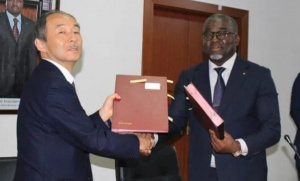
Japan just donated a billion CFA (250 million yen) to Togo, under the Kennedy Round (KR) food aid project. The funds will be used to buy 3,600 tons of rice, according to the agreement inked on September 25, in Lomé, by the Japanese Ambassador to Togo, Ikkatai Katsuya, and the Togolese Minister of Agriculture, Antoine Gbégbéni.
The rice, which will arrive next December, will be sold at “a reasonable cost” and returns from its sale will be pooled into a counterpart fund that will finance various socio-economic development projects in areas including agriculture and education.
"The importance of this food aid from KR projects in the economic, social, and food life of our populations no longer needs to be demonstrated. That's why, once again, we want to welcome the continuation of this food aid, and especially the strengthening of this program," said Antoine Gbégbéni, the Minister of Agriculture.
The Togolese official added that funds collected from Kennedy Round (KR) 2018, 2019, and 2020, will serve to accelerate agricultural mechanization in the country.
Between 2008 and 2022, Togo benefited from thirteen KR projects, totaling around CFA20 billion for a total volume of 100,551 tonnes of cereals.
Esaïe Edoh
From Lomé, MSC Interconnects African Countries, General Manager Says
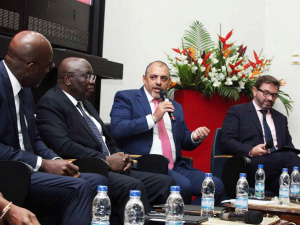
Gregory Krief, General Manager of MSC (Mediterranean Shipping Company), attended the Choiseul Africa seminar in Abidjan on September 14. On the occasion, he expanded on how the company contributes to the development of Africa's maritime sector, through its activities at the Port Autonome de Lomé.
In the panel entitled: "Sustainable Value Chains in Africa: Strategy, Industry, Finance," Krief noted that MSC plays a major role in connecting African countries among themselves, on the one hand, and to the rest of the world, on the other. The Swiss-Italian giant attributes this position to its presence at the Port of Lomé.
"As one of the few players to interconnect Africa through the Port of Lomé, we perceive this position as a unique opportunity. We can leverage our commitments to sustainability to improve delivery times, enabling our customers to receive their goods faster by supporting the development of national economies," said Gregory Krief during his speech.
Indeed, after closing the acquisition of Bolloré Africa Logistics at the end of 2022, MSC unveiled its ambition to strengthen its presence in Africa from Lomé. An ambition that is already taking shape, according to Gregory Krief, who added that "a dematerialization of processes between sea, land, and customer combined with collaboration with partners and relevant administrations will help shape a more sustainable future for Africa and for the planet."
The Choiseul Africa seminar is a regular event organized by the Institut Choiseul in partnership with the Confédération générale des entreprises de Côte d'Ivoire (CGECI). This year, it attracted over 200 participants, according to the organizers.
Esaïe Edoh