

Togo First
Togo is a Peaceful Country and Opposes All Wars (Robert Dussey)
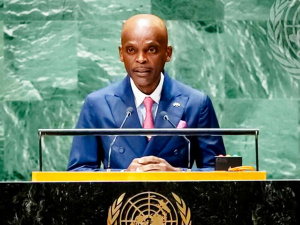
Speaking last Thursday at the podium of the 78th United Nations General Assembly, Togo's Minister of Foreign Affairs, Robert Dussey, addressed the issues of terrorism, climate change, socio-political crises, and political transitions in Africa.
The Togolese diplomat noted that leaders' commitments are not sufficient to meet the world’s current challenges. This lack has pushed the world into a sick state that “calls for a level of responsibility as high as the United Nations'.”
In this sick world, Africa, Dussey noted, is in a state of vulnerability “caused by low levels of development, large-scale health crises, the impacts of climate change, and disrupted global food supply chains.”
The diplomat stressed that Africa's peace and stability are threatened by cybercriminals and disinformation, recurring armed conflicts and war news, and the spread of international terrorism.
Investing in peace
Amidst all the turmoil, West Africa is particularly volatile, with several countries under transitional regimes. Regarding the security situation in this region, Robert Dussey urged world leaders to "invest more in peace" rather than war.
On this subject, the diplomat recalls that "Togo is a country of peace and Togo opposes war, whatever its reasons." "Since our independence on April 27, 1960: Togo has never waged war on its neighbors. Never has Togo aggressed its neighbors or any country. Never has Togo served as a rear base for any aggression against a brother country," he clarified.
Togo, Dussey indicated, is a good example of this investment in peace. Notably, he recalled President Gnassingbé’s involvement in resolving the crisis between the governments of Côte d'Ivoire and Mali over the case of the 49 Ivorian soldiers, and in the war in Sudan through a consultative dialogue and consultation between the political and military leaders of Darfur last July in Lomé.
Gnassingbé’s country, indeed, has taken several steps to preserve peace on the continent. One of these steps, Dussey mentioned, includes the "Lomé Peace and Security Forum" scheduled for October 21 and 22 in the Togolese capital. He also talked about the 9th Pan-African Congress scheduled for Lomé in 2024.
Another initiative is the African Political Alliance (APA) created last May, by Togo and other countries.
Reforming the Security Council
Regarding the world's socio-political situation, Togo believes that the United Nations Security Council needs reforming. For Lomé, Africa can no longer remain on the sidelines of the body responsible for ensuring international peace and security.
"The Security Council can no longer remain a mere affair of the victors and their allies of the Second World War. Nothing can any longer justify maintaining the status quo. The ideological and institutional structuring of the post-war world is now obsolete. This is a new era in Africa and the Global South's relations with the world, and Africa no longer intends to remain in the shadow of any great power in the new dynamic," said Robert Dussey.
He argued that Western and other powers need to change their attitude and approach in their relations with Africa. "Africa needs a partnership that respects the strict dignity of each individual. We want to be your partners, not your subjects. We want to serve our people, not foreign interests," the Togolese Minister hammered.
Esaïe Edoh
Togo: Agence Universitaire de la Francophonie (AUF) Eager to Support Employability Policy for College Graduates
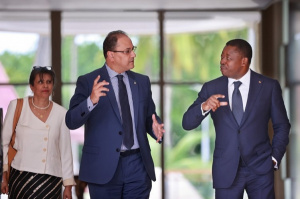
The Agence Universitaire de la Francophonie (AUF) recently announced that it will support Togo’s employability policy for college graduates. This is an “eminently important project”, according to AUF’s chancellor, Slim Khalbous who met in Lomé with Togolese President, Faure Gnassingbé, on September 19.
"This is an eminently important project because it concerns the development of our countries through research. The President of the Republic, Faure Essozimna Gnassingbé, has supported this project, which enables us to improve all our vital sectors such as agriculture, medicine, and education," said Khalbous just after his audience with Gnassingbé.
Concretely, supporting Togo’s employability policy for college graduates means helping them secure decent jobs, through additional training, leading to professional certification in the French-speaking employability centers of public universities.
The AUF regroups more than 1,000 universities, ivy-league schools, university networks, and scientific research centers, through French.
Cement: HeidelbergCement Denies Rumors of Price Hike
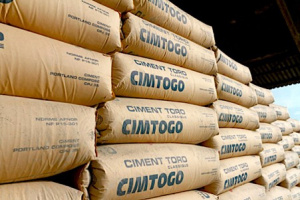
A ton of Cimtogo cement currently costs CFA81,000. The price cap was announced on September 20 by HeidelbergCement which makes the product.
The firm made the public announcement to end price hike rumors that went viral online. In its statement, HeidelbergCement said it did, indeed, "re-adjust its pricing structure" on September 18, 2023, but the new prices do not exceed the limit set by the government.
Since October 2021, the government, via the Ministry of Trade and local consumption, capped the ton price of cement at CFA81,000, or CFA4,050 per 50kg-bag. The move tackles the recent speculations on cement prices across the country.
Esaïe Edoh
US Announces New Humanitarian Aid Financing for Many African Countries, Including Togo
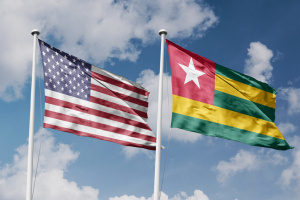
The US announced new funding of over $247 million (CFA152 billion) for humanitarian aid across many African countries, including Togo. The USAID made the announcement on September 19, 2023.
Recipient countries include Burkina Faso, Cameroon, Central African Republic, Chad, Djibouti, Mozambique, Niger, Nigeria, Togo and Zimbabwe, as well as the central Sahel.
The package is “for urgent humanitarian assistance to help people across Africa cope with the impacts of protracted humanitarian crises and natural disasters.”
The funds will support “humanitarian partners providing lifesaving food assistance, emergency health care, safe drinking water and sanitation, and protection for vulnerable people, including children, survivors of gender-based violence, and people with disabilities."
Ayi Renaud Dossavi
Togo-Germany: President Gnassingbé Meets New German Ambassador
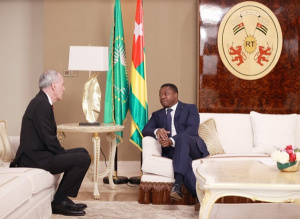
President Faure Gnassingbé gave two days ago an audience to Germany’s new ambassador to his country, Dr. Claudius Fischbach. During the meeting, the diplomat presented the leader with his credentials. He also made known his commitment to enhancing cooperation between Togo and Germany.
"Germany and Togo are bound by a shared history. I am committed to strengthening this old cooperation to realize the ambitions of the people and the government of Togo," said Fischbach.
Germany has been helping Togo implement various projects falling under its 2025 Government Roadmap. This cooperation is also subject to optimal monitoring, through biannual periodic consultations, alternately in Germany and Togo.
Through the GIZ and KfW, respectively its operational and financial cooperation arms, Germany supports Togo in four key areas: sustainable economic development and vocational training, agro-industrial transformation, decentralization and good financial governance, as well as strengthening the healthcare system.
Togo: Tax Authority Announces 30% Cut on Clearance Fees for Some Vehicles
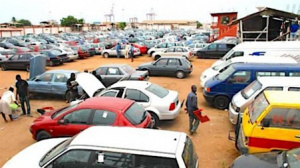
Togo’s Tax Authority, L’Office Togolais des Recettes (OTR), has announced a 30% reduction in customs clearance fees for vehicles over five years old. The measure is valid for the period going from September 20 to December 20 of this year.
According to the tax authorities, this relief applies to vehicles over five years old that are still in bond. The measure is designed to relieve fleet congestion and spur new orders at the end of the year.
The 30% depreciation, the OTR stressed, is in line with the provisions of the National Customs Code.
For some years now, this rebate has been applied in the last quarter of the year. In 2021, this relaxation went up to 40% to support taxpayers "in these times of Covid-19 pandemic", according to the OTR.
Esaïe Edoh
CIZO Program: Over 130,000 Solar Kits Distributed at June 2023
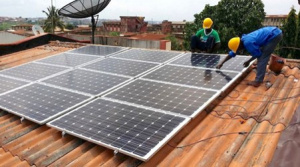
From its launch in 2017 to 30 June 2023, the CIZO rural electrification program has provided 134,431 solar kits to households in Togo. This was recently disclosed by the Togolese authorities.
The kits help recipients meet their basic power needs (lighting, phone charging, radio powering) and also in their farming activities, such as watering.
Pay As You Go is the payment system adopted for purchasing the kits. Concretely, the buyers can purchase the kits in installments and via Mobile Money.
The CIZO program aims to help Togolese households, in rural parts of the country in particular, easily access electricity. The program’s goal is to provide cheap solar kits to over 2 million citizens (200,000 households) by 2025.
Operators engaged in the project include BBOXX-EDF, Solergie, Sun King, Moon, and Fenix Intl.
Esaïe Edoh
Togo-Turkey: Trade Volume Nears $200 Million in 2022
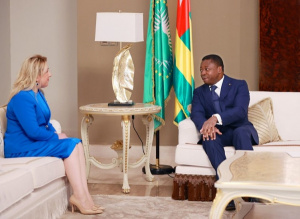
Trade between Togo and Turkey reached nearly $200 million last year. Muteber Kılıç, the new Turkish ambassador to Togo, disclosed the figure on September 19, 2023, in an audience with President Faure Gnassingbe, in Lomé.
During the meeting, the new ambassador presented the Togolese leader with her credentials. “The volume of trade was about $128 million in 2021, and it increased to nearly $200 million by the end of last year. There is significant potential that we could further develop,” Muteber Kılıç said after the meeting.
The increase in trade is attributable to efforts made by both sides. In 2020, for example, they signed many agreements and memoranda of understanding, focusing on setting up a political consultation mechanism between their foreign ministries, a reciprocal visa exemption agreement for holders of official passports, and a memorandum of understanding relating to cooperation between the Togolese Ministry of Foreign Affairs and the Diplomatic Academy of the Republic of Turkey.
“Turkey and Africa have developed their relations in recent years in all areas, and Togo, of course, holds a special place in these relations. The balance is positive, but we could do more. We discussed strengthening bilateral cooperation, and I am ready to do everything necessary to develop our relations with Togo,” Ambassador Kılıç added.
In October 2021, Turkish President Recep Tayyip Erdogan made his first official visit to Togo, in line with the two nations’ ambitions for a stronger partnership.
Ayi Renaud Dossavi
Togo: Inflation Falls to 6.6% in August

After rising consecutively since April, the inflation rate in Togo fell slightly to 6.6% in August. This was recently disclosed by the country’s Institute for Statistics, Demographic and Economic Studies (INSEED).
The source mainly attributes the decrease to a decline in indices across various consumption sectors. Notably, there were declines in "Food and non-alcoholic beverages" (-5.3%), "Housing, water, gas, electricity, and other fuels" (-1.0%), "Transport" (-0.3%), and "Alcoholic beverages, tobacco, and narcotics" (-2.7%).
More specifically, there was a significant decrease in the costs of food products like tubers, vegetables, fish, and various staples.
Excluding food products, prices nationally saw a marginal drop of 0.2%. Core inflation, which excludes energy and fresh products, also dropped by 0.3%.
The inflation rate, calculated based on the average indices of the last twelve months on a national scale, stood at 6.6% in August 2023. Excluding food products, the general price level saw a 0.2% decrease nationally. The core inflation, which measures monthly price index variations excluding energy and fresh products, declined by 0.3%.
Despite price pressures improving between July and August, compared to the same period in 2022, the general price level was up by 3.8%; a surge attributable to a general rise in costs in the post-Covid period.
Ayi Renaud Dossavi
Eight Togolese Entrepreneurs Among Laureates of the 3rd Edition of "L’Afrik de Demain" Awards

The "Océan’s News" magazine announced the winners of its third edition of the "L’Afrik de Demain" program. Eight young Togolese entrepreneurs stood out among the 20 laureates revealed on September 14.
The eight chosen, all under the age of 35, come from diverse sectors such as agro-industry, technology, fashion, and design. They were picked because their projects, according to the jury, met significant social challenges.
Under the program, the laureates will benefit from increased visibility, offered by "Océan’s News" and its media partners. "This media exposure will assist the winners in establishing their online presence, thereby strengthening their credibility on the international stage," said the organizers.
In addition to this visibility, the winners will have access to a comprehensive training program that will cover essential aspects of their businesses' growth, including communication, digital marketing, financial management, and business management.
This year, 275 entrepreneurs from eight African countries applied. The countries are Togo, Cameroon, Benin, Ivory Coast, Senegal, Niger, Madagascar, and Cape Verde.
The "L’Afrik De Demain" program aims to boost the skills of young African entrepreneurs while improving their online presence and visibility, enabling them to grow their communities and solve crucial issues these communities face.
Esaïe Edoh