

Togo First
Grain: Togo maintained an upward dynamic with an output of 1.433 million Mt in 2022
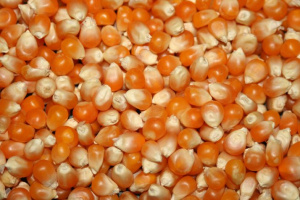
Togo produced more grains last year than the year before, 2% more to be exact, thus sustaining the sector’s growth dynamic that started in 2018.
Indeed, recent data from the Central Bank of West African States (BCEAO) puts the country’s grain output in 2022-2023 at 1.433 million metric tons, against 1.404 million metric tons in 2021-2022.
In 2018, 2019, and 2020, respectively, Togo produced 1.19 million Mt, 1.26 million Mt, and 1.35 million Mt of grains according to the BCEAO.
In 2021, the production of corn, the most consumed cereal in the country, stood at 929,000 tons (up by 4.5% YoY), while the production of paddy rice and millet-sorghum stood at 165,50 tons (+3.5%) and 304,600 tons (down by 2,000 t).
Ayi Renaud Dossavi
Togo eyes CFA30 billion in its first issue of the year on the UEMOA market
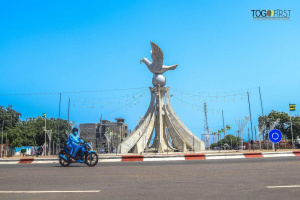
For its first issue on the UEMOA market this year, which will close on January 13, Togo will seek CFA30 billion.
The corresponding operation is a simultaneous issue of fungible treasury bonds. The securities have a nominal value of CFA10,000, respective maturities of 3 and 7 years, and interest rates of 5.3% and 5.9%.
According to the terms and conditions of the issue, the operation’s proceeds should allow Togo to finance its annual budget; the latter stands at CFA1,957 billion (revenues and expenditures).
Last year, Lomé raised CFA473 billion on the same market, against a forecast of CFA663 billion under the amending finance law 2022. This year, the country plans to raise CFA574 billion on the UEMOA market to finance its budget.
Esaïe Edoh
India, Burkina Faso, and Côte d’Ivoire were Togo’s top three buyers in Q3 2022 (INSEED)
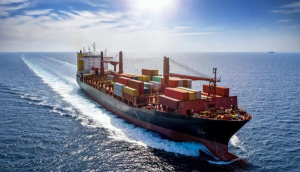
India was Togo’s biggest buyer in Q3 2022. The Asian giant absorbed nearly a fifth (19.4%) of the West African country’s exports over that quarter, according to data from the Togolese Institute of Statistics, Economic and Demographic Studies (INSEED).
Togo exported 161,050 tons of goods to India in the third quarter of 2022, with an estimated value of CFA27.38 billion.
Behind India came Burkina Faso and Côte d’Ivoire, respectively Togo’s second and third most important export destinations. The former captured 12.9% of the country’s exports, according to the INSEED. The latter captured 11.5% or around 15,300 t (valued at CFA16.5 billion).
With 165,000 t of goods imported from its neighbor, Benin was fourth in the ranking. The volume corresponds to 9.6% of Togo’s total exports in Q3 2022 and is valued at CFA18.3 billion. A little behind came France (7.7%), Mali (6.5%), Ghana (5.1%), and Senegal (4.6%).
The world’s biggest importer, China, was absent from the ranking–A situation attributable to its “Zero Covid Policy” in line with which the economic powerhouse has been limiting its port activities and international trade.
It should be emphasized that Togo’s top 10 buyers purchased 80.8% of its exports, in terms of value, during the quarter concerned. Overall, these exports were valued at CFA140.8 billion over the period; that is 4.3% down year-on-year.
Ayi Renaud Dossavi
Renewables: Togo and three other West African countries get $311M financing from the World Bank
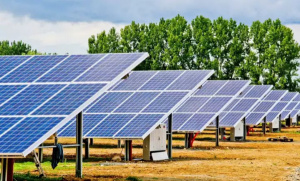
Togo, Chad, Liberia, and Sierra Leone will receive $311 million from the World Bank as part of the Regional Emergency Solar Power Intervention Project (RESPITE). The latter was approved on December 20, 2022, by the Bank’s fund for the poorest, the International Development Association (IDA).
The RESPITE aims mainly to “rapidly increase grid-connected renewable energy capacity and strengthen regional integration in the participating countries,” according to the World Bank. Also, part of the financing, a $20 million grant, will “help facilitate future regional power trade and strengthen the institutional and technical capacities of the West Africa Power Pool (WAPP).” The latter is a network that regroups 14 of the 15 Ecowas countries and whose construction should be completed this year.
Moreover, the project “will finance the installation and operation of approximately 106 megawatts of solar photovoltaic with battery energy”, and expand by 41 megawatts the hydroelectric capacity of the four recipient countries.
“Solutions supported by the new project are manyfold and have substantial benefits for the countries and the region. Among others, it will provide fiscal space for countries to address food crisis resulting from the war in Ukraine, initiate development of competitively tendered grid-connected clean energy to alleviate current power supply crisis, positively address climate change by helping countries to move away from expensive and polluting fuels, and help synchronize the WAPP network to enhance regional integration in the energy sector,” said Rhonda Jordan-Antoine, World Bank Task Team Leader of the project.
Ayi Renaud Dossavi
Togo will try to raise CFA557 billion on the WAEMU market this year
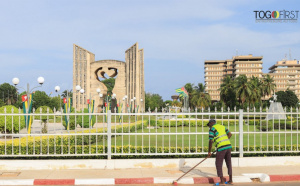
This year, Togo intends to borrow CFA557 billion from the regional money market to finance its annual budget (of about CFA2,000 billion).
This is less than the amount expected in the 2022 rectifying finance bill, knowingly CFA663 billion.
Also, data from the UMOA-securities agency indicates that Togo, last year, raised 473 billion from regional investors, thus 71% of its annual target.
Compared to 2021 when the country raised 557 billion, the amount raised in 2022 was down by 17%, and by about 32% compared to 2020 (623 billion).
Esaïe Edoh
Togo: New press code set to come into effect on January 7

Togo’s new press code will come into force on January 7, 2023. It was adopted in 2020 but its implementation was delayed to give press actors enough time to adapt to the changes it brings.
These changes include, notably, the conditions to be recognized as a journalist in Togo, the creation of "press companies" instead of "organs" of the press, the decriminalization of press offenses, and the rights and duties of journalists.
According to the new code, a journalist, to be recognized as such, must either hold a professional diploma in journalism issued by a State-accreditated journalism college or training institute; or have at least a bachelor's degree or an equivalent diploma recognized by the State with a minimum professional experience of three years, or five years (for those without a bachelor), working as a journalist in a media company.
The code also bars communication officers, public relations officers, or anyone in a similar position, from working as a journalist. It also enshrines the principle of state support for the press and creates a fund to support the press sector.
Let it be recalled that in October 2022, the Togolese government signed with representatives of the private sector (leaders of trade unions and employers' organizations of the private press in Togo), a collective agreement for journalists and media professionals in Togo. The move which ended years of negotiations started after the general states of the press, in 2014, was a major milestone in updating of Togo’s press regulatory framework.
Ayi Renaud Dossavi
Togo: Minimum wage raised after staying unchanged for 10 years
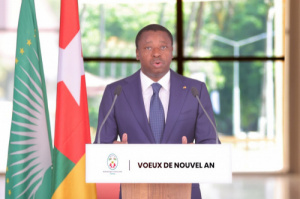
The Togolese government and its social partners (central trade unions and professional employers' organizations) recently agreed to raise the country’s minimum wage to CFA52,500 from CFA35,000 (since 2012).
Announced last Friday, the change came into effect on January 1, 2023.
In his end-of-year address to the Nation, President Faure Gnassingbé welcomed the change saying: "I would like to congratulate the social partners who were able to reach an agreement to raise the guaranteed minimum wage."
Besides raising the minimum wage, the social actors committed to keeping working "together for the continuous improvement of the overall working conditions of employees, and particularly the purchasing power of workers and households.”
The increase is the latest of a battery of social measures that the government has undertaken in recent months, to mitigate the impact of high living costs and rising inflation on the Togolese economy.
While the decision to raise the minimum standard is a major improvement, implementing it, in all socio-professional strata, the informal sector especially, is another issue.
Invesment promotion: Togo approved 24 new projects in Q3 2022

A total of 24 new investment projects were approved in Togo in Q3 2022. Valued at CFA107.1 billion, according to the Ministry of Investment Promotion, these include 10 projects approved under the Free Zone regime and 14 under the Investment Code. All of them should generate 2,000 permanent local jobs.
Regarding investment sources, there are 14 foreign direct investment (FDI) projects, valued at CFA82 billion. Out of the 14, three, valued at CFA15.3 billion, will be developed at the Industrial Platform of Adetikope (PIA).
The remaining 10 projects are national investments totaling CFA25.2 billion.
In 2021, 38 new projects, valued at CFA277.2 billion, were approved under the Free Zone regime and the Investment Code.
Recently, the ministry of investment promotion announced it would reinforce its partnership with Togolese embassies abroad, in hope of securing more investments.
Ayi Renaud Dossavi
Kennedy Round: Togo gets a new rice shipment from Japan, its third this year
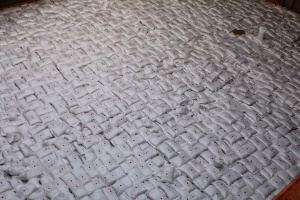
Togo received last Monday, another white rice shipment from Japan, the third this year, as part of the 2021 Kennedy Round (KR). This shipment (2,748 tons) is worth about CFA1.7 billion (350 million yen).
A delegation from the Togolese ministry of agriculture, led by Konlani Dindiogue, head of the ministry’s cabinet, received the shipment at the Autonomous Port of Lomé (PAL).
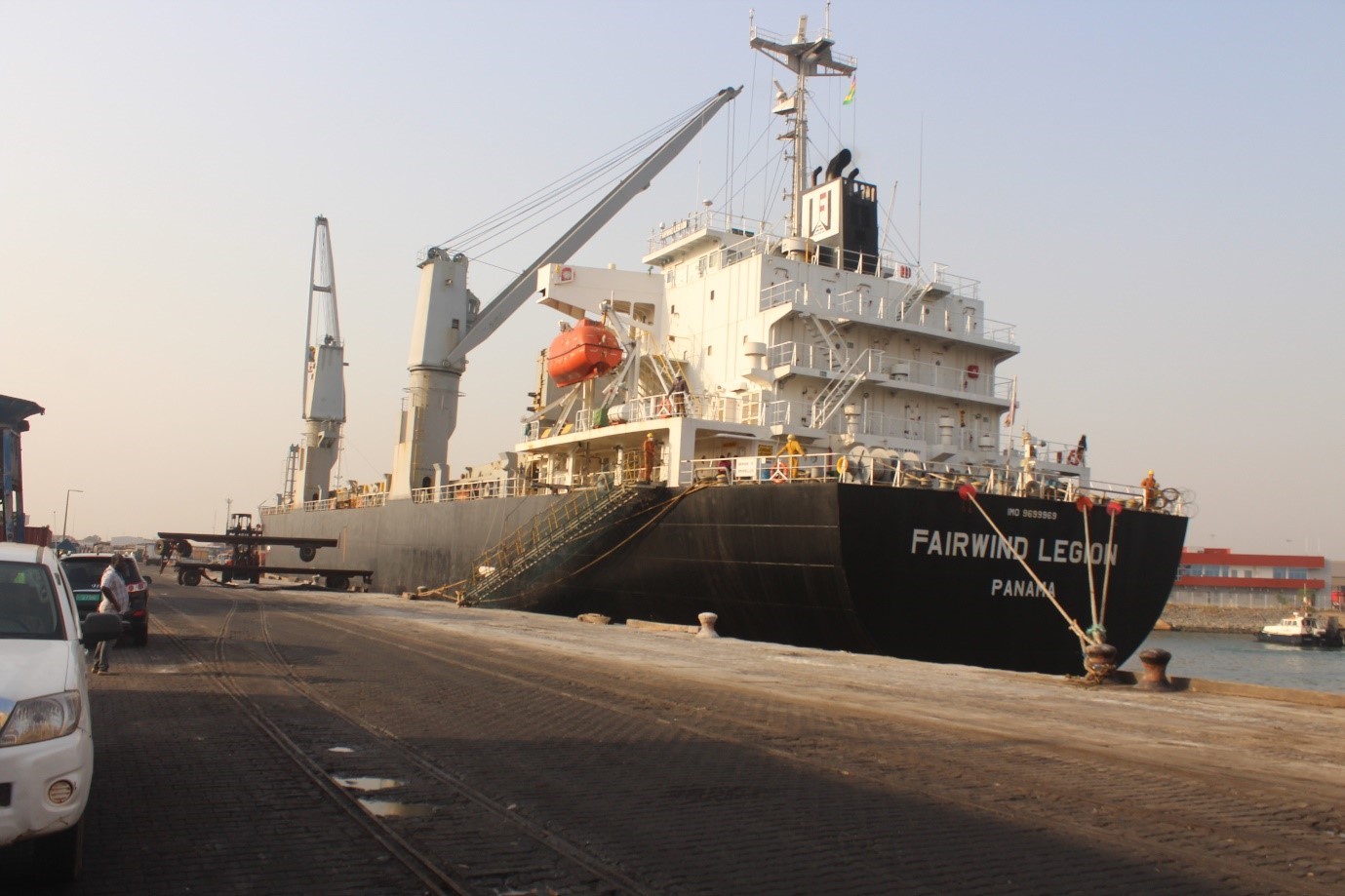
Under the terms of the KR project, the rice will be sold and subsequent earnings will be used to set up a fund for financing socio-economic projects across the country.
The Kennedy Round is a non-reimbursable financial cooperation assistance that allows developing countries facing food difficulties to receive cereals such as rice and wheat for the benefit of their populations, especially the most vulnerable.
Mainly, it supports the efforts of these governments to cut the rice deficit, boost food security, and improve nutritional balance, and the living standards of the poorest.
According to the Togolese ministry of agriculture, since 2008, Japan’s support for Togo, as part of the KR project reached 4.6 billion yen (a little more than CFA23 billion). The West African country has received from the Asian country 849 tons of wheat and 29,205 tons of white rice.
Esaïe Edoh
Ecobank remains Togo’s top bank for the 3rd consecutive year (The Banker)
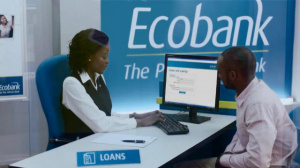
For the third consecutive year, The Banker, a specialized magazine, ranked Ecobank Togo the Bank of the Year. It was revealed during the media’s annual Banks of the Year Awards.
This year, Ecobank was able to keep its crown in Togo by launching new bancassurance products and improving its customer care.
“Togo’s Bank of the Year award for 2022 goes to Ecobank, whose highlights for the period include the development of its bancassurance product line, an upgrade to its customer relationship management capabilities, and its ongoing support for small and medium-sized enterprise (SME) customers,” The Banker wrote on its website.
In December 2021, Ecobank Togo signed a partnership with five major insurers to provide SMEs, in Togo and 26 other countries covered by the lender, with bancassurance products. Through the move, the pan-African bank aimed to tap into Africa’s flourishing insurance market.
We have proudly contributed to developing Togolese SMEs through initiatives beyond banking services. These include training, boosting digital presence, market spots, and more. This award recognizes our efforts, said Souleymane Touré, MD, Ecobank Togo.
In 2021, Ecobank was Togo’s second-largest lender, by assets, with CFA557 billion of assets. The first was Orabank.