
Togo First
Togo: Government allocates CFA21 billion to national universal health insurance project

The government of Togo will allocate CFA21 billion to its Universal Health Insurance (UHI) project this year. The sum, set in the 2023 Finance Law, is 10% higher than that forecast (CFA19 billion) for the same project in 2022, and it represents 16% of the health ministry’s budget in 2023 (CFA127 billion).
With the increased allocation, the UHI should be implemented faster. This is as the INAM, which is in charge of the project, gets ready to launch a new health insurance product that will cover informal actors who are not covered by traditional insurance products.
Togo, it should be noted, inked, in 2021, with the World Bank a CFA38.5 billion deal to provide quality healthcare to the Togolese people.
Esaïe Edoh
Togo: Société Générale opens up to MSMEs in a bid to expand its footprint
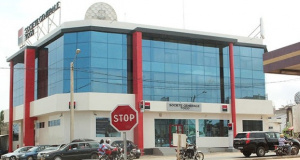
In addition to large companies, financial institutions, and NGOs, Société Générale Togo now does business with MSMEs. The lender announced the update on Facebook.
The move should expand SGB’s scope of action in a market currently dominated by Orabank, Ecobank, and Coris Bank, in terms of balance sheet size.
In 2021, the trio posted assets of CFA735 billion, CFA558 billion, and CFA428 billion, respectively, compared to CFA72 billion for Société Générale Togo.
It is worth noting that 99% of businesses registered in Togo are MSMEs; they contribute about 80% of the economic activity.
Ayi Renaud Dossavi
Togo: Chamber of Commerce and Industry discloses its latest reforms
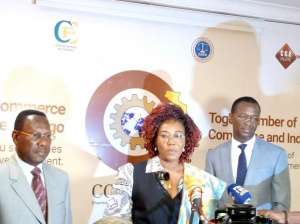
From now on, the chairman of the Chamber of Commerce and Industry of Togo (CCI-Togo) no longer has a salaried status. However, all professional expenses (trips) incurred by the chairman will be taken care of. This is one of the few reforms announced on Jan 30 by the Chamber’s special consular delegation. The reforms were presented to economic operators.
As part of the new reforms disclosed by the CCI’s interim management team, the consular delegation will now have 75 elected members– 27 established at the regional level, and 48 at the national level.
Also, the consular delegation is now required to present its annual report to the consular assembly. And the amount of its members’ contribution will be calculated based on their financial balance sheet filed with the OTR; this, according to Nathalie Bitho, head of the consular delegation, aims to “prevent unfairness in the payment of contribution by members.”
It is worth noting that the CCI’s interim management team was set up after the consular electoral process was halted, in September 2020, amidst an internal crisis.
Esaïe Edoh
World Bank to pour CFA95 billion into socioeconomic projects in Togo
The World Bank Group plans to mobilize CFA95 billion for social projects in Togo. The Bank’s representative in the country, Fily Sissoko, made the announcement last Friday, 27 January, in Lomé. This was during a meeting covering the new Country Partnership Framework between the financial institution and the Togolese government.
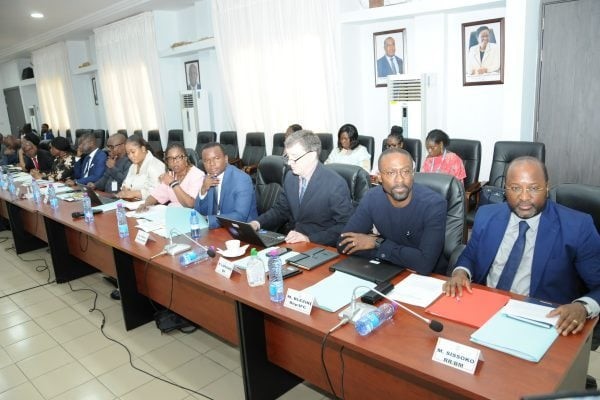
Part of the funds will finance health, education, energy, water, and agriculture projects which are important for the Togolese government. Another part will finance the implementation of the Emergency Program for the Savannah Region (PURS). The latter was launched by Lomé to make the region more resilient to terrorist attacks.
Let’s note that the World Bank spent $1.28 billion in its previous Country Partnership Framework with Togo. While that framework covered the 2017-2022 period, the one which is being elaborated will extend from 2023 to 2027.
Esaïe Edoh
Togo: President Gnassingbe urges farmers to produce more to cut dependency on food imports
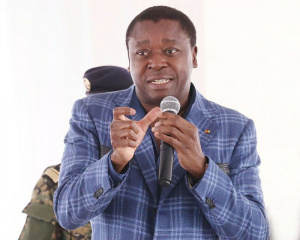
Togo must strive to achieve food self-sufficiency to accelerate its economic development. Faure Gnassingbe, the Togolese president, voiced this opinion last Saturday, at Tsévié, as the second part of the Agricultural Producers Forum was closing.
We must feed ourselves, live from our agricultural activities, and provide for ourselves and our families to better invest in the economic development of the country, the leader said.
According to him, efforts made so far by the government to this end are insufficient and must be increased for Togo to depend less on food imports. "The efforts we have been making for so many years have not yet allowed us to feed ourselves. We are forced to buy chicken and fish from outside, and often not of good quality. As we do not produce enough, we make do with these products that come from elsewhere, perhaps at low prices, but not always good for our health."
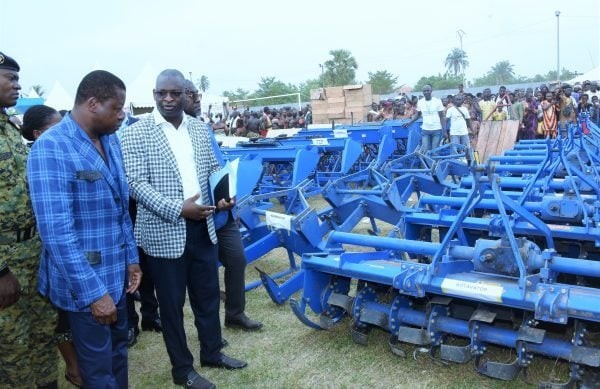
"When we think of tomorrow’s agriculture, what we think of is mechanization, irrigation, export, and we see bankers running after you (farmers) with financing offers. I am convinced that we will find ways to achieve this if we work together," President Gnassingbé added.
The Head of State and his collaborators, just like they did in Dapaong, met with various groups of the maritime region. The talks aimed to encourage farmers to produce more and foster inclusive management in the agricultural sector. They also covered some topics falling under the Togo 2025 Government Roadmap.
Esaïe Edoh
Togo: Prices of diesel and jet fuel drop
In Togo, the price of diesel and Jet A1 has fallen slightly. For diesel, the price is down to CFA775 from CFA850 FCFA per liter. As for jet fuel which is used by airplanes, its price has dropped from CFA654.41/liter to CFA615.41.
The change was disclosed in an interministerial order dated January 28, 2023. The latter was issued by the Ministers of Trade, Energy, and Transport, respectively Kodjo Adedze and Atcha-Dedji Affoh.
Prices of unleaded super fuel, kerosene, and two-stroke fuel did not change, however–CFA700, CFA650, and CFA788, respectively per liter.
While jet fuel’s price drop is good news for the Togolese aviation sector, it should be emphasized that the government still subsidizes petroleum products, to the tune of 230 CFA francs per liter on unleaded Super, and 239 francs per liter on diesel, and 157 CFA francs per liter on kerosene.
Ayi Renaud Dossavi
Togo: National Cybersecurity Agency takes steps to reinforce collaboration with banks and financial institutions

To better help banks and financial institutions tackle cyberattacks, Togo’s cybersecurity agency (ANCY) recently organized an awareness-raising and training workshop. Held on January 27, the event targeted actors from banks and microfinance institutions.
It was organized in partnership with Cyber Defense Africa and focused on cybersecurity and its challenges. The workshop notably covered the following themes: “The cybersecurity ecosystem in Togo” and “African finance institutions at the heart of cyberattacks”.
During the meeting, participants learned about ways their IT systems are attacked, and ways to prevent that, in line with Togolese laws.
"The goal is to find solutions, get the tools and techniques available to fend off cybercrime, and to further protect the data of customers and financial institutions," said ANCY’s Managing Director, Gbota Gwaliba. "It is also about discussing the challenges and opportunities related to cybersecurity," he added.
In addition to the workshop, the ANCY said it wants to strengthen its support to banks and financial institutions, via “collaboration and permanent interactions.”
Ayi Renaud Dossavi
Togolese capital to host the 8th edition of the UEMOA SMEs and Banks fair next week
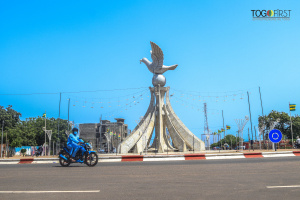
Lomé will host the 8th edition of the UEMOA Small and Medium Enterprises and Banks fair on Feb 7-10, 2023. The event’s theme is "Financing and Investment of UEMOA Small and Medium Enterprises, amidst the crises and changes of economies."
According to recent information, participants will be able to attend in person or virtually. "In the interest of always favoring very accessible participation, and without profit, at the UEMOA Small and Medium Enterprises and Banks fair, the hybrid mode will allow many SMEs to participate, online or on-site in their country," reads an official note, relayed by several media outlets.
"Business leaders already registered will be able to participate for free at the sites of Lomé, Ouagadougou, Niamey, Bamako, Cotonou, Abidjan, Dakar, and Guinea Bissau," the note adds.
High-level panels, meetings of the heads of SMEs from the UEMOA, project pitches, and B2B meetings will be hosted during the fair.
The UEMOA Small and Medium Enterprises and Banks fair was launched in 2015. It takes place once a year and has already been hosted in Ouagadougou (2015), Bamako (2016), Niamey (2017), Bobo-Dioulasso (2018), Korhogo (2019), Cotonou (2020), Ouagadougou (2021). The Lomé edition should have taken place last November but it was postponed.
UEMOA-securities: Togo raised CFA30 billion in latest issue
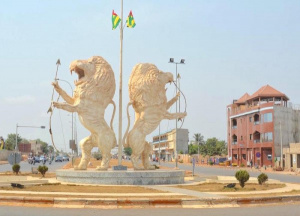
Togo obtained CFA30 billion in its second issue on the WAEMU market this year. The country retained the amount out of CFA46 billion mobilized by regional investors.
In detail, Lomé retained CFA16 billion from the issue of fungible treasury bills with a maturity period of 182 days. The remaining 14 billion breaks into 11 billion and 3 billion raised from fungible treasury bonds, maturing respectively over 5 and 3 years.
Togo, it should be noted, had a target of 35 billion for the issue. Adding the proceeds of this second operation to the first, the country has raised CFA46 billion so far in 2023. This is out of an annual target of CFA574 billion.
Esaïe Edoh
Togo: Revenues of the Road and Rail Transport Office almost doubled within five years ending in 2021
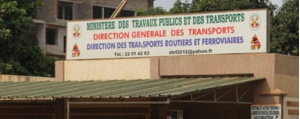
The Road and Rail Transport Office of Togo (DTRF) generated over CFA3.9 billion in revenues in 2021 (by the end of November). The entity disclosed the figure last Wednesday, Jan 25, 2023.
The DTRF attributes the mobilization to several activities such as the registration of motor vehicles, the organization of the examination and issuance of driving licenses, technical inspections of vehicles, the issuance of registration cards, and document transfers.
In 2021, precisely 93,944 vehicles were registered, 28,581 4-wheelers and 65,363 2-wheelers and similar. 29,620 licenses (renewals, international licenses, duplicates, and driving rights) were issued. In the same year, 142,873 vehicles of all categories passed the technical inspection.
Progress over the years
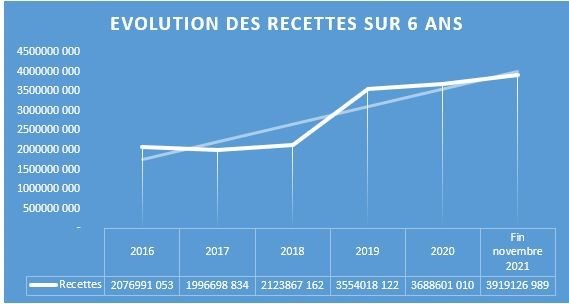
From 2016 to 2021, the DTRF’s earnings almost doubled, from CFA2 billion to CFA3.9 billion. Except in 2017 when they fell slightly to CFA1.9 billion, the revenues went up over the period. They stood at CFA2.1 billion and CFA3.5 billion in 2018 and 2019, respectively.
Meanwhile, the number of registered vehicles rose as well, from 64,120 in 2016 to 93,944 in 2021 (+46%).
Esaïe Edoh