

Togo First
Politics: The Organization of Islamic Cooperation (OIC) calls on President Gnassingbé to mediate the ongoing West African conflicts
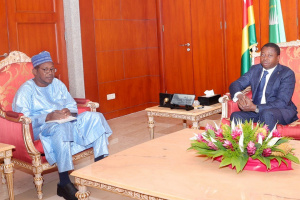
The Organization of Islamic Cooperation (OIC) wants Togo’s President, Faure Gnassingbé, to act as a mediator in the political conflicts affecting the West African region. The request comes in a context where ECOWAS is yet to have officially approved the request made by Mali’s ruling junta for Gnassingbé to mediate in the crisis prevailing in the country.
On a working visit to Lomé, Nassirou Bako-Arifari, OIC’s emissary, asked the Togolese leader to help resolve socio-political crises and preserve peace and stability in West Africa, especially in Mali, Burkina Faso, and Guinea.
“The OIC Secretary-General (Hissein Brahim Taha, Editor's note) hoped that the Togolese Head of State would put all his experience, his diplomatic genius, and his solidarity, which is a great diplomatic tradition of Togo, so that we can find consensual solutions, and reach acceptable compromises in the various crises in the sub-region, particularly in Mali, Burkina Faso, and Guinea," said Bako-Arifari.
Since the beginning of the Malian crisis, Togo has been active on the diplomatic front, advocating the return to constitutional order and looking for ways to end the crisis that pits Mali against the sub-regional organization, ECOWAS.
To this end, an international meeting devoted to Mali had been held in Lomé, Togo’s capital, last year.
Esaïe Edoh
Business Financing: AfDB and AGF team up to boost the capacities of 80 Togolese MSMEs
The African Development Bank (AfDB) and the African Guarantee Fund (AGF) will train and provide technical support to 80 youth-led micro, small and medium enterprises (MSMEs) in Togo.
This is part of a mentoring program initiated and backed by the AfDB’s Multi-Donor Youth Entrepreneurship and Innovation Trust Fund (YEI MDTF).
Businesses that applied and were enrolled in the mentoring program operate across a wide array of sectors, such as crafts, agriculture, service trades, renewable energy, and new technologies.
The program was launched on May 12, 2022, at AGF’s West African headquarters in Lome. The launching ceremony was attended by the selected entrepreneurs and several officials.
This technical support will be provided by Dowjil Capital (based in Abidjan), which was picked for this purpose by the AfDB and AGF. The support will focus on capacity-building, business registration towards loan obtention, and connection with financial institutions active in Togo.
Ayi Renaud Dosssavi
Lomé secures €50M from France for key waste management and rural road projects
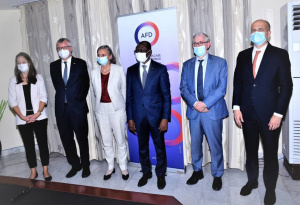
France will provide Togo a little more than CFA33 billion or €50 million to manage waste in its capital city Lomé, and build rural roads across the territory. The money will be disbursed as concessional loans through the French Development Agency (AFD).
In detail, the AFD will provide Togo with €20 million (around CFA13.2 billion) to partially finance stage four of the Urban Environment Project of Lomé (PEUL IV), and €30 million (around CFA20 billion) to partially finance the Rural Road Support Program (PAPR II). Regarding the latter, it also benefits from the financial support of the German Development Bank, KfW.
Related financing agreements were inked on May 12, 2022, by Togo’s minister of finance and economy Sani Yaya, France’s ambassador to Togo Jocelyne Caballero, and Germany’s ambassador, Mathias Veltin.
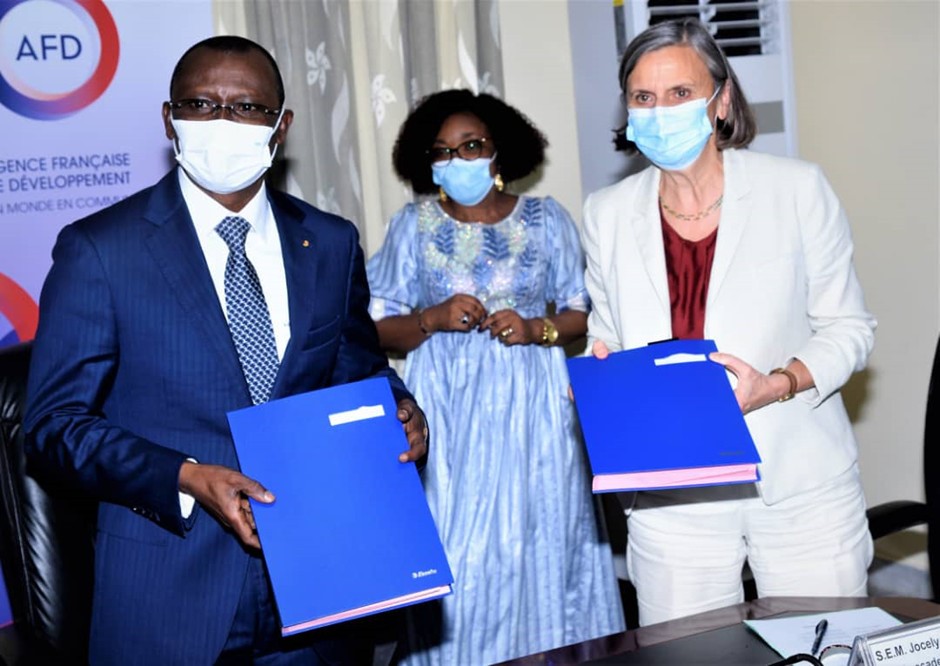
“I would like to stress that this support from AFD consolidates the decentralization process that Togo has initiated some years ago,” Yaya said on the sidelines of the signing. On the same occasion, he praised “the quality of the cooperation between our country, Togo,” and its European partners, knowingly France and Germany in this case.
Launched in 2006, PEUL aims to improve the conditions in which the people of Grand Lomé live. In its first two stages, it restructured waste collection and pre-collection segments in the capital, and led to the construction of a modern landfill at Akepé, among others. The third phase, which is being deployed at the moment, focuses on making sure that the old landfill of Agoè-Nyive is environmentally safe, and on bolstering the financial and administrative capacities of the Grand Lomé municipality.
As for the upcoming fourth phase, it should consolidate previous achievements, according to minister Yaya.
For its part, the second phase of the PAPR aims to build 2,000 km of rural roads and enable households and farmers to better access inputs and markets. It is backed by several partners, including AFD and KfW.
The Togolese government wants to build 4,000 km of rural roads by 2025.
Ayi Renaud Dossavi
Kennedy Round: Japan makes second rice donation to Togo this year, worth CFA1.5 billion
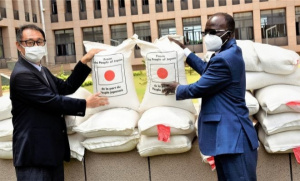
In the recently-ended agricultural campaign, Togo had a rice deficit of 88,000 t. In this context, the country received 3,000 t of rice from Japan on May 12. The donation was received in Lomé by the Director of Cabinet of the Ministry of Agriculture, Livestock and Rural Development, Dindiogue Konlani.
The estimated cost of the rice given under the Kennedy Round 2020 project is CFA1.5 billion. According to Togolese authorities it will help ease the shortage affecting the Togolese population. Also, they added, revenues obtained from selling the product will serve to set up a counterpart fund that will finance socio-economic development projects.
On the other hand, Shuji Shimizu, head of economic cooperation of the Japanese embassy in Togo, said the donation aims to help Togo reduce poverty.
This is the second time this year that Japan donates rice to Togo. In March, it had shipped a similar quantity to Lomé.
Esaïe Edoh
Digital payment company OMOA Group arrives in Togo
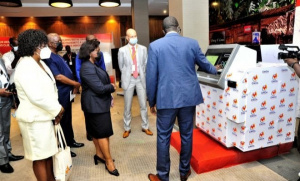
OMOA Group, a company specialized in digital payment, officially started operations in Togo on May 12, 2022. The group’s subsidiary, Operator Payment System, will contribute to Togo becoming an innovative service hub for digital skills and a reference in Africa.
OMOA will take steps to boost financial inclusion and bridging the gap between people and banks. It has committed to “foster inclusive economic growth by enabling consumers to carry out all their monetary transactions safely, across all supports, anywhere in Africa.”
The firm explained its decision to expand to Togo by the arrival of major African financial entities, and the country’s national policy which spurs the growth of digital payment and activities.
OMOA group is well-known as a technology hub and the only private processing and card center in sub-Saharan Africa for more than 20 years. Its arrival in Togo will surely lead to more competition in the fintech market, a market where firms like SEMOA and Cinetpay already operate.
Esaïe Edoh
In Togo, Africa Ceo Forum and Ecobank will co-organize a business forum next week
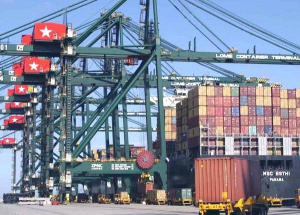
Africa Ceo Forum and Ecobank will hold on May 19, 2022, a forum that will showcase investment opportunities in Togo.
Investir au Togo (Invest in Togo), as the program is called, will especially focus on opportunities available in the following sectors: infrastructure, agribusiness, digital, and energy.
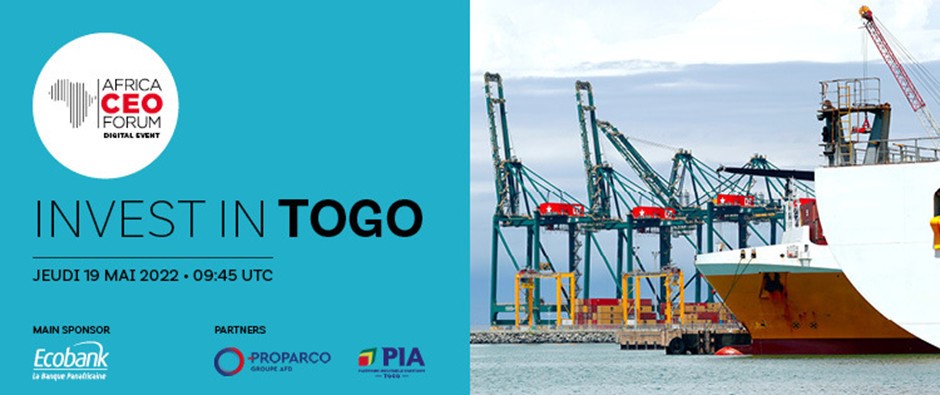
The event will also host a panel on the Togolese ecosystem, especially its business environment, key sectors, and reforms.
According to our source, Sani Yaya, Togo’s minister of finance, will be the forum’s special guest. He will, during a webinar, address foreign investors, CEOs of multinational firms, consultants, financial institutions, and African businesspeople.
Africa Ceo Forum is a company owned by Jeune Afrique Media Group. It considers Togo as West Africa's leading business hub, and one of the continent’s economies that is most resilient against the Covid-19 pandemic, forecasting a growth of 6.1% for the country this year, compared to 5.5% in 2019.
Esaïe Edoh
Togo amends, again, the cap on prices of local and imported goods
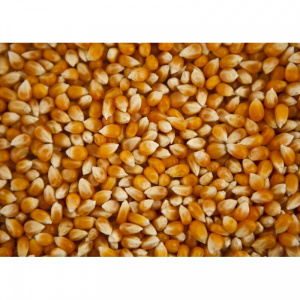
The Togolese ministry of trade has fixed a new ceiling on prices of necessities–VAT-exempt local and imported goods. The move follows the new increase in the price of petroleum products, due to a shift in oil and dollar rates, according to the government.
In detail, a 2.5 kg bowl of corn will now sell for 650 CFA francs in Greater Lomé and the Maritime region, 550 CFA francs in the Plateaux, 700 CFA francs in the Central region and Kara, and 600 CFA francs in the Savanes.
As for imported products exempt from VAT (vegetable oil, condensed milk, concentrated tomatoes, wheat flour, imported rice), their price remains the same throughout the country.
The changes are part of the government’s recently-adopted measures (April 28) to tackle inflation and bolster the purchasing power of residents. The regular price update was announced by the ministry of trade.
Ayi Renaud Dossavi
Public Procurement: ARMP to soon shed skin, and oversee PPPs as well

Soon, the Togolese Public Procurement Regulator (ARMP) could oversee even Public-Private Partnerships (PPPs). A draft decree was adopted by the council of ministers on May 11 in this framework. The decree covers the attributes, structure, and functioning of the new form of the regulator, the ARCOP.
Sources close to the matter told Togo First that the transformation should expand the ARMP’s field of action, now covering PPP contracts issued by the State or its arms.
“This reform increases the autonomy of this institution and improves its mode of operation to meet the challenges, such as processing speed, transparency, and efficiency, hampering public procurement,” the council’s statement reads.
It should be emphasized that in September 2021, two laws on public procurements and PPPs, respectively were adopted as part of the public procurement reform.
Now, the upcoming changes within the ARMP align with similar reforms undertaken across the WAEMU, notably in Senegal and Burkina.
Aftar Morou Touré currently heads the ARMP.
Ayi Renaud Dossavi
Togolese government takes further steps to operationalize new funds for culture promotion

Gathered for their weekly council on May 11, Togolese ministers issued a decree that defines the structure and functioning of the new National Fund for Culture Promotion (FNPC), formerly the Culture Support Fund or FAC launched in 2013.
The fund will aim “to bolster the cultural value chain through the professionalization of the sector and the emergence of true cultural and creative industries, sources of wealth and employment,” the council’s statement reads.
In the long run, the new fund which will finance cultural actors, rather than “support” the sector, should help establish a real cultural industry in Togo. It will do so by, notably, focusing on initiatives that have socioeconomic potential.
Moreover, the FDNC, designed a few weeks ago, should have a wider range of interventions, and more resources for its operations.
The FAC was established to rehabilitate and reinforce cultural equipment and infrastructure in Togo. In 2019, it allocated CFA600 million to nearly 250 projects and 300 million in 2021 for 512 projects.
Ayi Renaud Dossavi
FESMA: A culinary festival aimed at getting Togo’s cuisine recognized by UNESCO
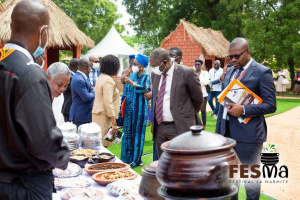
Lomé currently hosts the first edition of the Festival la Marmite (FESMA). The culinary event is organized by Focus Yakou Communication. Started on May 10th, it aims to get one or more Togolese meals on the UNESCO’s heritage list, like Senegal’s most famous meal, the Tiep Bou Dien.
The fair was officially launched by the minister of tourism, Kossi Lamadokou. It gathers cooks from all five Togolese economic regions. “The goal here is not to valorize these meals, but to get one of them or more on UNESCO’s heritage list,” declared Jean-Paul Agboh, who is behind the event.
For its part, the ministry of culture said the festival lines up with the government’s efforts to valorize local cultural tourism, and boost the consumption of local products.
There will be a food fair, exhibitions, tasting, B2B sessions, masterclasses, and training workshops.
About ten well-known Togolese chefs are attending this first edition of the FESMA.
Esaïe Edoh