
Togo First
Togo prepares to face monkeypox as several countries in the West and Africa deal with the virus

Togolese authorities are preparing to fight off monkeypox which is currently affecting some Western and African countries. They are taking measures though no case has been recorded yet in the country.
Preventive measures were presented to some infectious disease specialists, virologists, bacteriologists, and other medical staff gathered at the Regional Hospital Center (CHR-Lomé Commune) of Lomé. Ihou Wateba, who coordinates the CHR’s care and is also the minister of higher education, presented them.
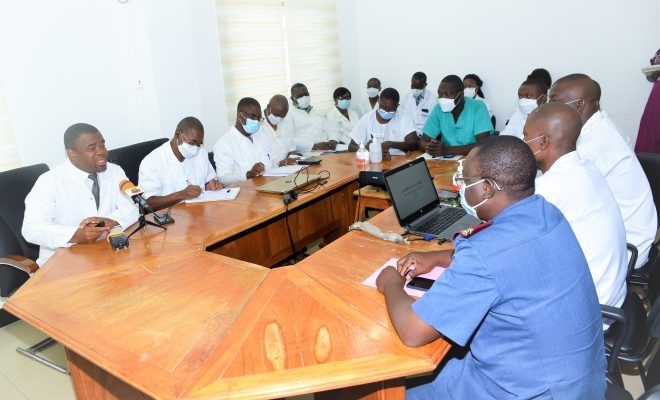
Wateba said Togo is preparing the necessary reception and support structures for possible confirmed cases of this disease.
Towards an efficient response, the official took stock of the recommendations of the health sector on strategies to adopt. Their recommendations, he added, will be studied by the government.
By anticipating the virus, the government intends to protect the Togolese people and limit the impact of the virus in case it spreads to Togo.
The symptoms of monkeypox are very similar to those of smallpox–generalized or localized adenopathies, single or bilateral submaxillary and cervical. It is transmitted by direct contact, with an animal or a human, and through objects.
Esaïe Edoh
BOAD launches waste management project in six WAEMU states

A project for sustainably managing waste and reducing organic pollutants in six WAEMU states, including Togo, was launched last Tuesday in Lomé. The regional project was launched in the presence of Kako Nubukpo, WAEMU Commissioner for Agriculture, Water Resources, and Environment.
Funded by the West African Development Bank (BOAD) through a Global Environment Facility (GEF), the project aims to promote best practices and techniques to eliminate dioxin discharges (which are carcinogenic) and build local solid waste treatment facilities in various municipalities.
“The goal is to set up a robust waste management mechanism that integrates all waste management stages, namely collection, disposal, sorting, recycling, recovery, and final treatment," said Ibrahim Sow, Regional Coordinator of the Global Environment Facility (GEF).
"Urban waste management is one of the most pressing environmental issues for developing countries. In most African cities, less than 30% of waste is evacuated," said Foli-Bazi Katari, Togo's Minister of the Environment.
According to Katari, "West African cities produce between 20,000 and 30,000 tons of household waste daily, nearly half of which is not managed properly, causing health problems that impact the living environment of urban populations.
The sub-regional initiative is expected to be the subject of a signed convention between UEMOA and BOAD.
Minister Adedze warns against speculating on the prices of consumer goods

Kodjo Adedze, the Togolese minister of trade, met with wheat and vegetable oil sellers on May 24, 2022. On the occasion, he told them to immediately stop speculation on the prices of these products.
Adedze deplored the situation which started a few weeks ago and warned the sellers–wholesale and small retailers– against the practice, telling them to align with the prices set by the government. "We don't want oil to be sold in Lomé at CFA 31,000 or CFA32,000," the official said.
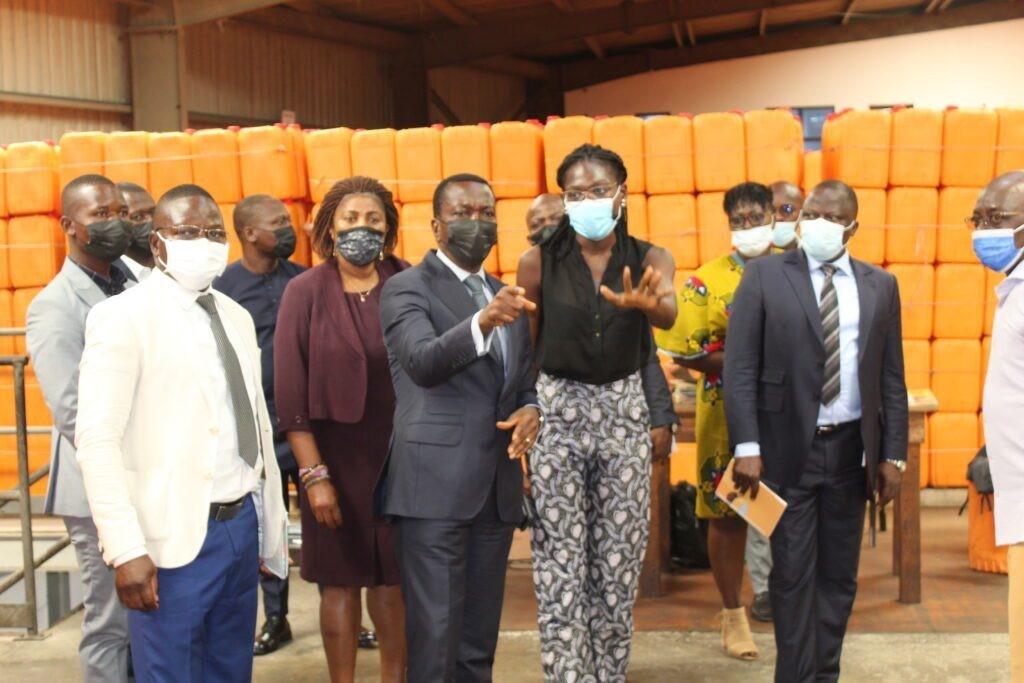
The minister of trade recalled that actors operating in the wheat and oil sector enjoy several incentives introduced by the government and as such have no excuses for raising their prices. "These factories that are established in Togo benefited from investment incentives. So, Togolese must, in turn, benefit from the government's efforts," said Kodjo Adedze who added that those who persist with speculation would have their goods seized.
Indeed, to counter the rising inflation in the country, the Togolese government has capped prices of basic commodities and exempted VAT on some local goods like wheat and vegetable oil.
The measures were taken after the prices of oil products in the country were increased, twice.
Esaïe Edoh
Cofina secures CFA40 billion to expand in Africa

COFINA, a West African meso-finance company, has just secured nearly CFA40 billion from Development Partners International (DPI), a London-based investment firm focused on Africa.
According to the related statement relayed by Ecofin Agency earlier this week, DPI made the payment in exchange for a minority stake in COFINA. The firm said it would use the funds to boost its activities in West and Central Africa.
Among others, it will launch “new and differentiated products and services to reach a greater number of customers."
COFINA, let’s note, is already present in Togo, Senegal, Côte d’Ivoire, Guinea, Gabon, Mali, Congo, and Burkina Faso.
"Despite issues caused by the pandemic, the Cofina Group has proven its resilience and most importantly the relevance of its business model adapted to African ecosystems. Building on this success, we now have DPI, a particularly experienced and trusted investor, at our side. As Cofina Group opens this new chapter, this transaction will allow us to strengthen our equity to consolidate our positioning and accelerate our digital transformation," commented Jean-Luc Konan, Founder, and CEO of Groupe COFINA.

"There is significant demand in the SME market for Cofina Group’s products and services which help entrepreneurs grow their businesses while promoting financial inclusion and creating a positive impact on African economies. We are delighted to join Groupe Cofina as investors and look forward to working with Jean-Luc and his team to keep materializing his vision," said Babacar KA, Partner at DPI.
For the deal, DPI was advised by ASAFO & Co, a law firm co-founded by Pascal Agboyibor of Togo, and KPMG. Meanwhile, Cofina was advised by ADNA.
In Togo, Cofina is well-positioned when it comes to SME support. It provides intermediate solutions between microfinance and traditional banking. The fast-growing group has, among other things, concluded agreements with public and private support companies to support financial inclusion and entrepreneurship projects, such as in agribusiness.
Ayi Renaud Dossavi
The University of Lomé and WHO team up to bolster research and public health training in Togo

The World Health Organization (WHO) and the University of Lomé (UL) signed an MoU last Monday in Lomé, to enable more Togolese to get training and do research in public health. The document was signed in Lomé by the UL's chairman Dodzi Kokoroko and WHO's resident representative in Togo, Fatoumata Binta Tidiane.
In detail, the memorandum sets the practical modalities of WHO-Togo's technical support to the Centre de Formation et de Recherche en Santé Publique (CFRSP) of the UL and health training schools.
As part of the deal, both parties are to mobilize resources, draw course curriculums, and lead research in line with healthcare-related quality assurance standards.
On the occasion, Kokoroko told WHO's representative that his university would ensure that everything goes according to plan.
In response, Binta Tidiane lauded "the commitment of the University of Lomé to support the development of public health in Togo."
As a reminder, according to university authorities, this agreement was yielded by the partnership agreement signed on June 11, 2019, with Heidelberg University to introduce a Master's degree in Public Health, with the support of the United Nations System (UNS).
Esaïe Edoh
Togo has the cheapest and fastest FTTH offer in the WAEMU (ARCEP)

Togo is the country with the cheapest and fastest fiber optic internet offers within the West African Economic and Monetary Union (WAEMU). ARCEP, Togo’s telecom regulator, disclosed the information on May 23, 2022.
The regulator explained that Togo owes its performance to a price overhaul recently carried out by Canalbox (Vivendi Africa Group, GVA).
GVA replaced its 10 Mbps monthly offer with a 50 Mbps offer, for the same price: CFA15,000. "This is the most affordable FTTH offer on the African continent and enables more Togolese to enjoy high quality and unlimited broadband Internet access at home. This offer fosters wide democratization of Internet access in Togo, hence reducing the digital divide in line with the National Development Plan," the Internet Service Provider (ISP) said.
Similarly, the ISP upped its former 50 Mbps offer to 200 Mbps while keeping its price at CFA30,000 per month.
The tariff changes were announced after ARCEP complained about the prices of electronic communications being too high in Togo. Now, it urges other operators to take a leaf out of GVA’s book, to contribute to the development of Togo’s digital economy.
Esaïe Edoh
Wheat: To tackle supply issues induced by the Ukraine-Russia war, Togolese authorities recommend using local flour

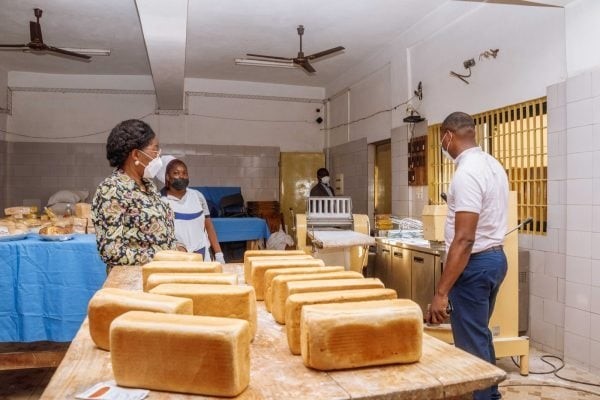
As the world keeps dealing with wheat supply issues spurred by the war in Ukraine, the Togolese authorities encourage the transformation of local tubers and cereals into bread. Yesterday, May 23, the country’s Prime Minister, Victoire Dogbé, visited some companies based in Lomé that make and use local flour. She was with the minister of trade, Kodjo Adedze, and the minister of grassroots development, Myriam Dossou d’Almeida.
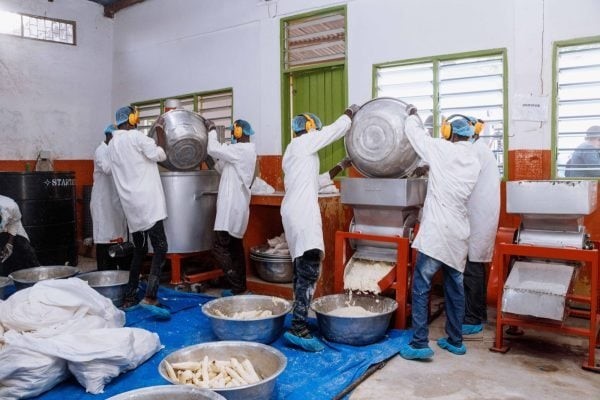
The companies visited include Wesa Glory Corporation (WGC), Boulangerie Jérusalem and Minagro Group. They make flour and bread using cassava, yam, soybean, maize, and rice.
During the visit, the PM reiterated the government’s ambition to boost the local processing of local products. Dogbé stressed the need to integrate local flour into the production of bread and other bakery products.
Since February 24, 2022, when Russia invaded Ukraine, Togo, like several other countries, has been suffering from the resulting wheat crisis.
In 2020, Togo imported around 70,000 t of wheat and meslin from Russia, according to the World Trade Organization (WTO).
Esaïe Edoh
In Togo, Gozem and TotalEnergies inked a partnership agreement covering digital payment

From now on, Gozem taxi-bike riders can pay for fuel at any TotalEnergies gas station via their Gozem Champion wallet.
The two companies inked an agreement to this end on May 23, 2022.
"This partnership will, first of all, allow Gozem drivers to better maintain their vehicles with good quality TotalEnergies gasoline," said the Lomé-based start-up. "Secondly, they will be able to save time by paying directly for fuel through their Gozem e-wallet instead of withdrawing cash," it added.
"Thanks to this partnership that will emerge, there is no doubt that the passage of champions in our stations will be more pleasant and that the service will be improved. For that is the purpose of digital technologies: to move us towards a better customer relationship," said Frederic Maupetit, CEO of TotalEnergies Togo.
Only two TotalEnergies stations in Lomé accept the new payment mode at the moment, one in Hanoukopé and the other in Totsi. More will follow in the rest of the country and other African markets where Gozem and TotalEnergies operate.
Ayi Renaud Dossavi
Togo: Cotton output drops again

During the 2021-2022 cotton season, Togo had an output of 50,000 t, against 130,000 t expected. This is about 25% lower than the 66,000 t recorded in 2020-2021, according to the sector’s actors.
This year, 74,000 ha of arable lands were used, instead of the 193,000 ha announced when the season began.
The sector’s regulator, Nouvelle Société Cotonnière du Togo (NSCT), said there was a drop because farmers turned away from white gold to soybeans since the latter was more profitable.
For this new 2022-2023 campaign, the objective is to plant 180,000 ha for a production of 146,000 t of cotton.
To reverse the situation, NSCT took several measures to draw farmers towards cotton. Among others, it increased the price of first and second choice seed cotton. During the new campaign, these will be sold at CFA300 and CFA280 per kilogram, compared to CFA265 and CFA225 previously.
The company expects farmers to cultivate 180,000 ha and produce 146,000 t of cotton in the 2022-2023 campaign.
Esaïe Edoh
In Togo, M Auto launches two new models of electric bikes and announces an upcoming manufacturing plant

M Auto Electric Mobility, an electric car maker based in the Adétikopé industrial zone, has officially launched two brands of electric bikes on May 22, 2022. The bikes were presented to the media during a press meeting held at the 2 février hotel.
There is the Chap Chap model which costs CFA900,000 and the Commando model which costs CFA1,179,000.
“Pay as you go” and Mobile Money
The bikes can be purchased in instalments or fully. Both models can be paid over 36 months, making mobile money (Flooz or T Money) payments 25 days per month. Buyers of the Chap chap models can pay CFA999 per day while those purchasing the Commando model are to pay CFA1,299 per day.
M Auto also said it would sell the bikes’ batteries all over the country, leveraging partnerships with various fuel-selling companies. Among others, it reached agreements with TotalEnergies, Somayaf, and Energium. In the long run, battery swapping sites should be opened in 200 gas stations.
“M Auto’s long-term ambition is to have a battery-swapping station every one kilometer,” the firm said.
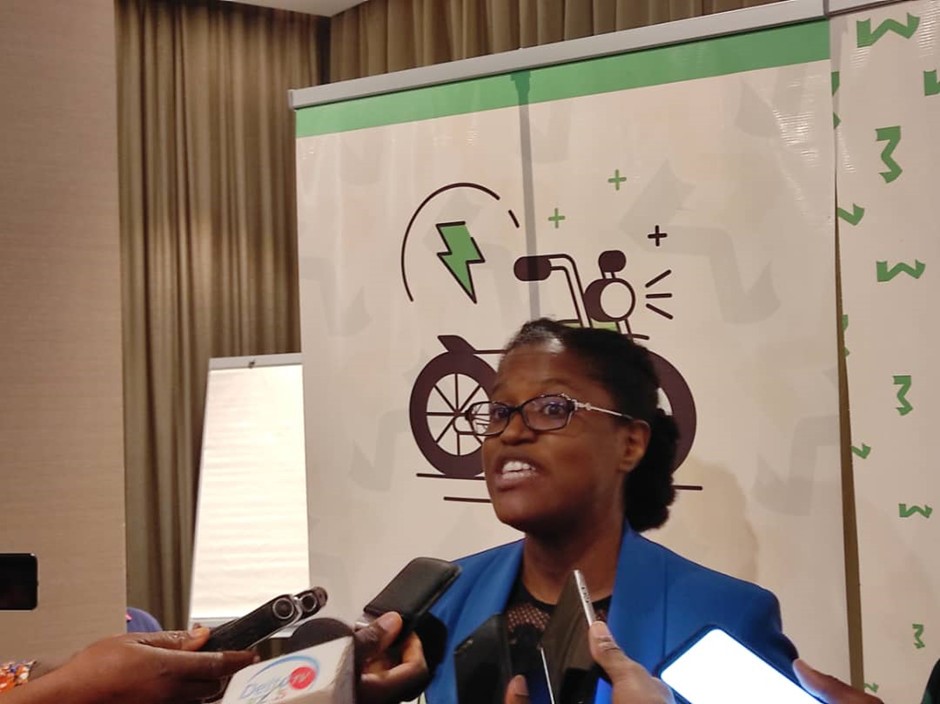
Charging a battery costs CFA1300 and a fully-charged battery can last over a distance of 75 km, according to Emmeline Brutus, project manager at M Auto.
A manufacturing plant coming soon
After previously announcing an assembly factory in the country, M Auto now says it wants to open a manufacturing plant in Togo. The plant, the firm says, which is being built and should be completed next year, will generate 3,000 jobs in Togo and Benin, according to Yasmeen Jawaharali, co-founder of M Auto.
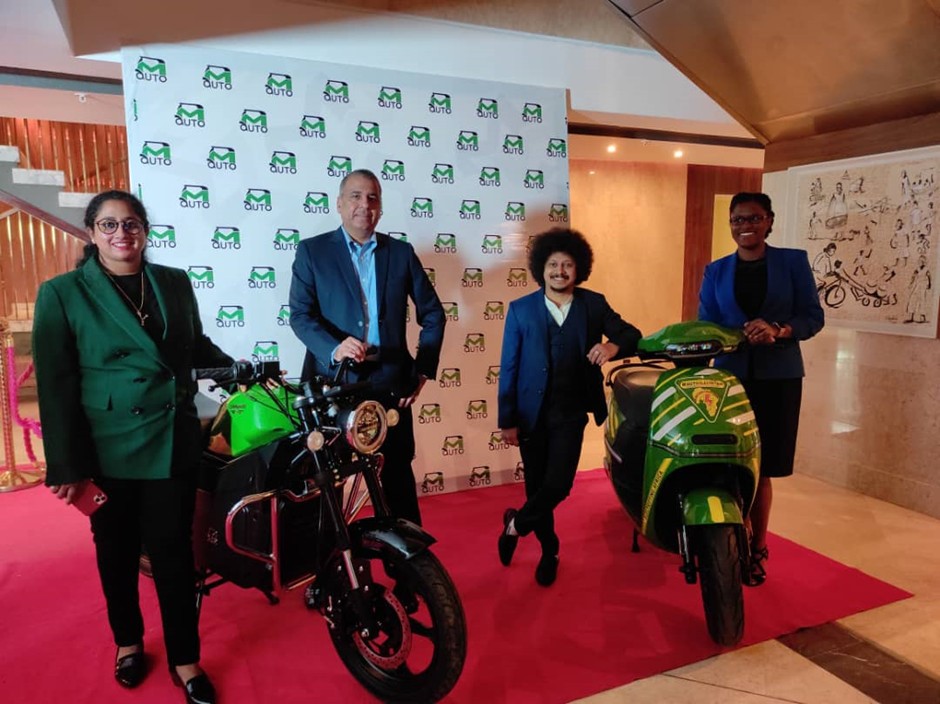
"Togo has a large fleet of two-wheelers for commercial use and government policies that are very favorable to the establishment of local electric vehicle manufacturing units. This is a great opportunity for M AUTO," added the co-founder.
To date, about 300 M AUTO motorcycles are in circulation in Togo.
Green investments
M Auto is mostly owned by Africa Transformation and Industrialization Fund (ATIF), a fund based in Abu Dhabi and focused on industry and economic development in Africa.
One of the fund’s associates, Shegun Adjadi Bakari, is a former senior advisor to President Faure Gnassingbé. Bakari believes that M Auto is “a technological and quality product for African populations” in their energy transition.
Ayi Renaud Dossavi