
Togo First
Over 2.5 million healthcare services covered by School Assur since 2017
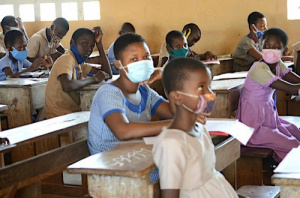
Set to end next December, the School Assur program has covered 2,615,962 healthcare services as of August 29, 2021. The data was disclosed by the ministry of financial inclusion and the informal sector.
In detail, the program has financed 1,031,059 medical visits, 13,660 admissions, 48,097 surgeries, 290,310 analyses, and 1,232,836 drug purchases.
According to the source, the figures reflect the growing impact of this presidential program, especially on the health of public school students and pupils.”
School Assur was launched in 2017. As a presidential initiative, it aimed to provide free healthcare services to public primary and secondary school students. It mainly covers sickness and liability risks.
The program should have ended in 2020, but it was extended to the end of this year.
Esaïe Edoh
Togolese Prime Minister among Top 100 Most Influential African Women

Togo’s Prime Minister, Victoire Tomégah-Dogbé, is among Africa’s top 100 most influential women. She’s is featured in Avance Media’s annual ranking of influential women in Africa and its diaspora.
“We believe this project provides us with another opportunity to not only celebrate African women but to showcase the individual and collective achievements of women who are inspiring the next generation of leaders in Africa,” Avance Media wrote on its website.
The women featured in the top 100 are regrouped into eight categories: economic leadership, civil society organizations and philanthropy, diplomacy, education and literature, entertainment, media, and public service and governance. Tomegah-Dogbe is in the latter with 15 other women including the Presidents of Tanzania and Ethiopia, Samia Suluhu Hassan and Sahle-Work Zewde, Benin’s Vice president Mariam Chabi Talata, and Rwanda’s First Lady Jeannette Kagamé.
Overall, women from 30 different countries were ranked. Those from West Africa include the Ivorian digital marketing expert Edith Brou, Nigerian author Chimamanda Ngozi Adichie, her compatriot Ngozi Okonjo-Iweala who heads the World Trade Organization, and Liberia’s former leader Ellen Johnson Sirleaf.
Regarding the Togolese PM, it’s important to recall that last July 4th she received the German Senate’s Sustainable Development Award.
Klétus Situ
Payment of motor vehicle tax by lorry drivers will henceforth be checked at weighing stations
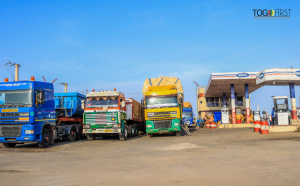
From now on, the motor vehicle tax (TVM) paid by lorry drivers will be checked at designated weighing points. This was announced by the Office Togolais des Recettes (OTR) and the Société Autonome de Financement de l'Entretien Routier (SAFER).
"Before checking up weight and axle load of lorries and others, payment receipts of the TVM must be presented,'' reads the statement issued by the OTR and SAFER. Control will begin on September 1, at Djerehouten’s weighing station which is on the N°1 national road, in the Plateaux region.
Lorries must comply with gauge, weight, and axle load standards. This is important to ensure road safety and preserve infrastructures along the Lomé-Ouagadougou-Niamey and Abidjan-Lagos corridors that pass through Togo; so is collecting the motor vehicle tax (TVM), as 85% of these revenues are used for road maintenance in Togo
Klétus Situ
Lomé announces a 72-hour systematic quarantine measure for passengers coming from...
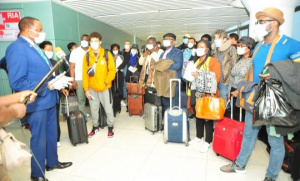
Brazil, South Africa, India, the UK, Russia, Portugal, and Tunisia. Those coming to Togo from these seven countries will automatically be quarantined for 72 hours upon arrival.
According to the Togolese ministry of health, the decision follows “the discovery of new variants of Coronavirus that are highly virulent and spreading rapidly in these countries.”
The quarantine holds “regardless of the Covid test result” of the passengers concerned. This was disclosed in a letter to the director-general of the national agency for civil aviation (ANAC).
A similar measure - a 10-day quarantine - was taken on July 13, 2021. The measure concerned passengers from Brazil, South Africa, India, the UK, Russia, and Portugal.
Esaïe Edoh
World Bank’s IDA to invest $60M in Togo to improve education quality
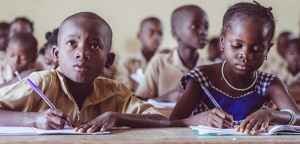
The World Bank approved last Thursday the disbursement of $60 million (about CFA33 billion) by the International Development Association (IDA) to support education in Togo. The funds will enable the implementation of the “Improving Quality and Equity of Basic Education Project” in Togo.
The monies will be injected into the government’s 2020-2030 Education Sectoral Plan. This was disclosed in a statement released by the World Bank, and obtained by Togo First.
In detail, some of the funds will “boost primary and middle school education, as well as improve the overall management of the education system.” Part will also be used to build classrooms, train teachers, reform curricula, and raise schooling rates of girls in remote areas.
Hawa Wague, the resident representative of the World Bank in Togo, declared regarding the financing that it will “contribute to the government’s 2025 roadmap by supporting key projects aimed at raising school capacities and the quality of education, towards increasing the country’s human capital ranking.”
The project, let’s recall, was announced a few days after the Togolese government said it would pay school fees of public middle school and high school students for the 2021-2022 academic year.
Esaïe Edoh
The Airport of Lomé will be equipped with PV solar plant
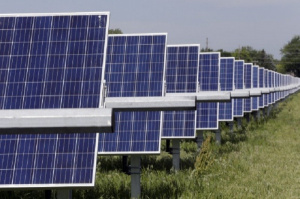
Lomé’s airport will be equipped with a PV solar plant. To this end, a tender was launched to hire the firm that will carry out the project.
The selected company will design, deliver and install the plant, said Société Aéroportuaire de Lomé Tokoin (SALT) which launched the tender. SALT indicated that the tender’s winner will also finance the project.
In 2016, the airport was renovated and expanded. It now receives two million passengers per year, against 600,000 at the time of the renovation. The works had cost $150 million (CFA83 billion).
Esaïe Edoh
Compact with Africa: Sani Yaya asks Africa’s G20 partners for greater support to deal with Covid-19
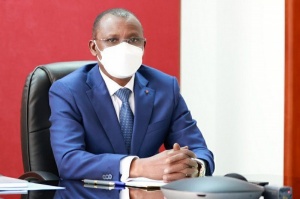
Sani Yaya, Togo’s minister of economy and finance, asked G20 members to support African nations facing the Covid-19 pandemic more. This was last Friday, during the 3rd Compact with Africa (CwA) Summit held physically, in Berlin, and virtually.
The Togolese minister said it is necessary that economies concerned get funds to easily have access to drugs, diagnostic equipment, and to massively produce vaccines.
“I take this opportunity to plead for greater support from our G20 partners for our countries, to further support our efforts to develop in line with our people’s aspirations,” said Yaya.
On the same occasion, the minister of finance urged German investors to take part in Togo’s key projects - projects falling under the country’s 2020-2025 roadmap.
Launched in 2017 by Angela Merkel, Compact with Africa regroups G20 members and international finance institutions. They discuss ways to support Africa’s development more and promote investment on the continent.
Togo joined the Summit in 2018, with 11 other African countries.
Esaïe Edoh
Decentralization: Golfe 6 municipality seeks CFA3.5B for its development program
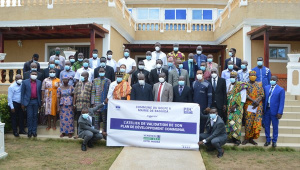
To implement its 2020-2025 development program, the Golfe 6 municipality (in the south-eastern part of Lomé) will raise CFA3.4 billion.
The plan was approved last Friday and according to the municipality’s authorities, 44% of the funds will come from the municipality itself, 1% from the civil society, and 55% from partners.
The plan revolves mainly around three axes. The first aims to improve administrative, financial, and sociopolitical governance. The second seeks to develop a diversified, sustainable economy where decent jobs will be created. The third and last axis aims to improve living standards and access to basic social services.
The mayor of the Golfe 6 municipality, Jean-Baptiste Dagbovie, noted that the plan’s major objective is to “improve living standards of all social layers of the population.”
Esaïe Edoh
Covid-19: Government Keeps Price of 50-kg Fertilizer Bag at CFA12,500
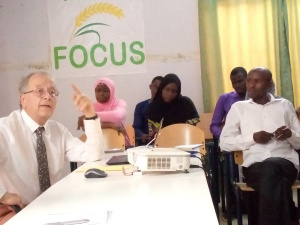
The price of a 50 kg bag of fertilizer is kept at CFA12,500 for the 2021-2022 agricultural campaign. The decision was announced by the government which explained it is part of steps to mitigate the impact of the Covid-19 pandemic and support farmers.
As part of these measures, the ministry of agriculture distributed over 80,000 t of farm inputs. Out of these, 38,000 t have been used. The inputs are dispatched via more than 450 approved sales points across the country.
The government also mobilized certified seeds - 2,566 t of corn, rice, soybean, peanut, cowpea, and sesame seeds.
Lomé’s support to farmers drove up fertilizer consumption in the country. “The volume of fertilizer consumed at the end of the first half of 2021 exceeds by more than 21% the average volume consumed between 2015 and 2020; it reached about 60% in the Savanes,” the ministry of agriculture declared.
Agriculture contributes 40% of Togo’s GDP, and the government, with this in mind, decided to develop the sub-sectors of this industry that have great potential for job creation and export.
Esaïe Edoh
NSCT Organizes Workshop to Boost Field Agents’ Capacities
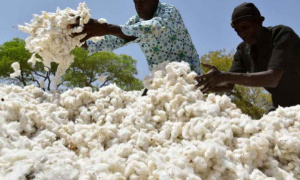
Nouvelle société cotonnière du Togo (NSCT) started last Wednesday a 3-day workshop for its new field agents. This is to reinforce their skills, according to the firm’s management.
The new agents, 82 of them in all, will be trained regarding their function - technical and commercial, and be deployed later.
Ultimately, the workshop aims to boost Togo’s cotton production, by raising the farmer-to-field agent ratio. The NSCT expects cotton output to reach 135,000 t in the 2021-2022 season after it fell by 43% from 117,000t to 66,000 t in 2020-2021.
To improve the situation, the company took many steps, such as disbursing CFA9 billion to refinance the current campaign - the money will be used to buy input for 180,000 hectares of planting areas - or setting up a weather alert system to foresee rain issues experienced in the previous season. It (the NSCT) also spent CFA4.6 billion to rehabilitate factories, replace spare parts, as well as purchase and install management software.
The NSCT, a limited company, is 51% owned by the Singaporean OLAM International Group, 25% by the National Federation of Cotton Producers Group (FNGPC), and 24% by the Togolese State.
Esaïe Edoh