
Togo First
Islamic Development Bank to Support Rural Electrification Projects in Togo with $20M
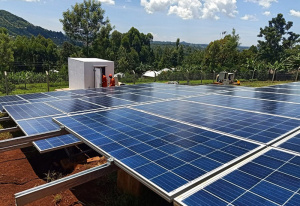
The Islamic Development Bank (ISDB) will spend $20.5 million (CFA11.3 billion) to advance rural electricity projects in Togo. The news was announced by the Bank on Sept. 26, after its board met.
The projects - which involve mini solar panels - aim to “improve human development by providing a sustainable supply of electricity to rural people in Togo who live in dense and sparsely populated areas, far from the existing grid.” In detail, 372 schools, 22,092 households, and 102 health centers will benefit from the financing, said the ISDB.
The Jeddah-based institution is one of Togo’s historical partners when it comes to electrification. It previously loaned the West African country $49 million for projects in the northern region (to expand the CEB’s high voltage network from Dapaong to Mango).
At the end of 2020, Togo’s external debt to the ISDB was CFA61.45 billion, up 15% from 2019 (CFA53.36 billion). This makes the lender the country’s third multilateral creditor, after the IMF and the World Bank.
During yesterday’s board meeting, besides Togo, the ISDB also extended its support to Iraq ($17 million) and Bangladesh ($36.4 million).
Ayi Renaud Dossavi
Why did Sanlam sell its life unit in Togo to NSIA?
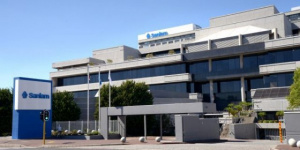
“This is a bipartite agreement between our group Sanlam and the NSIA group,” commented Simon Pierre Gouem, MD Sanlam Togo, after the group sold some of its insurance units to the Ivorian NSIA.
“Sanlam sold its life insurance units in Togo and Gabon, its non-life units in Congo and Guinea to the NSIA group. At the same time it acquired NSIA’s life and non-life units in Mali,” the executive declared.
Gouem, who has headed Sanlam Togo since 2018, explained that the move is “part of a financial strategy, and each group has made a good deal that lines up with its development and profitability goals.”
Leveraging Saham’s strengths
Sanlam, let’s recall, became Africa’s largest insurer after acquiring the Moroccan Saham Assurances for $1.1 billion. In Togo, Sanlam plans to build on Saham’s strengths as the latter was the local market leader in non-life insurance, with FCFA 13 billion in 2020, compared with only FCFA 1 billion for life insurance.
"Selling the Sanlam life unit was strategic. It is a new subsidiary and in the group's strategy, everything we develop must be profitable. Given the results of the life subsidiary, which are not yet visible, the smart move was to sell and focus on the non-life segment. Especially in Togo where we have been recording great results for a long time, we have been very strong for a long time," said Simon Pierre Gouem, the leader in this segment.
"We want to reassure our partners and clients that this operation will not affect the quality of our services. Better still, it will strengthen our financial base and our ability to cover the risks feared by our policyholders and prospects,” he added.
Last May, Saham Assurances officially became Sanlam, the South African insurer. Acquiring Saham enabled Sanlam to expand its presence significantly - it is physically active in 32 African countries, and 44 via joint ventures and partnerships.
Fiacre E. Kakpo
African Solidarity Fund to help COFINA raise CFA5 billion for expansion
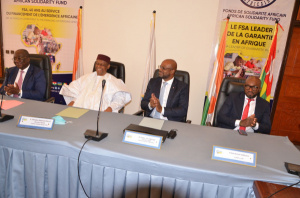
The African Solidarity Fund (ASF) will help COFINA -an Ivorian meso-finance group- raise CFA5 billion for its expansion in West Africa, and Togo especially.
The two signed a guarantee agreement in this framework on Sept. 22. In line with the agreement, the funds will be raised by COFINA’s holding, Compagnie Transnationale d’Investissement (CTI), from Sunu Participations Holding SA - a financial services company, while ASF will co-guarantee the operation with CFA2 billion (40% of the total financing).
The agreement was signed by Ahmadou Abdoulaye Diallo, CEO of the ASF, and Charles-Eric Moulod, Cofina Group's SG and Cofina-Togo's MD.
"Funds mobilized through this operation will serve to extend and develop the CTI network. Through this operation, the ASF contributes to the development of Cofina, a financial institution specialized in meso-finance that is based in eight African countries (Senegal, Guinea, Ivory Coast, Mali, Gabon, Burkina Faso, and Togo)," said Ahmadou Abdoulaye Diallo, head of the multilateral guarantee institution.
COFINA Togo launched its activities in March this year. Since then, it has partnered with many entities that support local entrepreneurship to impact SMEs and local businesses, especially in the agricultural sector.
The African Solidarity Fund (ASF) will help COFINA -an Ivorian meso-finance group- raise CFA5 billion for its expansion in West Africa, and Togo especially.
The two signed a guarantee agreement in this framework on Sept. 22. Under the agreement, the ASF will, alongside SUNU Participations Holding SA, disburse CFA2 billion (40% of the total financing) to co-guarantee the fundraising.
The agreement was signed by Ahmadou Abdoulaye Diallo, CEO of the ASF, and Charles-Eric Moulod, Cofina Group's SG and Cofina-Togo's MD.
"Funds mobilized through this operation will serve to extend and develop the CTI network. Through this operation, the ASF contributes to the development of Cofina, a financial institution specialized in meso-finance that is based in eight African countries (Senegal, Guinea, Ivory Coast, Mali, Gabon, Burkina Faso, and Togo)," said Ahmadou Abdoulaye Diallo, head of the multilateral guarantee institution.
COFINA Togo launched its activities in March this year. Since then, it has partnered with many entities that support local entrepreneurship in order to impact SMEs and local businesses, especially in the agricultural sector.
Ayi Renaud Dossavi
Togo: SOFEMEF has loaned CFA15 billion to local businesses since 2017
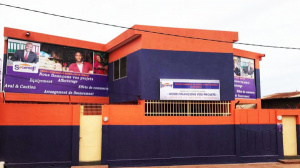
Société Générale de Micro et Méso finance or Sogemef said it has loaned over CFA15 billion to its customers in Togo, between 2017 and now.
The lender, which focuses on small businesses (SMEs, SMIs, TPMEs, TPMIs) emphasize that the funds went to sectors like agriculture, crafts, trade, hospitality, tourism, and construction. It also offered "more flexible guarantees as well as adapted and innovative solutions in all sectors of the national economy."
SOGEMEF recently expanded to another city, Kpalimé. This is as it now competes with COFINA, an Ivorian group, which settled in Lomé last March.
It should also be noted that SOGEMEF claims "solid partnerships" with the ANPGF (National Agency for Promotion and Guarantee of Financing (SMEs/SMIs)), the MIFA (Incentive Mechanism for Agricultural Financing, based on risk-sharing), the FAIEJ (Support Fund for Youth Employability) for the benefit of its clientele, "large of more than 15,000 accounts. For its part, COFINA, which is more recent, has also partnered with MIFA and Cube, an incubator that supports young entrepreneurs.
Ayi Renaud Dossavi
Togo: 88% of business turnover is generated by only 6% of companies declared in the country
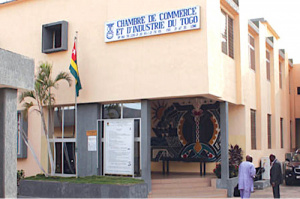
Only 6% of companies registered in Togo earn more than CFA500 million. However, they account for 88% of the total turnover declared in the country.
The figures were disclosed by the Chamber of Commerce and Industry of Togo (CCIT) on Sept. 21. These are the preliminary results of a study the Chamber conducted, with the support of INSEED - the national statistics institute.
Most of the companies that generate the most money in the country are part of the Big Enterprises Association of Togo (AGET). They mostly include subsidiaries of multinationals like NSIA-Insurances, Orabank, Scan-Togo, Atlantique Telecom Togo (Moov), Canal +, Cfao Technologies, Ecobank, Eiffage, Contour Global, and Maersk. But there are also Togolese actors like Zener (formerly Sodigaz).
The study also found that over 90% of Togolese companies are modest-sized and 113,607 out of the 123,48 registered earn less than CFA60 million annually. These SMEs make up the bulk of the productive fabric in Togo.
Togo seeks a consultant to audit the WACA ResIP project
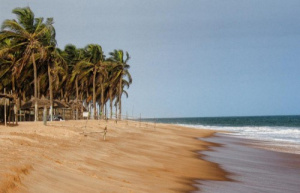
The Togolese government launched a call for applications to recruit an internal auditor to assess the West Africa Coastal Areas Resilience Investment Project (WACA ResIP) which is being implemented in the country.
Auditors interested have until October 1 to submit their offer. The winning applicant will verify that procedures related to general administration, program management, procurement, financial management, and accounting, are followed.
WACA ResIP is an integral part of the West African Coastal Management Program (WACA). The latter aims to boost the resilience of coastal communities in six West African countries: Benin, Côte d'Ivoire, Mauritania, Sao Tome and Principe, Senegal, and Togo. It is funded by the World Bank through the International Development Association (IDA).
The project will help Togo protect its coast by building and rehabilitating 13 short groins and a longitudinal barrier. Initial works should begin next month.
Togo adopts a work plan to implement a universal health coverage project
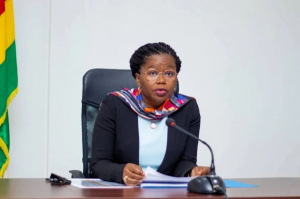
The committee in charge of "Basic Health Services of Quality for Universal Health Coverage in Togo” adopted yesterday a work plan to initiate the scheme. The document was adopted during the second session of the committee; the meeting was chaired by Togo’s PM, Victoire Tomegah Dogbe. The plan covers the period from July 2021 to December 2022.
Conceived by the government and financed by the World Bank ($70 million), the project concerned spans five years, from 2021 to 2026.
It has five major goals: increase the demand for and supply of quality health and nutrition services, bring health facilities and services closer to households, strengthen the national social health insurance scheme, improve stewardship, monitoring, and management, and emergency response.
Ivorian Insurer NSIA acquires three of Sanlam’s subsidiaries, including Togo’s
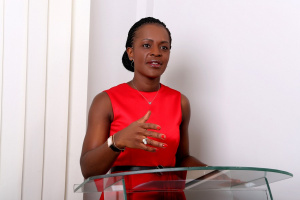
NSIA - the Ivorian Insurer - has acquired four Sanlam subsidiaries, including its Life Insurance unit in Togo. The three others are Sanlam's Life Insurance unit in Gabon, Non-Life Insurance in Congo, and Non-Life in Guinea, a statement read.
“For 26 years, the NSIA Group has been undertaking a controlled development strategy for its activities. This has enabled us to establish ourselves in each of the countries where we operate. Today, we are strengthening our presence in Togo, Gabon, Congo and Guinea. For all our stakeholders, this operation heralds promising prospects,” said Jean Kacou Diagou, Chairman, CEO, and founder of the NSIA Group.
At the same time it is expanding in some countries, NSIA sells its life and non-life insurance units in Mali to the South African Sanlam (formerly Saham in Togo).
Despite selling part of its activities in Togo, Sanlam claims that Lomé will remain at the heart of its development strategy. "Sanlam will continue to deploy its multinational and pan-African strategies through its platforms in Casablanca and Lomé. They will continue the usual coordination and management of our programs via our SPA network or through partnership agreements," said the group.
Sanlam Togo, let’s recall, was initially controlled by the Moroccan Saham, before passing under South African control. The transfer from Saham to Sanlam was finalized in 2018, for more than $1 billion. Subsequently, the brand’s identity was changed last May.
Togo shares its post-covid recovery strategy during a forum that regrouped least developed countries
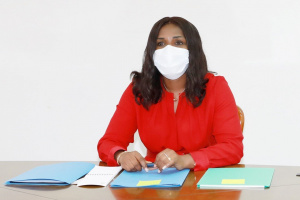
Togo presented its post-Covid-19 recovery strategy to the international actors of the LDC (Least Developed Countries) Group, during a ministerial meeting last weekend. The country was represented by Sandra Ablamba Johnson, Minister Secretary-General of the Togolese Presidency.
“The Covid-19 crisis is unprecedented in both scope and suddenness. Estimates show it cut the GDP by 4 percentage points (from 5.3% in 2019 to 1.8% in 2020),” Johnson said.
That is why, added the official, Togo adjusted its development strategy, by adopting a new government roadmap covering the 2020-2025 period and launching a Response-Resilience-Recovery strategy to contain the virus, ensure growth, and achieve the 4.8% growth forecast for the year.
Moreover, the country will keep fostering investment in high-potential sectors - a strategy marked by the launch of the PIA and solar plants.
During the recently held international forum, Lomé asked for a greater international mobilization for poor countries - especially regarding access to vaccines - as financing to LDCs “has dropped drastically.”
“This is the place to solicit once again the support of the United Nations for the mobilization of international partners and financial institutions through the reallocation of Special Drawing Rights (SDR) to support the recovery of African economies and universal access to vaccines,” the Secretary-General declared.
There are currently 46 countries falling under the LDC category and most of them are in Africa. This category was created in 1971 by the UN.
BCEAO has injected CFA610 billion into the Togolese economy since the month began
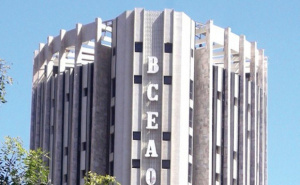
So far into the month, Togolese financial institutions asked and obtained CFA610 billion from the Central Bank of West African States (BCEAO).
In detail, the entities secured CFA425 billion on Sept. 6. The funds were collected separately - CFA243 billion at the monthly window and CFA182 billion (for the interbank market) at the weekly window.
The remaining CFA185 billion were raised on September 1, via the weekly refinancing window. Again, the funds were destined to the interbank market.
The BCEAO has poured CFA7,919 billion in all WAEMU countries since the beginning of this month - respectively CFA1,709 billion via the monthly window and CFA6,255 billion in weekly refinancing (on Sept. 6 and 13).
Togolese lenders secured 7.7% of the total amount the Bank injected in the region over the past three weeks. Côte d’Ivoire had the lion share (25.3%), followed by Senegal (19.6%) and Benin (14.3%).