
Togo First
PIA ready to host more Togolese investors
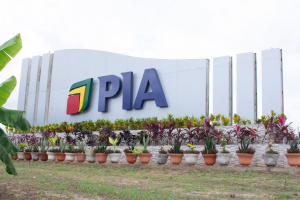
After Togo Wood Industries and Togo Agro-Resources, Adetikope’s Industrial Platform (PIA) could host more Togolese companies.
Indeed, Laurent Coami Tamegnon, chairman of the National Employers’ Council (CNP-Togo), urged the members of the entity he heads to consider the option.
While recently visiting the PIA, Tamegnon explained that his call aimed to “spark interest in the members so that they can also find a spot on the platform’s site.”
The PIA plans to open a single window to help investors easily complete administrative procedures required to join the platform. This window should regroup representations from the Business Formalities Center, the Togolese Revenue Authority (for taxes and customs), the Immigration service (for the issuance of work and stay permits) as well as environmental protection bodies.
Séna Akoda
Covid-19: Government orders vaccination of all hotel staff in the Grand Lomé region

“As part of his many efforts to fight and eradicate the pandemic, the Head of State, after health personnel, has ordered the vaccination, with no age differentiation, of all staff members of hotels in Grand Lomé.” This was announced last Friday by Kossi Lamadokou, the Togolese minister of tourism and culture.
Any hotel worker who refuses to be vaccinated will be sent on a technical leave until the pandemic ends, the minister warned in a written address to the heads of the country’s hotels.
The move was motivated by an urgent need to slow the spread of the virus. Hotels, it should be noted, are significant vectors of this spread, given their activities.
Daniel Agbenonwossi (Intern)
BOAD wins Sustainability bond of the year award for successfully issuing its first sustainable bond ever
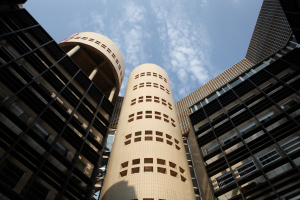
The West African Development Bank (BOAD) has won a 2021 Environmental Finance Bond Award in the category “Sustainability Bond of the year - supranational, sub-sovereign and agency (SSA).” The prize rewarded the success of the Bank’s first sustainability bond, the first to be issued in Africa. “It is with pride that I accept, on behalf of the Bank's teams, the 2021 Sustainability Bond of the Year Award given to the BOAD,” said a delighted Serge Ekué, President of the BOAD.
The regional Bank raised a total of €750 million ($890 million) through the 12-year sustainable bond. The latter attracted over 260 international investors, most of whom are located in the United Kingdom and Europe. “It was oversubscribed six times, with a total demand amounting to €4.4 billion,” according to the published results. This is a true record, both within the WAMU and Africa.
The BOAD will use the funds mobilized to finance projects with a high social and environmental impact. Parts will also help boost the financial institution’s capacities to invest in key sectors with high social and environmental impact, such as agriculture and food security, renewable energy, basic infrastructure, health, education, and social housing, according to the information released.
The Environmental Finance Bond Awards are given by environmental-finance.com, a specialized news website.
Séna Akoda
Chap Chap, a new delivery service starts operations in Togo

A new delivery service, Chap Chap, has launched operations in Togo. The announcement was made on April 1 by the company which stated: “Our service is officially operational for your parcels and mail shipment”.
According to Alao Lawal, Chap Chap’s founder, the particularity of the new delivering service is that it is exclusively digital and uses geolocalization. In Togo, Chap Chap joins Delivroum, another service recently acquired by Gozem.
Chap Chap has a website and a mobile app, just like Kaba Delivery which also works in Lomé.
Séna Akoda
In 2019, exports from Togo to Niger exceeded $80 million

In 2019, Togo exported over $80 million worth of goods to Niger, according to data gathered by the UN.
The exports include mainly livestock and oils (valued at around $25 million), as well as plastics and derivatives ($14.5 million). There were also vehicles, sugar, iron, steel, wines, fabrics, alcohol drinks and other beverages.
This makes Niger Togo’s fourth export destination over the period reviewed, with 8.9% of all Togolese exports. The new performance is far better than that recorded in 2018; it stood at about $38 million.
The increase is attributable primarily to the Port of Lomé’s performances which were significantly driven up by the Togolese government’s efforts to make the infrastructure a logistics hub across the region.
It should be noted that President Gnassingbé was in Niamey on April 2, 2021, to take part in the swearing-in ceremony of Niger’s newly elected leader, Mohamed Bazoum. It is to be expected that bilateral cooperation between the two countries, at the trade, politial and diplomatic levels, will further improve, especially given growing talks of an open market in Africa.
Séna Akoda
Nunya Lab launches call for projects to digitize public services

The Nunya Lab incubator urges young Togolese entrepreneurs, startups, and professionals to run in its Hack your Administration contest. The latter promotes digital innovations in public services.
Themed “Digitizing public services to better help citizens,” this hackathon has a winning prize of CFA3 billion. Applicants must submit their projects by April 10, 2021.
In effect, these projects can be in any of the following areas: health, business startup, tax management, delivery of nationality papers, insurance, education, visa issuance, employment and land.
The projects may consist of the design and delivery of products or services, computer software, mobile applications, websites or computer devices.
Daniel Agbenonwossi (intern)
The Airport of Lomé resumes process to renew its airdrome certificate
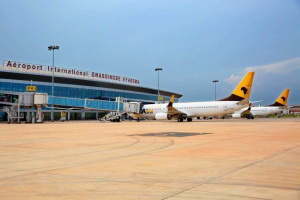
The Société Aéroportuaire de Lomé Tokoin (SALT) has resumed steps to renew its airdrome certificate after halting the process in 2019 due to Covid-19.
In this framework, experts, from Senegal, Niger, and Togo, are gathered since March 29, 2021, with the executives of the entity which manages infrastructures at the International Airport of Lomé (AIGE).
For two weeks, all the parties meeting will assess the airdrome facilities ensuring they are safe for use and confirm the safety of the Togolese air space. This assessment, the AIGE indicates, “is the 3rd out of 5 phases of the process to examine equipment, facilities, and operational procedures in line with applicable certification standards.”
The five phases concerned are the expression of interest by the applicant, the formal application including the evaluation of the airdrome facilities and equipment, the issuance or refusal of the airdrome certificate, the publication of the status of the certified airdrome, and the required details.
According to the experts gathered, emphasis will be put on how efficiently the applicant will manage its operations and potential issues will be addressed to the applicant in written form. They further observed that it would “befall the applicant to take the necessary measure to tackle these issues” before securing the requested certificate.
The SALT’s airdrome, it should be noted, has been operating for a year with a provisional certificate issued by the National Civil Aviation Agency (ANAC).
Daniel Agbenonwossi (intern)
The BOAD plans to double its capital

On Wednesday, March 31, 2021, Serge Ekue, president of the West African Development Bank (BOAD), announced that the institution plans to double its capital.
“We plan to double the Bank's capital by structuring a capital increase operation in which member states and the BCEAO will be the reference shareholders, with the possible entry into the capital of strategic partners rated AA or higher,” said Ekue.
The project will be discussed at the next Council of Ministers of Finance of the WAMU to know the predisposition of member countries to follow through with the process. The latter should in effect allow the BOAD to increase its equity to about 1,626 billion CFA francs.
Initiating the Djoliba plan...
The capital raising as well as the structuring of the shareholding will be an essential component for the new Djoliba plan, a strategic program covering the 2021-2025 period. And while this plan revolves around certain priority sectors, others should not be left out, the Beninese financier said.
“The Bank is committed to providing about CFAF 3,300 billion (€5.03 billion) of which at least ¼ will be used to support the private sector; this is an increase of about 50% compared to the financing put in place under the previous plan,” said Ekué.
To achieve its ambitions, the BOAD aims to raise its current BBB rating, from Moody's and Fitch, by two notches. Doing so should enable it to keep mobilizing funds on the international markets.
Through this investment program, the Bank intends to help develop 12,170 hectares of land for the production of 170,300 tons of rice per year.
In the energy sector, the monies will serve to install an additional 380 MW, with a minimum share of 39% generated from renewable energies. While it just mobilized €750 million in bonds focused on sustainable development goals, the BOAD has committed to finance projects that will save 18 million tons of CO2 and increase average drinking water production by 87,700 m³/day.
Already much active in the road infrastructure sector, the Bank is expected to back the construction of 12,700 km of roads to improve transportation and facilitate the movement of people and goods across the region.
The institution headed by Serge Ekué since August 28, 2020, expects all these actions to generate 244,000 jobs; 16,700 of these are expected to be created by MSMEs, which, so far, have directly benefited from only 2% of BOAD's loan portfolio.
A looming overhaul
While the positions of vice-president and chief economist have just been created within the Bank, Serge Ekue announced that more profound reforms will follow in the coming months. The former Natixis executive said he will soon have a second vice-president, as part of the Oasis project, which he defines as “an internal change management project.” “The BOAD of tomorrow is under construction,” he added. This is as the Bank plans to “acquire the capacities required to be more efficient across the entire value chain: origination, preparation, structuring, financial structuring, monitoring of the physical and financial execution of projects, and ex-post evaluation.”
Fiacre E. Kakpo
Electricity: Two years after its announced restructuring, the CEB now moves towards its dissolution
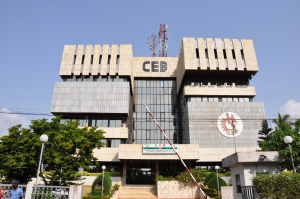
“The High Inter-State Council proposes to the Heads of State the dissolution of the Communauté Électrique du Bénin (CEB). The chairmen of the High Inter-State Council of the CEB are responsible, each in his or her area of responsibility, for implementing this decision, which takes effect from the date of its signature.”
The decision was taken last week’s ending, during the 105th session of the CEB. The related agreement was signed by the Togolese and Beninese ministers of Energy and Mines, respectively Mila Aziable and Dona Jean-Claude Houssou.
Unpaid bills
For over half a century, the CEB marked the two neighbors' power industry. Finally, however, it appears to have suffered many months of troubles - economic notably - including accumulated debts to Nigeria, one of its suppliers. The situation led Nigerian President, Muhammadu Buhari, to threaten, repeatedly, to cut power supply to Togo, Benin, and Niger, if these countries did not pay the $16 million they owed his country. At the time, the Nigerian leader had said that power supply is not charity.
Out of the amount owed, Togo, until 2020, was the only country to have cleared part of its debt. Lomé indeed made a payment of N1.51 billion (CFA2.16 billion) to Nigeria, according to a report recently released by the Nigerian Electricity Regulatory Commission (NERC) and covering the second quarter of 2020.
Ultimately, it is up to the heads of state of Togo and Benin, Faure Gnassingbé and Patrice Talon, or his eventual successor, to endorse and seal the acts of their representatives in the Interstate Council, which heralds a scheduled dissolution of the joint institution responsible for producing and transporting energy in both countries. According to some experts, this denouement should not be shocking considering recent events the CEB recorded.
A predictable turn of events
Indeed, even before the dissolution was announced, the two nations had started, since January 1, 2019, independently importing the energy they need. Before that, it was the CEB that was tasked with ensuring the production and transport of electricity for Benin and Togo and the two States had committed not to sign any deal separately.
In the wake of these events, the corporate purpose of the CEB was amended, turning the joint entity into a “power transmission system operator with the charge of continuing to operate the Nangbeto dam and the two gas turbines installed in the two countries.”
It has been placed under provisional administration. “A transitional management will be put in place from January 1, 2019,” the two countries had announced.
Séna Akoda
The dialogue on the integration of environmental issues in development challenges has been rescheduled for April 1

Initially scheduled for March 11-12, the dialogue on the integration of environmental issues in development challenges will finally take place on April 1 and 2, 2021.
Organized by the National Agency for Environmental Management (ANGE), the event will be sponsored by Togo’s Prime Minister, Victoire Tomegah-Dogbe. It will be held in Lomé.
Placed under the tutelage of the ministry of environment and forest resources (MERH), the ANGE helps citizens protect the environment.
During the dialogue, the place of this entity will be discussed, concerning Togo’s efforts to secure funds for major projects.
Among expected participants are representatives of State institutions, UN bodies, and civil society actors. There should also be figures from Togo Invest, Kékéli Efficient Power, and the MERH.
Séna Akoda