

Togo First
Togo: Microfinance institutions slow down on lending as overdue loans spike amid Covid-19 pandemic

Amid the Covid-19 pandemic, microfinance institutions active in Togo considerably lowered loans to the public in the nine first months of 2020. Indeed, after recording two-digit growth in the years before, unpaid loans from these entities had grown by 0.7% only at the end of September 2020, data from the central bank of West African States (Banque centrale des Etats de l’Afrique de l'Ouest - BCEAO) shows.
Meanwhile, overdue loans have risen across the WAEMU over the period under review. Indeed, the gross deterioration rate of the credit portfolio of microfinance institutions operating in the region grew from 7.6% to 9.1% between Sept. 2019 and Sept. 2020. This is far above the 3% norm set in the sector.
The situation caused decentralized finance systems to be more cautious with the loans they grant.
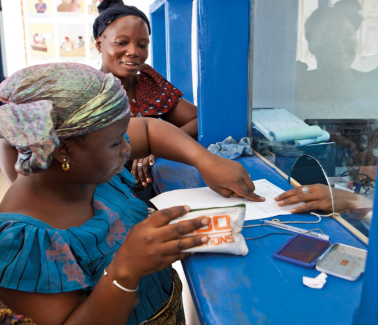
Deposits are on the rise
Regardless, in Togo, deposits kept increasing over the period. Year-on-year they grew by CFA20.3 billion or 8.7% over the period covered.
The country, with its population of 7.8 million people, recorded the fourth-best performance in this segment in the WAEMU. It was behind Côte d'Ivoire (+44.6 billion or 13.4% y/y), Burkina Faso (39 billion or +15.3%), and Benin (31.9 billion or +26.8%).
After Togo came Senegal (+17.32 billion, +4.5%), Mali (+15.26 billion, +14.2%), Niger (+490 million, +1.9%), and Guinea Bissau where deposits slumped by CFA2.4 million (-2.5%).
According to BCEAO, the overall upward trend was “favorable to financial inclusion, in a context where restrictions imposed due to the health crisis were gradually being lifted”. Across the whole Union, deposits made soared by CFA169 billion, from 1,454 billion to 1,623 billion (+11.6%), year-on-year.
Ayi Renaud Dossavi
And the new boss of the Vivendi group in Togo is...

Armand Sato is the new boss of Vivendi Africa, Togo. Before that, he was the technical director at Canal+’s Indian Ocean division.
At Vivendi Africa Togo, He replaced Alexandre Cohen (who moved to the headquarters of Canal+ International in Paris). He thus takes the head of Togo’s leading internet access provider (and fiber optics provider as well), with its Canalbox offer.
This happens in a context where the group is expanding across Togo, especially in the TV content sector and by opening movie theaters.
Ayi Renaud Dossavi
Government issues new warning to illegal occupants of coasts

All those settled illegally along the Togolese shores have until March 3rd, 2021, to vacate the public domain. This is the latest warning of the government after the one issued last August.
It came from the Ministers of Territorial Administration, Security, Maritime Economy and Urbanism, in a joint statement. At the set date, “legislative measures and regulations against violations will be strictly applied”, the officials said
Let’s recall that in Togo, the maritime public domain includes the sea, lagoons, salt ponds, rivers, navigable rivers. No third party is eligible to hold a deed or own the space. In the actual case, illegal occupants must vacate the land which will host some projects, such as the program tackling coastal erosion and sea pollution.
In this regard, some, notably taxi-drivers associations, have initiated talks with public authorities to remain on part of the area concerned. The drivers use the space as terminal.
After Lomé and Kara, Gozem expands services to a third city in Togo

It has been two years since Gozem started operations in Lomé. Recently, the uber-like company expanded its offer to Tsévié, a city located 35 km north of Lomé.
Thus, since February 3rd, residents of Deve, Kpali, Kpatefi, Boloumodji and surrounding areas can book Gozem bike drivers, said a source close to the startup.
Tsévié is the third Togolese town Gozem serves since its establishment in the country. Besides bikes, it also provides transportation of goods and people with tricycles and cars. Soon, delivery should follow.
Séna Akoda
ANPGF trained 107 young entrepreneurs in Kara last week

107 young male and female budding entrepreneurs received a training session on entrepreneurship culture and skills to start a business between February 1st-3rd, 2021 in Kara
The training was organized by the National Agency for Promoting and Guaranteeing to Finance for SMEs and SMIs (ANPGF), headed by Naka Gnassingbé de Souza (pictured below).

ANPGF was established by the government to “support and train small and medium enterprises but also micro enterprises operating in goods and services-producing sectors”. Its main goal is to make it easier for these businesses to get financing.
Séna Akoda
Togo: Construction works on rural roads behind schedule
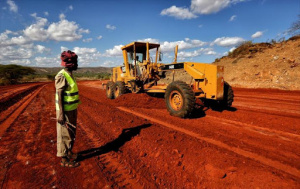
Last week, the Ministry of rural roads published an assessment of construction work on rural roads carried out under the Rural Roads Support Program (Programme d'appui aux pistes rurales - PAPR).
Out of the four regions covered by the project, only the savannah region shows optimal progress in the works.
Savannah region
Indeed, works on the 53 km of roads in this region have reached an average progress rate of 16.6%. The roads in question are the Ayikpere-Mandiki-Koumongou (26.5 km) and the Mougou-Centre-Gbeti-Vapore-Tonton (26.5 km) axis.
This is slightly higher than the initially expected rate (13.2%). The works, which were launched in June 2020, are expected to last 12 to 14 months.
Kara region
In Kara, three road segments are being worked on. Overall, these roads span 52.2 km and construction works on them have reached 9.3%, thus 3.2% less than expected. These works also began in June 2020 and should be completed within the same period as those in the Savannah region.
Plateaux region
In the Plateaux, the works carried out in the Haho and Ogou prefectures are 63% complete. Regarding the deadline, 98% of the 14months deadline has been used
Maritime region
Here, construction works cover 31 km of roads. They began in December 2019 and have reached an 80% completion rate. They should help open up communities located in Zio and should have been completed last December.
Let’s recall that earlier last week, the minister of rural roads, Kanfitine Tchede Issa, issued a statement warning firms late on the works they could be sanctioned if they fail to catch up and gave them two months to do so.
Klétus Situ (intern)
Construction works on Sokode-Bassar road to cost CFA35 billion
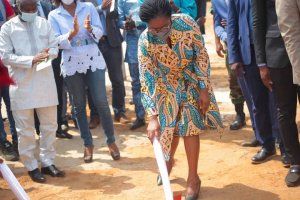
An estimated sum of over CFA35 billion have been dedicated to the construction works on the 75 km-long Sokodé-Bassar road launched last Saturday.
The works were launched by the Prime Minister herself, Victoire Tomégah-Dogbé. The project, which is being executed by Soroubat’s local subsidiary, includes expanding, and asphalting the Malfakassa bypass and the exit connecting the N°1 National Route to the N°17 National Route. The project is scheduled to be completed in 24 months.
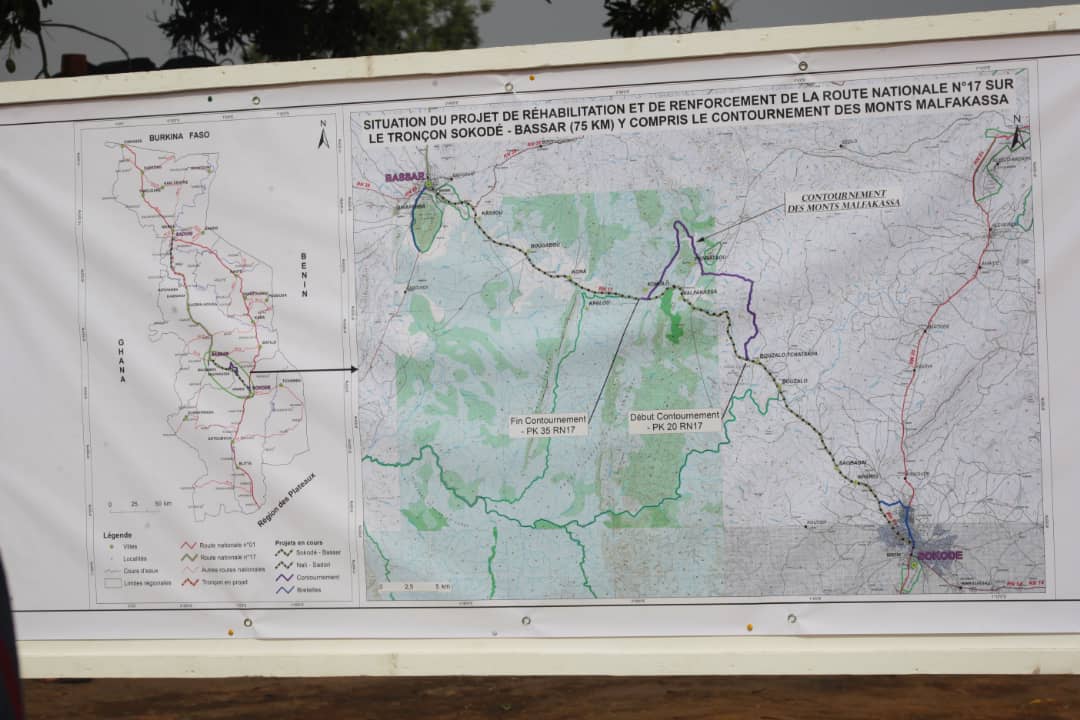
Souroubat Togo is also responsible for enlarging part of the Togokomé-Aneho road (20 km) and has already done the same for a 26.1 km-long axis on the Kpélé Govié –Atakpamé road (66.1 km).
Séna Akoda
Togo: 6,500 tons of seeds to be distributed in the 2020-2021 agricultural season

During the 2020-2021 agricultural campaign, farmers will receive 6,500 tons of certified seeds from seed producers. This was the key outcome from the meeting held this week in Kara between the network of seed producers of Togo and heads of food-producing sectors.
Commenting with regards to the way the seeds will be distributed, president of the seed producers networt, Balintiya Konsana revealed that "talks are ongoing with the Agricultural Fertilizers Management and Supply Centre (CAGIA) to stock our seeds in stores where fertilizers are sold".
Moreover, seed producers said they took measures to facilitate the identification of seed varieties. Starting this year, the seeds sold to farmers will be labeled.
During the meeting, it was also revealed that the TGX1914F and the IR841 seed varieties were respectively picked for the soybean and rice sectors. Maize growers for their part will have the choice between short-cycle and long-cycle varieties depending on the desired yield.
Klétus Situ (intern)
Pharmacists adopt a collective convention to improve their working conditions

After five years of negotiation, Togolese pharmacists finally inked their collective convention that will considerably improve their working and living standards.
This was announced by Ekoué Ekoué-Bla, general secretary of the Union of Private and Wholesale Pharmacists of Togo.
Among others, the convention also witness the increase in wages of workers in the pharmaceutical sector, a recalculation of working hours and payment of overtime.

Both the workers in the industry and the National Order of Pharmacists of Togo rejoice over the news. Dr. Innocent Kpeto, a member of the order, said the convention is “a huge step toward the modernization of the pharmacy sector in Togo”.
The collective convention should also improve relationships between workers and their employers, even if there is already very little friction between these two groups.
Séna Akoda
Portfolio of African Lease Togo valued about CFA10 billion

To date, the portfolio of African Lease Togo (ALT) is valued at about 10 billion CFA. This was revealed to Togo First by the firm’s managing director, Toussaint Sossou.
Active in Togo since 2019, subsequent to the adoption of the law on leasing, the company significantly supported businesses over a short period. At the time it started activities in the country, Sossou had declared: “Through leasing, African Lease Togo will obtain professional material and equipment for very small enterprises, small and medium enterprises, and small and medium, industries, giving them the option to buy or lease over long periods of time.”
ALT, whose operations are approved by the ministry of finance and economy, covers agriculture, agribusiness and construction.

In tandem with the Incentive Mechanism for Agricultural Financing based on risk-sharing (MIFA), African Lease Togo arranged the purchase of tractors for farmers. The related investment was 1.5 billion CFA.
Also at the end of Q2 2020, 15 new MAN trucks and 15 SCHMITZ CARGOBULL trailers were provided to Brasserie du Bénin (BB Lomé), for nearly one billion CFA.
It should be noted that ALT increased its capital from CFA3.1 billion to 3.5 billion in order to expand its leasing-factoring activity.
Séna Akoda