

Togo First
World Bank forecasts a growth rate of 3% for Togo’s economy in 2021
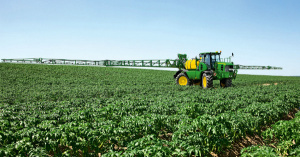
The Togolese economy is expected to expand by 3% in 2021. The forecast was disclosed in the World Bank’s latest Global Economic Outlook report published this month.
With the projection, the Bretton Woods institution consolidates perspectives for a rebound this year. However, the figure announced by the Bank is lower than the 4.7% growth rate Lomé hopes for, “provided that the pandemic is quickly brought under control.”
The economic dynamism expected for the country should be driven by an increase in national public and private, as well as foreign investment, in line with the national development plan (PND), knowingly in agriculture, energy, ports, airports, and infrastructure. Among other factors that will contribute to the economic revival of Togo is the takeover of the cotton sector by the Singaporean company Olam and the commitment of its subsidiary Arise in the construction of the Adétikopé Industrial Park, a flagship project of the PND.
At the regional level, Sub-Saharan Africa should experience “moderate recovery in 2021, with a growth rate of 2.7%,” the World Bank’s report states.
Klétus Situ KOMKO (intern)
Togo’ Inclusive finance fund granted almost CFA100bn in loans in 2020
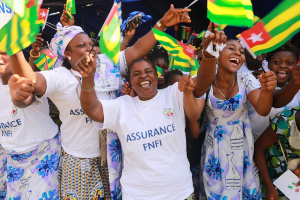
As of Dec. 31, 2020, the sum of loans granted by the National Fund for Inclusive Finance (FNFI) had exceeded CFA98 billion, according to recently released statistics.
In the months closing the year 2020, the institution had provided more than CFA11 billion via its partnering microfinance institutions.
Let’s recall that in 2019, loans provided by the FNFI amounted to CFA87 billion, making it the third-best performer in terms of financial inclusion across the West African Economic and Monetary Union (WAEMU). According to the BCEAO report on financial inclusion in the union for that year, Togo was behind Côte d’Ivoire (77.9%) and Benin (77.8%).
Since it started operating, the Togolese Fund has provided 1,766,001 loans.
Séna Akoda
The Pineapple sector is buoyant
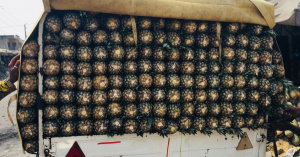
Between 2017 and 2019, Togo’s pineapple output grew by 11.6%, from 27,000 tons to 30,149 tons. The sector, which employs more than 3,200 producers, generated over CFA6 billion per year over the period reviewed. Out of this sum, the State got more than CFA200 million.
The pineapple industry, mainly oriented towards processing and export, produces more than one million liters of pineapple juice, 20% (200,000 liters) of which is destined for the organic market. Like Soya, the Togolese pineapple is mainly sent to the European organic market (which buys 60% of the West African country’s pineapple production, exported fresh and processed).
Driven mostly by the growth of the pineapple industry and a rising demand for organic products, the number of businesses processing and exporting the fruit in Togo soared by more than 60% - from 30 to 50%, over the period reviewed. The increase is also attributable to support from many partners.
In Togo, pineapple (the Cayenne and Brazza varieties) is mainly grown in the coastal and plateau regions (south and central regions). Besides juice production, it is also dried and used to make jam.
Ayi Renaud Dossavi
Togo looks to collaborate with Pfizer BioNTech to get more Covid-19 vaccines
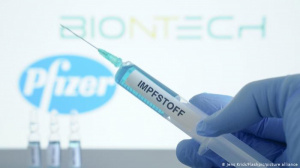
Besides the Covax initiative to ease access to the novel coronavirus vaccine, Togo is seeking other ways to acquire it - notably through a partnership with the U.S firm Pfizer BioNTech. This was disclosed by the national team coordinating the response to the pandemic (CNGR), last Wednesday.
“We will have doses well before the arrival of covax vaccines in June,” said Col. Djibril Mohaman, who heads the CNGR. He stressed that the country wants to anticipate the pandemic which so far has killed 70 people in the country.
“The coming vaccination campaign will thus mobilize the whole health system and will first cover medical staff, those above 50 years, and those less than 50 years with comorbidities,” indicated a statement from the council of ministers held last Wednesday.
After this group of people, students, teachers, public servants, and parastatal workers, as well as security forces will be next.
Ayi Renaud Dossavi
Togolese government to audit management of school fees across the country

The government will carry out a mixed control and audit of school fees management in all junior and senior high schools in Togo. The news was disclosed by the ministry of education, Dodzi Kokoroko.
The mission will be conducted by external experts and agents of the ministry of education. Also involved in the operation are the regional directorates for education and education inspections, states the official portal of the Togolese Republic.
The project aligns with the public authorities’ decision to improve the quality of services and education. It will enable the government to have a clearer idea of how school fees are collected, the performances of schools, and related demographics.
WAEMU securities: Togo raised CFA27.5 billion for its first issue of the year

For its first issue in 2021, Togo raised CFA27.5 billion (thus 2.5 billion more than the country was seeking) on the WAEMU securities regional market. The sum, secured by issuing fungible treasury bills, will finance the public treasury.
The issue which closed last week, Jan 8, was oversubscribed by WAEMU investors. They generated more than CFA39 billion - a performance that represents a coverage rate of 157.20% and aligns with the trend Togo has been recording on the regional financial market for more than a year.
A year ago, in January 2020, Togo carried out its first issue ever on the same market. The operation - a fungible treasury bill issue - was oversubscribed (276% coverage rate).
Since then, the country has mobilized CFA623 billion on the WAEMU financial market, through 23 successful issues.
Séna Akoda
Togo’s Tax Revenue Authority reveals main tax innovations in 2021
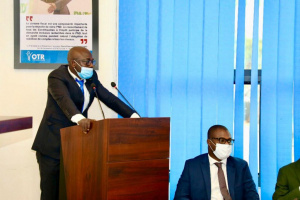
Last Wednesday, while meeting with the press, the Togolese Revenue Authority (OTR) disclosed the major tax innovations of the new finance act.
On the occasion, officials from the authority revealed that many changes have been made to the original draft bill. These include broadening the tax base and strengthening measures to control and tackle tax fraud and evasion, reducing the tax burden, making technical adjustments, and taking into account sub-regional tax regulations.
In detail, this year, value-added tax (VAT) will be imposed on electronic or digital transactions, i.e. services, operations, advertising, and others, offered by Togolese residents or businesses subjected to the Togolese law.
Also, it is now compulsory for bailiffs, authorized customs agents, and other administrative authorities like notaries to request, hold and declare any information regarding beneficial owners of businesses and other entities to which they provide their services.
Besides broadening the tax base to boost tax and customs revenues, the OTR reduced tax pressure on young entrepreneurs who pay the unique professional tax (TPU). From CFA300,000, the TPU was reduced to 20,000 CFA for the year 2021. Moreover, to encourage the population to adopt the motor vehicle tax, the Togolese government has significantly reduced the tax burden, which is considered too high for taxpayers.
The tax revenue authority also observed that, in line with efforts to improve the business climate in Togo, it will no more collect any fee when a guarantee on immovable property (a mortgage registration) is released and canceled.
In the same vein, the registration fee for transferring a property (resale) fell to 0.6% against 6% in 2020, while the fee for parceling was cut from 1% to 0.3%.
In addition to these, some technical changes were also introduced. For example, the new tax law allows businesses to issue a provisional declaration of their annual performances and regularize it within the following three months.
Séna Akoda
Loan repayment extension amid Covid-19 exceed CFA18 billion
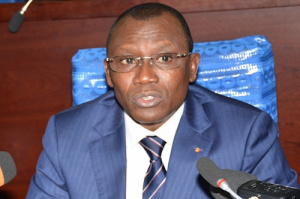
In Togo, the extension of credit granted to companies and individuals since April 1, 2020, due to the health crisis induced by the Covid-19, amounts to more than 18 billion FCFA.
Let’s recall that, as of September 30th, the Central Bank of West African States (Bceao) instructed credit institutions to grant, without any interest charge or late penalty, three months extension of maturities to companies that request the delay due to struggles caused by the pandemic.
In detail, as at the end of September 2020, maturity extensions had been granted to 212 companies for a total of 15 billion FCFA. On the other hand, 1361 individuals have requested and benefited from the incentive for 3 billion FCFA.
This was disclosed by the minister of finance, Sani Yaya, during the last session of the National Credit Council (CNC) in 2020. According to him, the measure has not only allowed banks to control credit risk, but also businesses and individuals to preserve the quality of their signature and, therefore, maintain their access to financing.
Séna Akoda
Kako Nubukpo joins WAEMU economic commission

Kako Nubukpo, the Togolese economist, has been recently appointed economic advisor of the president of the West African Economic and Monetary Union’s economic commission, Abdallah Boureima.
The former minister of planning, and now former dean of the faculty of economic science and management at the University of Lomé, announced on social networks, thus confirming growing rumors regarding his appointment in Ouagadougou.
It should be recalled that the scholar is one of the key critics of the CFA Franc, which is the currency used by WAEMU’s eight (8) countries. As a new member of the Union’s commission, he replaces another Togolese, Essowè Barcola (who was holding the same position since 2017). Nubukpo’s application was backed by President Faure Gnassingbé himself.
Ayi Renaud Dossavi
Togo to increase funding for scientific research
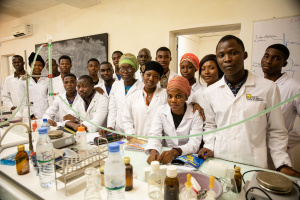
Togo recently adopted a national strategy for research and innovation covering the 2020-2030 decade.
The document was validated by the ministry of higher education and scientific research on December 22, during a two-day meeting which gathered researchers, central directors, as well as the country’s technical and financial partners.
Among others, the new strategy is aimed at tackling Togo’s shortcomings in terms of research, and defining its main directions, taking into account economic and development ambitions falling under the national development plan (PND).
Most importantly, the objective is to solve financing issues, by raising national GDP’s quota dedicated to research. “While African Union states have agreed to invest 1% of GDP in research, here we dedicate between 0.15 and 0.22% of the GDP,” said Prof. Kouami Kokou, national director of research at the ministry of higher education.
The two other main axes covered by the new strategy are “how to provide the country with research structures” and “the transfer of research; how to make research benefit the communities.”
Ayi Renaud Dossavi