

Togo First
In Grand Lomé, market sellers are being sensitized about using e-payment tools to prevent the spread of the Coronavirus
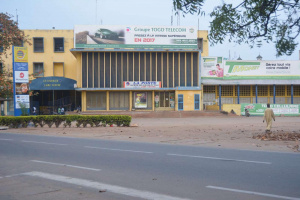
The Post company of Togo has teamed up with the team heading the Novissi cash transfer scheme to inform sellers about the use of e-payment tools in the various markets of the Grand Lomé region.
The tools in question are the post’s Eco CCP e-wallet, and the Tmoney and Flooz mobile money platforms. The initiative aligns with the Covid-19 response which mainly aims at keeping physical contact at the lowest.
Started last week, the campaign in the concerned markets will end this month, according to the Post Company of Togo.
Séna Akoda
In Togo, 60% of Covid-19 cases have recovered
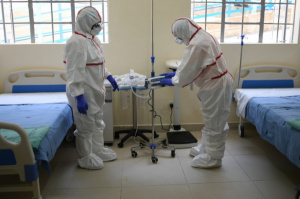
To date, 45 people have recovered from the coronavirus infection in Togo. This is more than 59% of the number of cases reported (81) so far.
Togo is thus one of the countries with the highest recovery rate in the world. Regardless, the death rate is near the global average which is very high.
Recently, two infected patients died. Aged respectively 63 and 39, one was being transferred from the Sylvanus Olympio hospital of Lomé to the designated treatment centre while the second had just been admitted at this centre.
Coronavirus: Doctors at the Sylvanus Olympio hospital quarantined after coming in contact with infected patients

Fifteen doctors working at the Sylvanus Olympio hospital in Lomé have been quarantined. They were in contact with two recently deceased Covid-19 cases.
So far, the hospital has identified at least 40 medical staff (from the hospital’s emergency and pneumology units), including the quarantined doctors, who were in contact with the deceased. Regarding the latter, “aged respectively 63 and 39, they died on the evening of April 15. One died while being transferred to the treatment center and the other just after being admitted at the center.”
Togo has reported 81 Covid-19 positive cases to date. Out of these, 45 have recovered, 31 are undergoing treatment and five died.
Togo: The government identifies agricultural actors, towards creating an agricultural stock market

Togo plans on soon having its agricultural stock market, according to Jérémie Yamouti, head of the crop production at the ministry of agriculture, husbandry, and fishery.
This stock market should support actors of the agricultural sector, knowingly producers, processors, buyers. The project was born from a need to build trust between these various actors and help them find new outlets for their products. In its framework, authorities are undertaking a census to identify all agricultural entrepreneurs active in the country.
The ministry of agriculture thus urges all concerned actors to get registered “as soon as possible.” Information needed includes the name of cooperative or business, status, location, type of activity (production, processing, distribution, etc), production capacity, sector (maize, rice).
Once verified and consolidated, these details will be put on the stock market which any interested person will have free access to. The State will certify businesses using the platform and help them access opportunities.
Séna Akoda
Togo: Water at public standpipes is free until the end of June 2020
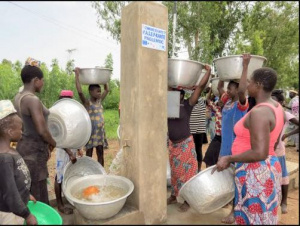
From now till the end of June, water at all public standpipes across Togo is free.
This was recently disclosed by the county’s water utility, Société Togolaise des Eaux (TdE), as part of social measures taken by the government to contain the spread of the Covid-19 in Togo.
The utility hence advised populations to properly use the standpipes, avoid wasting, and respect basic protective measures set by health authorities.
Other social measures put in place by the State to help populations cope with the impact of the Covid-19 response on economic activities include free electricity for the most vulnerable, as well as a cash transfer scheme called “Novissi.”
To date, Togo has confirmed 81 cases of Covid-19, 3 deaths, 35 recovered, and 43 undergoing treatment.
Ayi Renaud Dossavi
Coronavirus: In Togo, 20 banks and financial institutions have contributed XOF100 million to the recently launched Solidarity Fund

In Togo, the Professional Association of Banks and Financial Institutions (APBEF) has contributed XOF100 million to the XOF400 billion Solidarity Fund launched by Togo’s President, Faure Essozimna Gnassingbé, on April 3, 2020, to contain the spread of the Covid-19.
The sum was gathered by 20 members of the APBEF, knowingly banks, insurers, brokerage, and leasing firms, according to the presidency’s official website.
It should be noted that a similar initiative is underway at the national level to raise funds from anyone willing to contribute.
Séna Akoda
Coronavirus: IMF approves immediate debt relief for 25 African countries, Togo included
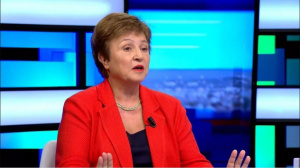
Togo and 24 other African countries will receive immediate debt service relief from the IMF as support against the Coronavirus pandemic. This was revealed in a statement published by the Bretton Woods institution on April 13, 2020.
“I am pleased to say that our Executive Board has approved immediate debt service relief to 25 of the IMF’s member countries (...) as part of the Fund’s response to help address the impact of the COVID-19 pandemic,” IMF’s Managing Director, Kristalina Georgieva, wrote in the statement.
This response, she adds, “provides grants to our poorest and most vulnerable members to cover their IMF debt obligations for an initial phase over the next six months.”
The IMF thus wants to help the 25 nations concerned “channel more of their scarce financial resources towards vital emergency medical and other relief efforts.”
The IMF’s MD hopes that the Fund will provide additional debt service relief to its poorest member countries for “a full two years.”
Similarly, French President Emmanuel Macron recently wrote off part of the debt of countries in need, following requests by Senegal’s President, Macky Sall.
Let’s recall that very recently, the IMF provided Togo $131 million to help the nation fight the Coronavirus.
Ayi Renaud Dossavi
Togo: The government assures that the ongoing academic year will not be canceled
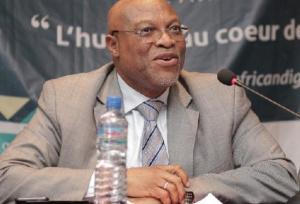
The 2019-2020 academic year will not be canceled. This was disclosed on April 13 by the minister for primary and secondary education, Affoh Atcha Dedji.
The announcement aims at reassuring those concerned by such an eventuality. Let’s recall that all schools have been closed in Togo since March 20th due to the Covid-19.
To continue classes, the ministry of primary and secondary education considers switching to distance and e-learning (TV, radio, and internet).
The government also plans to support around 12,000 teachers from private schools.
Concerning fixed examination dates, the official said: “new dates could not be fixed at the moment.” The same goes for the reopening of schools.
Social safety is key in the fight against Coronavirus, Faure Gnassingbé affirms
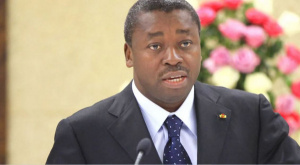
In a recent article published in the Financial Times, Togo’s President, Faure Gnassingbé, declared: “No matter how effective the developed world’s approach to the Covid-19 pandemic might be in terms of protecting public health, it simply will not work in Africa without social protection.”
“Almost 85% of African workers - be they small farmers, street-food vendors, waste collectors, transport operators, or nomadic merchants - operate in the informal sector.” Also, “many survive day to day” so they will be torn between staying safe and surviving.
“Restricting their movement means they will not be able to put food on their families’ tables,” the leader said. He then went on asserting that “the most effective way we can come to their aid is via cash transfers.”
The Novissi scheme
In this regard, President Gnassingbé mentioned the Novissi scheme launched by his government: this is a cash transfer initiative that is “designed to support all Togolese informal workers whose incomes are disrupted by the Covide-19 response.”
It is extremely simple to benefit from the scheme: Any informal worker aged 18 or older whose revenue has been affected by the crisis and who can prove their identity with a valid voting card will receive a state grant worth at least 30% of the minimum wage. More exactly, women will get XOF12,250 per month while men will receive XOF10,500.
“The aim is to help beneficiaries pay for basic daily necessities such as food, sanitation, and communication,” Gnassingbé indicated while noting that his administration has already waived water and electricity charges for the most vulnerable. It will help cushion them from the economic impact of complying with measures implemented to contain the pandemic.
“Women will receive the highest possible payouts, as they are more directly involved in nurturing the entire household. Payments will also be made directly to the mobile money accounts of beneficiaries. This is quick, reduces the risk of fraud and eliminates contact with cash, which many fear may help spread the virus.”
In total, more than 800,000 people have registered for the scheme and more than 383,000 have already benefited. For this program, the government has disbursed more than XOF2.2 billion so far.
“People should not have to choose between death by Covid-19 or by hunger,” declared Gnassingbé while urging other African leaders to adopt similar systems to help their people: “Enrolment is quick. Funds can be transferred rapidly. The system is transparent and easy to audit.”
An unprecedented undertaking
The Togolese president believes this initiative will be an unprecedented undertaking while adding the key role that partners’ support will play in the process. “Now more than ever, the support of international donors, development partners, philanthropists, friends of Africa and, crucially, national diaspora can make a difference.”
“However, victory in the fight against Covid-19 will ultimately be judged not just by our ability to save lives, but also by our ability to keep millions of people from falling back into abject poverty.”
Let’s recall that Faure Gnassingbé also recently put in place a solidarity fund to help Togolese SMEs cope with the impact of the Covid-19 crisis. The State hopes to raise XOF400 billion for this fund.
Covid-19 : Classes at the University of Lomé will take place online
After suspending classes due to the Coronavirus crisis, the University of Lomé has decided to shift to e-learning.
“Measures taken to handle the Covid-19 crisis, notably the closure of schools and universities, have compromised the 2019-2020 academic year. Therefore, the Social and Collaborative Network of the University of Lomé, RESCOUL, which has proved its effectiveness over two years of use will be used more to allow bachelor and masters’ students to continue classes”, the University announced.
Created two years ago, the RESCOUL facilitates interactions between members of the community of the University of Lomé. With it, all students (more than 64,000) enrolled at the university will be able to take classes online.
Séna Akoda