
Togo First
Covid-19: Promising results with Chloroquine?
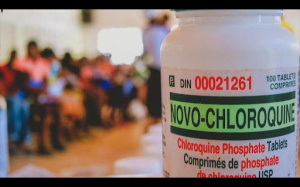
After the first works published by French virologist Didier Raoult on chloroquine as a potential cure for Covid-19, another study showing similar results was recently published.
The second study was conducted at Renmin Hospital in Wuhan (China) on 62 patients aged about 45 years. The patients were handpicked to exclude those who suffer from cardiac diseases, eye, liver and kidney problems (as they can develop serious side effects from using the drug, especially in the event of overdose).
Half of the study’s patients were treated following the same protocol used for coronavirus-infected patients (control group), and the other half received that treatment plus the anti-malaria drug.
Results of the study show that “cough and fever reduced a day or two earlier for the group that was administered the hydroxychloroquine molecule, while pneumonia improved for 25 out of the 31 patients, as against 17 out of 31 patients from the control group. Subjects who were given hydroxychloroquine seemed to recover faster.”
Two patients had minor side-effects: one had skin rashes and the second had headaches.
In addition to these conclusions, it seems that taking the drug when symptoms arise lowers the risks of the disease advancing to a more severe stage.
The tested drug brings hope, in the absence of more efficient protocols. However, more research has to be done to determine the appropriate dosage to treat the infected.
In the meantime, Chloroquine has been widely adopted as a treatment in Africa, Togo included.
Ayi Renaud Dossavi
The BCEAO takes strategic measures to boost e-payment
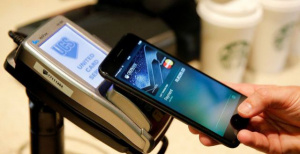
As its member States struggle against the Coronavirus crisis, the Central Bank of West African States (BCEAO) has taken many steps to reduce physical contact and foster prevention measures.
On April 3, the lender introduced new measures to enhance digital transactions instead of hand-to-hand cash exchange. The measures are effective for 30 days, renewable.
No more fees for all minor transactions
The first of the measures concern digital money transfers. Local money transfers involving a sum equal or below XOF5,000 are free. This stands for mobile money, wire transfers, and e-wallet transactions. In Togo for example, last week, mobile operator Togocel announced that all transactions on its TMoney mobile money platform were free. Its direct competitor Moov did the same as instructed by the ministry of communication and the central bank.
Fees exemption for water and electricity bills
Similarly, no fees will be charged for water and power bills paid via mobile money, for bills whose amount is equal or lower than XOF50,000.
Incentives for digital commercial transactions
Traders accepting mobile money payments no longer have to pay commission to mobile operators since April 3rd. Based on how things progress, the measure could be extended after the 30 days, according to the BCEAO.
Regarding fees charged for business transactions conducted using the GIM-UEMOA card, they have been halved (-50%) for sellers. This also aims at pushing the latter to adopt e-payment solutions.
Withdrawal and transfer fees at ATMs cut by 50%
The BCEAO said it will no longer cash in its share of fees charged on wire transfers. It has therefore cut by 50% fees for wire transfers processed through its compensation system, SICA-UEMOA.
In the same vein, costs for withdrawals at any ATM that is part of the GIM-UEMOA network have also been halved. The central bank has in this framework instructed commercial banks operating in the region to ensure sufficient cash supplies to the ATMs.
E-wallet creation and transactions made easier
Issuers of electronic money are allowed to proceed to transactions using mobile data, as long as approval from the sender is obtained, a remote identification process is done and within fixed regulatory transaction limits, the BCEAO said.
Moreover, it is possible to open an e-wallet using only a phone number.
Fiacre E. Kakpo
In Togo, pump prices of oil products have been reduced as announced earlier on
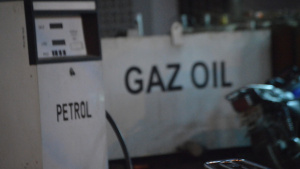
Announced last week by the minister of trade, prices of oil products in Togo have been reduced.
The measure, which took effect today at midnight, brings down the prices of super unleaded (from XOF564 to XOF508 per Litre), kerosene ( from XOF505 to XOF455 per Litre), gasoline (XOF567 to XOF537), and blend (from XOF611 to XOF609).
Meanwhile, prices of cooking gas remain the same with the cylinders of 12.5kg and 6kg respectively sold at XOF6500 and XOF3120.
The prices, it should be indicated, were reduced in a context where global oil price has fallen.
Séna Akoda
Coronavirus: A second batch of the equipment Jack Ma promised Africa is on the way
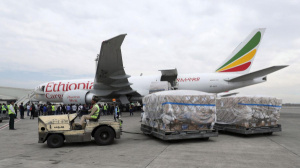
Chinese billionaire Jack Ma recently tweeted that the second batch of equipment to combat the coronavirus pandemic was on the way to 54 African nations.
“That includes 500 ventilators, 200,000 suits & face shields, 2,000 thermometers, 1M swabs & extraction kits and 500,000 gloves,” the tweet reads.
For its part, Togo, which is part of the recipients received the first batch of equipment (masks, testing kits, hand sanitizers, etc) a few weeks ago.
Airlines such as Ethiopian Airlines and Asky are ensuring the transportation of the goods in a context where the aviation sector is hardly hit by the virus.
So far, 52 people have tested positive for the Covid-19. Twenty-two (22) of them have recovered, 3 have died, and the remaining 27 are being treated. Over the continent, 9,793 Covid-19 cases and 443 deaths from the infection are reported as of today.
Government lifts the recent ban on movement of taxi-bikes and tricycles
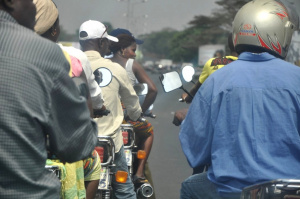
“All suspension measures relative to public transport announced on April 4 are lifted until April 11, 2020.” The government’s decision was broadcasted on the national TVT channel on April 5, 2020.
Therefore, taxi-bikes (also known as “zemidjans”), and tricycle drivers can resume activity for six days.
The government, it should be noted, has taken steps to support the most disadvantaged social and professional groups. In the meantime, public authorities “trust in citizens’ sense of sacrifice to align with efforts made to prevent the spread of covid-19.”
As mentioned in the broadcasted statement, the government had banned on April 4, the movement of taxi-bikes and tricycles in the Grand Lomé area (located in the Gulf and Agoè-Nyivé préfecture). The decision was made by the minister of infrastructure and transport, Zouréhatou Kassah-Traoré, and the minister of security and civil defense, Yark Damehane.
Séna Akoda
IMF approves immediate disbursement of a $131 million loan for Togo to combat covid-19
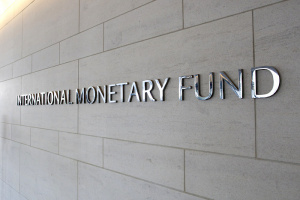
To help it combat the coronavirus, the International Monetary Fund (IMF) will provide Togo with a concessional loan of $131.3 million. The loan is repayable over 30 years at a zero interest rate.
The Bretton Woods institution announced the loan approval in an official note published after the sixth review under the Extended Credit Facility (ECF) program with Togo.
With the new facility, “disbursements made under this arrangement now totals around $336.4 million,” the statement further added.
The monies which are to be disbursed immediately are nearly four times the amount expected initially.
According to the IMF acting president and deputy managing director, Mitsuhiro Furusawa, the economic recovery which was consolidating has now been impaired by the covid-19 pandemic. However, authorities, he added, are taking immediate measures to deal with the social and economic impacts of the pandemic, while preserving the budgetary achievements it has hardly reached in recent years.
The IMF facility is quite timely as a few days ago, President Faure Gnassingbé announced the creation of a XOF400 billion fund to help local businesses and populations cope with the crisis.
Ayi Renaud Dossavi
Togo: Government to help taxi-bikes and tricycle drivers cope amid the covid-19 crisis
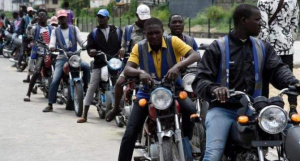
Alongside lifting the temporary ban on the movement of taxi-bikes and tricycles, the government said it will support these actors throughout the health emergency state.
“They have been presented with some options for support,” according to the State Secretary in charge of financial inclusion and the informal sector.
In the same framework, a large number of drivers affected by the crisis were identified and talks with some of them helped find potential options regarding the kind of support they will get.
Séna Akoda
Coronavirus: Government will collaborate with producers and importers of hand sanitizers to keep up with booming demand
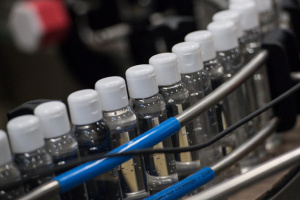
The government of Togo plans collaboration with producers and importers of hand sanitizers. A call for expression of interest was launched in this framework.
The move comes as the country experiences a shortage, and surge in prices of these products which are used to prevent infection to covid-19. Through the collaboration announced, authorities wish to ramp up their production to meet an ever-growing demand, as well as making sure the sanitizers are sold at a fair price.
Producers and importers interested in collaborating with the government can register on the trade ministry’s website, latest by April 6, at 5:30 PM.
Togo's government seeks XOF400 billion to cushion coronavirus' impact on the economy
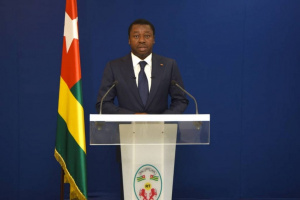
The Togolese government seeks to raise XOF400 million to cushion the economic impact of the coronavirus pandemic in the country.
The sum corresponds to the budget of a fund created especially to preserve the economy against the disease which continues to spread across the continent. This was announced by president Gnassingbé last Wednesday.
No Togolese citizen will be ignored in this battle we are fighting together, the leader said.
The amount mentioned is about 30% of Togo's budget for 2020 (around 1400 billion). It will be used to finance all socioeconomic measures initiated by the government to mitigate the virus' impact on the economy, support businesses, SMEs and SMIs especially.
The funds sought by authorities should come from the State, its partners, and any other willing contributor.
Coronavirus: Togo declares state public health emergency for 3 months
In a speech addressed to the nation on April 1, 2020, President Faure Gnassingbé declared a 3-month state public health emergency in the country. The measure, which “has never been implemented in our country before, reflects the gravity of the crisis we are facing,” the leader said referring to the coronavirus outbreak.
While this state of emergency differs from a lockdown, authorities have imposed, until further notice, a curfew from 7PM to 6AM effective April 2.
To ensure compliance with the set safety measures, a mixed anti-pandemic force was dispatched. The special force which regroups 5.000 security agents was established by decree.
Soon, the government should initiate social measures such as the distribution of funds to those who are most affected by the crisis. In this regard, the President also announced yesterday that water and electricity would be free for three months, for the most vulnerable populations - adding to a reduction of the fees to access water, from XOF75,000 to XOF25,000.
On a larger scale, Gnassingbé announced the creation of a XOF400 billion national fund for economic solidarity to support businesses affected by the pandemic.