

Togo First
Nouvelle Sototoles Launches New Paint Production Unit in Togo
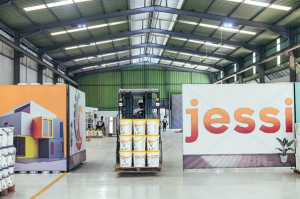
In Togo, Nouvelle Sototoles, a company under Hage Group, launched a new paint production unit, expanding its operations beyond sheet metal and metallurgical products. The new venture, branded Jessi Peintures, has been marketed in the sub-region for 20 years, particularly in Burkina Faso.
Located in the port area of Lomé, the plant required an investment of around CFA1 billion. It can produce up to 20,000 tons of paint annually. According to executives from Nouvelle Sototoles, "the plant uses automated production systems and state-of-the-art technologies, with mixing and packaging robots, as well as integrated quality control laboratories."
The company emphasizes its commitment to sustainability by using eco-friendly raw materials, recycling solvents, and reducing CO₂ emissions. "We aim to produce paints that not only beautify spaces but also respect the planet," they added.
The production will target local and regional markets, where demand for building finishing products is rising due to urbanization and growth in the construction sector. In Togo, the housing deficit is estimated at over 500,000 units, prompting both government and private investments in social housing projects.
The region faces a total housing deficit of about 3.5 million units, with a need for 250,000 new homes each year to keep pace with rapid urbanization and population growth.
Togo and Ghana Resume Border Demarcation Talks

Togo and Ghana resumed talks on the demarcation of their land borders. A two-day meeting was opened on Oct. 8 in Lomé, the Togolese capital, in this framework. The session aims to help both countries agree on the exact boundary line between Borne 1 and the sea.
Participants reviewed previous technical commission sessions and monitoring committee meetings. The review aimed to help national coordinators agree on how to delineate the boundary.
“Our expectations for this meeting are very high. We have already worked on more than 350 km, and we wish to find common ground to enable our technical teams to resume work. I am convinced that thanks to our goodwill and shared commitment, we will overcome any misunderstandings in the general interest of our two countries,” said General Emmanuel Kotia, Commissioner General and Chairman of Ghana's border delimitation commission, at the meeting’s opening.
This joint initiative, which started a few years ago, aims to enhance territorial protection, prevent conflicts, and resolve border disputes between Togo and Ghana. The two countries have already made progress in delineating their maritime borders, reaching an agreement on this issue in 2022.
Esaïe Edoh
Belgian Economic Mission Offers B2B Opportunities for Togolese Entrepreneurs

Ahead of an Belgian economic mission scheduled to visit Togo next month, the Chamber of Commerce and Industry of Togo (CCI-T) invites Togolese entrepreneurs to participate in projected B2B meetings.
The mission will include a plenary session on November 7 at the Hotel Sarakawa, followed by B2B meetings on the same day and November 8.
These sessions aim to connect Togolese companies with potential partners from Belgium, focusing on sectors like industry, finance, technology, energy, the environment, infrastructure, health, digital services, and agriculture.
The economic mission, announced several months ago, seeks to strengthen trade relations between Belgium and Togo, particularly in strategic areas such as infrastructure and transport. About 40 Belgian companies are expected to take part in the mission.
Interested companies must register with CCI-Togo by October 31, 2024.
Port of Lomé: Digital Platform for Handling Procedures Officially Launched
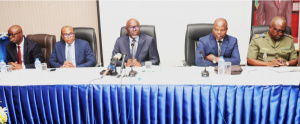
The digital platform for handling procedures related to the Port of Lomé is officially online. Announced a few days ago, the platform was launched on October 8, 2024. This new platform allows service providers to complete all port-related formalities online, from data entry to invoice payment.
Minister of Maritime Economy and Coastal Protection, Richard Kangbeni, explained that the move mainly aims to speed up goods collection, track activities and processing times, and clarify responsibilities to address complaints. "This digitization will enable our port to be even more efficient and competitive, climbing up the world rankings," Kangbeni added.
Though it was just officially launched, the platform has been active since August 2024. It includes features such as online declarations and payments, shipment tracking, and access to information about port procedures and tariffs.
Commenting on the development and its significance, Kombaté Yentcharé, Secretary General of the Autonomous Port of Lomé, said: "Today, without IT, we can't move forward. We can't be one of the best ports in the world if we're not at the cutting edge of technology."
This initiative is part of Togo's efforts to enhance its port operations and improve overall efficiency.
Ayi Renaud Dossavi
Togo: Domestic Receivables Close to CFA2,000 Billion
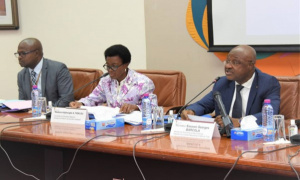
As of the end of June 2024, Togo's total domestic receivables, which include financing provided to both the private sector and the government by banks and decentralized financial systems, reached CFA1,968 billion. This is 4% more than the sum reported for all of 2023–CFA1,890 billion. The Conseil National de Crédit (CNC) disclosed the recent figure during its third annual meeting in Lomé.
According to the CNC, nearly 90% of the receivables went to the private sector, with a significant 41% allocated to micro, small, and medium-sized enterprises (SMEs). The funds also supported real estate projects and equipment purchases for companies on the Plateforme Industrielle d'Adétikopé (PIA).
The CNC attributed this rise in bank lending to the commitment of credit institutions and microfinance organizations to support the national economy, a shift encouraged by the government over recent years. Additionally, the expansion of financial institutions in 2023 contributed to this growth, with Togo having 250 bank branches, 332 ATMs, and 40 other cash machines by the end of that year.
The Minister of Economy and Finance Essowè Georges Barcola, who chairs the CNC, announced ongoing economic reforms as part of the government's Togo 2025 Roadmap to build on these gains. These reforms aim to maintain a favorable macroeconomic environment for financial activities.
The Observatoire de la Qualité des Services Financiers du Togo (OQSF-TG) was established as part of these reforms. The OQSF-TG addresses disputes between financial institutions and consumers, promotes financial mediation, and enhances financial inclusion in Togo.
Esaïe Edoh
Togo Plans New "Tourist Site" Label to Boost Tourism

The Togolese government plans to create a "Togo Site Touristique" label to enhance the country's tourist sites and set quality standards in the tourism sector. This initiative is part of the government's broader reforms outlined in the Togo 2025 roadmap.
The new label will distinguish Togolese tourist attractions, making them more appealing to local and international visitors. According to the "Rapport de mise en œuvre des réformes au premier semestre 2024," published by the Secrétariat Permanent pour le suivi des Politiques de Réformes et des Programmes Financiers, the criteria for this labeling have already been established, and a committee involving various national quality institutions is being formed.
The initiative will also include a comparative analysis of tourism labels from other African and developed countries to align Togo with international best practices. Additionally, plans are underway to digitalize the classification process for tourist accommodations and approval applications. "This activity will make it possible to increase the number of approved and classified tourism operators," the report states.
Furthermore, a new law will be introduced to better organize the tourism sector, addressing recent developments while harmonizing development and promotional strategies. A significant change will involve transferring management of the tourism sector from the Ministry of Culture to a newly established "high-commissariat."
Ayi Renaud Dossavi
Togo Launches Second Edition of National School on Internet Governance

The second edition of the National School on Internet Governance (ENOGI) ended on October 8, 2024. The two-day event was organized by Internet Society Togo (ISOC-Togo). It gathered in Lomé various Togolese internet pioneers, such as Jean-Marie Noagbodji, whose company manages the Togolese internet extension ".tg," along with regional experts.
"Our meeting today comes when the Internet is at a crossroads. As strong advocates for an open, free, and secure Internet, we face significant challenges that require us to rethink our long-held policies and approaches," said Emmanuel Vitus Agbenowossi, President of ISOC-Togo, on the first day.
The event covered key topics including internet governance, cybersecurity, artificial intelligence, and national digital regulation strategies. "We are confronted with issues related to the security of digital infrastructures and protecting users' rights. Cybersecurity remains critical due to rising cyber threats and vulnerabilities, making it essential to ensure a safe Internet for everyone," Agbenowossi declared.
The first ENOGI edition took place in 2021. It was organized in partnership with the African Union (AU) and the European Union (EU) as part of the PRIDA project. The event received nearly 500 applications, reflecting growing interest in digital governance. Out of the 500, 60 participated in online training, while 45 attended in-person sessions in Lomé.
Founded in January 1992, the Internet Society is a global organization based in the United States. It promotes the advancement of computer networks worldwide. Over the past 20 years, the Internet Society has advocated for an open, secure, and interconnected Internet in Lomé.
Ayi Renaud Dossavi
Togo Begins Recruitment for 5th National Agricultural Census
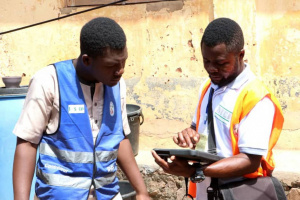
Togo’s Ministry of Planning, Development, and Cooperation is recruiting field agents for the 5th National Agricultural Census (RNA 5) until October 15, 2024. This recruitment is in preparation for the census, which last occurred in 2012.
Candidates must apply on a dedicated platform. Once selected, they will gather information on crops, cultivated areas, farm types, and agricultural farming practices.
This census will provide a clear picture of Togo's agricultural sector, highlighting its strengths and challenges. The data collected will help shape future policies and investments in agriculture.
This fifth census aims to monitor and evaluate Togo's agricultural sector, which has not been surveyed on this scale for over a decade. The last census indicated that Togolese agriculture contributed nearly 40% of the Gross Domestic Product (GDP) and employed around 60% of the workforce.
The results of this new survey will measure the evolution of this vital sector and account for changes that have occurred over the past ten years.
Esaïe Edoh
Asky Resumes Flights from Lomé to Pointe Noire
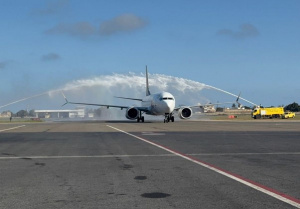
Lomé-based Pan-African airline Asky has resumed flights from Lomé, Togo, to Pointe Noire, Congo, through Luanda, Angola. A ceremony was held on October 2 to celebrate the resumption.
On this route, Asky will operate three flights weekly–Mondays, Wednesdays, and Fridays.
The flights had been halted for four years due to a lack of passengers. With the reopening, Asky has only one destination left to reach its goal of serving about 30 destinations in West and Central Africa.
The reopening should also translate into higher traffic for Lomé’s airport, contributing to the facility’s ambition of having 1.5 million passengers by 2025.
Asky received a new aircraft on October 1, 2024, to replace its oldest plane as part of its modernization and expansion plan. Under this plan, the carrier should acquire two new planes every year and expand to two new destinations.
Ayi Renaud Dossavi
Public Procurement: Togolese Regulator Launches Online Platform to Ease Attestation Request Process
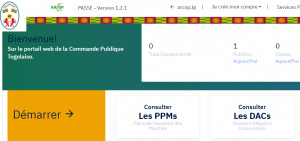
It is now possible to request proof of payment for the regulatory fee related to public procurement in Togo. On October 1, the sector’s regulator, the ARCOP, launched PASSE, a digital platform enabling this service.
On this platform, proofs are generated automatically once an application is submitted. The document can be obtained within 72 hours.
With this move, ARCOP is taking a significant step in its efforts to improve accessibility and follows other government agencies that are also digitizing their services. The goal is to digitize 75% of administrative procedures by 2025.
Several state entities, including the Port of Lomé, the Tax Office, and various ministries, already kicked off the transition.
Esaïe Edoh