

Togo First
Togo: President Faure Gnassingbé Attends the 79th UN General Assembly
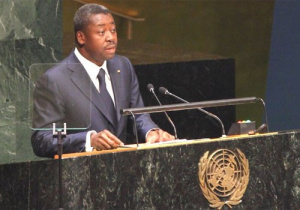
Togolese President Faure Gnassingbé is in New York. He participates in the 79th UN General Assembly, which started on September 22, 2024. This year's theme is "Leaving no one behind: acting together for the advancement of peace, sustainable development and human dignity for present and future generations”.
During this annual event, President Gnassingbé will discuss the Sustainable Development Goals (SDGs) with other world leaders and participate in international meetings, including the Future Summit and the general debate.
Topics that will be covered align with Togo's focus on human development. Togo plans to highlight its role in conflict resolution through dialogue in West Africa and its contributions to peace and security with UN peacekeeping forces.
Esaïe Edoh
Togo: PIA Dry Port Officially Launches Digital Logistic Platform
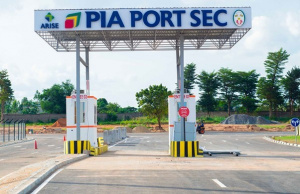
The Adétikopé Industrial Platform (PIA) dry port is going digital. On September 19, 2024, the PIA administration announced the official launch of a digital platform for logistics management. However, the platform has been active since June 2024.
The new platform aims to simplify and improve operations at the dry port. With it, users can track containers in real-time–arrival at the Port of Lomé and routing to the PIA Dry Port.
The platform also allows users to manage various requests, such as invoicing, container positioning, and issuing delivery notes. It also includes a payment solution developed through a partnership with Ecobank.
The PIA’s dry port spans 20 hectares. The facility was built to reduce congestion at the Autonomous Port of Lomé. It is operational since August 2021. In 2022, the dry port handled 7,339 containers (ed. note: out of a total capacity of 12,500 containers) and 6,364 trucks.
Esaïe Edoh
Togo Moves to Standardize Local Authority Management
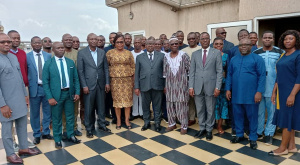
The Togolese government is working to standardize the management of local authorities, especially at the communal level. On September 17, 2024, the process began to create organization charts and administrative, financial, and technical procedure manuals for local authorities in Lomé.
This meeting was organized by the Ministry of Territorial Administration, Decentralization, and Customary Chieftaincy (MATDCC) to discuss the documents’ preliminary drafts. A final standard document will be submitted to the government for approval after the meeting on September 21.
The documents should help municipalities better address their people’s needs, especially in areas like drinking water, education, health, and public hygiene. According to the Director of Decentralization and Local Authorities, Pali Essossinam, "it is necessary for these tools to be available to enable local authorities to better succeed in their mission.”
For his part, the Ministry's Secretary General, Esso Koudjoou, pointed out that these tools are essential for optimizing administrative management and guaranteeing greater responsiveness to the expectations of our fellow citizens.
Koudjoou added that these tools are crucial for improving administrative management and ensuring a quicker response to citizens' needs, declaring: "These tools are essential for clarifying roles and responsibilities within our local administrations. They will serve to align the objectives of our local authorities with the expectations of the people, while strengthening the trust between elected representatives and constituents."
Esaïe Edoh
Togo's AED and CFMI Join Forces for Better Vocational Education
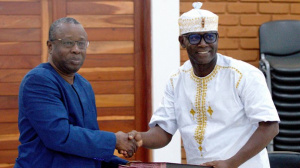
Togo’s Education and Development Agency (AED) and the Training Center for Industrial Trades also known as Centre de Formation aux Métiers de l'Industrie (CFMI) have partnered to improve vocational training for young people. The related agreement was signed on September 17, 2024, in Lomé.
This collaboration will enhance the training content at the Institutes of Alternating Training for Development also known as Instituts de Formation en Alternance pour le Développement (IFAD) using CFMI's expertise. Students in the IFAD Renewable Energies program will gain access to advanced technologies from CFMI, while CFMI students will benefit from the practical experience offered by IFAD, especially in construction and artificial intelligence.
The goal is to provide training that better meets job market demands. Noupokou Dammipi, director of AED, commented: "The world is changing, and we need to adapt. We need to innovate in the training we give young people."
The new partnership adds to several other agreements signed by AED to support IFAD students. Such as the graduate support agreements signed with the Ministry of Grassroots Development, the Fund for Supporting Youth Economic Initiatives also known as Fonds d'Appui aux Initiatives Économiques des Jeunes (FAIEJ) and microfinance COOPEC-AD.
Esaïe Edoh
Togo: "Nana Tech Immersion" Project Kicks Off in Tsévié
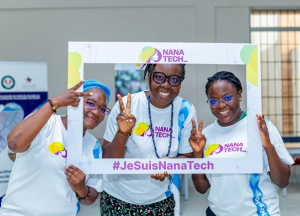
The NanaTech digital training program is expanding its support for women in Togo. Currently, twenty women traders and entrepreneurs are participating in a training course as part of the "NanaTech Immersion" program in Tsévié, which runs until September 21, 2024.
During this week-long training, participants will learn about digital transformation, digital marketing, financial management using digital tools, and developing managerial skills for the digital age. The goal is to help them integrate technology into their businesses and improve their leadership abilities.
Bandékine Yendoubé, Secretary General of the Zio prefecture, described the initiative as "revolutionary" for empowering Togolese women. Mawulolo Roger Lasmothey, a technical advisor to the ministry overseeing digitalization, noted that this initiative aligns with the country's strategy to enhance women's skills in line with its digital transformation goals.
Supported by the Millennium Challenge Corporation (MCC) through OMCA-Togo, NanaTech is an initiative from the Ministry of Digital Economy and Digital Transformation. It aims to equip women with business management skills and digital tools to boost their competitiveness. "NanaTech Immersion" is one of five components of this initiative. Recently, the "Lab" component concluded its first phase, which supported around 50 young women entrepreneurs in the ICT sector with a pitch ceremony that showcased three business projects.
South Korea Donates Computer Equipment to Three Togolese Communes
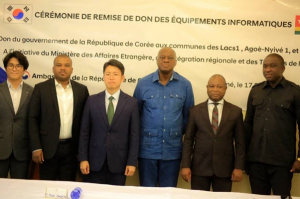
South Korea donated computers and printers to the Togolese municipalities of Lacs 1, Agoè-Nyivé 1, and Agoè-Nyivé 2. The equipment was handed over on September 17 by Moon Dongkyu, the Minister Counselor of the Republic of Korea in Togo.
"In the digital age, it is timely to provide this support to local authorities to better serve their constituents," Moon Dongkyu declared.
In March 2023, South Korea and Togo reaffirmed their commitment to collaborate in key areas such as agriculture, health, education, renewable energy, and information and communication technologies.
South Korea has been active in Togo for many years, through its International Cooperation Agency (KOICA). Among others, the KOICA provided nearly CFA3 billion to support the Savanes region, under a program titled “Improving equitable and sustainable access to quality education for all children in Northern Togo.”
Esaïe Edoh
Togo Ranks Among Africa's Top 10 Countries in Cybersecurity

Togo has made significant strides in cybersecurity, ranking among the top 10 African countries according to the 2024 Global Cybersecurity Index (GCI) report published by the International Telecommunication Union (ITU). The country achieved an impressive score of 88.8 points, placing it in Tier 2, labeled "Advancing." This is a remarkable improvement from its previous score of 33 points.
The GCI evaluates countries based on five key areas: legal measures, technical capabilities, organizational measures, capacity development, and international cooperation.
The Togolese government credits this success to a well-structured strategy that includes the establishment of the National Cybersecurity Agency (ANCy) and Cyber Defense Africa (CDA). Collaboration with Asseco Data Systems S.A. has also helped train local staff in advanced technologies while meeting international standards.
The GCI’s recognition comforts Togo in its ambition to become a regional leader in cybersecurity, a goal Lomé seeks to achieve through legislative initiatives, strong infrastructure, strategic partnerships, and hosting international events.
Ayi Renaud Dossavi
Togo: Faure Gnassingbé and UNOWAS Head Address Security Challenges in West Africa
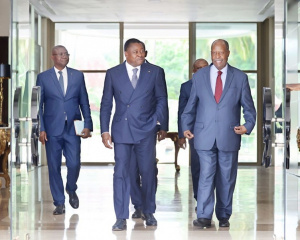
Leonardo Santos Simão, head of the UN Office for West Africa and the Sahel (UNOWAS), was recently in Togo. He met with President Gnassingbé on September 17. They discussed peace and security in the region.
During the meeting, Simão praised Togo's efforts to maintain peace and stability. "I congratulated the President on his peace policy and initiatives to strengthen stability in the subregion," he stated. The UN Special Representative also reaffirmed the UN's commitment to supporting Togo's diplomatic efforts, especially in preventing and resolving conflicts.
Security remains a significant concern for Togo, particularly along its northern border with Burkina Faso, where the country is working to manage the flow of displaced persons and enhance local resilience amid terrorist threats.
The ongoing security and humanitarian crises in Burkina Faso, Mali, and Niger have led to an influx of refugees into Togo, Benin, Ivory Coast, and Ghana. As of early 2024, around 87,000 people, mostly women and children, were seeking refuge in northern regions of these countries.
UNOWAS covers 15 countries, including Togo, and aims to support governance, promote human rights, and integrate gender considerations into conflict prevention and management.
Ayi Renaud Dossavi
Togo: Primary and Secondary Education Ministry Announces New Theory-Practice Initiative for 2024-2025 Academic Year
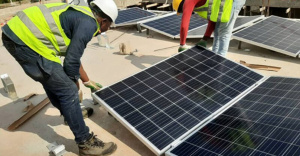
The Togolese Ministry of Primary and Secondary Education has announced new priorities for the 2024-2025 school year, including the launch of "écoles-projets", an initiative aiming to blend theory and practice in education, allowing students to engage in real projects related to their studies.
"Each school/school establishment draws up a project that is the result of learning," said Minister Dodzi Kokoroko, in a statement dated September 9, 2024.
Planned projects include installing solar panels for classroom lighting, making water filters to improve access to drinking water, starting vegetable gardens, and reforesting local plant species. Schools with computers will also offer computer courses.
The Ministry will provide resources, equipment, and qualified supervisors to support these projects. "Each school must take responsibility," Kokoroko emphasized, urging schools to participate actively.
Besides the project schools, the government has outlined six other priorities in its public memorandum. These include optimizing the deployment of teachers and administrative staff, providing in-service training for teachers, and establishing an evaluation system to enhance educational strategies. The Ministry also plans to strengthen collaboration with various partners and implement guidelines from the previous school year.
The new academic year for primary and secondary schools in Togo began on September 16, 2024.
Ayi Renaud Dossavi
Togo and Benin to Soon Hold First Joint Annual Meeting on Entrepreneurship and Trade
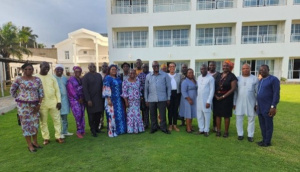
Togo and Benin’s Chambers of Commerce and Industry will soon host their first annual meeting on entrepreneurship and trade. The roundtable falls under the Regional Program for the Integration of Agricultural Markets (PRIMA).
In preparation for the meeting, whose date is yet to be disclosed, a delegation from CCI-Benin was in Lomé from September 9 to 14. The delegation met with CCI-Togo executives, including the chamber’s boss, José Kwassi Symenouh. The two sides discussed common challenges in agriculture and the opportunities PRIMA offers for regional integration and entrepreneurship. Talks focused on financing for agricultural players, tax incentives, and implementing entrepreneurial projects in both countries.
The recent preparatory mission laid "the foundations for the success of the first annual meeting between the two Chambers of Commerce". Thus, the upcoming meeting will "strengthen regional cooperation and the development of agricultural markets along the two countries' cross-border corridors".
This joint initiative is supported by the International Fund for Agricultural Development (IFAD) and comes amidst strong trade between Togo and Benin, at the formal and informal levels.
Esaïe Edoh