
Togo First
Togo to Host 2nd Edition of National School on Internet Governance Next Month
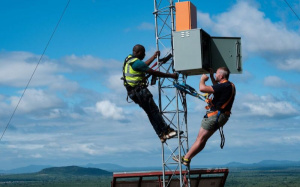
Lomé will host the second edition of the National School on Internet Governance (École Nationale sur la Gouvernance de l'Internet) from October 7 to 9, 2024. Organized by Internet Society Togo, the event aims to train 50 participants from various sectors, including government, private industry, civil society, universities, and the technical community, on Internet governance issues.
Attendees will learn the skills needed to manage digital governance in Togo efficiently.
"The National School on Internet Governance is an essential project that aims to equip local players with the necessary skills to positively influence digital governance in our country", saidEmmanuel Agbenonwossi, Chairman of the Board of Directors of the Internet Society Togo.
Digital regulation, cybersecurity, artificial intelligence, and digital policy strategies will be discussed during the program. These topics are all key to the government’s goal of enhancing digitalization.
The National School on Internet Government took place for the first time in 2021. It aimed to lay the groundwork for more inclusive and effective digital governance. The Internet Society Togo is the national branch of a global organization dedicated to ensuring an open and secure Internet.
Ayi Renaud Dossavi
Togo: Exports to Other ECOWAS States Reached Nearly CFA400 Billion in H1 2024
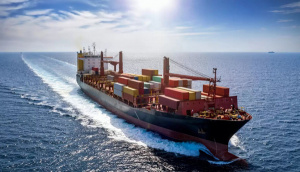
In the first half of 2024, Togo's exports to West Africa reached nearly CFA400 billion, driven by strong port activity and re-exports. The country maintained a positive trade balance with other ECOWAS countries. The ECOWAS has 15 member States. Burkina Faso, Niger, and Mali recently exited the block.
According to data from the National Institute of Economic, Statistical, and Demographic Studies (INSEED-Togo), exports from Togo to ECOWAS amounted to CFA217.7 billion in H1 2024, up 0.2% year-on-year. Between Q1 and Q2 2024, Togolese exports slumped by 10.9%.
Regarding imports, Togo spent CFA93 billion to buy goods from its ECOWAS peers, over the first half of this year. Between Q1 and Q2 2024, the sum was up 33%. Overall, Togo recorded a trade surplus of CFA124.6 billion with its neighbors.
The West African Economic and Monetary Union (WAEMU), which includes eight French-speaking West African countries and Guinea-Bissau, accounted for about 85% of Togo's exports in H1 2024. Exports to the Union totaled CFA184.8 billion. Between Q1 and Q2 2024, they slumped by 9.4%.
For Togo, the trade balance with WAEMU was more favorable than with ECOWAS. While imports from WAEMU rose to CFA49 billion, the trade balance remained in surplus at CFA135.7 billion.
Ayi Renaud Dossavi
Togo: President Faure Gnassingbé Calls for Global Cooperation at UN Summit
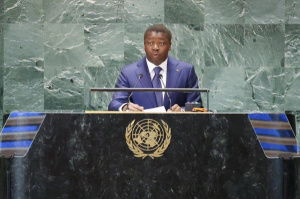
In New York, Togolese President Faure Gnassingbé called for a global response to the crises affecting many countries during his speech at the Summit of the Future at the UN on September 23, 2024. He emphasized the need for international cooperation to tackle food, security, and environmental challenges.
Gnassingbé stated, "There is no better future than in the collective action of our States within renewed global political frameworks," urging a rethinking of multilateralism and the reform of outdated global institutions. The official also expressed optimism about Africa's future, viewing the continent as key to global market development, especially in green and blue economies. He believes Africa, with its vibrant youth and free-trade zone, is ready to adopt new partnership models, particularly those involving the private sector.
Gnassingbé advocated for public-private partnerships to create favorable conditions for private investment, asserting “Africa will continue to be home to most of the world's youth. This is where the potential for developing the markets of the future lies”.
Gnassingbé also supported ongoing UN reforms and called for equal representation of African nations on the international stage, declaring “We can only build a better future if all voices are heard and respected.”
While optimistic, he expressed concerns about international aid, which he believes often does not meet people's real needs. As a solution, he proposes “strengthening the role of African states in development aid, so that they become strategic and equitable partners”.
Upon returning to Togo, Gnassingbé reiterated the importance of building a strong state to lead development and humanitarian efforts in collaboration with the private sector and civil society. "In Togo, we are striving to build a strong state. We see this state at the center of any development and humanitarian aid solution, in collaboration with the private sector and civil society,” he noted.
Esaïe Edoh
9th Pan-African Congress Postponed Again
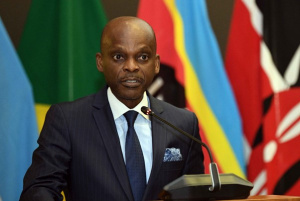
The 9th Pan-African Congress, set to take place in Lomé from October 29 to November 2, has been postponed to an unknown date. The Togolese Ministry of Foreign Affairs announced this on September 23.
This is the second time the event has been postponed. It was initially scheduled for Oct. 22-25.
The congress aims to discuss "Renewal of Pan-Africanism and Africa's role in the reform of multilateral institutions."
Despite the postponement, six preparatory conferences have already been held, leading to recommendations for all African leaders to participate. The event is set to welcome participants from Africa, its diaspora, and Afro-descendants.
Togo Launches Census for Administrative Reserves in Greater Lomé
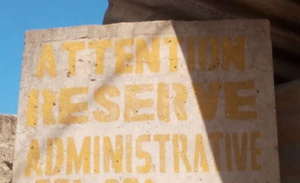
In Togo, a census campaign for administrative reserves began on September 23, 2024. The campaign will last two weeks and will focus on the 13 municipalities of the Greater Lomé Autonomous District. The goal is to identify and secure state-owned land to prevent speculation and illegal occupation.
By listing these administrative reserves, the government aims to clarify property boundaries. These public lands are crucial for public projects like schools, hospitals, and roads. This initiative is part of a broader effort to optimize public land use amid rapid urbanization in the capital.
The campaign comes as land management in Togo faces challenges and conflicts. Implemented by the Office Togolais des Recettes (OTR) as part of its reforms, this system aims to simplify and modernize land-related procedures.
To improve land management, a Unique Parcel Number (NUP) system has been introduced to simplify land procedures. As a result, each plot of land in the country has been assigned a unique number since August 1, 2024.
Esaïe Edoh
Togo Secures CFA6 Billion for Rural Electrification from BOAD
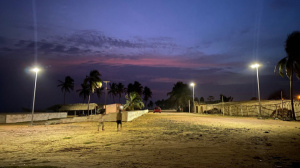
During its 143rd board of directors meeting, the West African Development Bank (BOAD) approved a CFA6 billion allocation to support rural electrification in Togo.
The BOAD approved a total of CFA105.6 billion in new financing to support the region's economies. Including the recent funds, the Bank has disbursed CFA8,854.3 billion for the Union since its launch in 1976.
? 143ème CA de la BOAD : 6️⃣ nouvelles opérations approuvées pour un montant global de 105,638 milliards FCFA.
— Banque Ouest Africaine de Développement (@BOAD_official) September 21, 2024
Découvrez les opérations approuvées ici
➡ https://t.co/GdxHLb6Xek pic.twitter.com/WzbJy3XaAx
The new financing will impact 172 localities by extending the electricity distribution network, aligning with Togo's goal of universal electricity coverage by 2030. Currently, the coverage rate stands at 66%. The funding is expected to add 9.3 GWh to the grid in the first year, providing electricity to around 35,000 residents and creating over 600 jobs.
Additionally, Togo is working on constructing energy infrastructure, including a project to electrify 317 localities using solar mini-grids. The World Bank supports the Togo Energy Reform and Investment Project (PRISET), which includes rehabilitating the Lomé power grid and reducing power outages.
Another initiative, the Lomé Power Grid Extension Project (PEREL), is being financed by the Agence Française de Développement (AFD), the European Union (EU), and KFW (German Development Bank) to improve electrical infrastructure in the capital.
Togo: Lomé to Host 3rd Extraordinary Session of ECOWAS Parliament
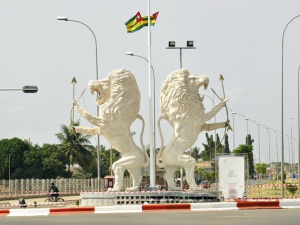
From September 24 to October 4, 2024, Lomé will host the 3rd extraordinary session of the ECOWAS Parliament, alongside the 2nd parliamentary orientation seminar for the 6th legislature.
The upcoming extraordinary session will focus on adopting the ECOWAS’ 2025 draft budget, ensuring budget stability, and implementing reforms to modernize the institution, according to the National Assembly. These align with ECOWAS’ 2050 Vision which aims at an integrated, prosperous, and peaceful West Africa.
The meeting should regroup 115 parliamentarians from the 15 member states and will emphasize financial inclusion for women and strengthening regional governance amid ongoing security and economic challenges.
Ayi Renaud Dossavi
Togo: Microfinance Sector Hits CFA400 Billion FCFA in Outstanding Loans in H1 2024

Throughout the first half of the year, outstanding loans extended by microfinance institutions active in Togo reached nearly CFA400 billion (CFA395.697 billion), up by 13.3% year-on-year. The Microfinance Directorate (DMF) of the Ministry of Economy and Finance disclosed the figure on September 20, during a meeting organized by the Professional Association of Decentralized Financial Systems (APSFD-Togo).
This growth reflects renewed public confidence in decentralized financial systems (SFD). Additionally, the number of microfinance customers increased by 8.1% compared to 2023, reaching almost 4.2 million. The total number of service points also rose slightly, 0.5%, to 625.
Despite the improvements, challenges remain. For example, over the period reviewed, there was a decline in the quality of SFD portfolios, which affects profitability. The DMF also noted structural issues such as insufficient capital and weak information systems. Regulatory authorities must tackle these issues to stabilize the sector and secure transactions.
Ayi Renaud Dossavi
Togo and World Bank Discuss New Funding for Social Sectors
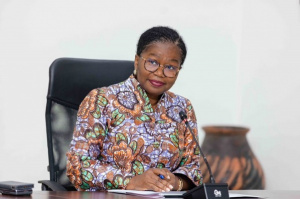
Togo seeks to secure new World Bank funding to support education, health, social protection, and gender equality initiatives. Related talks began last week in Lomé between Prime Minister Victoire Tomégah-Dogbé and a World Bank team.
During the meeting, the Togolese side highlighted how it used past World Bank financing to boost human capital. According to the latest United Nations Development Programme (UNDP) report, Togo's human development index rose from 0.539 in 2022 to 0.547 in 2023, although the country fell one spot in the global rankings to 162nd.
Lomé wants to consolidate these gains, especially in social sectors, which are crucial for economic growth and job creation. Prime Minister Tomegah-Dogbé stressed that the government’s roadmap prioritizes health, education, and social protection to develop human capital and empower the workforce.
"The government roadmap prioritizes social sectors like health and education to develop human capital for growth and job creation. We want our country to have an active force capable of self-sufficiency. We are implementing mechanisms to strengthen women's empowerment through inclusive finance programs," Tomegah-Dogbe said.
Togo plans to accelerate actions in social protection and women's empowerment.
During the recent meeting, the two sides also discussed other sectors such as energy and digital technology alongside social priorities.
As of February 29, 2024, the World Bank's commitment to Togo stood at $1 billion, covering six national projects ($403 million) and nine regional operations ($597 million). With new projects under negotiation, this portfolio is expected to exceed $2 billion in the next three years.
Esaïe Edoh
Togo and Malaysia Collaborate on Maritime Training for West and Central African Ports
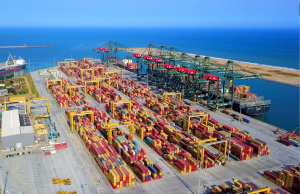
The Togolese capital, Lomé, is hosting a high-level regional training course focused on port development. This event, which started on Sept. 23 has gathered delegates from 16 ports in West and Central Africa. It is the fruit of maritime cooperation efforts between Togo and Malaysia.
The training runs until September 28. It will cover organization and strategies in the international maritime and port sector. It will enable participants–members of the West and Central African Ports Management Association (AGPAOC)-to learn from each other and improve their expertise, competitiveness, and port performance.
The workshop will cover maritime market trends, international port strategies, and innovations in the maritime sector. It will close with visits to port infrastructure and the Adétikopé Industrial Platform (PIA), to enable participants to better understand Togolese facilities and their role in regional economic development.