

Togo First
Togo: EU Ambassador Joaquín Tasso Vilallonga ends mission, Gwilym Jones takes over
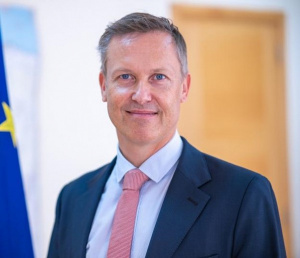
Joaquín Tasso Vilallonga, the European Union (EU) Ambassador to Togo since 2020, has completed his mission in the country. Gwilym Jones, a British diplomat, will now lead European diplomacy in Togo.
Vilallonga announced his departure on X on August 31, 2024."Today, my mission in Togo comes to an end and I hand over to my colleague Gwilym Jones, who will take over this account in the coming days ", posted the British-born European diplomat.
Before his recent appointment, Jones served as EU Ambassador to Mauritania from September 2021. Before that, he was Head of EU Cooperation in Niger, from 2019 to 2021, where he oversaw development projects.
Under Jones’s leadership, the EU team in Togo will continue projects funded in the first phase of the 2021-2024 multi-year programming. These projects focus on tackling climate change, developing agro-industries, and strengthening the Togolese state’s resilience.
In addition to ongoing projects, Gwilym Jones will lead discussions with Togolese authorities about the budget for the second phase of multi-year programming from 2025 to 2027.
This new phase will focus on human development, socio-economic inclusion, sustainable agro-industries, natural resource management, and strengthening peace and resilience in Togolese society.
Esaïe Edoh
Togo: Ministry of Digital Economy Seeks Director to Lead NanaTech Program
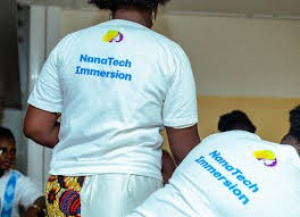
Togo’s Ministry of Digital Economy and Digital Transformation is seeking a director for the NanaTech program. This is a program that supports women entrepreneurs in the digital sector.
The hired director will monitor and evaluate current initiatives and ensure the program's continuity by creating synergies with existing efforts. He/She will also help define and implement additional projects to strengthen women's skills in the digital field.
The director will work closely with the Ministry of Digital Economy and Agence Togo Digital (ATD) to ensure these projects’ sustainability. Starting this year, the director will oversee five additional NanaTech programs funded by the Millennium Challenge Corporation (MCC) through the Millennium Challenge Account Implementing Agency - Togo (OMCA-Togo).
These programs are part of a grant agreement between the Togolese government and the United States under the Threshold Program.
Applications for the position are open until October 7, 2024. Candidates should have a Bac+5 degree in business management, information and communication sciences, or a related field, along with at least eight years of leadership experience in the digital industry or business development.
Esaïe Edoh
Startup Innovation Challenge: Project Submissions Open Until September 18, 2024

The United Nations Development Program (UNDP) launched the 2024 edition of the "Startup Innovation Challenge" last weekend in Lomé. Project submissions are open until September 18.
This competition aims to support Togolese digital startups by promoting innovative technological solutions for local challenges. The UNDP seeks projects that can significantly impact communities and industries.
At the end of the challenge, up to 10 innovators will be selected in specific fields such as digital, human services, agritech, artificial intelligence, blockchain, and logistical conservation services for local produce, with a focus on perishable fruit and vegetables. Each winner will receive funding to develop their project. The agency is also committed to providing these innovators with resources and platforms to test, prototype, and refine their ideas.
This year, the challenge, which focuses on creating solutions that meet local community needs, is organized in collaboration with the University of Lomé. Since its launch in 2019, the initiative has supported over 50 startups, primarily led by women, to benefit from UNDP support in Togo.
Esaïe Edoh
China-Africa: Faure Gnassingbé in Beijing for FOCAC Summit
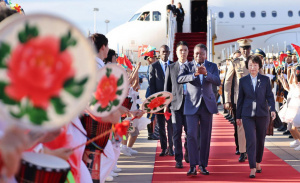
Togo's President, Faure Gnassingbé, is in Beijing for the 9th Forum on China-Africa Cooperation (FOCAC) summit. He arrived on September 1, three days before the event’s opening.
This year's theme is "Joining Hands to Advance Modernization and Build a High-Level China-Africa Community with a Shared Future." Discussions will focus on security, health, economic recovery, and climate change, with African and Chinese leaders reaffirming their commitments and exploring new ways to enhance their partnership.
During the summit, President Gnassingbé will hold bilateral talks with Chinese President Xi Jinping, "to discuss prospects for comprehensive strategic partnership" but also "with bilateral, multilateral partners and investors", according to the Togolese Presidency.
Ayi Renaud Dossavi
WAEMU Audiovisual Regulators Hold 11th General Assembly in Lomé, Togo
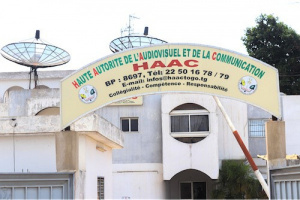
Audiovisual regulators of WAEMU States and Guina (PRA-UEMOA-GUINEE) are gathered in Lomé for their 11th General Assembly. The roundtable kicked off yesterday and ends today. Its theme is: "Effective implementation of DTT in Platform member countries: state of play, proposals and strategies for action in the face of delay."
One of the key highlights of the meeting will be the confirmation of Pitalounani Telou as the new boss of the PRA-UEMOA-GUINEE. If confirmed, Telou, who currently heads Togo’s communication and audiovisual watchdog, will take over from Rémi Moretti.
The Assembly will also address regulation issues relating to communication across the WAEMU. These discussions are part of the 2023-2024 Action Plan adopted in Cotonou at the previous General Assembly.
Esaïe Edoh
Togo: Gbaga Channel Will Be Dredged Over Next 9 Months
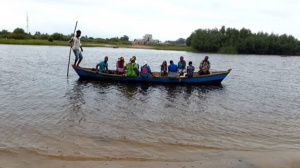
Togolese authorities plan to launch a major cleanup operation for the Gbaga channel, a natural border with Benin. Both countries will be involved.
Set to cost CFA4.7 billion, the cleanup is part of the WACA ResIP Coastal Resilience Program. The latter aims to reduce flooding risks and improve the quality of life for riverside communities.
The 30 km-long Gbaga channel faces silting, pollution, and erosion.
Its dredging, which is expected to take nine months, will include mowing and sediment excavation. These will follow environmental and social impact studies.
TC MARINES/ZILLA GROUP and the INROS LACKNER/ DECO IC/ IGIP/ Afrique consortium will carry out and monitor the project.
Surrounding residents were informed about the project a month ago, via a radio program launched by WACA in Togo.
The dredging project aims to curb growing environmental pressures on the wetland and bolster climate resilience living conditions in the Lacs 1 and Lacs 2 municipalities.
"These works aim to reduce flooding and improve navigation while creating thousands of jobs for young people. Cooperation from riverside populations is essential for the success of this initiative," noted Dr. Alimi Adou Rahim, WACA ResIP program coordinator in Togo.
Ayi Renaud Dossavi
Togo: "NanaTech Immersion" Program Moves to Central Region

The "NanaTech Immersion" program was kicked off in Togo’s Central region on August 26. The program which was previously rolled out in the Greater Lomé, Kara, and Plateaux regions aims to drive women's empowerment in the ICT sector.
In the Central region, 20 women are receiving, under the program, specialized training to help them integrate digital tools into their businesses. This is to help them grow their businesses, earn more, and contribute to economic growth. Participants will also receive personalized coaching and certification.
"NanaTech Immersion" is part of the larger "NanaTech program," inspired by the legacy of Togolese women traders known as the "Nana Benz."
The program is supported by the Ministry of Digital Economy and Transformation. So far, 90 women have been trained under the initiative since it began in June.
Togo: National Federation of Soybean Cooperatives Gets New Boss
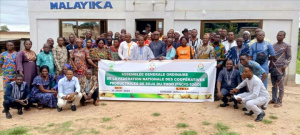
The Togolese Federation of Soybean Cooperatives (Fédération Nationale des Coopératives Productrices de Soja –FNCPS-Togo) has a new president. Elected during a general meeting on August 26, Daloli Mimbouab replaced former chairman Kadzakadè Komlan. He will lead a nine-member board for a three-year term.
Under the previous president, soybean production increased from about 40,000 tonnes in 2018 to nearly 300,000 tonnes today. Cited by Agence Togolaise de Presse (ATOP), Mimbouab expressed gratitude for the trust placed in her and promised to address producers' concerns and strengthen the industry. The new board will receive support from a supervisory board led by Tibé Bassinani.
Monday’s general meeting concluded with an agreement between the FNCPS-Togo and the Togolese Association of Soybean Processors (ATTS) to ensure the availability of seed soybeans for processing units. The partnership aims to enhance the agro-industry in Togo.
Established on March 18, 2018, the FNCPS-Togo aims to boost soybean production and sales in collaboration with key players like the Conseil Interprofessionnel de la Filière Soja du Togo (CIFS-Togo). The FNCPS helps its members get inputs, credit, and training in good production practices while promoting group sales of their products.
Togo's Public Universities Prioritize Curriculum Harmonization and Student Transfer

The universities of Lomé and Kara are embarking on a process to facilitate student transfer between them. A brainstorming workshop in Lomé, ending August 28, 2024, focuses on harmonizing curricula and student mobility within Togo's public universities.
The goal is to standardize teaching unit content and establish harmonized diploma criteria. At the end of this process, the universities will adopt a common LMD (Licence (Bachelor) - Master (Master's) - Doctorat (PhD)) procedures manual, map training offerings, and develop a pedagogical framework using new technologies.
In addition, the institutions will identify fundamental teaching units for academic paths, assessment forms, and syllabus writing guides. They will formulate proposals to facilitate bachelor's student mobility and develop harmonized syllabi.
Togo's public universities hope to revise texts to allow student supervision by a university lecturer to count at the home institution.
According to Professor Komlan Batawila, 1st Vice President of the University of Lomé, "the importance of this initiative is to guarantee the degree equivalence and recognition while offering students new academic exchange opportunities."
Professor Kokou Tchariè, President of the University of Kara, emphasized the need to draw on the University of Lomé's expertise to improve training quality. Professor Adama Mawulé Kpodar, President of the University of Lomé, affirmed this harmonization reflects both institutions' commitment to meeting contemporary employment, digitalization, and globalization challenges. It aligns with Togo's authorities' desire to pool resources at the public university level.
Esaïe Edoh
Togo: Cinkassé 1 and Tandjoaré 1 Municipalities Integrate Anti-Extremism Measures into Local Plans
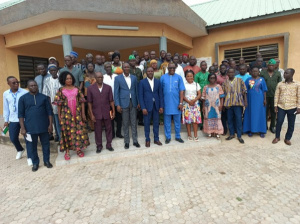
The municipalities of Cinkassé 1 and Tandjoaré 1, northern Togo, have updated their Communal Development Plans (CDP). This decision came on August 26, 2024, in Cinkassé, located 650 km north of Lomé.
Previously, the CDPs did not address security issues but now they do. The revision incorporated insights from the National Strategy to Prevent and Combat Violent Extremism (NSPCVE).
The revised CDPs will focus on municipalities’ vulnerabilities and include actions to prevent and combat violent extremism. Plan International, with support from the European Union, will provide technical and financial assistance through the "Pillar Rapid Response" project.
The latter aims to better prevent violent extremism, promote social cohesion, and improve community resilience in the Savanes region.
Other municipalities, including Kpendjal 1, Kpendjal 2, Kpendjal Ouest 1, Oti 2, and Oti Sud 2, will also revise their CDPs to address similar security threats.
Esaïe Edoh