
Togo First
Togo: Anti-Corruption Body Teams with Civil Society Organizations
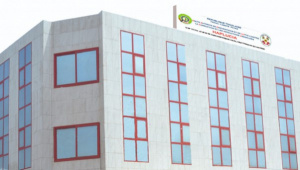
Togo’s Top Anti-Corruption Body, HAPLUCIA, has teamed up with several Civil Society Organizations to fight corruption in the country. Various agreements were inked last week in this framework.
The partnering CSOs will organize awareness workshops with Togolese citizens. They will also benefit from the Good Governance project financed by Germany and implemented by GIZ.
The end goal of the actions is to improve citizens’ trust in the public administration.
HAPLUCIA’s boss, Aba Kimelabalou, commented: "Corruption is a major obstacle to democratic governance, the protection of human rights, and sustainable development in Africa. It erodes citizens' trust in public institutions".
HAPLUCIA was established in 2015 to fight corruption and related offenses. The recent partnership with CSOs is a new milestone toward implementing a global strategy that aims to eradicate corruption in Togo.
Esaïe Edoh
ECOWAS Bank Launches $70 Million Green Bond Offering in West Africa
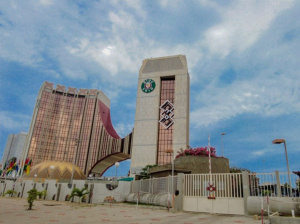
The Ecowas Bank for Investment and Development (EBID) launched yesterday a green and sustainable bond issue in the UEMOA (West African Economic and Monetary Union) zone, via a public offering. The Bank seeks about $70 million through the issue, the first of a kind in the WAEMU market.
This operation will help raise the third tranche in a series of fund-raising initiatives targeting CFA240 billion (around $240 million) that EBID initiated to finance economic stimulus investments by its member states. The Bank raised CFA170 billion (approximately $170 million) through previous tranches.
EBID is launching a green and sustainable public bond issue in the WAEMU zone to fund projects in agriculture, renewable energy, health, and industry. For more info, visit: https://t.co/RrEjq1cbqC#Investment #GreenFinance #SustainableEconomy pic.twitter.com/51ZL4y7uGk
— ECOWAS Bank for Investment and Development (EBID) (@BIDC_EBID) July 15, 2024
Yesterday’s issue involves 7 million bonds, each with a face value of 10,000 CFA francs, with a 7-year maturity (including 2 years of deferral) and a net annual interest rate of 6.5%.
Proceeds will be "destined exclusively for the financing of a selection of projects identified mainly in Côte d'Ivoire, Senegal, Benin, and Guinea Bissau," focusing on sectors such as infrastructure, energy, and health, according to the joint financing institution.
A year ago, EBID raised a record CFA120 billion on the WAEMU market.
The recently launched operation shows the lender’s efforts to mobilize financing for sustainable development projects across West Africa, leveraging the regional financial market.
Octave A. Bruce
Gnassingbé Eyadema Airport: Passenger Traffic Reached 1.4 Million in 2023

The Gnassingbé Eyadema International Airport (AIGE) had 1.4 million passengers in 2023. This is 52% more than in 2019, when the figure stood at 916,000.
The launch of new flight routes mostly spurred the surge. Six new routes have been launched, two with Ethiopian Airlines and four with Asky, bringing the total number of destinations served worldwide to 41. Additionally, Liz Aviation, a firm owned by Burkina Faso tycoon Mahamadou Bonkoungou, has recently begun serving Ouagadougou, strengthening the country's air offer. The direct Lomé-Washington flight launched in June 2022 by Ethiopian Airlines, which uses AIGE as a transit airport to its base in Addis Ababa and other airports, has also contributed to this dynamic.
The recent peak nears the AIGE’s target for 2025–1.5 million passengers. However, Lomé airport still ranks behind other logistics hubs in the sub-region, notably Abidjan's Félix Houphouët-Boigny International Airport, which recorded 2.3 million passengers in 2023, compared to 2.09 million in 2022, an increase of 11.5%.
The increase in passenger traffic has also boosted Togo's tourism sector. In 2021 and 2022, the country welcomed almost a million visitors, generating revenue of CFA25 billion, compared to just over 480,000 tourists in 2020, at the height of Covid-19, for revenues of CFA19 billion.
Esaïe Edoh
WAMU Securities: Togo Raises CFA30 Billion in Latest Operation
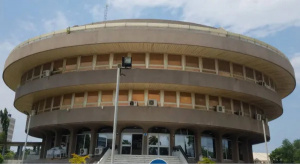
Togo raised CFA30.3 billion on the West African Monetary Union (WAMU) securities market last Friday, July 12. That is about CFA5 billion less than the country was targeting for the operation.
According to the operation’s report, Lomé secured CFA17.5 billion through fungible treasury bills and CFA12.8 billion through fungible treasury bonds. The former mature over a year and the latter over three and five years, at respective rates of 6.15% and 6.40%.
Overall, 27 investors took part in the operation, raising CFA39.5 billion. This corresponds to a 112.8% subscription rate.
Adding the recent operation, Togo has raised CFA499 billion on the WAMU market this year. The country’s goal for 2024 is CFA604 billion.
Esaïe Edoh
World Bank and Togo Sign $298 Million in New Financing Agreements
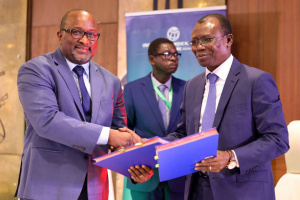
The World Bank and the Government of Togo signed three new financing agreements last Friday, July 12. Totaling $298 million, the funds will help Togo boost access to electricity, improve public service delivery, and foster social cohesion.
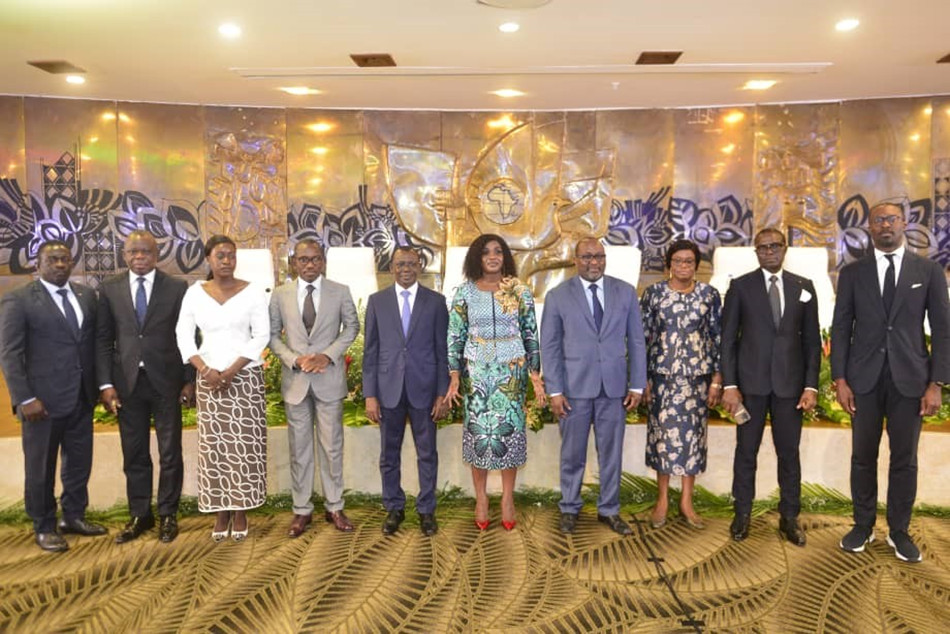
The deals were inked by the World Bank’s Resident Representative and Togo’s Minister of Finance, Fily Sissoko and Sani Yaya, respectively. The signing ceremony was chaired by Sandra Ablamba Johnson, Minister Secretary General of the Togolese Presidency and World Bank Governor for Togo. Other officials present include the ministers of energy, civil service, social action, and universal healthcare.
Three Deals, Three Projects
The three deals are for three projects, including the Inclusive Development through Access to Electricity project (IDEA), the Togo Public Sector Strengthening for Service Delivery Operation
(PforR), and the Gulf of Guinea Northern Regions Social Cohesion Project (COSO). Respectively $200 million, $75 million, and $23 million were disbursed for the projects.
Funds allocated to IDEA will be used to build 161kV transmission lines, providing electricity to over 1.5 million people, mainly in rural areas. The project also aims to strengthen the sector's institutional capacity and reduce greenhouse gas emissions by expanding renewable energy.
The second project, the PMAPDS will improve the management of human resources and public finances, modernize public administration, digitize tax revenue collection, and increase digital payments.
The $23 million disbursed for the COSO project will support refugees and their host communities.
"I am grateful to the World Bank Group for supporting our determination to tackle our major roadblocks to sustainable development," said Sani Yaya, Minister of Economy and Finance.
Over $600 Million Combined
Besides the three deals, thanks to a special waiver, Togo also secured an additional $315 million from the World Bank Group's Prevention and Resilience Window, resulting in cumulative funding of over $600 million for the country.
Commenting on the development, Sandra Johnson declared: "Emphasis should be placed on the impact for which these projects were initiated. This is why I am inviting us to greater celerity, a sense of urgency and realistic planning in the delivery of services, and greater efficiency in spending to achieve the goals set for our people’s good…These impacts must be felt in the daily lives of Togolese, whether women, young people, farmers, artisans, or any citizen."
New Country Partnership Framework
The signing ceremony took place on the sidelines of the presentation of the World Bank's new Country Partnership Framework (CPF) with Togo for 2025-2029, which aims to reduce poverty, increase shared prosperity, and promote sustainable development through the creation of quality jobs, improvement of human capital, and inclusive and sustainable territorial development.
Ayi Renaud Dossavi
Togo: National Local Consumption Strategy Validated
The Togolese Ministry of Trade, Handicrafts, and Local Consumption, together with representatives of public administrations and economic operators, validated the National Strategy for Local Consumption on July 10, 2024.
This strategy is built around three main pillars. Firstly, it aims to make local goods and services more competitive. Secondly, it seeks to increase the visibility and accessibility of local products. Thirdly, it aims to improve the governance of local consumption.
The new strategy is key to boosting local consumption, according to Koffi Vinyo Mensah, the Secretary General of the Ministry of Trade. The official believes it will foster the national economy by valorizing the know-how of artisans, very small and medium-sized enterprises, as well as other promoters of local goods and services.
Moreover, local consumption is a source of job and wealth creation, particularly for young people and women.
The National Strategy for Local Consumption is supported by the World Bank Group and is part of Axis 2 of the government's 2020-2025 roadmap. This axis aims to bolster job creation by leveraging the economy’s strengths.
Esaïe Edoh
Togo's Universal Health Insurance Covers 800,000 People in First Six Months
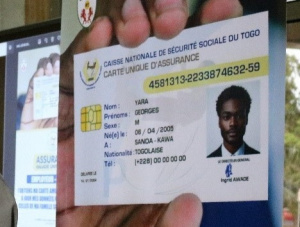
Togo's new universal health insurance program has already enrolled 800,000 people. The program was launched in January 2024.
The figure is nearly 50% more compared to the 470,000 people previously covered by the National Health Insurance Institute (INAM).
The rapid growth in enrollment for the new universal health insurance program demonstrates Togo's commitment to improving access to healthcare for all its people, regardless of their economic status or occupation. In line with this ambition, the government has allocated an additional CFA1.5 billion to the national drug procurement agency, CAMEG Togo, to acquire more generic medicines.
The universal health insurance scheme is being implemented through two main institutions–the National Social Security Fund (CNSS) and the INAM-. The former covers private sector workers and the latter public sector employees.
Esaïe Edoh
Togo Ranks First Among UEMOA Countries in Latest Human Development Index
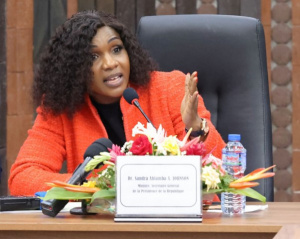
Sandra Johnson, Secretary General of Togo’s Presidency, met the press people last week on July 4. She told them about the steps that allowed the country to rank first among WAEMU countries in the latest Human Development Index (HDI) report. Johnson was with Yawa Kouigan, the Minister of Communication.
Togo scored 0.547 in 2023-2024 on the report, against 0.539 in 2021-2022. This is the fifth consecutive year that the country tops the ranking at the WAEMU level. It was fourth at the ECOWAS level.
Madame @SandraA_JOHNSON, Ministre, Secrétaire général de la Présidence de la République a présidé ce 04 juillet 2024 à Lomé, un atelier de dissémination à l’endroit des médias sur l’Indice de développement humain (IDH), en présence de Madame @YawaKouigan, ministre de la… pic.twitter.com/LTLRlmwaVh
— Présidence Togolaise/Togolese Presidency (@PresidenceTg) July 4, 2024
"Togo has chosen human-centered development, the most difficult process in economics," Sandra Johnson told the press.
The achievement is attributable to Lomé’s increased efforts in key human development sectors, such as health, education, access to drinking water and electricity, improving the living environment, infrastructure, agriculture, and food security. Togo can now aim to move into the medium HDI category, with a score of at least 0.550.
The HDI is a composite index created by the United Nations Development Program (UNDP) to assess human development in the world's countries. It is essentially based on three main criteria: health and longevity, level of education, and standard of living.
Togo Achieves Significant Progress in Healthcare Accessibility, Reaching 90.7% Coverage in 2023
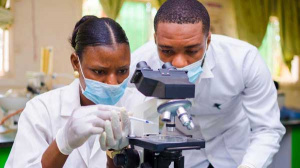
Togo's healthcare accessibility rate increased from 71% in 2020 to 90.7% in 2023, according to a report by the Presidency of the Republic. Published on July 4, 2024, the document includes the latest Human Development Index (HDI) figures.
According to the report, key factors that spurred the progress include the Wezou Initiative, designed to provide care for pregnant women and newborns. By the end of 2023, the initiative had benefited over 400,640 pregnant women, with 221,802 deliveries.
The government also invested heavily in health infrastructure, constructing 86 new health facilities and renovating 60 others under the Essential Quality Health Services for Universal Health Coverage (SSEQCU) project, financed with CFA40 billion. Additionally, six mother-and-child hospitals are being built across various regions, with three already completed.
Rehabilitation and equipping of prefectural and regional health centers, costing CFA7.36 billion, also played a significant role in improving healthcare accessibility.
To sustain this momentum, Togo has made the Universal Health Insurance (UHI) project operational, aiming to further improve healthcare access and coverage.
Esaïe Edoh
Togo: Inflation Rate Dips to 3.9% in May, Food Prices Still Rising
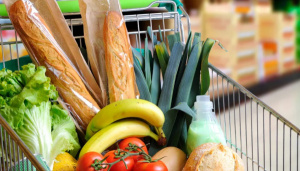
Inflation in Togo stood at 3.9% in May 2024, down from 4.1% in April. The figure was disclosed by the country’s statistics institute, the INSEED.
The INSEED also reported that the National Harmonized Index of Consumer Prices (INHPC), which tracks price trends for most consumer products, rose by 1.6% between April and May.
Food Products
The price surge from April to May was mainly driven by increases in food prices ("Food products and non-alcoholic beverages" +4.3%), transport costs ("Transportation" +0.5%), and restaurant spending ("Restaurants and Hotels" +0.2%).
Notable increases include corn (+11.2%), imported rice (+6.5%), local long-grain rice (+4.2%), and other staple foods like ripe plantains, fresh sweet potatoes, yams, manioc, tomatoes, onions, and carrots, which saw price indices rise by more than 10% month-on-month.
This increase was slightly offset by a decline in housing costs ("Housing, water, gas, electricity, and other fuels" fell by -0.9%).
Quarterly Increase
Comparing May 2024 with February 2024, the general price level is up 3.5%, mainly driven by rising food prices.
Overall Slump
However, inflation in Togo is expected to continue falling compared to levels seen since 2023. According to IMF projections, inflation should drop to less than 2% between 2025 and 2028, provided there is a favorable agricultural outlook, adequate food market supply, and continued government measures to contain prices.
Ayi Renaud Dossavi