
Togo First
Togo: Ministry of Tourism Approves Feasibility Study to Develop Souroukou Waterfall Project

Togo plans to develop the Souroukou waterfall, located 15 kilometers from Djarkpanga in the central region. The Ministry of Tourism approved the feasibility study for this project on June 28, 2024.
The study indicates that the project will cost CFA 1.55 billion and run for three years. It aims to improve the region's infrastructure and attract more visitors. Minister of Culture and Tourism, Kossi Lamadokou, highlighted the waterfall's “exceptional potential” to draw local and international tourists.
Hier, le 27 juin 2024, j'ai présidé l'atelier de validation du rapport d'étude de faisabilité du projet de valorisation du site de la Cascade de Souroukou, situé dans la Préfecture de Mô, en présence des experts et des cadres de la Préfecture de #Mô ⤵️#TourismeTogo #CultureTogo pic.twitter.com/bqlj7slt8J
— Kossi Gbényo Lamadokou (@GbenyoLamadokou) June 28, 2024
The project will sustainably develop infrastructure around the 190-meter-high waterfall, the highest in West Africa, thus improving the life of the Mo prefecture's people. According to Mafissa Assingguime, director of tourism development planning, the site is ideal for development, given its accessibility and features, including a pool.
Akalo Kofi, a legal expert in charge of the project's legal aspects, said the project would create jobs for the local youth and generate revenues for residents. “It will also contribute to opening up the region and promoting Togo as a tourist destination,” he added.
Togo has many other waterfalls besides Souroukou, in the Plateaux region especially. These include the Yikpa, Kpimé, Womé, and Akakpotoé waterfalls.
Ayi Renaud Dossavi
Togo-US: US Senate Delegation, Sandra Johnson Talk Bilateral Cooperation
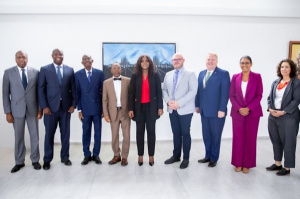
A delegation of US Senate officials was in Togo last week. They met with Sandra Ablamba Johnson, Minister Secretary General of the Presidency.
Topics discussed include the Togo-US economic partnership, projects fostering socio-economic development in the African country, as well as Lomé’s efforts to make the Togolese business climate more favorable to big investments.
Nous avons eu le plaisir de recevoir le mercredi 26 Juin 2024, une délégation d'officiels américains pour une rencontre consacrée à l'approfondissement des liens économiques entre nos deux nations.
— Sandra ABLAMBA JOHNSON (@SandraA_JOHNSON) June 29, 2024
Ensemble, nous avons pu noter les avancées majeures du Togo dans le domaine des… pic.twitter.com/mACeamvSQc
The participants also reviewed US programs for which Togo is eligible, including the Millennium Challenge Corporation (MCC) and the African Growth and Opportunity Act (AGOA).
Under the MCC, Togo awaits funding for energy, digital, and land-related projects. It has been in the Compact program formulation phase since December 14, 2022. As for the AGOA, it has helped Togo have easier access to the US market for the past two decades, with Togo's exports to the US totaling $12.9 million in 2020, compared to $213.5 million in imports.
The recent visit of the US delegation is expected to yield new opportunities for collaboration and development between the two countries.
Esaïe Edoh
Togo Adopts Smart Valleys System for Rice Farming
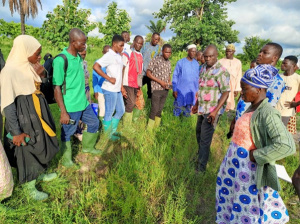
Togo has adopted the "Smart Valleys" system to boost its rice sector. This is a sustainable system for managing rice-growing lowlands. It was recently introduced to 120 farmers in Blitta, with the support of the West African Food System Resilience Program (FSRP).
The "Smart Valleys" system helps retain rainwater in fields, thus reducing flood-induced fertilizer loss while increasing yields.
Farmers introduced to the system learned low-cost techniques for better water and space management in rice fields. They also received essential equipment, including wheelbarrows, boots, ropes, cutters, decameters, and picks.
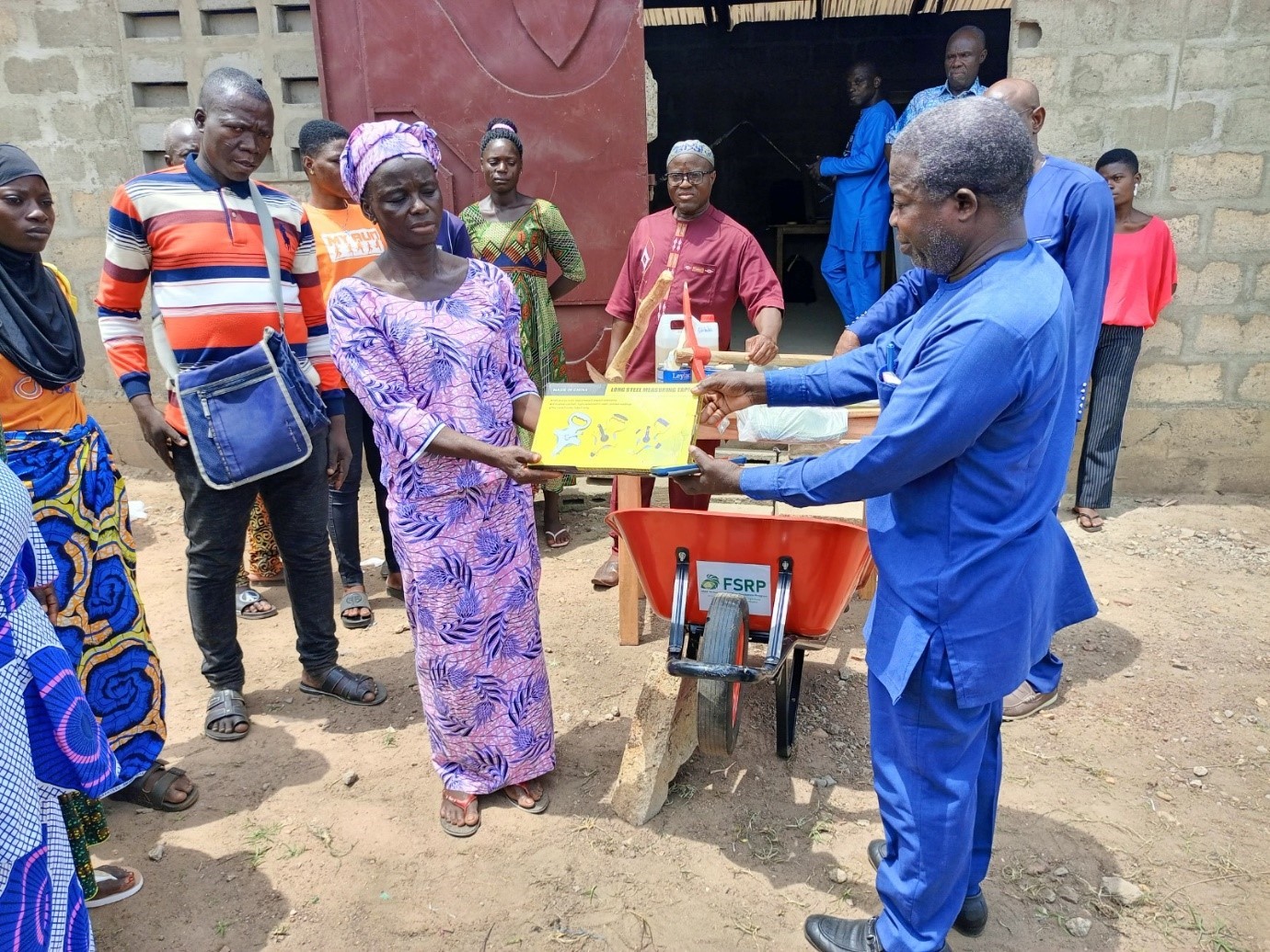
The training aligns with Togo's ambition of producing 1,115,087 tonnes of rice by 2030.
Esaïe Edoh
Lomé-Cotonou Road Rehabilitation Project Will Be Complete in 3 Months (AfDB)
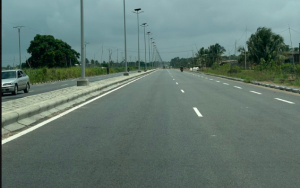
Works to rehabilitate the Lomé-Cotonou road will be done in three months. The African Development Bank (AfDB) announced the date, after visiting the site last Thursday, June 25. According to the bank, the work is 80% complete at the moment.
The AfDB delegation was with two others–one from the European Union and another from the West African Development Bank (BOAD).
"We're very pleased with what we've seen. The work is almost complete. In a few months, the work will be handed over, which will help strengthen regional integration in West Africa", said Joaquin Tasso Vilallonga, European Union ambassador to Togo.
The EU delegation also visited the Baguida market, in the Golfe 6 municipality. There, 13 new sheds and warehouses have been built, and the water and electricity distribution network has been rehabilitated.
The Lomé-Cotonou Road Rehabilitation and Coastal Protection Project (Phase 2) is financed by the AfDB, the EU, BOAD, the Global Environment Facility (GEF), and the Togolese government. The project’s total cost is €181.4 million.
Togo Media Regulator Issues Formal Notice to France 24 Over Hospital Report
Togo's media regulatory body, the Haute Autorité de l'Audiovisuel et de la Communication (HAAC), has sent a "last formal notice" to the French news channel, France 24. The Togolese entity accuses France 24 of "inequitable treatment of information and the dissemination of false news". The claim concerns a story covering maternities at the Sylvanus Olympio Hospital.
According to a letter that the HAAC addressed to France 24’s managing director, the report is titled "Maternities Amidst Medical Staff Shortage”. The regulator claims the media shot its report "without authorization from the hospital's management" and "did not take any steps to gather the CHU.SO management's version to confront the facts reported in the report". Now, the HAAC wants the report corrected within 7 days.
This is the second time the HAAC has issued a formal notice to an international media. Last May, Radio France Internationale (RFI) was also served with a formal notice for "broadcasting false news".
Esaïe Edoh
Togo: BOAD Backs Road Construction Project in Northeast with CFA30 Billion
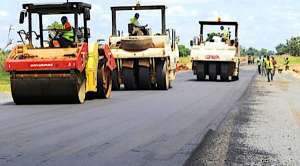
The West African Development Bank (BOAD) has approved a CFA30 billion facility to help develop and asphalt the Tchaasémondè - Gandé - Agbang road, in the northeast of Togo. The Bank disclosed the news on June 27, just after its 142nd board meeting.
The construction project aims to ease access to this part of Togo while boosting economic, social, and cultural exchanges at the local and regional levels, especially with the Republic of Benin.
The project is expected to create some 4,200 direct and indirect jobs. Also, Togolese authorities claim it will help slash accidents by 80% on the axis.
Besides this project, the BOAD also approved another CFA30 billion financing for the Agri-Food Processing Project (PTA).
Overall, during the meeting, the Bank allocated CFA162 billion in new financing to support WAEMU countries.
Ayi Renaud Dossavi
Togo: BOAD Approves CFA30 Billion Additional Financing for Agropole Project
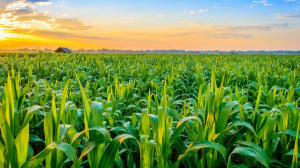
The West African Development Bank (BOAD) approved yesterday, June 27, a CFA30 facility to support the second phase of the Togo Agri-Food Transformation Project (PTA-Togo). This project aims to boost agriculture and reduce dependence on food imports in Togo.
The new funding will build on the success of the project's first phase, focusing on increasing the production of rice, corn, soy, sesame, broiler chicken, and cashew nuts. BOAD had already invested CFA10 billion in the project in 2018 and this new package will, according to the provider, be the key to accelerating Togo's agricultural transformation and boosting food security.
The project is expected to benefit around 800,000 people, with women making up 50% of the beneficiaries, while improving access to basic services–providing 10,000 people with drinking water and electricity. The project also includes building 10 agricultural processing centers or “agropoles”, the first being the Kara Agropole.
PTA-Togo aims to promote inclusive agricultural growth, create jobs, attract private investment in key agro-industrial sectors, enhance Togo’s agricultural infrastructure, and support small-scale farmers and agribusinesses.
The project was initially expected to cost CFA77 billion to develop. The African Development Bank (ADB) supports the project with $79.5 million, including grants and loans to improve agricultural infrastructure. The Nigeria Special Fund (NSF) has provided $5.6 million, and the Saemaul Globalization Foundation has contributed $5 million.
Launched in 2018, the PTA-Togo project is overseen by the Agence de Promotion et de Développement des Agropoles au Togo (APRODAT). The project was, however, delayed due to slow private investment.
Fiacre E. Kakpo
Togo: MSMEs Generate 75% of Jobs in Private Sector
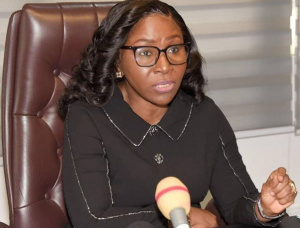
Micro, small, and medium-sized enterprises (MSMEs) generate 75% of private sector jobs in Togo. Minister of Trade, Kayi Mivedor, disclosed the figure on June 27, 2024.
Mivedor also noted that MSMEs “have been at the heart of the government’s action for many decades.” The official spoke on the sidelines of the MSMEs Day.
MSMEs make up over 90% of Togo’s economic landscape. They contribute 40% of its GDP and provide 60% of jobs.
Given their importance, the government constantly ramps up efforts to support MSMEs. For example, Lomé has adopted an MSME charter to provide these businesses with tailored support. The authorities have also created a national agency dedicated to MSMEs’ growth and coordination.
Esaïe Edoh
Togo: Ministry of Investment Works on New Business Viability Report

Togo’s Ministry of Investment prepares a report on business viability at the country level. The new study is similar to an already-released study covering the 2015-2020 period.
A workshop was recently held to review and validate the new report’s draft. The meeting gathered several stakeholders, including members of the Business Climate Cell, the President Cell for Key Projects Monitoring, the Ministry of Trade, the Ministry of Economy, the State Secretary in charge of Financial Inclusion, and representatives of the private sector.
#InvestInTogo
— Ministère de la Promotion de l’Investissement (@Promo_InvestTg) June 27, 2024
Dans le cadre du Projet d’Appui à la Promotion de l’Investissement et au Développement des Partenariats Public-Privé (PAPIDPPP), financé par l’@AfDB_Group et le @GouvTg, le @Promo_InvestTg a réalisé une étude sur la viabilité des entreprises au Togo. pic.twitter.com/bjfEPRKVVF
The stakeholders took the opportunity to fully assess the 2015-2020 report, identifying the main factors behind business mortality.
The upcoming study is part of a project which aims to foster investment and public-private partnerships in Togo. The project-the PAPIDPPP-is backed by the African Development Bank (AfDB) and the Togolese government.
The document’s final version targets entrepreneurs and members of the civil society. It should be available "in the coming weeks", according to the Ministry of Investment.
Ayi Renaud Dossavi
WAMU-Securities: Lomé Hosts 2nd Edition of Sovereign Securities Day
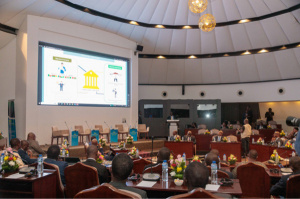
Over the past decade, the financing market for WAEMU countries has been extremely dynamic. But challenges remain.
The WAMU-Securities Agency held the second edition of its Sovereign Securities Day (JTS) in Lomé, on June 27. The annual event gathered several financial players of the WAEMU. This year, participants focused on the market’s development.
"For several years now, WAEMU States have been facing growing financing needs, linked not only to ambitious development programs but also to the management of health and security crises impacting our countries. Against this backdrop, the public securities market (MTP), and by extension the regional financial market, has shown increased resilience,” said Oulimata Ndiaye Diasse, director of the WAMU-securities agency.
"Our market dedicated to financing Uemoa zone states and our economies has evolved very strongly over the last ten years. The amounts mobilized have risen sharply from year to year, from nearly 2,000 billion a year in 2013, to 7,194 billion in 2023 after an exceptional peak of nearly 10,000 billion in 2020 at the time of Covid-19," she added.
Development Imperative
While the primary market has undergone profound changes, not only in terms of amounts, but also in terms of practices, especially "the strengthening of instrument liquidity and market depth, the assimilation of securities, the standardization of instruments issued, the implementation of a yield curve, or the strengthening of transparency and availability of information", challenges remain in the secondary market, Diasse stressed.
"Among the pillars of the development of a local bond market, is not only the expansion of the primary market, which we are delighted with in view of the results, but also and above all the development of the secondary market".
Indeed, this segment, despite strong ten-year growth and apparent dynamism (the annual volume traded rose from 100 billion in 2014 to almost 2,073 billion in 2023, with the number of participants rising from 18 to 93), faces several difficulties. These include the search for securities, the definition of fair prices for instruments, the finalization of transactions, and the turnover rate of the portfolio of public securities issued by auction.
New infrastructures
Faced with these resource mobilization challenges, work is underway to launch a quotation platform designed to enhance market transparency.
Octave A. Bruce