

Togo First
Togo’s Digital Agency Launches Nationwide Awareness Campaign for MSMEs

Agence Togo Digital (ATD), the government's operational arm for digital projects, is set to launch an ambitious initiative called "DigiTour" aimed at Very Small and Medium-sized Enterprises (VSMSEs). The awareness-raising tour will run from July 29 to August 10, 2024, across Togo's five administrative regions.
The tour aims to inform MSME owners about the possibilities that digitalization offers. They will learn about various digital tools, that can help them manage their finances, protect their data, and boost their online presence. The tour will also offer training on inventory management tools and present platforms for increasing visibility and competitiveness in Africa.
Only businesses registered in the databases of the FAIEJ, CNP, GTPME-PMI, or ANPGF can enroll. They must also have a CFE card and have been active for at least two years.
Registration ends on July 14, 2024.
West Africa Braces for Impact as Sahel States Move to Exit ECOWAS
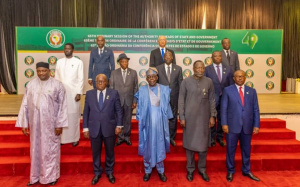
With the imminent withdrawal of the AES countries (Burkina Faso, Mali, Niger) from ECOWAS, observers there are growing concerns about the potential consequences of their exit from the regional economic community.
ECOWAS authorities expect the withdrawal to impact the free movement of people and goods significantly. Citizens of Burkina Faso, Mali, and Niger could soon need visas to travel to ECOWAS member states.
"The withdrawal of Niger, Mali, and Burkina from ECOWAS will affect the travel and immigration conditions of the citizens of these three countries," stated Omar Aliew Touré, president of the ECOWAS commission, at the 65th Community summit on July 7.
“They will need to go through visa procedures before traveling within the sub-region and can no longer reside or set up businesses freely under ECOWAS facilities, being subject to various national laws instead,” Touré added.
Also, using a common passport and biometric identity card for travel within the ECOWAS community space could be affected. Other ECOWAS citizens could also need a visa to visit the three AES States.
Economic Impacts
Economically, the withdrawal of the AES could “end or halt” projects and programs implemented by the ECOWAS Commission in these three countries. According to Aliew Touré, these projects are valued at over $500 million. This would also pose challenges for cooperation with regional financial institutions like EBID and BOAD.
In the meantime, ECOWAS remains “open” to discussions. Togo and Senegal’s Leaders, Faure Gnassingbé and Bassirou Diomaye Faye were recently appointed to facilitate these discussions.
It is worth noting that the AES countries have recently announced plans to create an investment bank and a stabilization fund for the Sahel, moving further away from ECOWAS.
Ayi Renaud Dossavi
Togo: National Institute of Statistics Partners with ACED to Enhance Statistical Research and Development

Togo’s National Institute of Statistics and Demographics (INSEED) signed a memorandum of understanding with the African Centre for Equitable Development (ACED) on June 28.
The move aims to support INSEED in key areas such as implementing the statistical visa, improving research capacities, and organizing study tours. It should also enable the Institute to leverage ACED's expertise and explore new opportunities for future initiatives.
INSEED's Secretary General, Tchiou Animaou, highlighted the partnership's South-South collaboration, emphasizing the importance of local institutions positioning themselves to support development in the sub-region with their expertise and resources.
"This strategic partnership with INSEED is a major step towards fostering a culture of systematic data use in decision-making in West Africa," said Dr. Fréjus THOTO, Executive Director of ACED. "It will allow us to combine our efforts and expertise to promote evidence-based decision-making in key areas of sustainable development in Togo."
Together, INSEED and ACED will focus on improving data production and use and on making it easier for policymakers and practitioners in Togo to access INSEED's data and services.
Based in Benin, ACED is a research and action center promoting equitable development in Africa, with interventions in food systems, the natural economy, the digital economy, and human development.
Ayi Renaud Dossavi
Plan International Togo and Water Actors Partner to Improve Access to Water and Sanitation
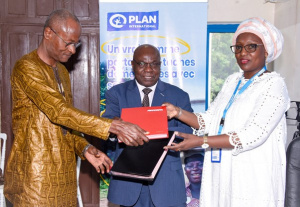
Plan International Togo and the Cadre de Concertation des Acteurs de l'Eau et de l'Assainissement de Base au Togo (CCEABT) have partnered to help the government improve water and sanitation practices and investments. The related memorandum of understanding was signed last weekend.
The partnership is backed by the Ministry of Water and Village Hydraulics.
Plan International Togo and CCEABT will bridge the gap between research and field actions, implementing interventions meeting the population’s specific needs.
"By combining our expertise and resources, we are confident that we can make significant strides in enhancing water and sanitation services for communities across Togo," said the director of Plan International Togo.
Together, the partners will focus on areas such as infrastructure development, capacity building, and community engagement to ensure sustainable and equitable access to these essential services.
The new partnership aligns with Togo's commitment to achieving universal drinking water coverage by 2030. At the end of 2023, the water coverage rate was estimated at 69%.
Esaïe Edoh
Star Garment Secures $15 Million IFC Loan to Open Factory in Togo
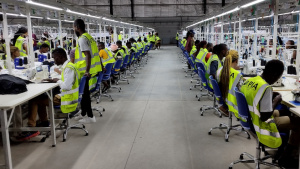
Star Garments Group Limited, a subsidiary of the American company Charles Komar & Sons, has secured a $15 million loan (around 9 billion FCFA) from the International Finance Corporation (IFC) to set up Togo’s first large-scale, export-oriented garment manufacturing plant.
The IFC announced the news on July 8. According to the World Bank’s private sector arm, the project could create 4,500 direct and indirect jobs, mainly for women, by 2030.
Announced at the end of 2023, the project will be housed at the Industrial Platform of Adétikopé (PIA) in Lomé. The factory will produce "cut-make-trim" garments and adhere to Leadership in Energy and Environmental Design (LEED) standards, ensuring optimal environmental and health performance.
"Our factory in Togo will offer our customers an integrated 'farm to finished product' process that few destinations in the world can offer," said A. Sukumaran, Managing Director of Star Garments Group.
This project marks the first venture for Charles Komar & Sons and Star Garments in Africa, aiming to diversify the company's production base.
"IFC is proud to partner with Star Garments to support job creation, exports, and industrial development in Togo," said Josiane Kwenda, IFC Regional Manager for Togo, highlighting West Africa's potential to become a textile industry hub.
IFC's strategic priorities in Togo include agriculture, transport, energy, and digital technology. Its current investment portfolio in the country amounts to $131 million.
Ayi Renaud Dossavi
Togo Sees Significant Increase in Electricity Access over Past Three Years
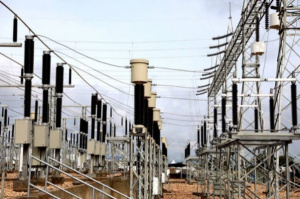
Togo’s electricity access rate rose from 50% in 2020 to 68% in 2023. According to the Presidency, the surge is due to several inclusive initiatives, including the CIZO and Tinga Fund projects. Over 600,000 households now have light because of these projects.
Another project that fostered the increase is the installation of 50,000 autonomous and intelligent solar streetlights launched in April 2023. It covered 4,599 localities. There is also the Blitta solar power plant. Initially, the plant had a capacity of 50 MWp but it is being expanded.
Togo aims to achieve 70% electricity coverage this year and 100% by 2030.
Esaïe Edoh
Togo: Exports to ECOWAS at CFA53 Billion in March 2024

Exports from Togo to other ECOWAS countries stood at CFA52.968 billion in March 2024. The figure was disclosed by the country’s Institute of Statistics and Demographics (INSEED).
The biggest portion of the exports, 83% or CFA44.358 billion, was captured by the West African Economic and Monetary Union (UEMOA) countries. Côte d'Ivoire was Togo's main trading partner in the Union; receiving nearly CFA20 billion of goods in March. Burkina Faso was next with CFA8.9 billion and Mali followed with CFA6.2 billion.
Togo also exported CFA4.1 billion worth of goods to Benin, CFA2.3 billion to Niger, and CFA2.8 billion to Senegal.
Togo's exports outside the WAEMU totaled CFA8.6 billion. Its main buyers were Ghana and Nigeria. To these two countries, Togo exported almost CFA4 billion and CFA4.3 billion of goods respectively. Other countries like Guinea, Liberia, Gambia, and Sierra Leone represented smaller markets, with combined sales of just CFA383 million.
From February to March, Togo’s exports grew by 73%. In February 2024, they stood at CFA30.5 billion. These figures highlight the importance of the ECOWAS zone, particularly UEMOA, for Togo's trade. In Q2 2024, ECOWAS States accounted for 40% of Togo's exports.
Ayi Renaud Dossavi
WAEMU-Securities: Togo to Seek CFA35 Billion This Week
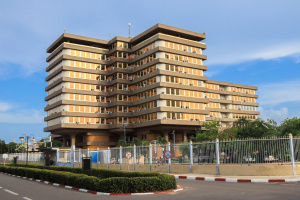
Togo will seek CFA35 billion on the WAEMU market on July 12. This will be the country’s first issue on the regional market this semester. Lomé will issue fungible treasury bills (BAT) and fungible treasury bonds (OAT).
In detail, Togo will seek CFA10 billion through the BATs and CFA25 billion through the OATs. The first securities have a nominal value of CFA1 million, stipulated with a maturity of 364 days and a multiple interest rate. The latter have a face value of CFA10,000, issued on maturities of 3 and 5 years, at interest rates of 6.15% and 6.40% respectively.
Proceeds will finance Togo's 2024 budget, which balances resources and expenses at CFA2,179 billion.
So far this year, Togo has raised CFA463 billion on the WAEMU market. That is around 76% of its annual target of CFA607 billion.
Esaïe Edoh
ECOWAS Appoints Togo and Senegal Leaders as Facilitators to Persuade Sahel States to Reverse Withdrawal
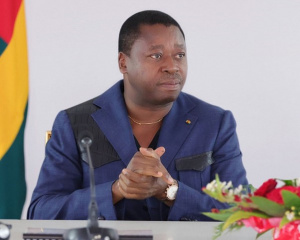
Faure Gnassingbé and Diomaye Faye, the Presidents of Togo and Senegal have been appointed as co-facilitators for ECOWAS to work with the leaders of Mali, Burkina Faso, and Niger. Several months ago, these three countries began withdrawing from ECOWAS to form the Alliance of Sahel States (AES).
They were assigned the mission at the 65th Ordinary Session of the ECOWAS Heads of State and Government Conference on July 7, 2024, in Abuja, Nigeria. Gnassingbé and Faye have been tasked to persuade the AES leaders to reverse their decision to leave ECOWAS.
The AES was established on July 6, 2024, after a prolonged crisis with ECOWAS. This was after the latter condemned the leaders of Burkina Faso, Niger, and Mali for seizing power by force.
Previously, Faure Gnassingbé played a crucial role in negotiations between ECOWAS and the military authorities in these countries, helping to resolve issues such as the release of 49 Ivorian soldiers detained in Mali and the son of Niger's former president, Mohamed Bazoum.
The mission trusted to Presidents Faye and Gnassingbé will be challenging given that the AES leaders are focused on deepening their new alliance. The co-facilitators' success will be crucial in determining the future of regional cooperation in West Africa.
Esaïe Edoh
Lomé Hosts 23rd International Pharmaceutical Forum

The Togolese capital is hosting the 23rd International Pharmaceutical Forum from July 4 to 6, 2024. The event, themed "Universal Access to Healthcare, challenges, Issues and Prospects for the Pharmaceutical Sector," is set to gather around 1,500 participants from various African countries, including researchers, teachers, wholesalers, pharmacists, manufacturers, biologists, and public health professionals.
"For us in the pharmaceutical sector, it is essential to align with this major objective. Medicines are the lifeblood of healthcare, and through this theme, Togolese pharmacists aim to unite with their African colleagues to support our government's call for equitable access to healthcare for our populations," said Dr. Koundé Innocent Kpeto, former President of the National Order of Pharmacists of Togo (ONPT).
The forum provides a platform for stakeholders in the pharmaceutical industry to discuss strategies and solutions to improve universal healthcare access across the African continent.
Ayi Renaud Dossavi