
Togo First
AFD provides €40.7 million credit to Togo in support of clean water supply and sanitation projects
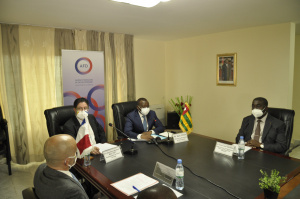
On June 8, 2020, Togo and France, via the French Development Agency (AFD), inked two financing agreements worth a total of €40.7 million.
According to the Togolese minister of finance, Sani Yaya, the agreements will “support the government’s strong initiatives relative to water and sanitization in Togo.”
In detail, the first which is for a €40 million (XOF26.2 billion) concessional loan will help implement a program that is aimed at improving access to drinking water in the Savanes region; it will benefit 200,000 people. This project is divided into four parts: Supplying clean water in Cinkassé, Korbongou, Bombouaka, Mandouri, Tandjoaré, Gando, and expanding the water network of Dapaong, starting from the Dalwak dam. Next is supplying clean water to six other semi-urban areas, rehabilitation, and expanding water systems of towns located in the perimeter of the TdE (water utility); proceed to strategic studies associated with the roadmap for supplying drinking water in the Grand Lomé area. The last part concerns an in-depth assessment of the new water supply system in Kara.
Regarding the second agreement, the related facility amounts to €700,000 (XOF459.17 million). The funds will serve to actualize the master plan for the treatment of wastewater and stormwater in the Grand Lomé area (PDA2004). This project is steered by the Fonds de la Facilité d’Amorçage, de Préparation et de Suivi de Projets (FAPS).
Let’s emphasize that the AFD has so far invested more than €108 million in projects focused on sanitation and improving access to drinking water in Togo. This includes the two agreements signed recently.
Séna Akoda
The Ministry of trade launches contest to select local startups that will attend the Annual Investment Meeting in Dubaï
Until June 30, 2020, Togolese SMEs and SMIs can apply to the big contest launched by the country’s ministry of trade, in partnership with the International Federation of consular chambers for Africa (FICA). The contest aims at enabling innovative businesses to access new outlets across the globe.
Selected startups will attend the 2020 Annual Investment Meeting in Dubaï. Eligible firms must have an annual turnover ranging between $100,000 and $1,000,000, less than 50 employees, must be running operations for two to seven years, and must have previously successfully organized fundraising.
During the event, participants will be able to showcase their products and services to more than 1,500 commercial partners, clients, and investors coming from more than 140 countries.
Application forms are available on www.commerce.gouv.tg and www.aimcongress.com.
Séna Akoda
After being delayed by Covid-19, ACP-EU talks finally enter their last stage
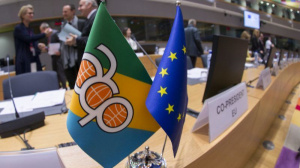
Started in September 2018, talks between ACP countries (Africa-Caribbean-Pacific) and the European Union (EU) are entering their last phase.
Indeed the two parties commenced yesterday in Brussels, technical discussions ahead of negotiations which will take place next Friday. The Talks will focus on political issues, such as the right to sexuality, abolition of the death penalty, or the financing of the African civil society by the EU.
The talks which were slowed due to the Covid-19 should end in the coming weeks. The Cotonou Partnership Agreement between the EU and African, Caribbean and Pacific countries will expire at the end of December 2020 (against February 2020 as planned initially). The agreement regroups 79 ACP States, the EU Member States, and around 1.5 billion people.
Togo’s organic soybean exports to the EU surged by 115% in 2019
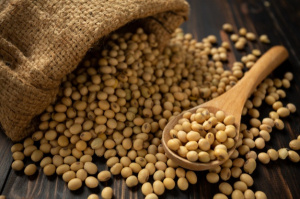
From 19,700 tons in 2018, exports of organic soybeans from Togo to the European Union (EU) were at 42,300 tons (+115%) in 2019, a recent report revealed.
This makes Togo the largest exporter of the crop to the Old continent, before China (28,200 t) and India (21,600 t). In Africa, Uganda was the next biggest exporter of organic soybeans to the EU in 2019 with 2,300 t shipped; it is the 7th worldwide.
Soybeans, most produced organic product in Togo
Soybeans is the most produced organic product in Togo and around 300,000 people work in this sector. It made up nearly 95% of Togo’s organic foods exports to the EU in 2019 (which totalled 44,684 t).
Ayi Renaud Dossavi
Covid-19: Togo lifts curfew and makes it compulsory for all to wear face masks

In Togo, authorities lifted the curfew set at the beginning of April 2020 to contain the spread of the Coronavirus. This was announced yesterday, June 6.
Subsequently, the lockdown measure imposed on towns has been lifted as well. However, starting today, June 9, 2020, it is compulsory for every citizen to wear face masks (the measure applied only to health agents previously).
The country, it should be noted, has confirmed 497 cases of Covid-19, including 251 who recovered and 13 who passed away.
UMOA-securities: Togo secures about XOF21 billion on the regional financial market

Last Friday, Togo raised XOF 26.31 billion for its latest fungible treasury bonds on the regional financial market. Out of this sum, the country retains XOF21.8 billion.
According to the UMOA securities agency, “the operation aligns with Togo’s public securities issuance program in line with its medium and long term debt management strategy.”
The amount mobilized corresponds to a coverage rate of 131.5% since Lomé was initially seeking XOF20 billion. The bonds in question will mature over a year.
Séna Akoda
Togo is the second-largest African exporter of organic foods to the European Union
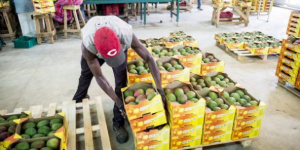
Between 2018 and 2019, Togo doubled its exports of organic foods to the European Union. From 22,000 tons, the latter rose by 102% over the period to reach almost 45,000 tons.
This makes the country the second-largest exporter of these products to the EU in Africa (Egypt is first). Worldwide, it is the 14th (against 31st in 2018).
In the ECOWAS region, Togo is first ahead of Côte d’Ivoire (23,503 t), Ghana (20,318 t), Burkina Faso (13,312 t), Senegal (4,765 t), Benin (2,081 t), Niger (640 t), and Nigeria (289 t).
It should be noted that overall, EU’s imports of organic food products were somehow stable between 2018 and 2019 (3.24 million tons). However, the demand for tropical fruits and soybeans rose; a situation that benefited Togo.
In Togo, more than 36,000 farmers practice organic farming. This is about 4.83% of African producers in the sector.
Ayi Renaud Dossavi
Covid-19: Lomé’s airport will be equipped with a mobile laboratory for testing travelers
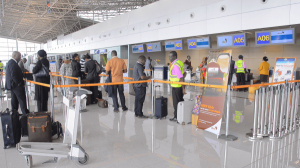
In Togo, the Gnassingbé Eyadema International airport (AIGE) is taking various measures to restart activity soon.
Among these is a mobile laboratory where all arriving and departing travelers will be tested for Covid-19. This was recently revealed in a press briefing organized by the Covid-19 response team (CNGR).
“It is imperative to restart economic activities,” the CNGR said. “In this framework, major changes are taking place at the Gnassingbé Eyadema International airport, in preparation for the reopening of our borders,” the coordinating team added.
Let it be noted that the air sector is one of the most impacted by the current pandemic. In the WAEMU, air traffic fell by 95% (and the AIGE turned to freight and cargo transport).
The International Civil Aviation Organization (ICAO) has recently recommended systematic testing of travelers, compulsory mask-wearing at airports and on flights, as well as frequent disinfection of planes, among safety measures to follow for restarting air transport. Togo’s efforts thus align with these measures.
Ayi Renaud Dossavi
Minister of water to drill 400 new boreholes, rehabilitate 200 old ones, in Kara and Savanes regions
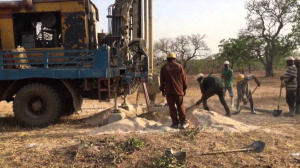
Over the next months, access to water in the Kara and Savanes regions will be improved. The ministry of water, rural equipment, and hydraulics (MEERHV) is planning to drill 400 boreholes, and rehabilitate 200 more, in these two regions.
In this framework, the ministry has opened a tender for enterprises interested in carrying out these works. The tender has been divided into two lots involving respectively the installation of 200 new boreholes (equipped with manual pumps) and the rehabilitation of 100 old boreholes.
Let it be recalled that between 2005 and 2019, 3,200 boreholes were rehabilitated and 5,000 new ones dug. As a result, the rate of access to drinking water in rural areas has risen from 21% to 69% over the period. In the same period, the number of branches of Togo’s water utility, Togolaise des Eaux (TDE), increased from 23 to 53.
Séna Akoda
“In the coming days, banks will finance the agricultural sector more” -Kossi Ténou, BCEAO national director
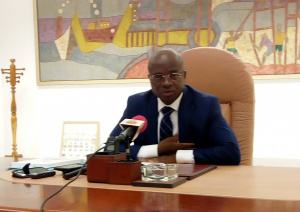
The Togolese government is keeping up with initiatives to increase financing to the agricultural sector. Last Wednesday, top officials from the ministries of finance and agriculture met with managing directors of credit institutions operating in the country in this framework.
The meeting, which was held in Lomé, aimed at finding ways to substantially increase the contribution of the lenders to agriculture, as well as bank loans.
According to figures published in 2019, the sector gets only 0.2% of bank loans; this is despite employing 38% of the population and generating 23% of Togo’s GDP. According to Kossi Ténou, the national director of the BCEAO, “banks are making some effort, but it is still insufficient considering the huge needs of the agricultural sector.”
Hence, this year, XOF50 billion should be mobilized- with the support of banks- for the agricultural sector, actors gathered at the reunion decided. “In the coming days, banks will finance the agricultural sector more,” Ténou commented.
Ayi Renaud Dossavi