

Togo First
Togo’s new cotton campaign officially begins
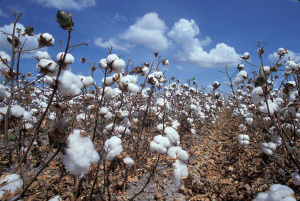
Yesterday, May 19, the minister of agriculture, Noel Bataka, officially launched the 2020-2021 cotton campaign in Kara (412 km north of Lomé).
According to the official, “it is imperative to increase sowing areas, boost output, productivity, and farmers’ income.” However, he stressed on the need to take into account current limitations that emerged due to the Covid-19 pandemic. “All actors will have to find adequate ways to protect themselves against the pandemic,” Bataka declared.
During the previous campaign, the country’s annual output was down 15% due to low rainfalls. From 137,000 tons of white gold in 2018-2019, yields harvested last year stood at 116,000 tons.
Ayi Renaud Dossavi
Togolese anti-pandemic special task force seizes drugs at the Togo-Ghana borders

The Togolese anti-pandemic mixed special task force, FOSAP, seized last week 285 cannabis bread pieces which were being smuggled into Togo, from Ghana.
The task force announced the seizure yesterday, May 19, indicating that it took place during a routine control at the border.
It was also during one of the new force’s routine controls that nearly 1,000 Togolese citizens were recently intercepted while crossing the Togo-Ghana borders despite the latter being officially closed. The citizens intercepted were placed under quarantine.
The FOSAP, let’s recall, is a unit of 5,000 people established to enforce measures taken by the government as part of its Covid-19 response.
A new director has been appointed to head Togo’s power utility, CEET
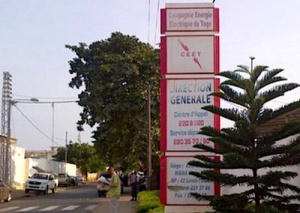
The new head of the Togolese power utility (CEET) is Laré Santiégou. He was recently appointed to replace Pauli Kakatsi Mawussi who had been holding the position since 2016 (and in 2009-2011 before that).
Before coming to the CEET, Santiégou was the chief of BBOXX Togo which is active on the CIZO rural electrification project. Before that, he was the Managing Director of Contour Global, which produces and supplies power in Togo.
Among the various challenges that the new CEET chief has inherited is the big debt Togo owes Nigeria. The latter has been threatening to cut power supply to Togo, and other neighboring countries it provides electricity to.
The University of Lomé will soon launch its radio station, Campus FM

The University of Lomé (UL) currently plans to launch a radio station. Called Campus FM, the project is supported by the European Union.
In the framework of the project, an ad hoc commission was set up and tasked to elaborate a draft editorial guideline, a charter of ethics and deontology as well as a bylaw for the planned media. On May 19, 2020, this commission handed its report to Prof Dodji Komla Kokoroko, President of the UL.
According to Essohana Batchana, president of the ad hoc commission, Campus FM will support the UL in its missions, training, scientific research, and valorization of results namely.
The media should enjoy the freedom of expression, reflection, and objectivity, per the rules of ethics and deontology governing the profession of journalism and the provisions regulating the university’s operations.
Séna Akoda
UMOA-securities: After recording an astounding success with its Covid-19 bonds, Togo prepares its last issuance for Q2 2020

Togo is preparing its last issuance on the regional stock market for Q2 2020. According to UMOA-securities, the regional agency that organizes the issue of public securities, Lomé will proceed to the operation on June 12.
For the coming operation, Togo’s public treasury will try to raise XOF20 billion by issuing fungible Treasury bonds that will mature over 12 months.
On May 14, the country successfully retained XOF108 billion out of XOF224 mobilized by investors. For this quarter, Lomé aims at raising XOF183 billion, after securing XOF165 billion in the previous quarter. Cumulating its performances so far, the country is well set to achieve its target for the year, knowingly XOF420 billion.
It is not only Togo but the whole WAEMU region that has recorded good results on the regional financial market since the year began. In the first quarter, all WAEMU States raised a total of XOF1,331 billion (about $2.2 billion) on this market. This is 8.21% more compared to their initial target. During the current quarter, they seek XOF2,819 billion.
The positive performances of WAEMU States on the regional financial market reflect investors’ trust despite the persistent Covid-19 pandemic slowing both regional and global economies.
Fiacre E. Kakpo
EU grants XOF65 million to the media and CNGR to help fight Covid-19 pandemic in Togo

The European Union (EU) delegation has granted XOF65.5 million to Togolese media organizations and the national coordination for the management of the Covid-19 response (CNGR).
The grant falls under a project led by the Observatoire Togolais des Médias (OTM). The latter regroups the national council of media employers (CONAPP), the Press employers association (PPT), the Free Radios and Televisions Union (URATEL), and the Togolese Association of Private Online Media (ATOPPEL).
The project in question aims at boosting communication and raising awareness about the pandemic in Togo.
Commenting on the grant, Bruno Hanses, chargé d’affaires at the EU delegation, said the media play a key role in the response against the coronavirus, in support of the government’s efforts.
Séna Akoda
Togo: Eda-Oba hotel shuts down momentarily due to Covid-19
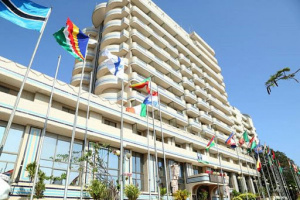
One of Lomé’s biggest hotels, the Eda Oba hotel, has suspended all activities until further notice due to the persistent coronavirus crisis. The information was reported by local media MiabeTogoActu.
“It is imprudent, both on the sanitary and financial levels, to keep the Eda-Oba hotel running given actual circumstances, especially since we are financially exhausted and have almost no treasury left,” said the hotel’s management.
The Covid-19 is the last straw that broke the camel’s back as “we had been running almost empty due to the very low business traffic.” Due to all these, “we temporarily laid off all our employees since April 30, 2020.”
The Eda-Oba hotel is not the only business in Togo struggling amidst the pandemic. Indeed, a recent survey carried out by the Togolese employers’ association revealed that 41% of businesses have halted operations and 91% had to temporarily lay off their staff.
Togo: The post office launches new online payment platform E-poste
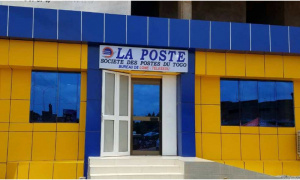
Togo’s post company, La Société des Postes du Togo (SPT), has developed a new online payment solution called E-poste.
The platform is solely reserved for the payment of power (CEET) and water (TDE) bills, at zero-cost.
The creation of this platform which can be downloaded on Google Play aligns the government’s dematerialization efforts. It also aims to make life easier for CEET and TDE customers.
Séna Akoda
Togo's budget revenues could reduce by 40% due to the Covid-19 pandemic, Minister of Finance predicts
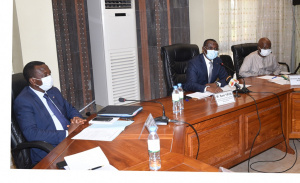
“Due to the various fiscal measures taken by the government to support businesses, budget resources should decrease from XOF578.4 billion to 348.4 billion.” The statement was made last Friday by the Togolese minister of finance, Sani Yaya, during a meeting with the private sector.
Explaining the reduction (of about 40%) in detail, the official said tax earnings should slump by around XOF198 billion, while non-tax and service revenues are expected to plummet by XOF32 billion, as health and social expenses surge amidst the Covid-19 pandemic.
According to Yaya, “the tertiary sector (trade, services, travel, and tourism) is the most affected” by the drastic measures taken in response to the outbreak.
The situation could cause the Togolese economy to plunge since it greatly depends on external economies. In effect, “GDP growth should stand at 1.3% according to the latest macro-budget review. The gross domestic product could fall by 1.5% in 2020, in the worst case, as against an initial forecast of 5.5%.”
Looking at present circumstances, the minister of finance pointed out the need for national solidarity to restart the whole Togolese economic machinery.
Yaya added that in line with the adopted strategy, which is backed by the national fund for response and economic recovery, XOF110 billion will be allocated to response actions, X0F110 billion to boost resiliency and 180 billion to restart the economy.
For now, he stressed, the government is still far from raising these funds which makes a total of XOF400 billion.
Fiacre E. Kakpo
Coronavirus: National Institute for Hygiene (INH) opens new office in Kara, Northern Togo
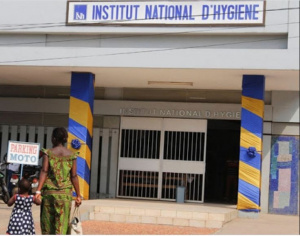
As announced a few weeks ago, the National Institute for Hygiene (INH) officially set up an office in Kara (412km from Lomé) last Saturday.
According to the ministry of health, this facility would help proceed to 1,500 daily tests for the Covid-19 virus. This is more than double the actual number of tests currently being performed. Additionally, the new center will enable the immediate processing of samples taken in the northern region without having to send them to Lomé first.
The new center’s opening, it should be noted, is quite timely given that the number of Covid-19 cases in Togo has almost doubled over the past week, surging from 153 cases on May 10 to 301 cases on May 17.
Ayi Renaud Dossavi