
Togo First
Solar: WeLight eyes the Togolese market
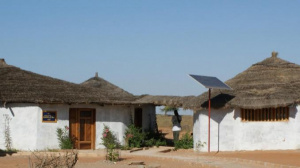
WeLight, the joint venture of Axian Group and Sagemcom, eyes three West African markets, in line with its expansion in sub-Saharan Africa.
Indeed, the JV which invests in rural electrification could soon enter Togo, Burkina Faso, and Niger.
“For economy-scaling purposes, we wish to develop around 50 projects per country and we are currently considering Burkina Faso, Togo, and Niger,” says Laurent Roineau, deputy managing director of WeLight.
The executive disclosed the information in a recent communiqué where the JV announces its partnership with Norfund, the Norwegian investment fund.
Let’s indicate that Axian Group currently operates in Togo via Togocom. Indeed, with Emerging Capital Partners, it is part of the Agou Holding which acquired from the Togolese State its 51% stake in the telecom operator.
Apart from telecoms and energy, Axian also operates in real estate, finance, and the innovation sectors.
Ayi Renaud Dossavi
Togo was Benin’s second-biggest electricity supplier in 2018

In 2018, Togo was Benin’s second-biggest electricity supplier behind Nigeria.
According to a report of the Central Bank of West African States (BCEAO), 6.3% of Benin’s imports came from Togo, mostly electricity provided through Communauté Electrique du Bénin. From Nigeria which supplies a quarter of its imports, Benin gets petroleum products.
Besides being Benin’s second-biggest supplier of electricity, Togo was its main provider (52.9%), regarding direct investment flows, over the year reviewed. Following Togo were China (36.2%), Senegal (12.2%), and Nigeria (8.2%). Most of these investment flows were debts (XOF111.2 billion).
From Benin, Togo imports frozen fish, petroleum products, drugs, and paint. It is its third buyer in the WAEMU.
Ayi Renaud Dossavi
Textile: Faure Gnassingbé urges cotton farmers to produce more, to attract more foreign investors
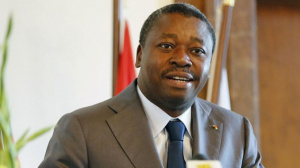
Togo’s president, Faure Gnassingbé, urged cotton farmers to increase their yield to attract textile foreign investors to the country. This he said while meeting with farmers in Atakpamé, 190 km north of Lomé, last Monday.
“Our dream is to move to the next step: transform our cotton into fibers, fibers to fabrics and use these fabrics to make the clothes we wear. That is the goal we must achieve and we have set it under our national development plan,” the leader said. He also voiced the wish to export made-in-Togo textile products to the U.S, Europe, etc.
Besides counting on foreign investors to develop the textile industry, the government said it would reopen Datcha’s textile factory. However, the local cotton output should be increased in this regard, as it is currently deemed too low according to investors.
Togo, it should be recalled, hopes to produce 200,000 t of cotton by 2022.
Séna Akoda
In Togo, GTA Assurances Vie and Coris bank launched together a new bancassurance product
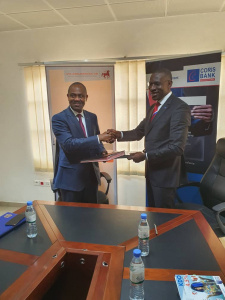
GTA Assurances Vie and Coris Bank Togo entered a partnership to sell and manage a new bancassurance product called Coris Protect.
The related agreement was signed by the respective heads of the companies, Claude Daté Gbikpi and Alassane Kabore.
Coris Protect, according to a statement released by the firms, should enable bank customers be better prepared in the event of an accident, total or permanent disability due to a disease or an accident, or death regardless of the cause.
In the first case (accidents), Coris Protect covers medical fees. In the second (permanent disability), the beneficiary gets financial support plus a payment equivalent to wages perceived over the six months preceding the incident (with a cap of XOF2.5 million). Last, in the event of death, the new product covers funeral benefits.
Coris Protect also allows the client to guarantee his beneficiaries a lump sum in the event of death or permanent disability, for a monthly premium of 1,000 FCFA.
Séna Akoda
Togo : More than 11,000 new businesses registered last year

In 2019, exactly 11,482 new businesses were registered at Togo’s Centre for Business Formalities (CFE) - a figure that is very close to the peak recorded in 2015. According to the CFE, this is about 9% more than the number recorded the year before that.
In detail, more than 67% of the new businesses (7,844) were created by individuals; this reflects a low level of association between Togolese entrepreneurs.
Over the year reviewed, 3,156 LLCs were created. Out of these, 86% were without resorting to a notary - a feat that is attributable to a reform approved by the World Bank in 2019.
It appears that 80% of the newly registered firms are owned by Togolese citizens. Meanwhile, the rest (2,349) belong to foreigners. While local businesses dominate the entrepreneurial industry, it must be emphasized that the number of new businesses launched by foreigners is 22% more than that recorded in 2018.
The increase is driven by the new government-led reforms to improve Togo’s business climate. These reforms, in fact, enabled the country to stand at the 15th place in the 2020 Doing Business’ “Starting a business” index. This represents a 40 ranks rise compared to 2019.
The African Guarantee Fund gets $30M from KfW to better support African SMEs
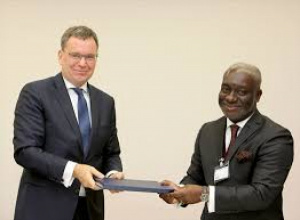
The African Guarantee Fund (AGF) has secured $33 million from the German development bank, KfW. The facility will mostly be used to back small and medium enterprises (SMEs) across the continent.
The fund indeed declares that the monies should “bolster its efforts - in line with its mission - to help African SMEs to keep playing an important part in the growth of African economies, by spurring financial inclusion especially.”
Let’s indicate that the AGF, at the continental level, wants to provide financial guarantees to more than 10,000 SMEs, yearly. In West Africa particularly, the institution targets 2,000 SMEs, per year on average, per country.
So far, guarantees provided by the fund for African SMEs amount to nearly $1.7 billion. About 20,000 SMEs benefited from this support - 60% of which are held by youths, while 30% are by women.
In Togo, the AGF, whose West African division is based in Lomé, signed a deal with the Risk-based Agricultural Financing Incentive Mechanism (MIFA S.A), last July. Under the agreement, the AGF will guarantee 50% of funds needed for projects submitted by MIFA S.A to its partners. The two parties, MIFA and AGF, also work on financial tools more suited to Togo’s agricultural sector.
Ayi Renaud Dossavi
Lomé will host this week a summit on ways to counter trafficking of fake drugs

On January 17-18, 2020, Lomé will host a summit on the fight against fake drug trafficking in Africa.
Six African presidents, former heads of State and governments, as well as top figures of the global health industry, such as WHO’s managing director, will be present.
The event is organized by Togo and Fondation Brazzaville. It is “a fully African initiative,” according to the Togolese minister of health, Moustapha Mijiyawa.
Through this summit, its organizers hope to lay foundations for a full engagement of the continent. It also aims to yield legal tools to efficiently tackle drug trafficking.
“Fake drugs kill more than malaria,” Mijiyawa says adding: “Paradoxically, the legal tools to fight their trafficking are light, and this translates into a large divide between the issue and measures taken to counter it.”
The illegal practice, let’s recall, kills nearly 900,000 Africans every year, including 120,000 under 5-year old children.
Ayi Renaud Dossavi
Togo: Vo prefecture will get five modern gari production units, with MIFA’s support

Very soon, five modern gari production units will be set up in the Vo prefecture. The project, which is backed by the MIFA, was revealed last week during a visit by President Gnassingbé in Gnita, a village located in the Akoumapé district.
The first of the five production units will be located in this village. It will cost XOF50 million. There, hundreds of women make gari, which comes from cassava.
Yearly, Togo produces about 900,000 tons of cassava. And while this is one of the products the country transforms most, there is still nearly 400,000 of unprocessed cassava per year.
Entrepreneurship: Kara to host next May the 6th AGAU RA meetings
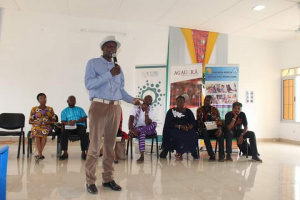
The 6th edition of the AGAU RÂ meetings will be held in Kara, on May 8-9, 2020.
On the first day of the event, there will be workshops aimed at boosting entrepreneurial capacities. Participants will learn about the conception and profitability of a Youtube page, conception of off-ground agricultural kits, robotics programming, etc.
On the second day, they will attend mini-conferences and 10 entrepreneurs will present their projects to partners and potential investors. The best projects will be backed by CUBE and partnering incubators, which will help them raise funds needed.
Entrepreneurs interested in participating in the event can do so freely, excluding exhibitors who are to pay a specific fee. Deadline for registration is March 13, 2020.
R.E.D
Togo : OTR recalls that second and third stamps are no more needed for land-related operations
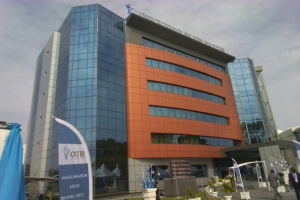
The Togolese Revenue Authority (OTR) recalls that the second and third fiscal stamps have been suppressed with the establishment of the single land desk.
The reminder comes as some surveyors, who are the link between landowners and the land administration, keep receiving payments for the operations, due to the ignorance of their clients relative to the reform.
A few Togolese know about the reform that led to the creation of a single land desk and the suppression of these procedures, in spite of the awareness campaign launched in this framework, the OTR indicates.
Séna Akoda