

Togo First
Togo: State of emergency extended for 12 months in the Savanes region
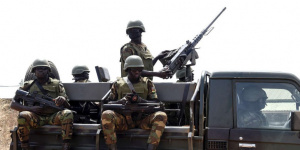
The Togolese National Assembly approved, Thursday, a 12-month extension of the state of emergency in the Savanes region.
This extension -which comes after a six-month state of emergency that ended on March 12, 2023- was requested by the government to continue and intensify its terrorism-combating actions in this northern area under terrorist threats since November 2021.
According to Minister of Security Yark Damehame, this new state of emergency period -which started on March 13, 2023- will allow the defense and security forces to make more provisions, keep the population alert and adapt the combat to new developments on the ground.
Ultimately, the initiatives planned for this new period should, according to the official, help stop the jihadist groups threatening the region and lead to victory against terrorism and violent extremism.
The state of emergency security decree in the savannahs was first introduced on June 13, 2022. In September 2022, it was extended for six months.
Esaïe Edoh
Afri-Plastics Challenge winner, GIP-Togo, wants to create 20,000 jobs
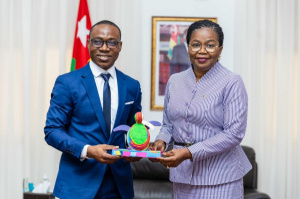
Gado Bemah, the founder of the start-up GIP Togo and winner of the Afri-Plastics Challenge prize, was received by Prime Minister Victoire Tomegah Dogbé last Wednesday.
During the audience, the Togolese entrepreneur -whose startup specializes in plastic recycling- was congratulated by the Prime Minister for winning the Pan-African competition and getting over CFAF700 million to develop his activities in Togo, with some 20,000 jobs to be created in the waste recycling sector.
"Congratulations to Mr. G. Bemah, founder of GIP Togo, a start-up specializing in plastic waste recycling, for winning the 1st prize of the Afri-Plastics Challenge. With this prize of more than CFAF700 million, he will modernize his startup and create more than 20,000 jobs," the Prime Minister said. She also praised the founder’s "determination and boldness" that "paid off" to inspire the country’s youth to venture into entrepreneurship.
As a reminder, GIP-Togo, created in 2017, sets up plastic waste collection units and sorting facilities in the country's main cities, in collaboration with local authorities. It was supported by the Support Fund for Youth Economic Initiatives (FAIEJ).
IFC provides BOA Group $77M facility to support SMEs in 10 African countries, including Togo
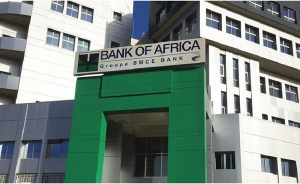
The Bank of Africa Group (BOA) recently obtained $77 million (about CFA46 billion) from the International Finance Corporation (IFC). IFC announced the news on April 3, noting that the facility would cover half of the risks on a $154 million loan portfolio dedicated to SMEs in 10 African countries, including Togo.
The nine other countries are Benin, Burkina Faso, Côte d’Ivoire, Ghana, Madagascar, Mali, Niger, Senegal, and Tanzania.
With the monies, the BOA will support businesses active in the following sectors: agriculture, trade, construction, and energy. The bank will also increase lending to women-owned SMEs.
Leveraging the risk-sharing facility, the BOA should extend 12,000 new loans, including at least 2,000 to businesses owned by women who often have trouble getting loans.
“One of the three pillars of our strategy is to reorganize our assets toward focusing more on SMEs. We are convinced that these companies play a driving role in the economy and we welcome IFC's initiative which will help our group increase its commitment to SMEs with greater strength and confidence," said Amine Bouabid, CEO of Bank of Africa Group.
The new financing should also help create jobs in the 10 target countries which face various conflicts and threats.
In June 2018, IFC provided the BOA Group $60 million to cover half the risks on a $120 million loan portfolio which targeted SMEs in eight African countries, including Togo.
Esaïe Edoh
The French Secretary of State in charge of the Francophonie inks financing agreement for a hospital rehabilitation in Togo
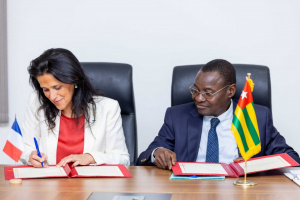
French Secretary of State in charge of the Francophonie, Chrysoula Zacharopoulou, was in Togo last week, as part of a working visit. On the occasion, she signed financing agreements to rehabilitate the University Hospital Centers (CHU) of Kara and Lomé. The documents were inked on March 31, 2023, by the French official and Moustafa Mijiyawa, Togo’s Minister of Health.
Mijiyawa said the funds–CFA70 billion in all–should help strengthen the Togolese health system. In detail, they will be used to extend and equip the two health facilities, in line with international standards. The project aligns with the Togolese government’s ambition to deploy universal access to health care.
Chrysoula Zacharopoulou explained that "France supports this project because health is the key to development.” “This new partnership wanted by French President Macron is based on a mutual interest to address all issues including health," she added.
A few days before the financing agreements were signed, Ecobank, the Lomé-based pan-African banking group donated $500,000 (about CFA300 million) to the University Hospital of Kara to build a hemodialysis center.
It is worth noting that Togo’s Ministry of Health has a budget of CFA127 billion this year. This is nearly 20% more than last year (CFA105 billion).
Esaïe Edoh
Disarmament in Africa: Togo could host an international seminar this year
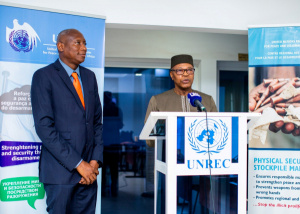
By the end of 2023, Togo could host an international seminar on disarmament in Africa. The seminar was announced, Tuesday, by the African Union's High Representative for Arms Reduction, Mohamed Ibn Chambas, who is currently visiting Lomé.
The seminar, whose details are to be worked out with the government, will enable significant advances in the implementation of the continental disarmament agenda.
"It is urgent to recover the small arms circulating in our West African and Sahelian space and throughout the continent. These weapons pose a real threat to peace and security in Africa, especially in the current context marked by a surge in terrorism," the African Union executive told the press on Tuesday.
He also announced a strong partnership between the African Union and the United Nations.
As a reminder, Togo, which hosts the regional headquarters of the United Nations Centre for Peace and Disarmament in Africa (UNREC), served as the launch point for Amnesty Month. In 2022, the country destroyed over 1,500 seized small arms.
Octave Bruce
Water supply monitoring: SOFIE now covers 92%+ of the national territory
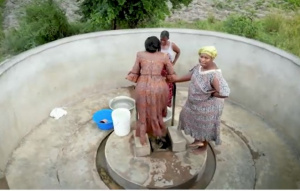
Four years after its deployment, SOFIE (Suivi des Ouvrages de Forage et des indicateurs pour l'Eau), the digital program that allows the population to quickly report issues on water infrastructures has reached 366 cantons out of the 394 in the country.
Since its launch in 2019, the program has connected 9,052 public boreholes to its monitoring platform, below the 9,460 initially planned, we learn.
The SOFIE program was initiated to improve access to clean water in rural areas. It is jointly implemented by the Ministers of Water and Digital Economy. Its platform helps quickly locate problems on boreholes and conduct repair works within a max of 72 hours.
In addition to ensuring a continuous supply of drinking water by limiting breakdowns, SOFIE aims to substantially save time and money.
Its deployment in Togo is in line with the government's policy of digitizing public services. It is also in line with the United Nations' Sustainable Development Goals, in particular SDG6, which aims to guarantee universal access to drinking water and sanitation.
Togo: The electoral census will start next Apr 29 (Government)
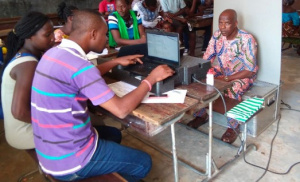
Togo will conduct the electoral census in preparation for the upcoming regional and legislative elections from April 29 to June 3, 2023. This census schedule, proposed by the Independent National Electoral Commission (INEC), was approved by a decree issued during the April 5, 2023, ministerial council.
The census, which will be preceded by the training of census agents (data entry operators), will lead to the establishment of the electoral lists, a crucial step in the electoral process.
The census is announced after the establishment of the Autonomous National Electoral Commission and independent electoral commissions.
According to the government, more information on the voter registration process will come later.
Esaïe Edoh
Togo: Tax reforms helped to double the collected amounts in 2013-2022 (OTR)
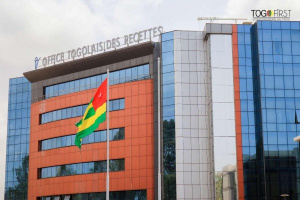
The tax collected by the Togolese Revenue Office (OTR) doubled between 2013 and 2022, rising from CFAF403 billion to CFAF865 billion. The figures, representing a 114.8% rise, were released by the OTR on Tuesday, April 4, 2023, during the orientation seminar organized to review the 2022 performance and set the 2023 action plan.
In 2022, the institution even exceeded mobilization targets, thanks notably to effective collaboration with taxpayers, the OTR indicates. That year, the tax office collected CFAF865 billion, exceeding the CFAF814 billion target.
According to the OTR, the improvement in tax collection is also driven by the digitalization of payment procedures. In the 2023 finance act, the target is CFAF 912 billion to finance the public budget.
To effectively achieve the collection target, Philippe Kokou Tchodie, the Commissioner General, and his collaborators are counting on the optimization of property tax revenues and the modernization of the land registry. They also plan to improve taxpayer relationships and enhance staff capacities. According to Philippe Kokou Tchodie, the planned actions will help the country cross the CFAF1 trillion collection mark in 2024.
Esaïe EDOH
Population Census: Togo has 8 million inhabitants, 51% of whom are women
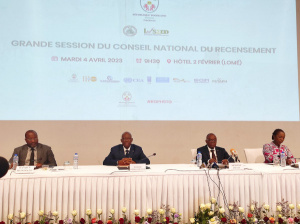
In 2022, Togo had a population of 8.095 million, according to the fifth population census presented at Hotel 2 Février, Lomé, yesterday. The census found that 51.3% (4.15 million) of the population were women and 48.7% men (3.94 million).
The census was conducted by the National Institute of Statistics and Economic and Demographic Studies (INSEED), from October 23 to November 16, 2022, with the support of partners such as the United Nations Population Fund (UNFPA)-Togo's lead partner- and the World Bank.
The results were officially presented in the presence of partners and representatives of stakeholders during a ceremony organized by the Ministry of Territorial Administration.
A mostly rural population
The figures presented show that Togo has a predominantly rural population, with 5.820 million people living in rural areas, compared to 3.473 million in urban areas.
The Greater Lomé region, which includes the prefectures of Golfe and Agoè-Nyivé, naturally has the largest urban population with 2.188 million people. The maritime region is the second most populated region with 1.346 million inhabitants.
The population is expected to double in 31 years
AT 2.7%, the rate of natural increase is higher in the Greater Lomé region compared with 2.4% for the Maritime region, and 2.3% for the country as a whole. At this rate, the population should double in 31 years.
At the census presentation ceremony, UNFPA said it was particularly "satisfied" because the findings are likely to guide and inform public policies and investments in the country, particularly in the areas of health, education, and employment.
Ayi Renaud Dossavi
Umoa-Titres: Togo seeks CFAF30 bln to finance its budget

Togo will try a comeback on the WAEMU public securities market after a not-so-successful operation on March 24. This time, the country is issuing two types of treasury bonds and T-bills to raise CFAF30 billion from West African investors.
After its poor performance on the WAEMU public securities market last March 24, Togo will go back to the market to try to raise CFAF30 billion from investors. This time, the country plans to raise CFAF30 billion. It intends to issue 3 and 5-year fungible treasury bonds to raise CFAF20 billion with each of the bonds carrying a face value of CFAF10,000 with interest rates of 5.7% and 6% respectively.
The remaining CFAF10 billion will be raised through the issuing of treasury bills with a face value of FCFA 1 million at a multiple interest rate for 182-day maturity. According to the regional institution Umoa-titres, the securities will be auctioned on Friday, April 7. The proceeds will enable the Togolese public treasury to finance the country’s 2023 budget set at CFAF1,957 billion FCFA. This year, the country has already raised CFAF111 billion out of a CFAF574 billion target.
Esaïe Edoh