

Togo First
The Port Management Association of West and Central Africa holds a meeting in Lomé
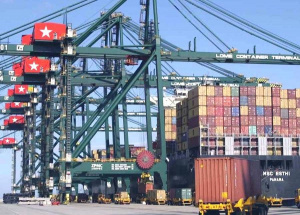
The Port Management Association of West and Central Africa, PMAWCA, is holding a meeting in Lomé, Togo, on March 21-24.
“Finance experts and legal affairs practitioners in ports will reflect on key issues like a follow-up of port concessions, procedures of liaising portions of ports domain,” the Association wrote on its website.
The meeting aims to bolster regional cooperation relative to port management and port competitiveness. This is in a context where the port of Lomé is among the top 100 ports in the world, the fourth best port in Africa, and the first in West Africa, in terms of container traffic.
The PMAWCA was established in October 1972 under the auspices of the Economic Commission for Africa (ECA). It covers ports in West Africa, Mauritania, and Angola. It takes into account a coastline of about 12,000 km and ports that handle about 300 million tons of maritime import/export trade for the subregion (excluding crude oil).
In 2018, the number of members of the association was 40, up from 9 in 1972.
Ayi Renaud Dossavi
South Africa-Togo: A group of South African economic investors is in Togo
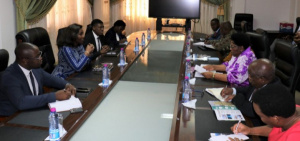
Togo and South Africa are working on bolstering their relationship. Last Thursday, the two sides opened a meeting to this end. The meeting was held between a ministerial delegation from South Africa and the Togolese ministry of investment promotion.
Specifically, both sides are working on action plans for investment projects to develop in Togo. Projects of interest fall under Togo’s 2025 government roadmap and they are in the following sectors: agribusiness, energy, water, telecom, roads, ports, and airports infrastructure.
According to the ministry of investment promotion, the South African initiative will restart cooperation between the two countries, after it slowed due to Covid-19.
The meeting follows many similar ones held with investors from Africa, Europe, and Asia. It aligns with Togo’s ambition to attract more investors and contribute to its economic development.
Esaïe Edoh
Niger’s President visits the port of Lomé in Togo
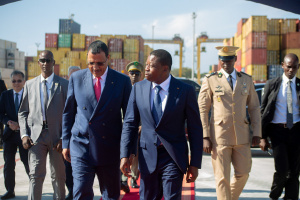
The President of Niger, Mohamed Bazoum, visited the Autonomous Port of Lomé (PAL) yesterday, March 20. He observed the platform’s achievements in improving transit from Togo to Niger.
In detail, the leader visited the port’s docks and operating rooms. He was also introduced to reforms undertaken by the government to improve the PAL’s services–such as measures to reduce the costs and duration of operations–and upcoming projects related to the port.
Among the projects is one to expand the port. This project costs €50 million (about CFA32 billion) and involves investing in the Lomé Container Terminal (LCT) and acquiring handling equipment.
Other projects include the doubling of the national road N°1 to make it easier to move goods to neighboring landlocked countries, and the installation of a dry port at the Industrial Platform of Adétikopé (PIA).
Some of these projects have been completed and others are ongoing. According to Edem Tengue, the Togolese minister of maritime economy, they all aim "not only to ensure the development of Togo but also, are an expression of the willingness of Togolese authorities to improve trade relations between Togo and its hinterland neighbors.
Data from the UN shows that in 2019 Togo exported $80 million worth of goods to Niger. It is one of the many Sahel nations with which Togo has excellent trade relations.
Esaïe Edoh
Decentralization: In Togo, Yoto III municipality adopts a CFA4 billion development strategy for the next five years
The Yoto III municipality in Togo needs CFA4.16 billion to implement its development strategy over the next five years. The strategy was validated on March 15, 2023, in Gboto Vodoupé, the head district of the municipality.
The funds, according to the municipal council, will finance agricultural and entrepreneurial projects. They will also help improve the quality of social services and boost environmental management, social cohesion, governance, and local finance management.
To get the money, the local authorities plan to partner with companies and international organizations that operate in Togo.
Already, the municipality can count on Lome Multipurpose Terminal (LMT), Scan Togo, the International Organization of the Francophonie (IOF), and the Etablissement de Travaux Géologiques et Miniers (ETGM as they contributed to the strategy’s elaboration.
Esaïe Edoh
Afri-Plastics Challenge: Green Industry Plast-Togo wins 1st place and gets £1 million

Green Industry Plast-Togo (GIP) won Challenge Works’ Afri-Plastics Challenge. The Togolese company won £1 million to scale its plastic waste collection, sorting, and recycling solution.
GIP is one of the nine teams of innovators from sub-Saharan Africa to which Challenge Works awarded a package of £4.1 million in the final stage of its contest, which was held on 13-16 March 2023 in Nairobi, Kenya.
Launched in July 2021, Afri-Plastics Challenge was organized alongside the Canadian government. It received 1,141 entries from sub-Saharan Africa.
The Challenge registered 1,141 entries from all parts of Africa. The final stage occurred on 13-16 March 2023 in Nairobi, Kenya, with 240 projects selected.
GIP Togo and its promoter, Bemah Gado from Togo, were among the three finalists that won the prize under the strand “Accelerating Growth”. The other two were Chanja Datti from Nigeria and Mega Gas from Kenya. They were respectively awarded £750,000 and £500,000.

With the help of local authorities, GIP-Togo set up plastic waste collection units and sorting facilities in Togo's main cities. The waste collected is recycled.
Since it was launched in 2017, GIP Togo has been backed by the Support Fund for Youth Economic Initiatives (FAIEJ). The latter also backed its participation in the Afri-Plastics Challenge.
Ayi Renaud Dossavi
Togo: More than 5 million trees planted in 2022, under the reforestation strategy
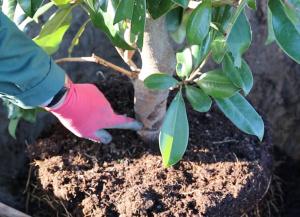
More than five million trees were planted in Togo last year, in line with the country’s reforestation strategy and efforts to fight climate change. The trees were planted over more than 8,000 hectares. The details were communicated on March 15, 2023, during the latest council of ministers.
The government lauded “the strong support of all actors during this reforestation campaign and encouraged them to keep the momentum for better results for our country’s good," the council wrote in its statement.
Togo planted 3.3 million trees in 2021, 57% less than it did last year. This year, it intends to plant 14 million seedlings over about 11,000 hectares (including 2 million on June 1st, the national tree day).
The West African nation expects to plant a billion trees by 2030.
Ayi Renaud Dossavi
Climate change: Togo adopts new law to stimulate carbon storage
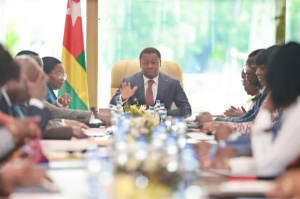
Togo adopted during its latest council of ministers, on March 15, a new decree that will support the country’s efforts to reduce its greenhouse gas emissions (GHG) and make populations more resilient to climate change.
"The adoption of this text, which sets the rules for carbon management mechanisms, will help boost carbon storage while contributing to the fulfillment of Togo's international commitments to reduce greenhouse gas emissions," the council's statement reads.
This will involve buying carbon credits, which are measurable, verifiable emission reductions from certified climate action projects.
Ayi Renaud Dossavi
Togo: IFC teams up with Large Enterprises Association to better finance local SMEs and SMIs
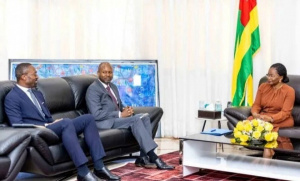
The International Finance Corporation (IFC) and Togo's Association of Large Enterprises (AGET) have partnered to support the country's small and medium-sized enterprises (SMEs). Olivier Buyoya, IFC's West Africa director, announced the partnership during a meeting with Prime Minister Victoire Tomegah-Dogbé on March 14.
Under the partnership, IFC will work with the government, large Togolese companies and other institutions to identify SMEs/SMIs based on their potential and help them secure financing.
"We really looked at the barriers that SMEs/SMIs face, and one of those barriers is access to finance, but there is also access to markets, access to information and tools that will help them grow," Buyoya said.
The support will be provided through the National Champions Support Initiative, a program that supports indigenous businesses and helps them grow.
The IFC is the financing arm of the World Bank. In Togo, it works with banks to support economic development. This partnership has helped provide over 600 loans to local SMEs, according to Sergio Pimenta, IFC's regional vice president for Africa.
Esaïe Edoh
Togo: Telecom regulator ARCEP opens new sanction procedure against Togo Cellulaire and Moov Africa
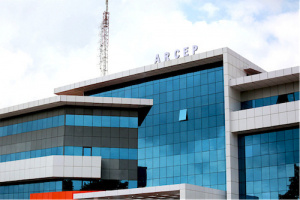
Togo’s telecom watchdog, ARCEP, has opened a new sanction case against Togo Cellulaire (part of the Togocom group) and Moov Africa. The regulator accuses the two mobile operators of providing poor service despite numerous warnings.
In a statement issued on March 15, 2023, the ARCEP noted "a slight improvement in the quality of service" of the two operators, 18 months after the last national compliance monitoring campaign.
ARCEP claims there has been "a slight improvement in quality of service of around 8% for Togo Cellulaire and 5% for Moov Africa Togo."
"The quality of voice and Internet services offered by the two mobile operators therefore still does not meet regulatory compliance thresholds for more than half of the sixteen indicators measured. Specifically, nationwide, the compliance rate is 48.6% for Togo Cellulaire and 37% for Moov Africa Togo," the regulator wrote in the statement. It also noted delays in the time taken to establish voice calls and download web pages in 3G.
The new sanction procedure, ARCEP said, will "force the operators concerned (editor's note) to make the necessary investments and take all measures to resolve quality of service problems throughout the country or face penalties.”
In 2021, the ARCEP fined Moov Africa and Togo Cellulaire for "serious and persistent breaches of their obligation to ensure the permanent and continuous provision of its electronic communications networks and services" on one hand, and for "prohibited tariff practices" on the other.
Esaïe Edoh
Togo: Certified seeds cost higher this season, compared to the previous season
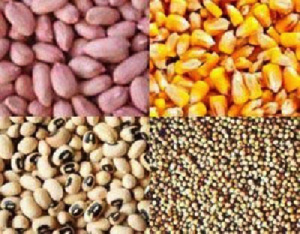
The National Network of Certified Seed Producers of Togo (RNPSC-Togo) recently set prices of certified seed for the 2023-2024 agricultural season. They were set during the Network’s general assembly last month.
A kilogram of maize seed of all varieties is set at 650 FCFA, while that of rice is 550 FCFA. Sorghum and fonio seeds cost 850 FCFA and 600 FCFA respectively. Other certified seeds, such as sesame, cowpea, soybean, and groundnut, are sold at 2,500 FCFA, 850 FCFA, 750 FCFA, and 850 FCFA per kilogram.
"For us, it is necessary that prices are announced very early so that producers can be well informed. Seed is one of the basic inputs for a farmer and quickly knowing these prices will allow the farmer to better organize himself," said Balintiya Konsana, president of RNPSC-Togo.
The price of certified seed has increased compared to the previous season. This may have an impact on farmers as they will have to adjust for this season. For the 2022-2023 season, the price of certified seed for maize was set at 500 FCFA/Kg (100 FCFA/kg less), while rice was 500 FCFA/Kg (50 FCFA less, according to our sources). Soybeans cost 700 FCFA/Kg and groundnuts 800 FCFA/Kg. In 2021, prices were 500 FCFA/Kg for maize, 625 FCFA/Kg for soybeans, 425 FCFA/Kg for rice, and 750 FCFA/Kg for groundnuts.
This price increase could also have repercussions on production costs for Togolese farmers.