
Togo First
Gas: Nigeria is set to inject $12.5B into the projected mega pipeline that will pass through Togo
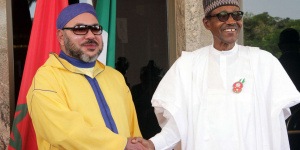
The Nigeria-Morocco mega gas pipeline project could soon materialize. Recently, Nigeria's National Petroleum Company Limited (NNPCL) announced that it will invest $12.5 billion to acquire a 50% stake in the $25 billion infrastructure project.
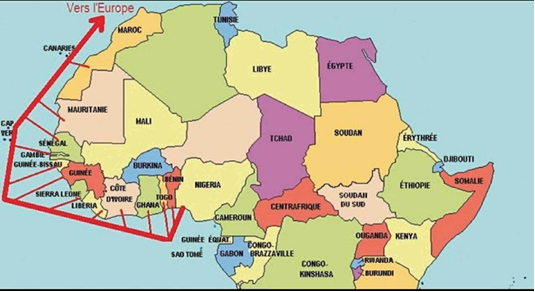
The pipeline will stretch 5,600 kilometers along the Atlantic coast, running through 13 countries, including Togo. Morocco will host 1,672 kilometers of the pipeline.
A wake-up call from Ukraine
The gas pipeline project was initiated in 2016, by Morocco’s King Mohammed VI and Nigerian President Muhammadu Buhari, but it recently gained traction as energy prices started rising and Europe started reducing its gas supplies because of the war in Ukraine.
For now, said the CEO of NNPCL, Mallam Mele Kyari, the project is at the environmental impact study and right-of-way survey phase. Timipre Sylva also explained that the date to commence the project was yet to be set. According to him, some administrative details must be settled before the date is picked.
Togo, it should be noted, imports natural gas from Nigeria to meet its energy demand. Lomé, however, should receive right-of-way dues as the mega pipeline will cross it.
The upcoming pipeline will add to existing infrastructure, such as the West Africa Gas Pipeline (WAGP) which connects Nigeria to Ghana, via Benin and Togo.
Ayi Renaud Dossavi
Togo: A glance at external debt
Togo's external debt amounted to CFA1,296.11 billion in 2022. According to the Ministry of Finance, this is 38.84% of the public debt portfolio and more than a quarter (25.32%) of the national GDP.
Multilateral creditors (Bretton Woods institutions, development banks, etc.) hold 58.6% of the country’s external debt. Right behind are commercial lenders who hold 36.8% of this debt, and the remaining 4.6% is held by bilateral creditors.
Bilateral and commercial loans
The Kuwait Fund was Togo’s main bilateral credit last year, providing 31.51% of the bilateral loans secured by Lomé. France’s development agency, AFD, and the Abu Dhabi Fund follow, with respective shares of 26.64% and 18.32% of the loans.
Regarding commercial loans, they amounted to CFA476.79 billion in 2022. Eximbank China Société Générale and Bank of Tokyo-MUFG provided, respectively 56.97%, 17.91%, and 13.40% of the amount, making them Togo’s top commercial lenders over the year under review.
Exchange rate risk remains moderate
Since four-fifths (83.5%) of its outstanding public debt is denominated in CFA and euro, Togo is little exposed to fluctuations in international exchange rates. But it is not the case for its external debt portfolio which is sensitive to fluctuations in certain major currencies.
Indeed, 15.99% of the external debt portfolio is denominated in US dollars and 12.07% in yuan renminbi (CNY). The euro, which does not fluctuate against the CFA, accounts for 28.93% of external debt.
The IMF's recent SDR allocations also have no impact in terms of exchange rate risk. Indeed, "It should also be noted that all IMF SDR assistance, the outstanding amount of which represents 15.30% of the external debt, does not affect the exchange rate because of the agreement signed between the BCEAO and the State," says the Ministry of Finance. Finally, loans from the BOAD, a sub-regional multilateral institution, are denominated in CFA and represent 13.87% of the external debt.
In 2021, Togo's external debt was about CFA1,000 billion at the end of September, compared to CFA550 billion in 2017. The country's external debt rose due to its efforts to curb the Covid-19 crisis and post-Covid measures that the government launched for its economic recovery.
Ayi Renaud Dossavi
Togo: Finance Minister Sani Yaya leads a Togolese delegation to World Bank and IMF’s spring meetings
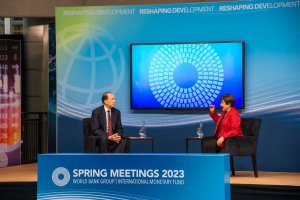
Togo is taking part in the World Bank and the IMF’s spring meetings which began on April 10, 2023, in Washington. The Togolese delegation is led by Sani Yaya, the country’s finance minister.
The spring meetings will last a week and will, according to experts, cover topics such as the World Bank’s reform, urgent global issues, and the management of debt which has reached levels that have not been recorded for over 50 years now.
Sani Yaya attends the summit alongside several political and economic leaders of the world. On its sidelines, the Togolese official will meet some of these actors.
It is worth noting that a week ago, the World Bank’s President, David Malpass, was in Togo, on an official visit. Also, the West African country took part in the Bank’s General Assemblies that was held in Washington, in October 2022. At the time, the Togolese delegation was led by President Faure Gnassingbé, himself. The Togolese leader then met many executives of both the World Bank and the IMF, such as the latter’s Managing Director, Kristalina Georgieva.
Esaïe Edoh
Togo: Public debt to GDP ratio grows for a third consecutive year
Togo's public debt stood at CFA3,337 billion in 2022. That is 65.84% of its GDP, according to a report recently released by the Ministry of Economy and Finance.
This is the third consecutive year that the debt ratio rises. It stood at 51.95% and 62.43% in 2020 and 2021, respectively. Back in Q3 2022, the Ministry of Finance said the country’s debt was “under control”. Indeed, despite the increase in the past three years, the public debt-to-GDP ratio is still under the 70% standard set by the West African Economic and Monetary Union (WAEMU).
According to the Ministry of Finance’s report, Togo’s total debt soared from CFA2,191.04 billion in 2018 to CFA3,337.36 billion (+52%). In detail, the external debt jumped from CFA600 billion (2018) to CFA1,296 billion (2022). Meanwhile, domestic debt rose from CFA1,590 billion to CFA2,041 billion, over the same period. The surge is imputable to the government’s efforts to curb the Covid-19 crisis and its economic impacts.
Last year, Togo cleared CFA504 billion out of its total debt. Around 21% of this amount–CFA107 billion–was dedicated to clearing part of the country’s external debt, and the remaining CFA396 billion was for domestic debt.
Ayi Renaud Dossavi
Togo and Brazil want to bolster their cooperation in the maritime sector
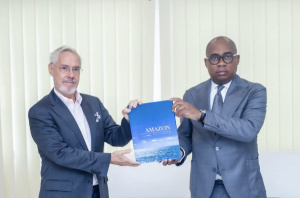
Edem Tengue, Togo’s Minister of Maritime Economy, recently met with Brazil’s Ambassador to Togo, Nei Futuro Bitencourt. The two men looked at possibilities to boost bilateral cooperation between the two countries, in the maritime sector.
Lomé wants to leverage its port’s position to bolster maritime trade with Brazil. According to Tengue, Brazil shares the same vision. "I am pleased with our converging views on the possibilities of cooperation in maritime matters," he said.
In addition to the maritime economy, Brazil and Togo are also exploring cooperation in the areas of agricultural research, education, and military training.
Togo and Brazil have been cooperating since 1972. In 2017, trade between the two nations was valued at $97 million. From Brazil, Togo mostly imports fish, shellfish, mollusks, meat, and edible offal.
Ayi Renaud Dossavi
WAEMU securities: Togo raises CFA32 billion in the latest issue, a success
Togo’s latest issue on the WAEMU-security market was successful. Lomé had a target of CFA30 billion but raised CFA32 billion on the market last Friday, April 7th.
The operation -a simultaneous issue of fungible treasury bills (BATs in French) and bonds (OATs)-attracted 19 investors. The latter subscribed for FCFA 33 billion, thus representing a coverage rate of 111.7%.
According to the issue’s report, CFA19 billion was raised through the BATs which mature over 182 days. The OATs, which mature over 3 and 5 years, raised CFA1 billion and CFA12 billion, respectively.
Out of the CFA32 billion mobilized, CFA26 billion were raised from Togolese investors.
Adding the latest issue, Togo has raised so far this year CFA143 billion on the WAEMU market. This is against an annual target of CFA574 billion.
Esaïe Edoh
Togo creates a state-owned manganese company
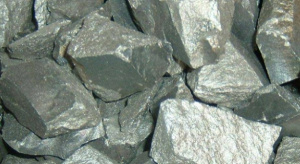
On Wednesday, April 5, 2023, Togo announced the creation of Société Togolaise de Manganèse (STM), a state-owned manganese mining company.
According to Togolese authorities, STM was created to ultimately "develop the mining value chain, boost job creation and improve the country’s economy by helping efficiently take advantage of mineral resources.
Indeed, despite a mineral-rich subsoil, Togo’s mining industry was mostly focused on phosphates. However, things are gradually changing with the discovery of an important manganese reserve with a potential estimated at 8.5 million tons for about 15 years lifespan.
Manganese is the fourth most used metal in the world. It is notably popular because of its ability to enhance the strength and ductility of steel. Its use for battery manufacturing is also growing because of its ability to notably stabilize cathodes in batteries used in electric vehicles and electronic devices.
The global manganese market is expected to grow by more than 4.19% between 2022 and 2027. In addition, more than 40% of the steel produced globally is used in the construction sector, which is expected to grow by an estimated $12.9 trillion by 2030, primarily in countries such as India, China, and the United States. Togo intends to take advantage of these robust prospects. It has already taken some steps in that regard.
On October 18, 2019, the Council of Ministers approved a decree granting its manganese exploitation rights to Société Générale des Mines ("SGM"), 85% owned by the British group Keras Resources. Under the initial agreement, SGM was to become a state company but, Keras never received the approval required to secure its mining license.
The Togolese government decided to take further actions to achieve its great ambitions for its manganese, which it considers a strategic resource. The Mines Ministry launched a national geophysical survey to evaluate the subsoil and identify the available mineral resources to inform an efficient plan for the development of the national mining sector.
For the time being, there is no information on the results of the survey. The government also did not provide information on the shareholding of the newly-created manganese development corporation. Nevertheless, Keras Resources previously circulated a memorandum of understanding about the deal that was to see its subsidiary SGM secure manganese exploration rights. In the memorandum, Keras revealed that the government demanded and received an additional 10% stake in SGM, bringing the British company’s share to 76.5% and increasing the government’s to about 24%
Doubling the mining sector’s contribution to GDP by 2025
Togo aims to double the contribution of its mining sector to GDP by 2025. In that context, it wants to exploit "its mineral resources in an "optimal" manner, starting with critical minerals like manganese, which is considered a transition metal because of its growing use in clean energy technologies - rechargeable batteries for electric vehicles and large-scale energy storage systems.
As a reminder, the Nayega manganese deposit is located in the Kpendjal West prefecture in the Savanes region, in the northern part of Togo. It spans over 29,819 hectares and consists of four exploration permits, namely the Pana permit, the Tandjoare permit, the Naki-Est permit, and the Borgou permit. It is Togo's largest known manganese project. According to Keras Resources, which conducted the exploration and sampling stages, it is at an advanced stage. A "Silicomanganese smelter test work was completed in Santander, Spain during July 2019 [...]” and the installed production capacity is 6,500 tonnes per month, the AIM-listed company detailed.
Fiacre E. Kakpo
DizzitUp, the marketplace that wants to become the African alternative to Alibaba (Interview)
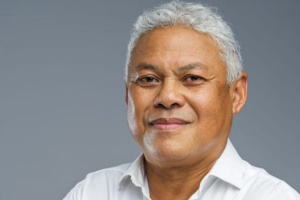
The e-commerce industry has grown exponentially in recent years and the number of online marketplaces has followed suit. The marketplaces that were developed in the wake of the e-commerce boom include DizzitUp, an African start-up and finalist of the Ecobank Fintech Challenge 2022. The platform has great ambitions and wants to become the African alternative to Alibaba. During the Lomé chapter of the Africa Fintech Tour, Togo First interviewed its CEO, Solofo Rafeno, to learn more about this marketplace which is getting popular by the day in Benin, Togo, and Madagascar.
Togo First: Could you tell us what DizzitUp is about?
Solofo Rafeno (SR): DizzitUp is an online marketplace that offers African SMEs access to financing solutions to develop their activities. The start-up also helps these businesses increase their revenue by providing an online store that enables them to showcase their products and services to locals and the African diaspora, which is constituted of over 40 million individuals.
DizzitUp is focused on essential goods and services sold exclusively by African companies in 6 categories: food, renewable energy and construction, health, education, tech (phones, computers & internet), and shortly, new decentralized financial services (DeFi).
As a result, DizzitUp enables the digital and financial inclusion of African VSEs/SMEs while bringing them additional revenues.
In 4 months of operation, DizzitUp Marketplace has registered 150 merchants and we plan to exceed 1,000 merchants in Togo, Benin, Madagascar, and Ivory Coast by the end of 2023.
Togo First: What are the main consumer profiles targetted by DizzitUp?
SR: DizzitUp buyers are divided into two main groups: locals that buy for their consumption and members of the African diaspora -more than 40 million individuals- that buy for their relatives based in Togo, Benin and Madagascar to date, and soon in Côte d’Ivoire.
Togo First: How does your marketplace address trust issues?
SR: 80% of the African economy is made up of informal small and medium enterprises (SMEs). To encourage trust between merchants and consumers, one solution is to carefully select merchants, verify them, and focus on essential products and services such as food, self-sufficient solar power equipment, building materials, phones, computers, and health and education services.
DizzitUp field teams verify that the stores have physical addresses and offer products that meet our criteria. We then take pictures and videos and only selected products are posted on our platform.
Also, since logistics is crucial to guaranteeing service quality, our platform offers an extra service: delivery, which is carried out by independent deliverymen.
Togo First: How are the deliveries made?
SR: Our main aim is to always boost the activities of our [registered] merchants. So, we prefer buyers picking their products directly from stores so that the flow of customers can be increased. Package pickup is the default choice but, each merchant can suggest delivery services, which are offered by local DizzitUp partners.
Let’s say for instance that a relative living in Kara buys on the platform and pays using TMoney or Flooz, the beneficiary, a family member in Lome, can come and pick up the goods at the store in Lome or the goods can be delivered by DizzitUp's partner.
Another case is the recurrent purchase of food baskets, "FoodBox", by a Togolese living in New York for his relatives living in Lome. Once the order is paid via Visa or Mastercard, the relatives living in Lome can pick up the goods at the selling store or have them delivered. The merchant is immediately paid by DizzitUp -via TMoney or Flooz or by bank transfer- after the goods are delivered. It should be noted that for any order exceeding CFA30 000, there is free delivery anywhere within the Greater Lome region.
Togo First: You have a Blockchain-based strategy. Do you think that payment methods such as crypto-currencies can be game-changers for marketplaces like yours in Africa?
SR: It is important to note that blockchain is not a payment method in itself, but rather an infrastructure similar to Swift.
Currently, our marketplace accepts Visa and Mastercard international bank cards and mobile money from seven French-speaking countries in West Africa.
We will soon launch our DizzitApp application, based on the Blockchain infrastructure, allowing the diaspora and young urban Africans to pay in Bitcoin and other crypto-currencies knowing that merchants will still be paid in local currency, FCFA, and Ariary for Madagascar. This third means of payment on DizzitApp will allow those with digital assets to use part of their assets to support their families back home with their needs (buying them food, paying school fees and medical procedures, etc.).
Cryptocurrencies are becoming a global medium of exchange with 200-400 million users, including over 40 million in Africa. These people will soon be able to use their cryptocurrency assets to buy essential goods such as food for their consumption or their families in other African countries
Togo First: What do you think of regulations, notably those related to crypto-currency use?
SR: Togo is the second African country with the largest number of crypto-currency users after Nigeria, which represents huge opportunities for the African economy.
Decentralized blockchain networks and associated crypto-currencies are an opportunity for emerging countries. They can allow African countries to accelerate intra-continental trade and facilitate the financial inclusion of VSEs/SMEs and citizens as mobile money services have done for a decade.
But all these new technologies can only be beneficial to businesses and citizens if there is a clearly defined regulatory framework that is regularly amended over time.
Regulators have realized that there is a need for this regulatory framework. We are eagerly expecting them to comply with them to sustain our investments and boost our merchants’ activities.
Togo First: Why did you choose Togo as your base? Do you think that Togo can accelerate the deployment of your startup in the sub-region?
SR: We created our first subsidiary in Togo, which is a real financial hub in the sub-region. We chose to set up here in Togo because the country has a legal infrastructure and a favorable business environment that attracts many financial institutions. The presence of Ecobank's global headquarters in Lomé was also a decisive factor.
Despite our start-up status, they welcomed us into their multinational division. This partnership allowed us to integrate their payment gateway to manage bank cards worldwide and mobile money in 7 countries in the sub-region.
As a result, we were able to create our subsidiary in less than a month, which is an important comparative advantage.
Togo First: You were one of the finalists of the annual competition organized by your partner Ecobank. Was the initial partnership a decisive factor in that selection?
SR: Our partnership with Ecobank was not the decisive factor in our selection in the competition, as other start-ups also had significant partnerships. However, our ambition to expand in 21 countries, of which Ecobank is absent in only two, and our vision and ambition to be an economic player impacting the VSE/SMEs in Africa gave us a definite advantage.
We were one of the six finalists, selected among 700 startups from 59 countries, in the Ecobank Fintech Challenge 2022.
Togo First: You have already raised venture capital funds once. Do you intend to raise additional funds?
SR: Indeed, DizzitUp has already managed to raise $340,000 in funding from 44 individual investors, called "business angels". About a third of these investors are Africans living in Africa or Europe. The funds raised helped develop the start-up and its technology platform over 3 years.
The company is currently planning a second round of $3 million in equity to finance its expansion in Côte d'Ivoire and Nigeria and to develop the new decentralized finance services for VSEs/SMEs merchants of DizzitUp Marketplace.
For this new round, DizzitUp aims to attract private African investors for about 20% of the total amount sought and international investment funds (VCs, international institutions, and corporate funds) for the remaining.
Togo First: What are your future expansion plans?
SR: Regarding our plans, we have decided to strengthen our presence in Madagascar, Togo, and Benin in 2023 and launch a subsidiary in Côte d’Ivoire. We also plan to expand in Nigeria, in 2024, to consolidate our position in West Africa.
I am convinced that Nigeria is not only Africa’s economic driver but also the key to success for a pan-African expansion. No one can claim to be a pan-African company without being present and operational in Nigeria.
Togo First: What are your strategies to achieve those plans?
SR: Our marketplace model is quite simple: purchases are proportional to the number of merchants and products listed. The more offers we have, the more accounts are created, because people can buy what they want. We invest in advertising for merchants and have already made sales in 2022. One of our competitive advantages beyond our decentralized payment infrastructure is our ability to attract merchants by combining digital and on-ground approaches.
We always start with a physical presence approach, deploying teams on the ground to recruit merchants. We also have student recruiters and an incentive system to encourage recruiters, who are also marketing managers for merchants. We provide full free support to merchants, including creating visuals, photos, and videos that we post on Facebook. Recruiters become marketers for our merchants.
Interview by Fiacre E. Kakpo
Togo: Dapaong to soon house a 30MWp solar plant
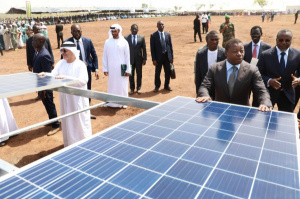
The Council of Ministers of Togo approved, on April 5, 2023, the construction of a PV solar plant in Dapaong (about 610km north of Lomé). This is the second PV plant the country will have after Blitta’s.
The upcoming infrastructure will be built over 115 ha and have a production capacity of 30MWp. The project falls under the regional solar project of emergency intervention (RESPITE).
Dapaong’s power plant will help reduce Togo’s dependence on external suppliers and boost its energy sovereignty. In detail, the power produced at the plant will electrify around 60 rural localities in the Savanes region, in line with the Emergency Resilience Building Program in the Savanes region (PURS).
Moreover, not only will the plant contribute to the country’s goal to achieve universal power coverage by 2030 but it will also help promote renewable energies in line with the government's 2020-2025 roadmap.
Regarding Blitta’s plant, its output capacity is set to rise from 50 MW to 70 MW. Works to expand the capacity were launched a few days ago by President Faure Gnassingbe himself.
Esaïe Edoh
Togo moves to update its exporters’ guide
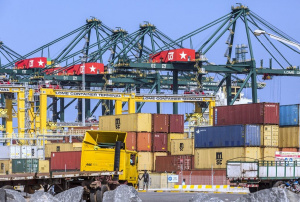
Last March 28-31, the Togolese Ministry of Trade held a meeting with local exporters. The meeting was organized in the framework of the country’s plan to update its "Exporters’ Guide" published in 2014, to guide economic operators. The country plans to add new information to allow Togolese entrepreneurs to be competitive and meet the requirements of international markets.
According to the Ministry, this updated Guide will “clearly highlight the trade facilitation tools contained in the 2017 WTO Trade Facilitation Agreement, the 2019 Agreement establishing the African Continental Free Trade Area (AfCFTA) and the Togolese National Policy for Trade Development issued in 2022.”
With the updated information, Togolese authorities want to guide economic operators in potential African markets. For the Ministry of Trade, the trade facilitation tools to be highlighted by the updated exporters guide offer operators the opportunity to conquer new markets.
Let’s note that the exporters' guide is not the only initiative taken by Togo to enable its private sector to take advantage of continental business opportunities.
Esaïe Edoh