

Togo First
Togo: Minister Sandra Johnson and presidential staff renew commitment to national development on Labor Day
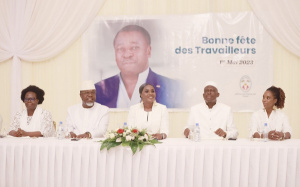
On May 1, the staff of the Togolese Presidency and affiliated institutions celebrated Labor Day with Minister and Secretary General of the Presidency, Sandra Ablamba Johnson, and the President's close collaborators in attendance. On the occasion, participants reiterated their commitment to work with President Faure Gnassingbé to successfully implement the government’s Togo 2025 roadmap.
Sandra Ablamba Johnson expressed her gratitude towards the staff for actively contributing to the country's socio-economic development. She then urged them to remain highly professional, while noting the importance of each team member in contributing to Togo’s success.
"The President’s ambition is to have quality human resources which will ensure better implementation of the government’s Togo 2025 Roadmap. He continuously takes steps to make sure that the fruits of our country's growth are shared fairly and equitably," she said, before adding: "Therefore, I encourage us to sustain a culture of excellence, responsibility, team spirit, civic commitment, and excellence in everything we do, and everything we are entrusted with."
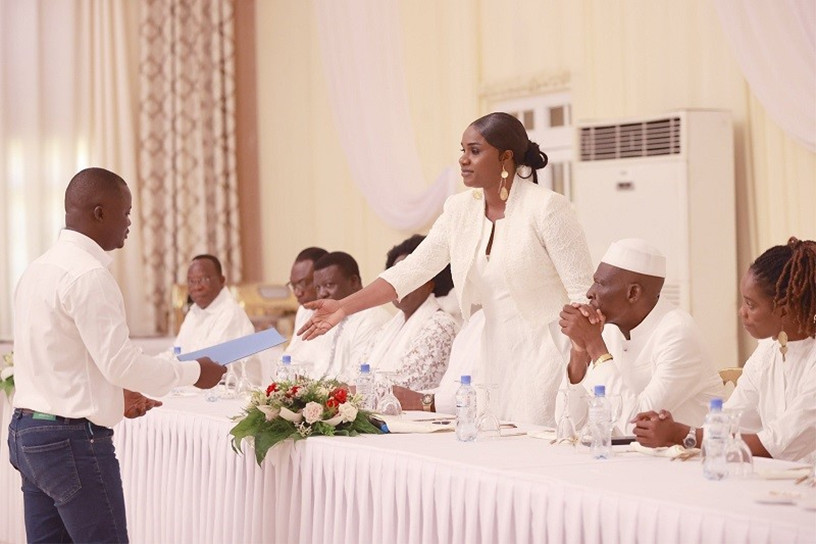
During the celebration, Johnson also thanked retired civil servants for "their loyalty and sacrifices they made for the country's growth."
Esaïe Edoh
Coffee: Togo’s output was up by 55.9% in the 2021-2022 season
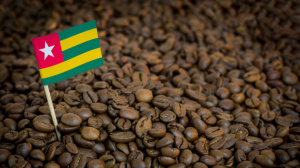
Togo’s coffee output surged by 55.9% during the 2021-2022 season. The increase was unveiled in the "Global Coffee Report and Outlook" released by the International Coffee Organization (ICO) on 17 April.
Production vs. consumption
Overall, Africa produced 0.8% less coffee in the 2021-2022 season. However, the ICO experts believe the continent’s production should grow by 1.4% the next season, as the industry rebounds in some countries, including Togo and Angola. Proportion-wise, 11.4% of all the coffee produced in the world in 2021-2022 came from Africa (against 11.3% the previous season).
While its production went down slightly, Africa’s coffee consumption in 2021-2022 went up by 2.6%, reaching 12.87 million 60 kg bags. And though the increase was most significant in Côte d'Ivoire (+50%), Africa’s biggest consumers remained Ethiopia, Algeria, Egypt, Morocco, South Africa, and Tunisia. Together, these countries totaled nearly 75% of the demand on the continent. Meanwhile, global consumption was up by 4.2% to 175.6 million 60 kg bags.
Forecasts
For the 2022-2023 season, the ICO expects global coffee production and consumption to rise by 1.7%. Regarding Africa, the organization expects its coffee consumption to grow by 4.1% to 13.4 million 60 kg bags.
Together, the ICO member States produce 93% of the world's coffee and consume 63% of the global output. Next September, Togo will take over the organization’s helm.
Originally written in French by Fiacre E. Kakpo
Translated in English by Schadrac Akinocho
Togo: UNDP’s new resident representative is in!
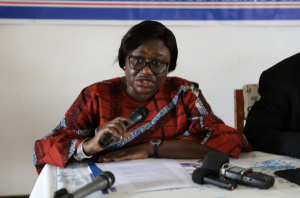
Binta Sanneh is the UNDP’s new resident representative in Togo. She officially stepped into the position on May 2, 2023, in Lomé. Sanneh took over from Aliou Dia.
The new representative has been working at the UN organization for almost 15 years. She was in Guinea Bissau, Burundi, and Chad.
An MBA holder, Binta Sanneh is from Gambia. An expert in international development, she is committed to gender equality, inclusion, and environmental sustainability.
In Togo, she will monitor all of the UNDP’s activities and projects, making sure the organization efficiently contributes to Togo’s development goals.
In recent years, the UNDP has increased its investments in Togo, especially in the following areas: education, youth employment, environment, digitalization, inclusion, gender, and community development.
Now, Bintah Sanneh will reinforce the cooperation between the organization of the government, with a focus on inclusive economic growth, creating jobs for the youth, and reducing poverty. She is also expected to address the issue of strengthening the ties between the UNDP, civil society, and the private sector.
A few months before the Gambian was appointed, Togo and the UN System signed a new cooperation framework agreement for the 2023-2027 period. In line with this agreement, Togo should receive about CFA150 billion to support its growth.
Togo: The African Political Alliance just held its first ministerial conference in Lomé
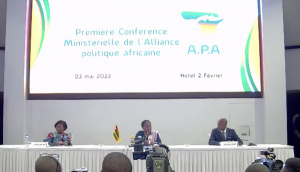
On May 3, 2023, the African Political Alliance (APA) held its first ministerial conference in Lomé, Togo, under the leadership of Togolese Prime Minister, Victoire Tomégah-Dogbé, and Minister of Foreign Affairs, Robert Dussey. It was attended by representatives from several countries, including Angola, Burkina Faso, Gabon, Central African Republic, Guinea, Mali, Libya, Namibia, and Tanzania.
The APA is a Togolese initiative aimed at bringing together countries that share a pan-Africanist vision and are committed to building a politically strong, independent, and non-aligned Africa. In her opening remarks, Prime Minister Tomégah-Dogbé emphasized the need for Africa to become a balancing force amid globalization.
For his part, Minister Dussey highlighted the alliance's commitment to strengthening Africa's independence and addressing the terrorist threat. He added that the APA promotes Pan-Africanism, leveraging a shared vision and commitment to meeting the challenges facing the continent.
Press Freedom Index (RSF): Togo ranks 70th worldwide and 14th in Africa
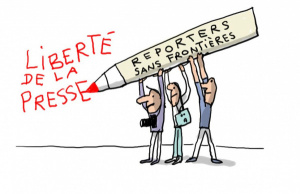
Togo ranked 70th out of 180 countries in the latest Reporters Without Borders (RSF) Press Freedom Index, released on May 3. The West African nation which ranked 100th last year is now 14th in Africa, with a score of 63.06 points, up by 5.89 points compared to 2022.
"Freedom of the press is recognized and guaranteed by the State" in Togo, says RSF, noting that the Press Code no longer provides for custodial sentences since 2004. However, the observer stressed that the country's press industry is still dominated by the political context, and faces significant financial hurdles. Togo, the report indicates, has a diverse media landscape, with 234 titles, 94 radios, and a dozen television channels.
According to RSF’s Secretary-General, Christophe Deloire, the World Press Freedom Index demonstrates strong volatility in Africa and the rest of the world. For instance, while Senegal and Tunisia lost respectively 31 and 27 places, Brazil won 18.
"This volatility is the result of increased aggression by those in power in many countries and growing hostility towards journalists on social media and in the physical world. Volatility is also the product of the growth of the simulacrum industry, which shapes and distributes fake news and provides tools to create them," RSF reports.
Worldwide, Norway remains the country where journalists enjoy the most freedom. This is the seventh consecutive year it holds the spot. It is followed by Ireland and Denmark. Meanwhile, Holland rose 22 places and regained its 2021 ranking. At the bottom of the ranking are Vietnam (178th), China (179th), and North Korea (180th).
Togo: Unions ask government to ensure that the new minimum wage is applied to all companies
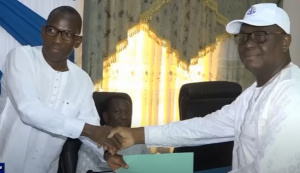
Gilbert Bawara, the Togolese minister of labor and social dialogue, met with representatives from some local unions on Labor Day, May 1. During the meeting, they requested the government's help to ensure the new minimum wage of CFA52,500 is applied to all companies.
Emmanuel Agbenou, Spokesman for the trade union centers, said, "We have asked the government to strengthen and improve state support for trade union organizations to provide training and labor education for workers."
The representatives also urged the implementation of a plan to support Small and Medium Enterprises and Industries affected by economic conditions. “We have also requested the extension of social measures to the informal sector, including health insurance and social protection. And we asked employers to promote social dialogue to resolve problems and avoid conflicts,” Agbenou reported, adding that they also asked the government to “strengthen the partnership between the state and denominational education.”
Progress acknowledged
However, the unions acknowledged the progress made in recent years, such as the 10% improvement in civil servants’ wages, transport allowances, and the revitalization of the national framework for social dialogue through the National Social Dialogue Forum. They also noted a 50% increase in the minimum wage in the private sector and the launch of universal health insurance.
After taking stock of the unions’ requests, Minister Bawara praised the unions and employers for having acknowledged, "with honesty and sincerity, the significant progress made by the government". "No work is perfect, and we will keep listening," the official added.
Ayi Renaud Dossavi
Afrik Créances launches subsidiary in Togo, its first-ever
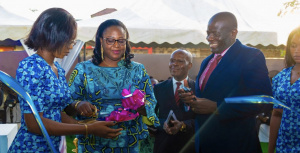
Financial company Afrik Créances has launched its first subsidiary, "Afrik Créances Togo," in Togo. The launch ceremony was held on May 2, 2023, with several finance actors, from Togo and Africa, as well as Togolese officials present. The official ribbon-cutting ceremony, marking the opening of the Lomé branch, was performed by Blaise Ahouantchede, the head of Afrik Créances, and Akou Mawussé Afidenyigba, the Director of Cabinet for the Ministry of Economy and Finance.
The new subsidiary aims to support African SMEs by facilitating their access to financing in West Africa. After Togo, Afrik Créances plans to first expand to Senegal and Ivory Coast.
"Our wish for banks and decentralized financial systems this year is that they can increase financing to micro, small, and medium enterprises at affordable costs; increase financing to the agriculture and housing sectors, strengthen the digitalization of financial services, and improve their quality. All these challenges can be met with the input and new business model proposed by Afrik Créances," said Akou Mawussé Afidenyigba.
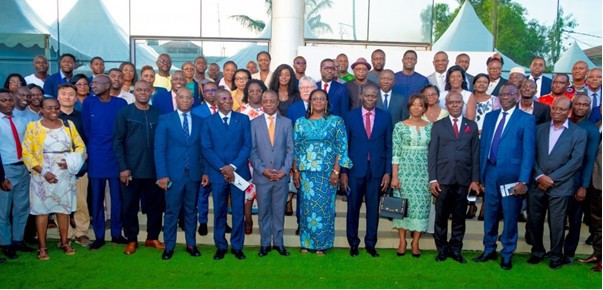
For his part, Afrik Créances’ CEO, Blaise Ahouantchede detailed the scope of activities of the company. “Afrik Créances’ activities are centered around three main areas: representing financial services, credit brokerage, and debt recovery…We also have two secondary projects: digitizing financial services and providing training for students and professionals in the financial and banking sectors”, he declared.
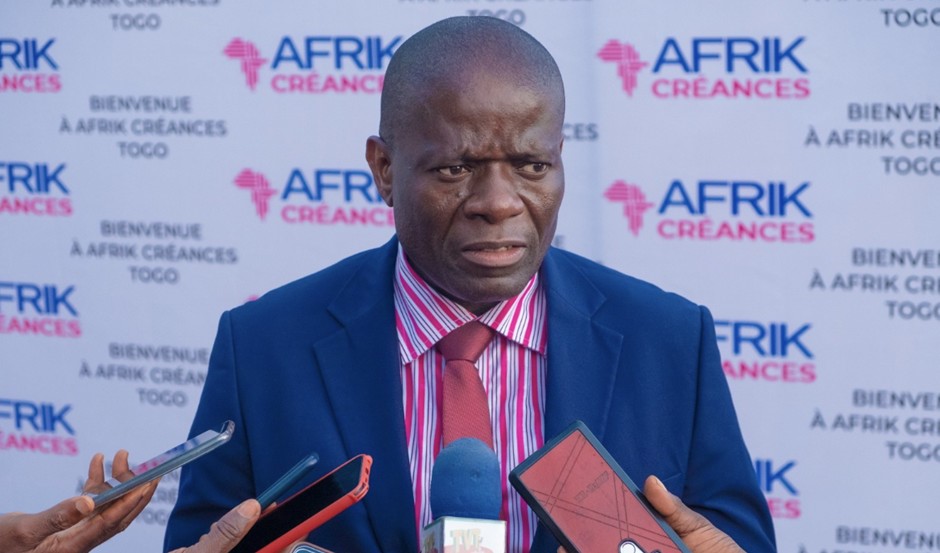
To start up in Togo, Afrik Créances received financing of 1.75 billion CFA francs, 14% from equity and 86% from bank loans. The UTB has covered the company for 1.5 billion CFA francs and has been guaranteed up to 80% by the African Solidarity Fund (FSA), providing financial security of 1.2 billion CFA francs. Regarding the FSA, it is considering a partnership with Afrik Créances to support SMEs in the countries where it operates, according to Olivier Amani, Deputy Director of Commitments and representative of the Fund’s boss.
Afrik Créances announced the arrival of its holding in Lomé a year ago during the first International Forum on Digital and Innovation Intermediation (FONI). The Togo subsidiary is expected to have a General Manager within the next three months. The subsidiary will contribute to the Togolese government's goal of making Lomé the "capital of African finance" and a "regional financial and logistics hub," according to Togolese authorities. Afrik Créances plans to cover 10 to 15 countries in the next five years.
Ayi Renaud Dossavi
Togo: President Gnassingbé announces biometric census, adding to general and electoral ones
In a recent interview with New World TV, the President of Togo, Faure Gnassingbé announced a new census, a biometric census. The operation is separate from the ongoing general and electoral censuses.
On the air, Gnassingbé said: "I also take this opportunity to tell the population that it is true that we have the general census and the electoral census. There will be a third census to offer a biometric card to every Togolese so that we can be effective in our social protection policy".
Through the additional census, personal and biometric data of citizens will be collected and they will receive a Unique Identification Number or UIN. This is a number assigned to all Togolese residents to facilitate interactions between citizens and administrations, as well as for the digitalization of public administration.
The government already took the first steps to materialize the project.
In March 2022, for instance, Lomé approved a bill to facilitate the creation of a social register of individuals and households, by leveraging the UIN.
A National Identification Agency was also set up in line with the project, and it is already operational.
Moreover, in May 2022, a meeting was held in Lomé for the WURI, a program that aims to help people in the ECOWAS move more easily across the region and access public and private services by creating a biometric registry. Six countries are involved, and the program has received $400 million from the World Bank. Joachim Boko, a social protection expert at the World Bank, said that Togo is doing well in implementing this program.
The biometric census project should have started at the end of 2022 but was delayed. Though he said it would still happen, President Gnassingbé did not specify exactly when.
Fiacre E. Kakpo
Bilateral cooperation: Togo and Central African Republic wish to step up their game
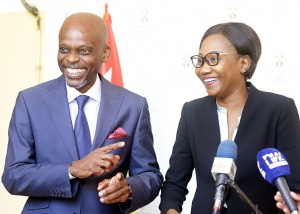
Togo and the Central African Republic want to enhance their bilateral cooperation, with a focus on trade and investment. The countries' foreign ministers, Robert Dussey and Sylvie Baïpo-Témon, recently discussed the topic in Lomé, Togo's capital.
The officials committed to "work closely" to establish a legal framework fostering cooperation between Lomé and Bangui. Subsequently, their respective chambers of commerce should ink various agreements aimed at promoting mutual investments and avoiding double taxation.
Robert Dussey, Togo's foreign affairs minister, spoke during the meeting about maintaining continuous dialogue with Bangui to consolidate this ambition.
Togo and the Central African Republic already cooperate in areas such as air transport and commerce. For instance, the Central African minister mentioned the Lomé-based Asky airline, which facilitates connections between Bangui, Togo, and other African countries.
Also, since July 2018, Lomé and Bangui have agreed on a visa exemption for citizens holding diplomatic, service, and regular passports, further strengthening their relationship.
Esaïe Edoh
Togo: President Gnassingbé announces upcoming revision of the national military programming law amid rising terrorism threat
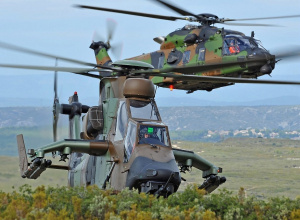
Togo should soon amend its military programming law which was adopted in 2020. President Faure Gnassingbé announced the move on the sidelines of the country's recent 63rd independence anniversary.
"This law is no longer adapted since the threat has evolved," Gnassingbé said referring to the escalating terrorism threats that the country faces. Already, steps are being taken to get the law revised in some weeks.
The Islamic State in the Greater Sahara and the Islamic and Muslim Support Group are the two primary terrorist organizations posing a threat to Togo. The president warned that though the national forces of defense have won against them a few times, staying alert is a must, given the sporadic and unpredictable nature of the attacks.
Togolese citizens must brace themselves for a "long and difficult fight" to safeguard their nation, all while upholding their core values and humanity, Gnassingbé said.
Togo has relocated nearly 12,000 of its residents in a bid to bolster border security and has welcomed refugees from neighboring countries affected by terrorism.
The current military programming law earmarks over CFA430 billion for defense spending through 2025. The budget includes allocations of 183.4 billion CFA francs in 2023, 107.6 billion CFA francs in 2024, and 138.5 billion CFA francs in 2025.
Ayi Renaud Dossavi