

Togo First
Togo: the Dogta-Lafiè Hospital in Lomé will be inaugurated tomorrow
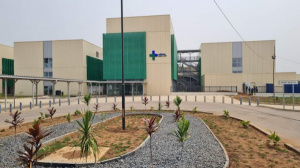
In Togo, the Dogta-Lafiè hospital, formerly Saint Peregin, will be inaugurated tomorrow, April 26. The inauguration, according to the government, will be chaired by President Gnassingbe, as part of celebrations for Togo’s 63rd independence anniversary.
Since March 1, 2023, the hospital has been offering imaging, radiography, and mammography services. After its inauguration, more departments should come online.
Located at the northern entrance of Lomé, the Dogta-Lafiè hospital specializes in the fields of Medicine, Surgery, and Obstetrics (MCO). With its high-end equipment, it should "serve a significant proportion of the population, and attract people who weren’t used to going to hospitals, due to its affordable pricing and care offer.”
In its first year of activity, the hospital should receive at least 80,000 patients, according to the National Social Security Fund (CNSS) which supports the project.
In June 2022, SOGEHP, which runs the hospital, opened its shareholding, hoping to increase its capital in the process. At the time, 49.975% was made available to interested investors, and the operation aimed to bring the hospital’s total capital to CFA25.01 billion.
Esaïe Edoh
Togo: Construction of new agricultural mechanization center begins in Kara
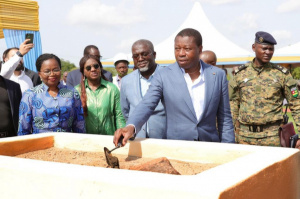
The construction of the Regional Center for Agricultural Mechanization (CRMA) in Kara, northern Togo, began last week, on April 20. President Faure Gnassingbe laid the foundation stone for the facility in Tchitchao, where it is located.
The CRMA is being built on a 3-ha piece of land. It will be equipped with modern materials and equipment to facilitate the various stages of agricultural production and increase the exploitable surface area and productivity.
The premises will also have several facilities including an exhibition area for agricultural equipment, an administrative building, accommodation for technicians, a warehouse for storing finished products, a spare parts store, and a technical department for maintenance and training of technicians.
This infrastructure will help speed up agriculture’s modernization in Togo. Five more are set to be built in other regions of the country.
Yielded by a public-private partnership, the CRMAs align with Lomé’s goal to boost productivity and entrepreneurship in agriculture.
"We are materializing the promise of the Head of State to agricultural producers. This mechanization center responds to the will of the President of the Republic to increase agricultural production as part of the project to improve the working conditions of producers and agricultural productivity," said Antoine Lékpa Gbégbéni, the minister of agriculture.
Esaïe Edoh
Togo to record heavy rains over the next three months

From now till June, Togo will record heavy rains and could face some flooding. Since March, early and heavy rains have been recorded throughout the country, especially in Lomé, the capital. According to hydrometeorological forecasts for April-May-June, the situation is not expected to subside any time soon, the Minister of Civil Protection revealed on 19 April.
Yark Damehame, Togo’s minister of security, warned that the rains could cause flooding and an overflowing of natural and artificial retention basins, as well as rivers and water bodies. This could damage properties and threaten nearby communities.
Already, the recent rains have damaged some properties and to tackle the situation, the National Agency for Civil Protection has been carrying out drainage operations in several areas.
"Key stakeholders and populations are invited to mobilize and be extremely vigilant," Damehane warned, stressing the need for a coordinated response to address the risks associated with the current weather conditions.
Togo: President Gnassingbe inaugurates Kara’s new central market
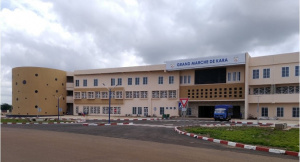
Kara’s new market has just been inaugurated. President Faure Gnassingbé inaugurated the facility as part of a one-day tour organized in honor of Togo’s 63rd independence anniversary.
The central market of Kara is built on a 6-ha piece of land. It has hundreds of stalls, stores, and administrative buildings. The infrastructure is part of the PARMCO, a project that supports the reconstruction of markets in Lomé and Kara, and traders.
Besides the market, the President also laid the first stone for the University of Kara and inaugurated the Institute of Alternative Training for Development (IFAD-Elevage) in Barkoissi in the prefecture of Oti.
The University of Kara is the second-largest public university in Togo. For more than 20 years, it had temporary facilities.
As for the IFAD of Barkoissi, it trains young Togolese, teaching them how to establish, manage, and run agropastoral farms. They also learn how to produce and process dairy products.
The facilities’ inauguration took place only a few days after the holding of the FOPAT, a forum that gathered farmers of the Kara region. President Gnassingbe, during the event, met with the farmers.
Italy seeks Togo’s support to host World Expo 2030
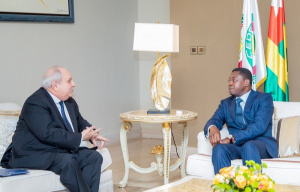
Mario Giro, a special envoy from Italy, was in Lomé on Wednesday, April 19. He met with President Faure Gnassingbe. The Italian official asked for Togo’s support of Italy’s application to host the World Expo 2030.
Rome, the Italian capital, is competing for the spot with Busan, Odessa, and Riyad.
Securing Togo’s support is essential since the West African country is a Bureau International des Expositions (BIE) member, the body responsible for supervising exhibitions.
The Italian envoy provided Gnassingbe with details of the application and told him about the innovations that Italy had in store for the global event. "We want a different World Expo where each country presents its pavilion to address the different challenges of our time," said Mario Giro.
Togo often attends global fairs, to showcase its assets and investment opportunities, but also to promote the country.
Esaïe Edoh
Togo: Ministry of grassroots development provides funds and equipment to 160 artisans in the North
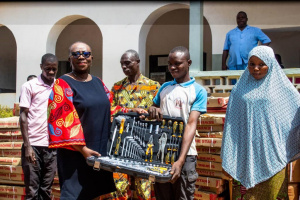
The Ministry of Grassroots Development of Togo recently gave away some money and equipment to 160 vulnerable young artisans of Mango, northern Togo. The related ceremony was held on April 13, and it was presided over by the minister herself, Myriam Dossou.
The initiative is part of the Emergency Program for the Savannes Region (PURS), which supports young people’s businesses in the region.
Besides work kits, beneficiaries will also get a CFA50,000 grant to start their activities. The money will be paid over three months, through the NOVISSI support platform.
Supporting the youth is a means for the government to tackle extremism in the region, as it has been facing terrorist attacks for some months now.
"I personally wanted to be present at this ceremony held in Mango in the presence of prefects and mayors, to urge the youth of the Savannah to cultivate peace, remain vigilant, work and live together, while reminding them of their role and responsibility in the prevention and fight against violent extremism,” Myriam Dossou said.
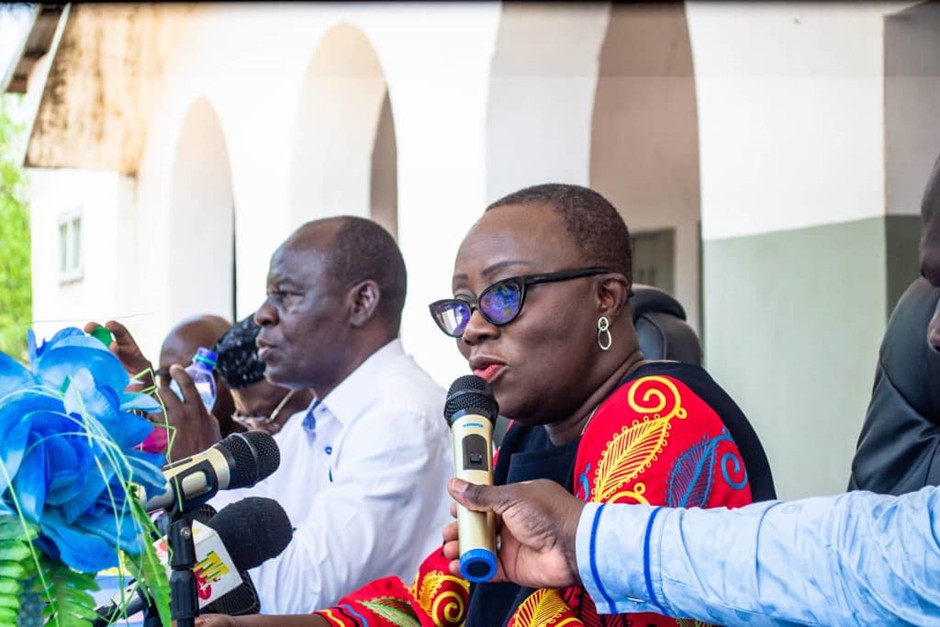
Launched at the beginning of 2022, the Savannah Region Emergency Program aims to improve the living conditions of people in this part of the country, but also to boost their resilience. About CFA50 billion has been poured so far into the project, according to the government, knowingly on health, water, electricity, and road projects.
Ayi Renaud Dossavi
IFC-Togo: Sani Yaya and Sergio Pimenta talk support to key sectors
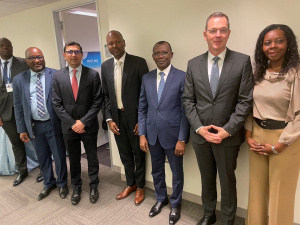
Sani Yaya, the Togolese minister of finance, met with some members of the World Bank Group involved in cooperation with Togo. Yaya met, notably, with Sergio Pimenta, vice president of the International Finance Corporation (IFC), the WB’s private sector arm.
The two men talked mostly about bolstering the Bank’s investments in Togo, with a focus on the IFC’s strategy in the West African country.
The talks covered key sectors like agriculture, energy, industrialization, financial services, digital economy, and implementing public-private partnerships in Togo.
The IFC’s actions in Togo are aimed at boosting economic growth and employment, particularly by supporting SMEs. Since 2014, when the institution opened offices in the country, its portfolio grew from $10 million to $300 million. This year, the Corporation extended a $77 million facility to the Bank of Africa Group, to support SMEs in ten African countries including Togo. It also entered a partnership with the Association of Large Enterprises of Togo (AGET) to support SMEs/SMIs.
Ayi Renaud Dossavi
Togo: Government reports on its actions to boost agriculture in the northern Kara region
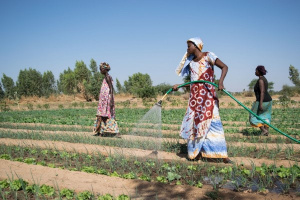
The Togolese government recently released an update on its actions to develop agriculture in the Kara region (northern Togo). The data covers planned agricultural development zone (ZAAP), financing for farmers, infrastructural support, and output, among others.
The Kara region, authorities reported, houses 71 ZAAPs. And out of the region’s 76 cantons, 61 house at least one ZAAP.
The creation of agropoles and agro-parks, the development of agricultural land, and the promotion of agro-industry are some of the key actions taken by the Togolese authorities to boost agriculture in the Kara region.
According to the latest government data, 61 out of 76 cantons in the region have at least one planned agricultural development zone (ZAAP). This part of Togo has a total of 71 ZAAPs.
Financial support
Regarding financing, for the ongoing campaign, the government provided several loans to Kara’s farmers. For example, the farmers obtained a loan of CFA60 million through the ANSAT, and CFA1.8 billion through the National Fund for Inclusive Finance (Fonds National de la Finance Inclusive of FNFI in French).
Lomé also disbursed, as the campaign began, CFA120 million in credit to the farmers via the MIFA (which is a risk-sharing-based financing mechanism), and CFA504 million as part of the Agropole project.
Infrastructure
Kara has 106 agricultural storage warehouses and 7 processing units. Also, an agro-park is being built in the region.
As a result of the government’s opening-up strategy, 460 km of rural tracks have been built in Kara.
Output
Last year, Kara recorded an agricultural output of 680,602 t, compared to 658,011 t in 2021, thus up by 3.4%. Farmers in the region mostly grow food and cash crops.
In detail, the region produced 160,259 t of grains in 2022, 432,677 t of root crops and tubers, and 86,666 t of legumes and oilseeds.
Kara is the third-largest region in Togo. It is currently hosting the last stage of the Forum of Togolese agricultural producers (FOPAT). The event started on April 17 and closes today, April 20.
Esaïe Edoh
Togo: Sarakawa to house a CFA78 billion multipurpose dam
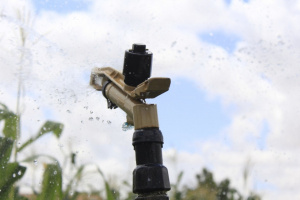
Togo’s Ministry of Water recently announced a multi-purpose dam project in Sarakawa, which is located in the Kara region (northern Togo). The project was revealed on April 15, via a statement.
According to the source, the project will cost about CFA78 billion and will provide electricity and drinking water to the people of Sarakawa and Kara (which is 22km northwest of the former).
The Sarakawa dam will be built on the Kara River, which flows between the So and Pam mountains. The infrastructure will enable the irrigation of up to 36,000 hectares of land and supply drinking water to more than 500,000 people.
Regarding energy, the project will include a hydroelectric power plant to provide electricity to more than 400,000 people, thereby cutting the cost of electricity distribution in the Kara region.
The dam project is financed by the government and HITECH Construction Africa Limited. The latter is involved in the rehabilitation of the Sokodé-Tchamba-Kambolé road linking Togo to Benin.
The Sarakawa project is part of the Green Power Togo initiative. This initiative comprises three solar power plants in Dapaong, Blitta, and Kara; all three have a capacity of 30 MW. There will also be three hydroelectric plants, respectively in Sarakawa, Titira, and Tététou (with respective capacities of 24 MW, 64 MW, and 24 MW).
Ayi Renaud Dossavi
Togo: The Center for Fairs and Exhibitions has a new managing director
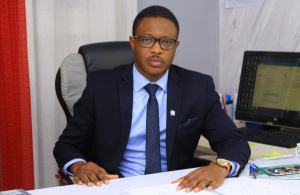
Alexandre de Souza is the new head of the Togolese Center for Fairs and Exhibitions (CETEF). He officially took office yesterday, April 18, 2023.
De Souza was picked following a tender issued in May 2022 by the Ministry of Trade and local consumption. He took the place of Yakpey Comlan Nomadoli, who took over as interim director after Kueky-Banka Johnson.
As managing director, Alexandre de Souza will coordinate and steer all CETEF activities.
De Souza has a lot of experience organizing fairs and big events. He was behind Togo’s first real estate and housing exhibition (Fest'immo). He is also the president of the Togolese Federation of real estate.
Esaïe Edoh