
Togo First
Togo: Food Security Agency opens new sales points across the country
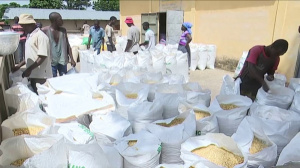
In Togo, the National Food Security Agency (ANSAT) opened new sales windows on May 3rd, according to the agency’s top management.
The ANSAT added that the new windows take only bundled orders from public and private entities, in all prefectures, as well as orders from poultry farmers. Orders must be addressed to the ANSAT’s general directorate in Lomé or general directorates in regional capitals.
By opening new sales points, the government agency aims to boost food security in Togo. About two months ago, on March 20, the ANSAT launched its nationwide sales campaign. As part of the latter, it has been selling 25kg and 50 kg bags of rice, corn, beans, and sorghum. Overall, 200 tons of corn has been made available to each of the five regions of the country.
Togo: Parliament greenlights adhesion to Global Green Growth Institute
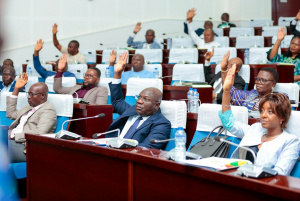
The Togolese parliament recently approved of the country’s adhesion to the Global Green Growth Institute (GGGI). This should enable Togo to receive technical support from the Institute, and consequently boost its capacities to raise traditional funding.
Also, the adhesion will accelerate the transition to a more resilient economy, while fostering job creation, job change, and capacity building.
The bill was on the table since 2020. In October of that year, the government issued a draft bill for adhesion.
Established in 2012, in Rio de Janeiro, Brazil, the GGGI has 39 Member States. In 2018, it signed with the African Development Bank (AfDB) an agreement to promote programs and joint studies, among others.
WACA-ResIP: AFD to finance part of the project in Togo
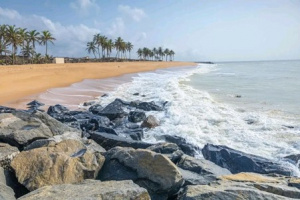
France’s development agency, AFD, is expected to soon provide new financing for the West Africa Coastal Areas Resilience Investment Project (WACA-ResIP) in Togo. According to the program’s coordinator in the country, Abdul Rahimi Alimi, the agency should spend €35 million on works along the Agbadrafo-Gbodjomé (18 km) axis along the coast.
"The AFD has committed €35 million in additional financing for the WACA. This will enable the preservation of the coast, going from Gbodjomé to Agbodrafo; 18 groins will be built along this stretch,” Alimi told Togo First.
“The financing agreement should be signed soon. Talks are well advanced, we are about to sign and it should happen next week,” the coordinator said last Friday, May 5.
Which contractor?
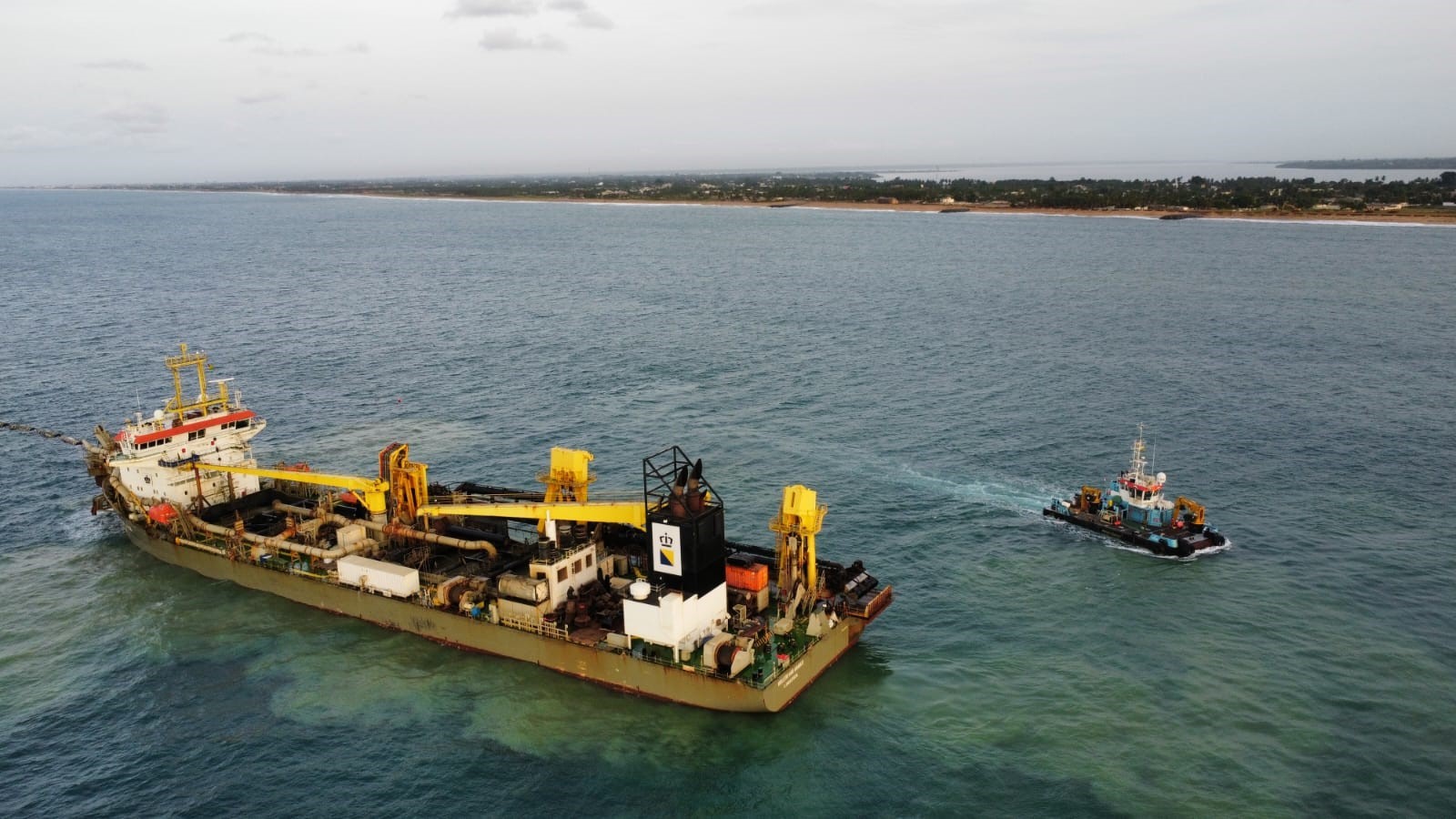
For the works on the Agbodrafo-Gbodjomé segment, Alimi said they are looking to hand over the contract to Boskalis, the Dutch firm in charge of the works on the Agbodrafo-Hilacondji segment. "We are in talks with Boskalis for a follow-on contract because the quality and efficiency they have put into the work have been impressive, and we want the whole project to have harmony".
Boskalis has conducted significant coastal protection projects in Togo and Benin, following agreements totaling €63 million (approximately 42 billion FCFA). The works, which span a 40-kilometer stretch include building and restoring protective groins and beach sand replenishment. They are almost done (99%).
Ayi Renaud Dossavi
Togo records third consecutive success on the WAEMU market
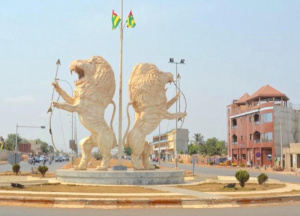
Last week, Togo raised CFA33 billion on the WAEMU market, 3 billion more than it was seeking.
In detail, the Togolese treasury obtained CFA25.5 billion via fungible bills and CFA7.5 billion via fungible bonds. The former matures over 182 days and the latter over 3 years.
According to the UEMOA-Titres’ report on the operation, 26 investors subscribed, raising CFA57 billion in all. Thus, the issue recorded a coverage rate of 189.69%.
This is Togo’s third consecutive successful issue on the regional money market since the year began.
Togo, it is worth noting, plans to secure CFA574 billion in this market in 2023.
Esaïe Edoh
WAEMU: BOAD successfully completes securitization operation, raises $246M
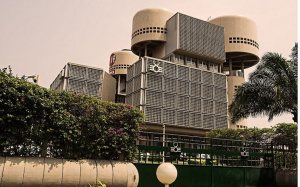
The West African Development Bank (BOAD) completed its recently-launched securitization operation. In a statement issued on May 2, the sub-regional lender announced that it raised, via the operation, a "historic" amount of CFA150 billion ($246 million) on the Uemoa financial market.
Carried out by BOAD Titrisation, the operation will help the Bank optimize its balance sheet, hence raising its capacity for financing its Member States. Specifically, the proceeds mostly finance the BOAD’s 2021-2025 "Djoliba" strategy.
The funds will be invested in projects that will bolster employment, water and rice production, road construction, States’ GDPs, and energy production, as well as help reduce CO2 emissions.
"The success of this operation is first and foremost that of the teams to whom I extend my warmest congratulations. They have been working hard for several months to structure it and get it approved by the WAMU Financial Markets Authority. It is then a new step in the dynamic that we are calling for, which is to find innovative financing mechanisms for the development projects of our member States. This operation, by restoring our balance sheet capacity, is in line with our expectations," said Serge Ekué, President of the BOAD, at the closing of this operation.
The funds collected will enable the Bank to stand by its commitment to be "the Bank of reference for a sustainable impact on the integration and transformation of West Africa".
To conduct the securitization, the BOAD was assisted by a consortium composed of NSIA Finance - SGI Togo - IMPAXIS Securities as co-lead managers of the placement syndicate. Bonds issued will mature over 7 years (84 months) at an annual rate of 6.10%. The operation was first announced in March.
Esaïe Edoh
Togo: World Bank portfolio exceeds $1 billion in value
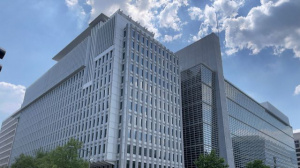
The World Bank’s portfolio is now valued at more than a billion dollars. In April 2023, the exact amount was $1,055.63 million, according to documents obtained by Togo First.
The portfolio covers nine national projects worth $520.1 million and nine regional projects worth $535.53 million.
The funds were invested in several sectors, including basic education, higher education, agriculture, health, social and environmental protection. Some of the projects backed by the World Bank include the Mining Development and Governance Project (MDGP), the Social Safety Nets and Basic Services Project (SSBS), the Economic Governance Support Project (EGSP), the West Africa Coastal Area Resilience Investment Project (WACA) and the West Africa Unique Identification Project for Regional Integration and Inclusion - Phase II (WURI).
Read Also: Togo anticipates stronger relationship with World Bank as the Group appoints a new president
This year, five new projects will be supported by the Bretton Woods institution – three national and two regional. These aim to boost resilience, access to water in cities, solar power output, and empower women, according to the Bank. The projects should accelerate Togo’s economic and social development, as well as strengthen the country’s ties with the World Bank.
Ayi Renaud Dossavi
Togo: BOA to support 100 local SMEs and SMIs with CFA2 billion
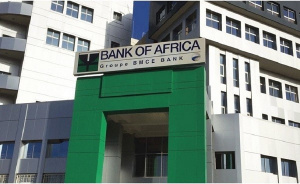
Bank Of Africa will support 100 youth-owned Togolese businesses with CFA2 billion. The Bank announced the facility on April 29, 2023.
The funds will be disbursed on May 6, 2023, in Lomé, during the second edition of the Meet Up Togo fair.
Beneficiaries will be picked among businesses that will take part in the event. Priority will be given to the most innovative businesses, which contribute to Togo’s economic development.
"We are pleased to participate in this 2nd edition of Meet up Togo and to support Togolese entrepreneurs in their goal of growth and development," said Khalid Kezire, BOA's Head of Marketing and Communication.
The announcement comes about a month after the lender received $77 million, about CFA46 billion, from the International Finance Corporation (IFC) to cover half of the risks on a loan portfolio of up to $154 million, targeting SMEs in 10 African countries including Togo.
With the IFC’s funds, the BOA will support businesses active in the agriculture, trade, energy, and construction industries.
Esaïe Edoh
Togo Strengthens Maritime Protection with Adherence to Two International Conventions
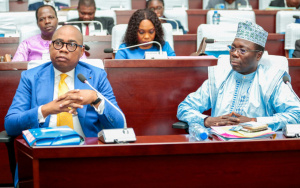
On May 4th, the Togolese parliament approved the country's adherence to two international conventions aimed at protecting its maritime activities. The first is the International Convention for the Conservation of Atlantic Tunas, and the second is the Agreement on the Privileges and Immunities of the International Tribunal for the Law of the Sea.
The first convention will enable Lomé to take steps to ensure the growth of fish species, particularly Atlantic tuna. Its adoption aligns with the government's efforts to regulate the opening and closing of fishing seasons, specifically on the Nangbeto Lake. This convention also serves as a legal tool that will allow Togolese authorities to control the expansion of industrial fishing by regulating fishing activities.
After the deputies agreed on the adoption, Edem Tengué, Minister of Maritime Economy, stated, "Through this adherence, Togo wishes to participate actively in the sustainable management of tuna stocks in the Atlantic, in cooperation with the other States Parties to the Convention."
Regarding the second convention, it enables the Tribunal for the Law of the Sea to intervene in conflicts related to Togo's maritime space, such as issues concerning the delineation of its sea borders. Commenting on this convention, Tengué said, "This adherence will also help foster cooperation at the international, regional, and sub-regional levels in the protection and conservation of fisheries resources and the fight against illegal, unreported, and unregulated fishing."
The two conventions complement other legal tools adopted by Togo to improve its maritime activity and fishing industry.
Esaïe Edoh
Togo anticipates stronger relationship with World Bank as the Group appoints a new president
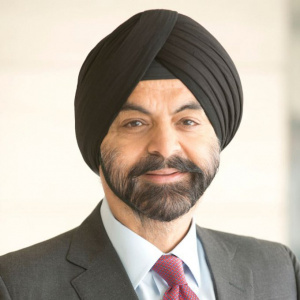
Ajay Banga is the World Bank’s next boss. For five years, starting on June 2, 2023, he will steer the Washington-based group, according to a statement released on May 3. Banga is the 14th president of the institution.
The former Vice President of General Atlantic and former CEO of Mastercard will replace David Malpass, who announced his resignation a few months ago.
In Togo, Sandra Johnson, the Presidential Minister, Secretary General, and the country's governor for the Bretton Woods institution congratulated Banga and said she is excited about the perspective of a stronger collaboration between the World Bank and Togo.
"Congratulations on your new appointment as head of the World Bank. I look forward to a greater and more fruitful collaboration between the World Bank and my country, Togo. For all your new missions, I wish you good luck," said the governor from Lomé, a few hours after the official announcement of the appointment.
Congratulations on your new appointment as head of the World Bank.
— Sandra ABLAMBA JOHNSON (@SandraA_JOHNSON) May 4, 2023
I look forward to greater and more fruitful collaboration between the @WorldBank and my country, #Togo. For all your new missions, I wish you good luck. https://t.co/Flmte5U98G
The World Bank is preparing for a transformation process to better serve its member countries, especially those affected by the Covid-19 pandemic. This transformation will involve setting up new financing mechanisms to help these countries and introducing governance reforms that will make World Bank more efficient and effective.
As the World Bank President, Ajay Banga will also serve as the President of the Executive Boards of the International Bank for Reconstruction and Development (IBRD), the International Development Association (IDA), the International Finance Corporation (IFC), the Multilateral Investment Guarantee Agency (MIGA), and the Administrative Council of the International Centre for Settlement of Investment Disputes (ICSID), covering a wide range of countries worldwide, particularly in Africa.
According to some observers, Banga’s appointment could pave the way for greater World Bank involvement in climate issues, especially as many of its clients, particularly in Africa, call for more support and climate equity from major polluters such as the United States, EU countries, and China.
The World Bank's portfolio in Togo weighs about $955 million, according to the latest data. It has 18 projects (national and regional) covering basic education, higher education, agriculture, health, social protection, and the environment. The Bretton Woods institution is expected to bolster its commitments in the West African country in the coming years, with funding projected to reach $1 billion in support of the government's roadmap, especially in key areas like social protection.
Ayi Renaud Dossavi
Empowering Togolese Women: BOAD's Yennenga Program Graduates First Cohort of Female Leaders
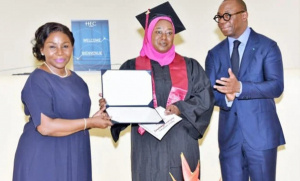
In Togo, the first cohort of women enrolled in the Yennenga Women Leadership Program, an initiative of the West African Development Bank (BOAD), has graduated. The BOAD and Paris' Haute École de Commerce (HEC) recently awarded completion certificates to all 20 graduates.
The program aims to enhance the BOAD's human capital, unlock women's professional potential in Africa, and inspire future generations of girls and women. The 20 graduates work across all of the Bank's divisions, and with the training, they now have the necessary skills to contribute to the lender's growth and help make it a benchmark.
During the graduation ceremony, Rose Kayi Mivédor, Togo's Minister of Investment Promotion, praised the BOAD's commitment to promoting gender equality and women's entrepreneurship in Togo through its Yennenga program. She emphasized that the program will enable Togolese women, who make up more than 50% of the population, to contribute to the country's economic growth and social development. Serge Ekué, President of the BOAD, stressed the importance of women's strong engagement in the development of African society, adding that the Yennenga program aims to encourage women to fully play their role within the institution.
The Yennenga program is part of the BOAD's Djoliba 2021-2025 strategy. On May 2, the program enrolled its second cohort of trainees.
Ayi Renaud Dossavi