

Togo First
ECOWAS: Lomé to host a major meeting on soil fertility and fertilizer use in two weeks

On May 30 and 31, ECOWAS ministers will hold, in Lomé, a meeting on fertilizers and soil fertility. The meeting is organized by the ECOWAS Commission, and backed by the World Bank, the International Fertilizer Development Center, USAID, and the Togolese government.
The upcoming roundtable will provide a platform for participants to deliberate on the recommendations put forth during the sub-regional consultations held from April 25 to 27. The consultations involved stakeholders from the private and public sectors, as well as civil society, who offered suggestions for enhancing soil fertility and agricultural productivity in West Africa.
According to the ECOWAS, despite the progress recorded in the past decade, agricultural productivity and production in the region are still insufficient. "Fertilizer use is still at low levels, far from the adopted targets of 50 kg of nutrients per hectare," the regional organization notes, adding that the situation induces "a significant recourse to food imports, the continuous increase since 2010 of the fringe of populations affected by food insecurity and hunger."
Togo, however, has been taking several steps to tackle the issue and meet the demand for fertilizers. For the ongoing campaign, for example, the country obtained 34,000 tons of fertilizers for local farmers, and CFA2.5 billion worth of fertilizers from Japan (a donation).
Ayi Renaud Dossavi
Translated from French by Schadrac Akinocho
Togo: BOAD disburses CFA10 billion to back Food Security Program

Togo will get CFA10 billion from the West African Development Bank (BOAD) for the Project 2 of the Food and Nutrition Insecurity Resilience Program in the Sahel (P2RS). The Bank’s board announced the financing on May 9, 2023.
The P2RS aims to boost agro-sylvo-pastoral productivity and output, end famine in the Sahel, and increase the revenues of agro-pastoral value chains. In Togo, the project is carried out by the African Development Bank (AfDB).
“The project aims, among others, to build, on a sustainable and resilient basis, agro-sylvo-pastoral productivity and productions, as well as income from agro-pastoral value chains. It will also help strengthen populations’ adaptive capacities for better control of climate risks,” the BOAD said.
Besides Togo, the project covers five countries. Overall, it provides direct support to 1,384,000 people, including 692,000 women (50%), with a focus on the displaced.
However, the P2RS is expected to indirectly benefit 5,96,000 people.
Ayi Renaud Dossavi
Togo: Fest’Immo kicks off in Lomé

In Togo, the international fair of housing and real estate of Lomé, Fest’Immo, officially kicked off today, May 12. Hosted at the Centre Togolais des Expositions et Foires (CETEF, dit "Togo 2000"), it will close on May 14.
Après une interruption suite à la crise sanitaire liée à la COVID-19,
— Salon Togolais de l'Immobilier (@fest_immo) February 22, 2023
le Fest’Immo fait son come-back avec sa 6e édition.?
Soyez prêt, quelque chose se prépare !☺️#TgTwittos #festimmo_6 #Immobilier #Togo pic.twitter.com/zGQaj0wGMq
The fair has not taken place for three years due to the health crisis that affected the country during that time. The upcoming event will be the sixth edition.
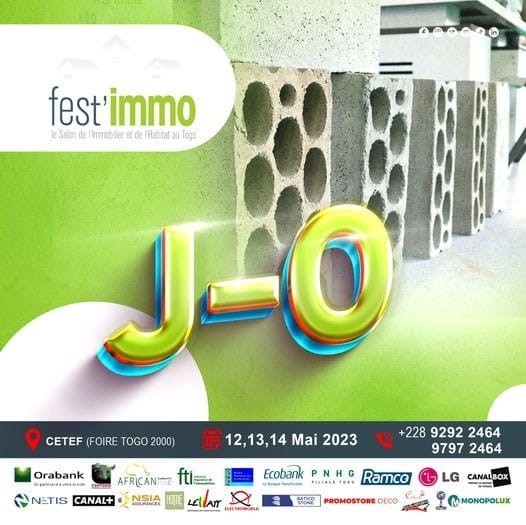
The Fest’Immo fair is organized by "E & K EVENT". It gathers professionals from the real estate industry who will showcase new products to consumers.
This year, organizers expect about around 50 exhibitors.
Ayi Renaud Dossavi
Togo: Participants from 40 countries attended the 2nd edition of the Festival de la Marmite African food fair in Lomé
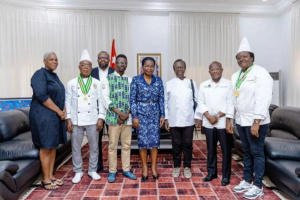
The Togolese Prime Minister, Victoire Tomégah-Dogbé, received a delegation from the organization committee of the Festival de la Marmite (FESMA) last Tuesday, May 9. Their mission was to show her the results of the second edition of the food fair which was recently held in Lomé, the capital.
The theme picked for the fair this year was "Cooking and SDGs: Rethinking Food Culture, Sharing, and Consumption. It brought together for a week, amateurs, professionals, officials, institutions as well as the general public, to promote African gastronomy.
40 countries
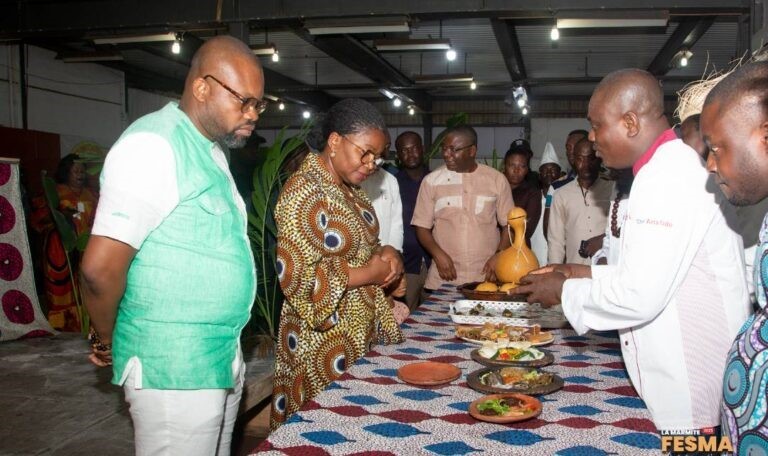
"This year, we were able to see a great diversity of dishes from different parts of Africa. All the countries represented had the opportunity to exchange culinary experiences, with the participation of Togolese chefs from France and their counterparts from West, East, and Central Africa," said Olivia de Souza Paass, sponsor of the event, after the meeting with PM Tomegah-Dogbé.
Over 200 exhibitors and several thousand visitors attended the fair. They came from 40 countries out of Africa’s 54 States.
France wants to support Togolese SMEs through its Choose Africa 2 initiative
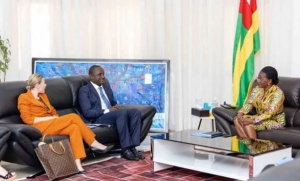
The French Development Agency (AFD) wants to support Togolese SMEs more, through the French Choose Africa 2 initiative. To this end, the Agency could set up an entity that would solely support these local businesses. The AFD’s executive director in charge of partnerships and communication, Papa Amadou Sarr, and its Country Director, Zolika Bouabdallah, discussed the project with Prime Minister Victoire Dogbé on 11 May 2023.
The entity, Sarr indicated, could be “a bank for SMEs, a bank for innovation or a structure at the central level that will back MSMEs’ initiatives with France’s support." The entity should bolster Lomé’s efforts to support local MSMEs.
The Choose Africa 2 initiative was launched on 27 February 2030 by President Emmanuel Macron. Benefiting from a €3.5 billion financing provided by the French government, the initiative targets African economies, with a focus on entrepreneurs from Africa, its diaspora, and France who operate in the informal sector but have a project and a business plan.
Esaïe Edoh
Translated from French by Schadrac Akinocho
African Union gives Togo a recognition certificate for leadership in the Aviation sector
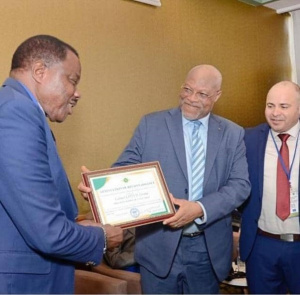
The African Union (AU) just awarded Togo a recognition certificate for its efforts and leadership in air safety and security in Africa, and the world. The document was delivered by Jamel Dridi, an expert in civil aviation and facilitation, on behalf of the African Civil Aviation Commission (AFCAC). This was on the sidelines of an inter-regional workshop on facilitation and border security, held in Lomé, on May 10 and 11.
Around 60 experts from 44 countries attended the meeting where they shared their experiences and discussed the latest trends in security and border facilitation.
Commenting on the certificate, the Director General of the National Civil Aviation Agency (ANAC), Col. Dokisime Gnama Latta, stressed Togo’s importance in strengthening regional integration in the aviation sector, especially through President Gnassingbé.
"The champion of the single market for air transport is the Head of State Faure Essozimna Gnassingbé. From 23 states at inception, there are now 35 countries and two others that are announced, Mauritania and São Tomé," Col. Gnama Latta said.
The international workshop was organized by the African Civil Aviation Commission (AFCAC), the European Civil Aviation Conference (ECAC), and the Arab Civil Aviation Organization (ACAO). The aim was to boost cooperation between these parties, enhance security at borders, and facilitate the exchange of passenger data.
The meeting falls under the Civil aviation security in Africa, Asia, and the Middle East project (CASE II). The EU backed this 60-month project with €8 million.
Lomé hosts the 4th edition of BRVM Awards
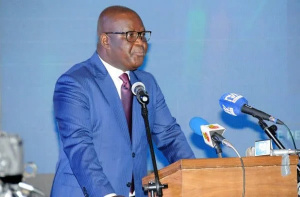
The 4th edition of the BRVM Awards ends today. The event, which started yesterday, May 10, focused on the development of financial markets and integration issues. It gathered about 300 stakeholders from the regional financial institutions of the West African Economic and Monetary Union (WAEMU), particularly those involved in the regional stock market.
The opening ceremony of the Lomé event was presided over by Togolese Prime Minister Victoire Tomegah-Dogbe, in the presence of Badanam Patoki, the president of the WAEMU's Financial Market Authority (FMA-WAEMU), and Adama Coulibaly, the Minister of Economy and Finance of Côte d'Ivoire.
According to Tomegah-Dogbe, this edition of the BRVM Awards took place at a crucial economic and financial juncture–one that requires taking every chance to strengthen ties between regional financial actors. She encouraged enhanced cooperation to tackle the challenges that WAEMU countries are facing.
The official also stressed that financial markets are a key driver for stimulating growth, prosperity, and resilience. She believes these markets need to raise more funds for supporting infrastructure projects, SMEs, and invest in key sectors. "The stock market should not only be associated with large listed companies but must position itself to impact the entire economy of our countries," Tomegah-Dogbe said.
Economic Resilience
"Capital Markets and Economic Resilience" was the theme of the 2-day event. This theme, according to Edoh Kossi Amenounve, the CEO of the Regional Securities Exchange (BRVM), is evocative given the troubled macroeconomic context.
The CEO of the BRVM reported that despite a challenging environment characterized by declining global stock markets and rising key interest rates, the organization raised slightly more funds (0.46%) last year than the year before. The context, in his opinion, calls for better organization to deal with rising crises, and explore technological solutions for boosting financial sectors.
A Distinguishing Event
In addition to being an annual meeting for stakeholders in the regional financial market, the BRVM Awards also is an occasion where the region’s financial actors are recognized.
This year, there were eight award categories integrating quantitative and qualitative criteria. Winners will be actors who helped sustain or develop market activities in 2022, in a significant manner.
The BRVM Awards were launched in 2020, and the first edition was held in Dakar, Senegal.
Esaïe Edoh
Threshold program: MCC sends a delegation to Togo to review progress made on the project
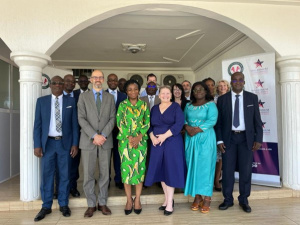
A top-level Millennium Challenge Corporation (MCC) delegation is in Togo at the moment. The team, led by James Gerard, Executive Director of the Threshold Programs, took part, on May 8, in a review meeting for Threshold in the country.
The delegation, according to the OMCA, which is the MCA’s local agency, came to analyze with key stakeholders, synchronization bridges between the Threshold’s ICT and Land Reform projects (LRAP) and the Compact, with a focus on the LRAP projects.
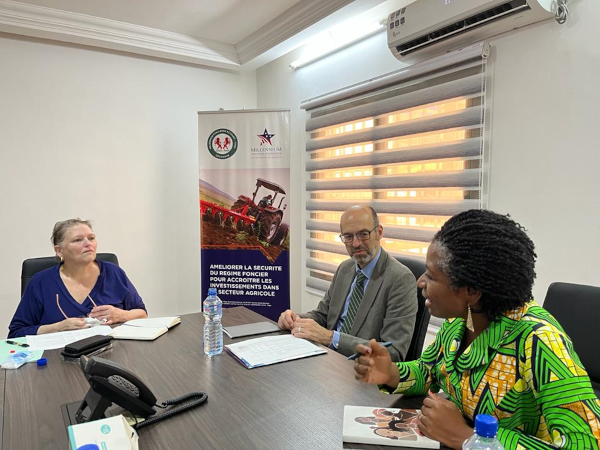
Another goal is to bolster existing mechanisms aimed at fighting gender-based violence, and at making sure that environmental and social norms are respected as part of the program.
The delegation should meet several officials during its stay in Togo. Among others, it is expected to go to the land reform ministry and the digital economy ministry. They will also meet with the chairman of OMCA Togo and the country coordinator of the MCC’s Compact program.
Togo received $35 million under the Threshold program. This includes $8 million for LRAPs. The country also recently obtained $12 million to prepare a project which it will submit to the MCC as part of the Compact. The latter provides more important financing packages.
Faure Gnassingbé talks peace and cooperation with Macron at the Elysée
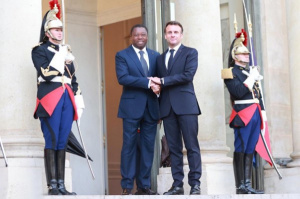
President Faure Gnassingbé of Togo and President Emmanuel Macron of France met at the Elysée yesterday, May 10. It was the second official visit of the African leader to France in two years.
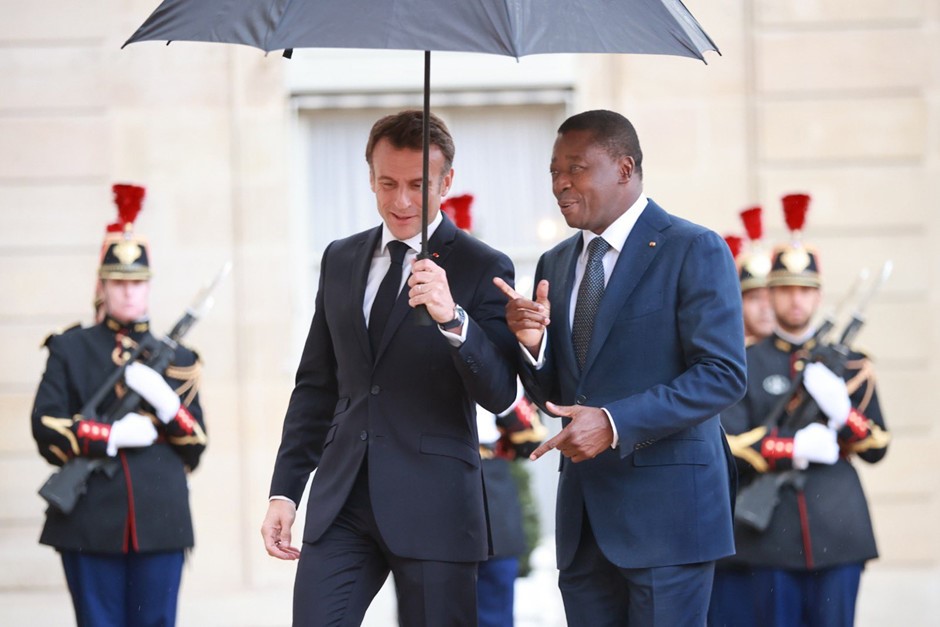
The two men talked mainly about peace and security issues, at the global and regional levels. They also discussed bilateral cooperation between their two countries.
Le chef de l'État, SEM @FEGnassingbe, a eu un entretien au palais de l’@Elysee ce 10.05.2023 avec son homologue français, SEM @EmmanuelMacron.
— Présidence Togolaise/Togolese Presidency (@PresidenceTg) May 11, 2023
La coopération bilatérale et les questions régionales et internationales relatives à la paix et à la sécurité ont fait l’objet des… pic.twitter.com/DX2G9f5aqj
The meeting, according to reliable sources, was "an opportunity to discuss Togo's important role in the fight against terrorism, cross-border crime, and violent extremism in West Africa and the Sahel, as well as Faure Essozimna Gnassingbé's constant commitment to regional peace and stability."
Before their discussion, Gnassingbé and Macron posed for a traditional photo on the steps of the presidential palace.
Esaïe Edoh
Togo: Government gets parliament’s approval to ratify the statute of Africa Minerals Development Centre
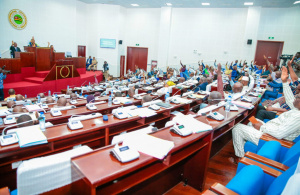
Togo will ratify the statute of the African Mining Development Center (AMDC), an institution created seven years ago in Addis Ababa. The country’s parliament gave its approval on May 9, during a plenary session attended by Mawunyo Mila Aziable, Minister Delegate to the President of the Republic in charge of energy and mines.
Ratifying the statutes will enable Togo to get support for implementing reforms in its mining sector, as well as access to qualified human resources to further its mining research. Lomé will also be able to harmonize its mining code with other nations’, and consequently better tap into its mining potential.
Togo, let’s emphasize, wants to double the contribution of its mining sector to national wealth. In 2017, this contribution stood at 3.17%, according to a report released that year. Among the recent steps Lomé took to achieve that goal is the establishment of a State Company in charge of developing the manganese sector.