
Togo First
Togo spent CFA55Bln on state personnel in Q1 2022, up 9% YoY
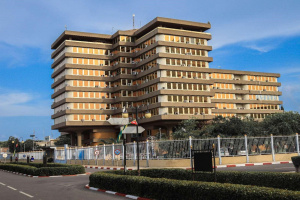
The State of Togo spent CFA55 billion on personnel expenses in Q1 2022, against CFA50 billion in Q1 2021. This was revealed in the Ministry of Economy’s "State Budget Execution Report, Fiscal Year 2022 - End of March".
In detail, the funds were used to pay emoluments, allowances, bonuses, family benefits, employer contributions, and all staff expenses covered by the general budget.
Year on year, the spending was up by 9.08% which, according to the report, could be due to an increase in the number of civil servants over the period under review. In the first quarter of this year alone, this number rose from 54,071 to 54,316.
Also, throughout the year ended on March 31, 2022, a thousand medical, paramedical, and administrative staff has been recruited.
It should be noted that this year's budget law provides for 253 billion CFA francs to be spent on personnel.
Written by:Esaïe Edoh
Translated from French by Schadrac Akinocho
Covid-19: Control measures relaxed for some passengers coming and leaving the Lomé airport
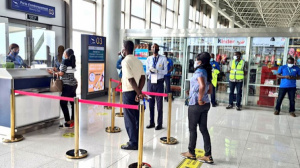
Travelers under 12 are no longer required to show their PCR test results when arriving or departing from the Gnassingbé Eyadema International Airport. This is part of relaxation measures implemented by the Togolese airport, and it was announced by the ministers of health, Moustafa Mijiyawa, and transport, Atcha-Dedji Affoh. The ministers issued a joint statement on August 30, 2022.
The document added that passengers who are more than 12 don’t need to show PCR test results when landing in the country, provided they present proof of full vaccination.
For non-vaccinated passengers over 12 years of age arriving in Togo, proof of a negative PCR test is still required. Otherwise, they will be subjected to a PCR test at the airport. In Togo, let’s recall, PCR test results are accepted only within five days after their issue.
The relaxation was recently suggested by the National Coordination of Response Management against Covid-19 (CNGR) in Togo. This recommendation took into account a drop in the number of cases and the disease’s overall progression.
Written by: Ayi Renaud Dossavi
Translated from French by Schadrac Akinocho
The tax office cuts clearance fees for some vehicles by 30%

The Togolese customs office reduced by 30% clearance fees for vehicles that are more than five years old. The measure will be effective from September 1 to December 31, 2022. This was disclosed by Philippe Kokou Tchodié, Commissioner General of the Togolese Tax Office (OTR), in a statement dated August 31, 2022.
This tax relief aims to free up space at car parks, according to the OTR’s boss. In addition, it aims to support buyers as inflation keeps rising, and get new car orders.
Similar rebates were announced last year, over the same period, with a reduction of up to 40%, for used vehicles over 5 years old.
Togo: Ministry of investment promotion launches strategic report to attract investors
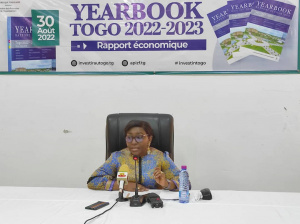
Rose Kayi Midevor, Togo’s minister for investment promotion, launched last Tuesday the Yearbook Togo 2022-2023, an economic report that showcases the country’s investment potential.
"The Togo 2022-2023 yearbook was published to make economic data accessible and to provide an overview of the achievements, completed and in progress, in the key sectors of our economy," the minister explained at the launch, which was held at the headquarters of the Société d'Administration de la Zone Franche (SAZOF) and the Agence de Promotion de la Zone Franche (API-ZF). "We also highlighted key projects of the government's roadmap, each sector’s priorities, greenfield projects, and incentives put in place for investors," she added.
The 190-page report was produced by LD Média développement and the ministry for investment promotion. It looks at Togo’s macroeconomic situation, reforms introduced in recent years, key achievements in the various economic sectors, and forecasts.
It will be distributed at embassies, diplomatic representations, and major international meetings. “We don’t target only businesspeople and investors, we also target other actors, such as international organizations, NGOs, national, political, economic, and social organizations, schools, libraries, and individuals,” Midevor said.
The book is prefaced by Togolese President, Faure Gnassingbé. "Our country is pleased to remain a strong pole of attraction for investors. We, therefore, invite you, dear investors, to come to Togo to achieve your ambitions for development and growth," the leader wrote in his introductory note.
Published in French, the Yearbook Togo 2022-2023 will be translated into English and made available digitally on the platform of the API-ZF, the Ministry of Investment Promotion said. It added that the goal is to release the report twice a year.
Written by: Ayi Renaud Dossavi
Translated from French by Schadrac Akinocho
Togo: Government doubles down efforts to improve the microfinance sector
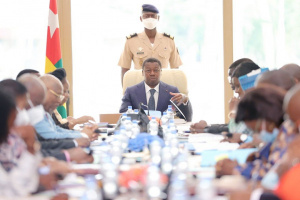
On the sidelines of the council of ministers held on August 31, 2022, the Togolese officials held a seminar where they mainly discussed ways to improve microfinance in the country.
President Gnassingbe and his ministers drew a strategy to monitor and improve the sector. Actions laid out under the strategy aim to help struggling microfinance firms deal with the increasing number of illegal entities, which have been hurting people who face financial issues.
The new strategy will be tested over three years. It should, according to the government, help the country preserve its achievements in inclusive finance, and boost the sector’s results.
Togo, according to the government, is the third-best in the WAEMU where deposits to decentralized finance institutions (microfinance lenders) increased most in the past year.
Written by: Esaïe Edoh
Translated from French by Schadrac Akinocho
TICAD VIII: Togo calls for solidarity to foster peace and security in Africa
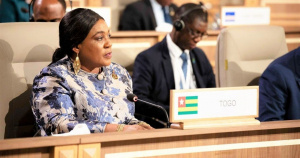
A united front and large-scale actions. Those are the two wishes expressed last Sunday by Togo’s assembly president, Yawa Tsegan, at the 8th Tokyo International Conference on African Development (TICAD VIII) in Tunis.
“We (Togo) urge our States to come together and reiterate our invitation to partners for more coordinated actions for peace and security,” Tsegan told 5,000 participants including 30 African leaders during a panel on peace and stability in Africa.
Let’s note that countries of the Sahel and the Gulf of Guinea, including Togo, currently face “resurgent terrorist attacks and serious criminal acts.” According to the Togolese official, these factors fuel socio-political instability, as well as economic and food insecurity, and impede Africa’s efforts to tackle its economic and social challenges.
To turn the tide, Yawa Tsegan thus advocates for international solidarity and for pro-peace and stability actions.
Written by:Esaïe Edoh
Translated from French by Schadrac Akinocho
WAEMU-securities: Togo will seek CFA30 billion on the regional market this week
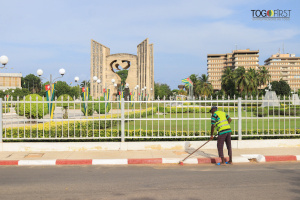
Through a simultaneous bond issue scheduled for September 2, 2022, Togo will seek CFA30 billion on the WAEMU market.
The bonds, recovery bonds, have respective maturities of five and seven years. They have a nominal value of CFA10,000 and carry interest rates of 5.75% and 5.90% per annum respectively, from the first year.
The upcoming issue targets socially responsible investors, companies, and individuals. Its goal is to “help cover financing needs of Togo’s State budget, in line with the economic recovery plan aimed at mitigating the impacts of the Covid-19 pandemic and returning to pre-pandemic performances.”
Written by:Esaïe Edoh
Translated from French by Schadrac Akinocho
In Togo, Plateaux municipalities earn more than CFA650 mln from transhumance
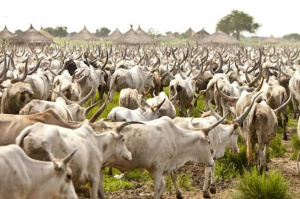
Between 2020 and 2022, the Togolese State earned CFA658 million from transhumance in the Anié 1, Haho 1, and Est-mono 1 municipalities (all located in the Plateaux region). This was disclosed last Thursday, by the Intercommunal Association for Development in the Plateaux (AIDAP), during a meeting with its members.
Respectively, the activity generated CFA225 million and CFA432 million in Anié 1 and Haho1; in Est-Mono 1 they generated CFA1 million over the period reviewed. The money, according to AIDAP, was collected at livestock markets, transhumance corridors, and loading docks.
“This sector has an important impact on the economy of the municipalities, which many people are unaware of,” said Victor Atara Ifaraba, president of the AIDAP.
For his part, Alidou Alassani, president of the livestock and meat sector of Togo, emphasized that “pastoralism is beneficial to the national economy”. He believes, however, that to draw more revenues out of the sector, it is crucial to “work to significantly reduce damages caused by oxen.”
According to an FAO report published in 2017, the livestock sector accounted for 16.5% of Togo’s agricultural GDP and over 6.5% of its national GDP. The report is titled: REVIEW OF THE LIVESTOCK/MEAT AND MILK VALUE CHAINS AND POLICY INFLUENCING THEM IN WEST AFRICA.
While being a highly profitable activity, transhumance, it should be highlighted, is often at the heart of conflicts between Fulanis and local farmers.
Written by:Esaïe Edoh
Translated from French by Schadrac Akinocho
Phosphate: Togo records a 10% increase in output in 2020-2021
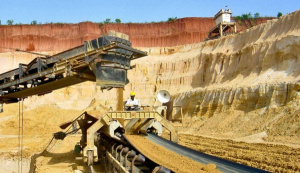
Togo produced 1.3 million and 1.45 million tons of phosphate in 2020 and 2021, respectively. While still far from its level in the 80s and 90s (+2 million tons), the country has not recorded such performances since 2003.
From 2020 to 2021, the country’s output was up 10%. Sales also shot up to nearly 1.39 million tons last year–the highest since 1999. Both the rise in output and sales are good news for Togo since global prices of phosphate almost doubled between February and December 2021–from $88 to $176.
Also, market conditions are favorable for exports, especially since the price rose from $173 in January 2022 to $287 in June–its highest since 2009.
According to the United Nations database Comtrade, Togo's exports of salt, sulfur, earth, stone, plaster, lime, and cement- which includes phosphate ore- in the international trade nomenclature, generated $205 million in 2021. For Togo, phosphate and clinker are the most important products in this group.
The Trade Map database, which is powered by the World Trade Organization (WTO), provides more details, showing $129 million in phosphate sales for 2021 alone.
Let’s recall that phosphate is one of the main ingredients used to make fertilizers.
Written by:Fiacre E. Kakpo
Translated from French by Schadrac Akinocho
TICAD VIII: Japan commits $30 billion to Africa over the next three years
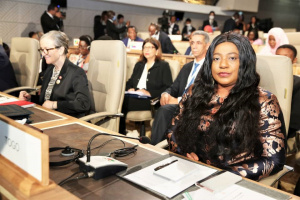
Japan’s PM, Fumio Kishida, announced last weekend that his country will spend $30 billion on various African projects over the next three years. This was during the Tokyo International Conference on African Development (TICAD VII).
Speaking in a videoconference, the Asian leader said Japan “prioritizes an approach that values human investment and quality growth.”
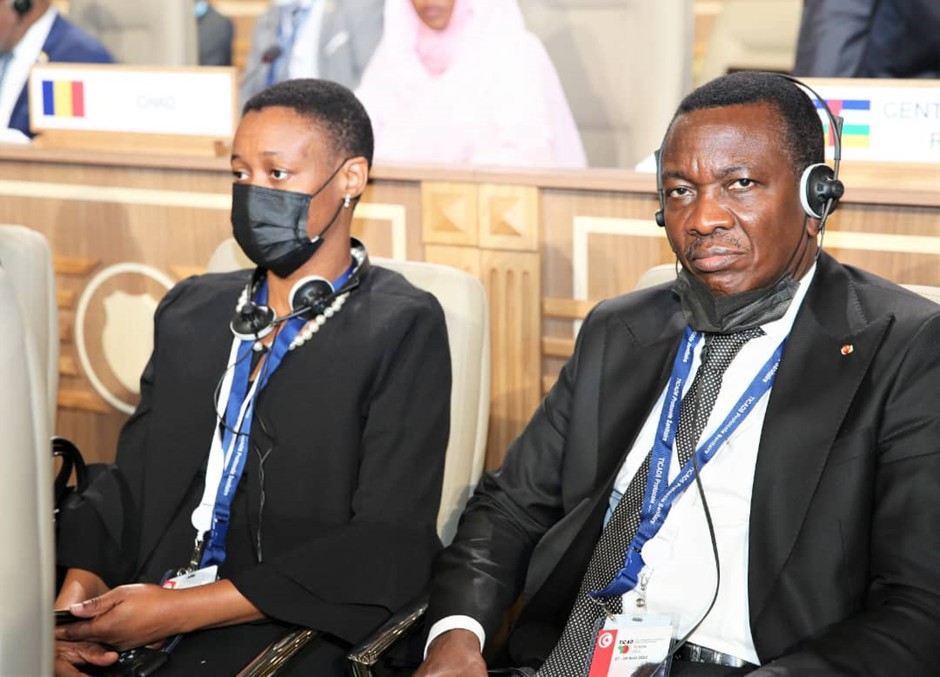
Togo sent a delegation led by the president of the national assembly, Yawa Djigbodi Tsegan, to attend the event. Other members of this delegation included the Minister of trade and local consumption, Kodjo Adedze, and the Minister in charge of universal access to health care, Dr. Mamissilé Akla Agba-Assih.
Togo-Japan cooperation
Japan, let’s emphasize, supports Togo in many areas, such as logistics, education, health, water, energy, fishing, and agriculture. Let’s also add that Lomé wants to revitalize its cooperation with the Asian country.
Some of the projects that Japan financed in Togo include the fishing port of Gbétsogbé, a project to reinforce its main corridor, and efforts to cope with Covid-19. Tokyo also supports Gnassingbé’s nation through the Kennedy Round.
Before TICAD VIII, Togo pleaded with Japan for the reallocation of special drawing rights (SDRs), to help revitalize African economies.
This year, the TICAD was held in Tunis, on August 27 and 28. It was attended by heads of state and government, institutions, economic operators, Japanese officials, members of the African Union, the UNDP, the World Bank, the African Development Bank (AfDB), and the UN Secretariat for Africa.
Written by: Ayi Renaud Dossavi
Translated from French by Schadrac Akinocho