
Togo First
WAEMU experts meet in Lomé to discuss how to better tackle the illicit trade of veterinary drugs
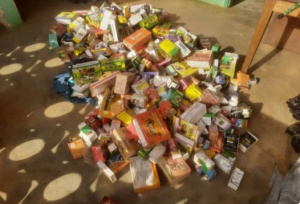
The animal health inspectors of the West African Economic and Monetary Union (WAEMU) are working on new strategies to tackle the illicit sale of veterinary drugs in the region. The inspectors are gathered in Lomé for their annual meeting for assessing veterinary drugs market sanitation campaigns (CAMMVET). The four-day workshop, which started on 19 April 2022, is an initiative of the WAEMU Commission.
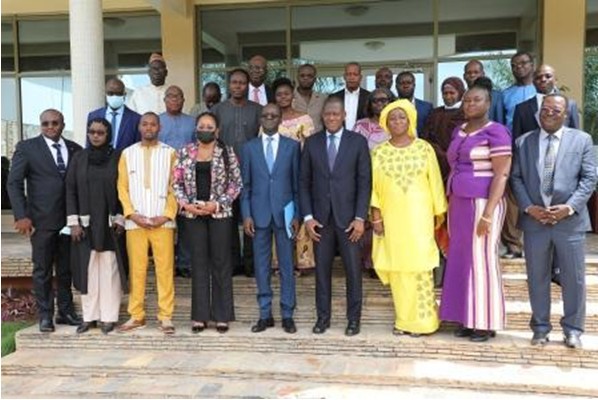
"In the framework of pharmacovigilance, the WAEMU commission in charge of the registration of veterinary drugs has decided to wage a continuous and relentless fight against fake veterinary drugs," said Kako Nubukpo, WAEMU Commissioner for Agriculture, Water Resources and Environment. "If our efforts to subject the entry of veterinary pharmaceuticals to a marketing authorization ends up with no verification mechanism on the ground, all our efforts would have been in vain," he added.
According to data presented by the Commissioner, 50 to 70% of veterinary products consumed in Africa "do not pass through authorized channels."
In addition to taking stock of veterinary drugs circulating across the WAEMU, and assessing sanitation campaigns conducted between 2018 and 2021, experts will harmonize new actions to be implemented as part of efforts to tackle the illegal sale of drugs in the Union.
Since 2014, seven sanitation campaigns have been financed by the WAEMU Commission for all eight countries of the Union, representing a total cost of 587.7 million FCFA.
Thione Niang teams up with Emmanuel Adebayor to build an agripreneurship institute in Togo

Togo will be the second country to house Thione Niang’s agriculture and leadership campus, after Senegal, his home country. Niang, a Senegal-US citizen and former advisor of Barack Obama, teamed up with former Togolese soccer star Emmanuel Adebayor for this project. He announced on his Facebook page. The campus, whose construction is set to begin next month, is called JeufZone.
“After Senegal, Togo takes a prominent place in the commitment to food self-sufficiency on our continent. I would like to salute the leadership of my brother and friend Emmanuel Adebayor, a great footballer, with whom I am carrying out this project," Niang posted on the social network.
"We will join forces, with partnerships with the Ministry of Agriculture, UNDP, and all organizations that can help to train more young people in agriculture," he added.
As part of their agreement, Adebayor should make available his domain which is a little over an hour and a half from Lome (Kpalimé - ed. note). “We Africans must feed ourselves. For that, we must use our lands, our domains. That's why I got the idea to start farming. With Thione Niang, we will join our hands to create something beautiful for the youth," said the former Ballon d’Or winner who played in prestigious clubs like Monaco, Arsenal, Manchester City, and Real Madrid.
Jeufzone Institute’s goal is to give young Africans the tools and experience they need to start their agribusiness.
In Senegal, the institute is an extension of the JeufZone farms, an agro-industrial platform for the production, marketing, distribution, and preservation of agricultural products, with a focus on local products. Training at the institute covers most aspects of agriculture, such as seed selection, planting, harvesting, irrigation, natural pesticides, livestock, and also entrepreneurial leadership.
Fiacre E. Kakpo
Spanish group PNHG secures deal to build St. Peregrin hotel complex in Lomé

PNHG, a Spanish construction firm, will build a hotel complex near the site hosting the ongoing St Peregrin hospital project, in Agoè. Dubbed St. Peregrin hotel complex, the project includes two hotels.
“The first is a 4-star hotel with 3 presidential suites, 4 junior suites, and 35 double rooms. The second is a 3-star hotel with 50 double rooms, 20 of which are designed according to PRM rules, and a conference area.”
The St. Peregrin hotel complex will cost CFA6 billion to build, and, just like the eponymous hospital, it will be financed by Togo’s social security fund (CNSS), in line with the plan launched in February 2019 by President Faure Gnassingbé.
“The St. Peregrin Hotel is a new project that integrates modernity, security, and prestige; its construction will be executed in only 16 months. This project is ambitious because of its location in the heart of Grande Lomé, near the St. Peregrine referral hospital," PNHG said.
The construction group, which uses innovative and fast technologies, is already active in Benin and Côte d’Ivoire. In the former, it was tasked with building 12,000 housing units and in the latter, it is building MSC’s headquarters.
Regarding the St. Peregrin hospital, the facility should have been completed at the beginning of 2020 but delivery has been delayed. According to official sources, the hospital was supposed to have its 4-star hotel with 64 rooms, and a helipad.
Fiacre E. Kakpo
IMF scales down global growth forecast for 2022

The IMF scaled down its global growth forecast for 2022 on April 19, 2022. From 4.4%, which the institution projected in January, the figure now stands at 3.6%. A drop the Bretton Woods body attributes to the Russia-Ukraine war, rolling lockdowns in China. The IMF made the new forecast during its spring meetings with the World Bank, in Washington.
The forecast revision is based on the IMF’s expectation that global inflation will be higher and last longer than previously anticipated. “The war in Ukraine will disrupt supply chains, which have barely recovered from the disruptions of the past two years due to plant closures, rising sea freight prices, and port congestion,” it said.
Meanwhile, David Malpass, president of the World Bank, wrote in an analysis that the war in Ukraine should hurt east European economies, and part of Asia, more than coronavirus. Earlier this month, the Bank said Ukraine’s economic growth would fall by nearly 50% this year. It also said developing countries are facing great challenges, as a result of other conflicts happening in the world, covid-19 and climate change.
The two institutions, in this context, warned of growing risks of fragility, conflict, instability, and food insecurity. These, they noted, will make developing countries more vulnerable, especially regarding their debt levels, low literacy, and climate change effects. The IMF and World Bank hence agreed on the crucial aspect of preparing for coming crises and boosting international cooperation, to help the most vulnerable people to become more resilient.
Esaïe Edoh
Microfinance: Outstanding loans in Togo grew by 34% in 2021
Last year, outstanding loans granted by microfinance institutions in Togo soared by more than 30%, reaching CFA249 billion. That is after stagnating in 2020, due to Covid-19.
According to the BCEAO, West Africa's Central Bank, the surge is attributable to the progressive resumption of economic activities which had been hampered by the health crisis.
Not just in Togo, the upward trend was recorded in Côte d'Ivoire (+27.6%), Burkina (+23.4%), Benin (+35.4%), Mali (+31.9%), and Senegal (+8.5%) as well.
Renewed Trust
Overall, Togolese microfinance institutions served 3.7 million customers in 2021, including 600,000 new clients. The increase bolstered collected deposits which stood at CFA68 billion last year, up by 29.5% compared to 2020. Savers, however, remained cautious about their exposure, preferring to use sight deposits.
Across the West African Monetary Union (WAMU), "sight deposits are predominant with a share of 57.3% of total deposits. Time deposits and other deposits account for 21.1% and 21.6% respectively. In addition, 48.7% of the savings mobilized by Decentralized Finance Institutions (DFIs) were constituted by men, 26.9% by women, and 24.4% by groups," the central bank said. This trend seems to be the same in Togo.
One hundred more service points
The number of service points has also increased. According to the BCEAO, microfinance entities have responded to the increase in activities by multiplying the number of service points. There were at least 660 of them at the end of last year, compared to about 518 in 2020.
Delinquent receivables down
After exploding in 2020, due to the health crisis, loans granted to Togolese clients which remain unpaid (outstanding debts) fell in 2021, from 14.7 billion CFA francs to 12.5 billion CFA francs. They now represent only 5% of outstanding loans, compared to 8.3% in 2020.
With its 75 decentralized financial systems (DFS), Togo is one of the countries of the Union where the microfinance culture is the most deeply rooted. The country has the second largest number of microfinance institutions behind Senegal and ahead of Côte d'Ivoire, despite its small population. The sector's assets passed the CFA260 billion mark in 2020, making Togo WAMU’s fourth-largest actor, by assets, in the industry.
Fiacre E. Kakpo
Togolese telecom regulator launches new campaign to assess the quality of mobile services in the country

In Togo, the Regulatory Authority for Electronic Communications and Posts (ARCEP) has launched a new campaign to assess the quality of cell phone services. This two-month campaign will focus on mobile voice (2G) and data (3G and 4G) services of Togo Cellular and Moov Africa Togo.
"This action aims to evaluate the level of quality of services provided by these operators to determine their compliance with regulatory requirements," the ARCEP wrote in a statement issued on April 19, 2022.
The Togolese telecom watchdog has previously adopted some measurement tools for this purpose, including a protocol for assessing the quality of mobile services, as well as cutting-edge QoS (Quality of Service) measurements and processing tools.
The results of a previous survey revealed, last December, "serious shortcomings regarding the quality of service requirements." This time, however, the regulator warns that "sanctions will be imposed by the Regulatory Authority against operators, per Article 31 of the LCE (Law on Electronic Communications of Togo, editor's note)" if any other failure is found.
The ARCEP also said that such an assessment campaign should be carried out twice a year, with results made public.
Ayi Renaud Dossavi
Ethiopian Airlines to offer straight flights from Lomé to Washington starting from June 1st
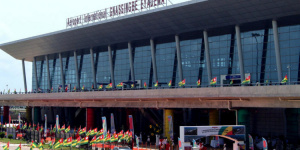
Ethiopian Airlines will, starting from June, provide direct flights from Lomé to Washington, thrice a week. The news was revealed by Samson Arega, regional director of the airlines in the U.S., who has been quoted by several media outlets.
The executive stressed that the planes landing in Washington would return to Addis Ababa, Ethiopia's capital.
Ethiopian Airlines is driven by its ambition to serve more people in West Africa. That is why the airlines chose Lomé which houses one of its strategic partners, Asky Airlines.
Also, adding new flights was possible because Covid-induced restrictions are being lifted and movement resumes. This is good news for Lomé as it will reinforce its position as a relay point in Africa, for long-distance flights to the U.S.
Indeed, the Togolese capital already serves as a stopover point for connections to Africa with the New York region, and the new route will be added to those of Newark and Los Angeles, which were active before the disruptions linked to Covid-19. Overall, Togo will move closer to achieving its ambition of becoming an air hub.
Ayi Renaud Dossavi
Ghana and Togo to reinforce shared land border
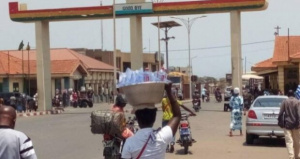
By the end of May 2022, Togo and Ghana will re-delineate their land border with border markers. This was disclosed by the national coordinator of Ghana's Border Commission, Brigadier General Emmanuel Kotia, after a field visit conducted on April 14.
"The decision taken here is that the two countries will jointly set up a technical committee to work on the reconstruction of these pillars. The deadline we have given ourselves is until May," Kotia told the press following his visit along the boundary line between the two neighboring West African countries.
The Ghanaian official claims that the Commission's priority is to ensure the protection of the two territories and avoid conflicts. The measure is indeed part of a plan put in place for this purpose and aims to calm a long-standing border dispute between Togo and Ghana.
To date, the grey areas focus on the pillars of Aflao (Ghana's border town, neighboring Lomé) and Pogulo. These pillars were removed due to natural or human activities, according to the Ghanaian general.
In parallel, the two countries have also been negotiating for several years over their maritime border. In this regard, their respective leaders, President Faure Gnassingbé and President Nana Akufo-Addo, recently agreed to conduct talks that would improve bilateral relations between Togo and Ghana.
The restoration of these border markers, some of which have disappeared or are damaged, is funded by the African Union's "Border Program."
UNICEF Togo gets $2M from Japan to better tackle Covid-19
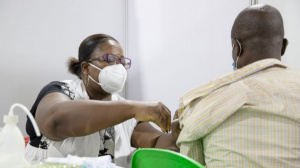
Togo secured, on 24th March, $2 million (about CFA1 billion) from Japan to better tackle Covid-19.
Specifically, the donation will be used by UNICEF's representation, under the "Emergency Grant Aid promoting COVID-19 vaccination in Latin America and the Caribbean, and African countries."
According to a joint statement from the two governments, the UN agency will use the money to help Togo commission equipment deployed for Covid vaccination. Thus, the grant will contribute to "strengthening access to basic health services, including the Expanded Programme on Immunization (EPI), which aims to protect 338,624 children aged 0-11 months against preventable diseases by 2022." It will also help reinforce the health system's cold chain throughout Togo.
Earlier in 2020, Togo, under the EPI, received initial funding of $1.6 million which served to acquire protective equipment, such as masks, handwashing devices, and hydroalcoholic gels. In total, nearly 350 health facilities and 200 schools in the country benefited from this first round of funding.
For the UNICEF Resident Representative in Togo, Aissata Ba Sidibé, the facility's provision "is a recognition of Togo's commendable efforts to protect the population against COVID." It also supports the implementation of national priorities in the government's 2020-2025 Roadmap, under its first axis aimed at improving people's access to basic social services.
Esaïe Edoh
Togo’s first issue on UMOA-Titres in Q2 2022 is a success
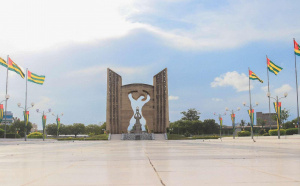
Togo successfully closed its first issue on the UMOA-titres (WAMU securities) market for this quarter. The treasury secured CFA32 billion, thus two billion more than it was seeking.
The proceeds were obtained by issuing recovery bonds (OdR), with a nominal value of CFA10,000, a 7-year maturity period, and a fixed interest rate of 5.8%.
Overall, Lomé raised CFA68 billion from 21 participants, thus representing a subscription rate of 229%.
So far into the year, Togo has secured CFA192 billion of the UMOA-Titres market, through six operations. This is out of a target of CFA550 billion for the whole year.
Esaïe Edoh