
Togo First
Togolese government inks deal with Asky Airlines to give diaspora members a discount on flight tickets

Henceforth, members of the Togolese diaspora will benefit from a 12% reduction on Asky’s flight tickets. The Togolese Ministry of Foreign Affairs, Integration, and Togolese Abroad signed an agreement to this end on April 5.
The discount applies to flights in both the business and economy class, regardless of the destination.
Also, the pan-African airlines said it would “waive the penalty for the first date change made 72 hours before the date of travel.”
According to a statement from the Ministry of Foreign Affairs, only Togolese abroad with a valid Togolese passport or national identity card and their consular card can benefit from the 12% discount. The ministry also explained that the agreement “was advocated because the majority of the Togolese diaspora is in Africa and this company (Asky) serves many African cities.” Other negotiations are underway with other companies, Robert Dussey’s department added.
It should be noted that for some years now, Togolese authorities have been mobilizing the diaspora to get it to invest more in local development projects.
Esaïe Edoh
PAIEJ-SP: Second phase may commence soon
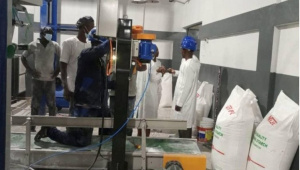
In Togo, the second phase of the Support Project for Youth Employability and Integration in Growth Sectors (PAEIJ-SP) should begin soon. A nationwide survey is currently being conducted to define the orientations and outlines of this phase.
Authorities behind the project decided to move on to the second stage because the results of the first stage were beyond their expectations.
Regarding the upcoming orientations of the program, they include consolidating the achievements of the first phase, strengthening the support mechanism for entrepreneurs, and creating more jobs.
Carried out over the past five years, the first stage of the PAIEJ-SP gulped an investment of CFA17 billion from the government and the AfDB which is backing the project. It claims to have created about 800,000 jobs, including 55,000 indirect ones and supported nearly 20 SMEs/SMIs and 3,000 associations
Earlier this year, the PAIEJ-SP, which is deployed especially in secondary sectors (soybeans, cassava, small ruminants rearing, etc), organized a meeting between the farmers it supports and its financial partners. The meeting’s objective was to ease the financing of the 2022-2023 agricultural campaign.
Cooperation: Germany committed over CFA65 billion to Togo last year
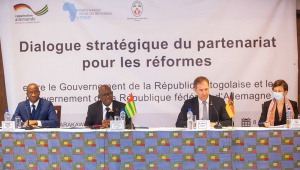
Germany committed more than CFA65 billion to Togo last year. The figure was mentioned during a strategic meeting between officials from the two countries–a meeting held in Lomé on April 8, 2022.
The money was used to finance a set of reforms validated in March 2021 by the two partners.
During the meeting, Lars Wilke, Director of West Africa at the Federal Ministry for Economic Cooperation and Development, and head of the German delegation said: "Most of the reform indicators we agreed on last year are on track. I am confident that it will be possible to fully achieve the goals we have set together by the next intergovernmental negotiations.”
Satisfied with the progress made so far, the Togolese and German officials suggested recommendations for new commitments to further bolster their political and economic cooperation. These commitments cover the sectors of health, climate, and renewable energy, in line with Togo’s 2020-2025 government roadmap.
Germany, let’s emphasize, also supports Togo in implementing development policies, especially relative to the management of the Covid-induced health crisis.
Esaïe Edoh
Togo postpones conference on terrorism and political transition in the Sahel and West Africa
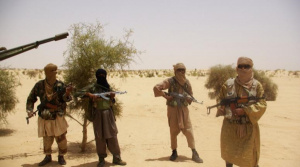
Announced last week, the conference on terrorism and political transition in the Sahel and West Africa was postponed from April 21 to an undisclosed date. This was revealed on April 11, 2022, in a statement issued by the Togolese ministry of foreign affairs and African integration.
The new date will be disclosed “to all national and international actors in due course,” the ministry wrote.
The event, which is organized by the Togolese government and backed by the UN, should allow participants to assess trends and recent changes in the Sahel and West Africa regions, especially in the face of violent extremism and terrorism.
They should also discuss strategies and the means to prevent terrorism from spreading, in addition to potential amendments to actions and mandates of peacekeeping operations, to better adapt them to real needs on the ground.
Esaïe Edoh
Togolese authorities discuss axes 2 and 3 of the 2020-2025 roadmap in Kara, during a key seminar
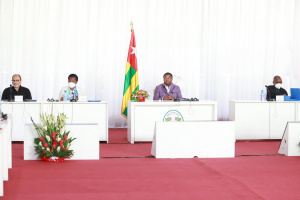
Togo held a government seminar in Kara (in the northern part of the country) last Friday and Saturday, April 8 and 9. The meeting addressed the implementation of key projects that fall under the 2020-2025 government roadmap, especially those that are part of the roadmap’s second and third axes.
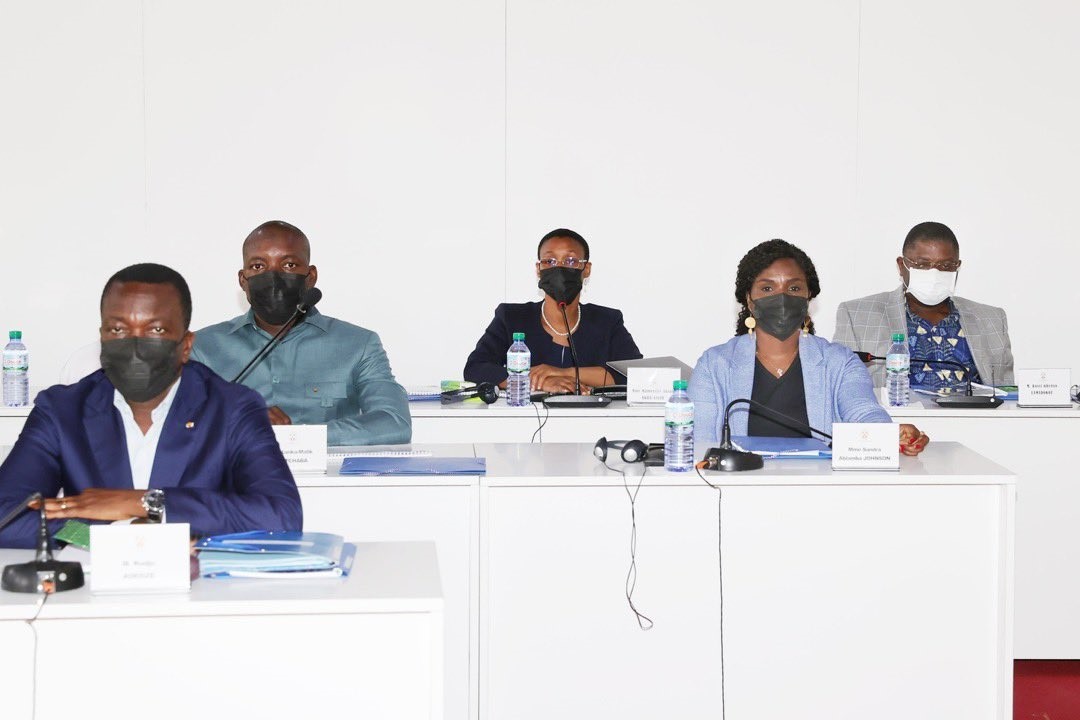
The two axes should help boost job creation, modernize the country, and reinforce its structures. Lomé, in line with these objectives, intends to ramp up the number of containers it handles from 1.5 million, currently, to 3 million by 2025. Over the same period, the authorities plan to cut by 30% the average time that ships spend at the Autonomous Port of Lomé (PAL).
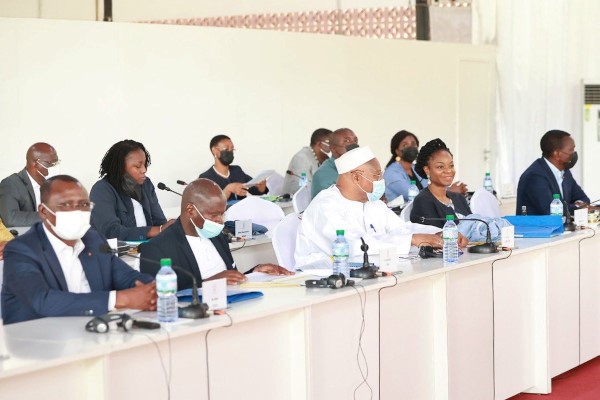
At the moment, this time stands below 52 hours, "thanks to major efforts made since the last government seminar" - efforts that helped reduce the duration by 40% as of March 2022.
Regarding the second axis, President Faure Gnassingbé and his collaborators said “agriculture remains an extremely important sector for Togo,” as it contributes 40% of its GDP and employs 70% of the population.
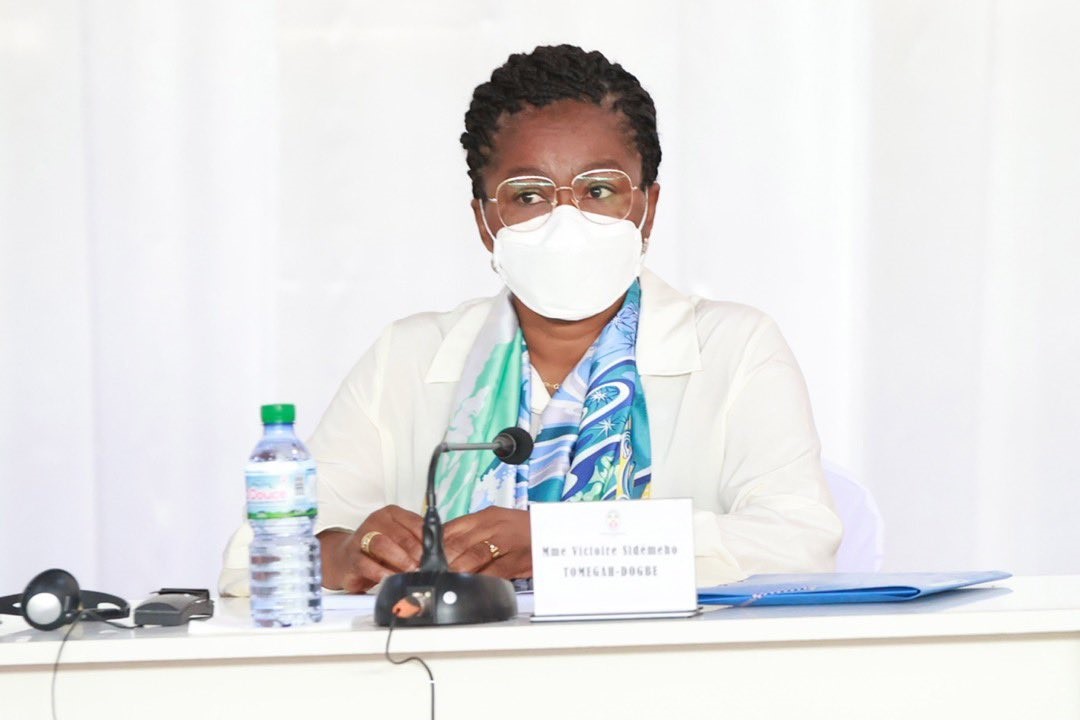
"We also discussed the impacts of the current global context on inflation and supply chains. Strengthening our resilience to shocks is a priority of the FDR 2020-2025 (Roadmap, editor's note) whose implementation should be accelerated," said Togolese PM Victoire Tomégah-Dogbé.
The government, during the two-day meeting, also assessed progress made with undergoing projects falling under the 2020-2025 roadmap. Notably, in the areas of digital transformation, universal access to electricity, agricultural transformation, access to water, the Savanes emergency plan…
Esaïe Edoh
International Business Bank Togo and CNP Togo want to activate the guarantee line of the African Solidarity Fund
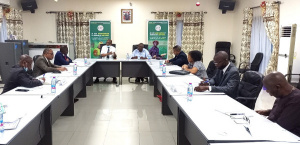
Togo’s National Employers’ Council (CNP-Togo) and executives from the International Business Bank -Togo (IBB) want to activate the guarantee line of the African Solidarity Fund (ASF). The two parties discussed the matter last week, on April 6, in Lomé.
IBB’s top management, which is for the move, is working with CNP-Togo on a memorandum of understanding that should define how the guarantee should be exploited.
On November 11, 2021, the BTCI became IBB after its purchase by IB Holding (July 2021) was sealed.
Esaïe Edoh
Cereal: Maize and wheat prices reach record levels worldwide
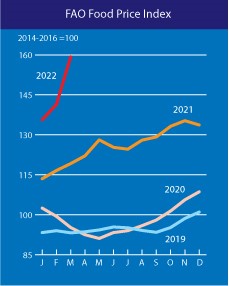
Over the past month, global food commodity prices reached their highest level ever and the pace has been maintained in the past weeks.
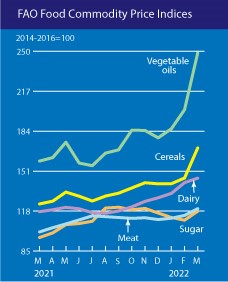
“The FAO Food Price Index averaged 159.3 points in March, up 12.6 percent from February when it had already reached its highest level since its inception in 1990,” the FAO warned. The Rome-based UN body said the surge was mostly driven by prices of commodities like vegetable oil, cereals, meat, sugar, and dairy products.
The Russia-Ukraine war’s impact on maize and wheat prices
Between February and March, world prices of wheat and corn both soared by nearly 20%, reaching a new record high, the same as sorghum and barley, according to the latest data.
The FAO Cereal Price Index leaped by 17.1% from February to March, notably due to significant increases in wheat prices. A situation that is directly linked to the Russia-Ukraine conflict, as the two countries, together, accounted for about 30% of global wheat exports, and 20% of global maize exports in the past three years, according to FAO estimates. The war also affected sowing in Ukraine and pushed Russia to reduce its wheat exports significantly; this could worsen supply pressures throughout the rest of this year.
Togo, while almost self-sufficient regarding maize - the country’s most consumed cereal, can’t say the same for rice, which it mainly imports from Asia, or wheat, which it gets mostly from Russia.
Indeed, Russia was, over the past three years, Togo’s largest wheat supplier, providing the West African country with 61% of its wheat imports. In 2020, Togo bought nearly $12 million of wheat and meslin from Russia.
Besides getting less wheat from Russia, Togo has been facing, since the end of 2021, inflation marked by a rise in prices of petroleum products and other imported goods.
Togo launches agricultural campaign
In this context, the government announced a battery of measures aimed at helping the Togolese people be more resilient to inflation. Already, the authorities are undertaking controls to prevent speculation on the importation of goods such as wheat.
In Togo, the month of March is the planting season, with the short rainy season beginning. For the just-started agricultural season, the government said it will keep subsidizing fertilizers, to make things easier for farmers.
Ayi Renaud Dossavi
Togo: Government suspends nine more teachers who are striking illegally
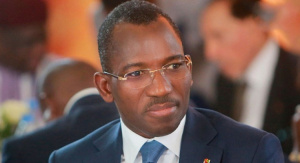
Nine more teachers joined the list of 137 teachers excluded from the Togolese education system and redeployed in the administration. The names of the concerned were released on April 5th by the Ministry of Public Service and Dialogue in a decree on administrative measures.
Like their 137 fellow colleagues, the nine teachers also respect the four-day work stoppage order issued on Tuesday, April 5, by the Togo Teachers' Union (SET). The union is not legally recognized by the government, which considers its calls to strike illegal, per the Labor Code and the provisions of the decree of February 23, 2022, on the representativeness of professional unions and the exercise of the right to strike in Togo.
The measure, according to Minister Gilbert Bawara, for the time being, only concerns "the most prominent members of the SET."
It should be noted that despite the government's sanctions, the SET is maintaining its strike over four days.
Esaïe Edoh
PAREC II: Construction of 400 new classrooms in Maritime, Plateaux, and Savanes regions recently launched
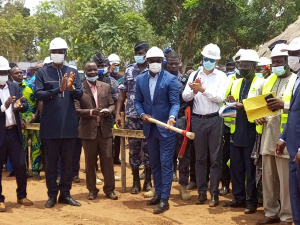
As part of the second phase of the Project to Support High School Reforms (PAREC II) in Togo, 384 classrooms are being built in the Maritime, Plateaux, and Savanes regions. The construction was officially launched last Monday by the minister of primary and secondary education, Dodzi Kokoroko.
The project covers 130 public high schools and it will help increase their capacity and conditions of reception, as well as improve governance and make them more attractive.
Let’s emphasize that a few months ago, in December, the government launched a project to build 30,000 classrooms across the nation. Aimed at “increasing school accommodation capacity,” it falls under the 2020-2025 roadmap.
Regarding the PAREC project, its first phase was implemented between 2014 and 2018. Backed by the French Development Agency (AFD), this phase enabled the construction of 160 classrooms.
Togo works on a gender-sensitive budget for 2023

Lomé hosted last Monday, April 4th, a workshop for the elaboration of the gender-sensitive budget for the year 2023. During the session, participants - gender experts, senior officials, technical and financial partners of Togo - aimed to better promote women and gender equality in the budgeting and allocation of state resources.
"Gender budgeting consists in applying the integrated approach of equality between women and men to the financial aspect of public policies," said Kofi Agbenoxevi Paniah, Secretary-General of the Ministry of Economy and Finance, at the beginning of the meeting. The official especially mentioned Togo’s efforts to support and strengthen gender equity, over more than a decade now; efforts consolidated in the first axis of the Togo 2025 roadmap.
2023: new "gender-sensitive" ministries
In Togo, the 2022 budget law came with a gender-sensitive budget covering six (06) pilot ministries, notably the ministries of grassroots development, primary and secondary education, health, social action, agriculture, and public works.
In 2023, two ministries (the ministries of justice and higher education) and two institutions (the Prime Minister's Office and the Court of Auditors) will be added, according to Kofi Agbenoxevi Paniah.
The elaboration of the gender-sensitive budget is supported by the World Bank (through the PAGE project) and the European Union. The latter’s representative, Joachin Tasso Villalonga, praised the government "for putting Togo at the forefront of GRB (Gender Responsive Budgeting) in the region and welcomed their ambition to extend it to all public institutions.”
In Togo, the development of a gender-sensitive budget was instituted on April 7, 2020.
Ayi Renaud Dossavi