
Togo First
Cinetpay deploys a new online payment gateway

Ivorian fintech CinetPay has recently deployed a new payment gateway to secure operators on its online transaction platform.
According to the start-up, this payment gateway is equipped with a special protocol called CSP (CinetPay Secure Payment) for securing all payments via Mobile Money, Bank Cards, and Wallets. It helps increase revenue for businesses...
The new interface also supports more than 40 of the most popular payment methods in French-speaking Africa (Orange Money, MTN Mobile Money, Moov Money, Visa, Mastercard, Mpesa, Ecobank Pay, etc.) whereas the previous version only supported 30 payment methods. This gateway also allows companies to accept payments in several currencies.
"This new online payment gateway offers companies opportunities to develop their business in more than 10 countries in French-speaking Africa," said the Co-founder and CEO of CinetPay, Idriss Marcial Monthe.
In December 2021, the start-up had secured $2.4 million in funding, or about FCFA 1.4 billion, from pan-African venture capital fund 4DX Ventures and unicorn Flutterwave to expand its digital payments services in the Francophone region.
As a reminder, CinetPay acts as an online and point-of-sale payment solution and it allows merchants to process payments from more than 130 different mobile money, bank card, and wallet operators. It is present in several African countries including Togo where it arrived in 2020.
Esaïe Edoh
Ghana reopens land borders after two years of closure

Togo's western neighbor, Ghana, will reopen all its borders as of Monday, March 28, 2022, after two years of closure due to Covid-19. This is what Nana Akufo Addo, Ghana's president, said in an announcement reported by several local media.
"From tomorrow, Monday 28 March, all land and sea borders will be open. Fully vaccinated travelers will be allowed to enter through land and sea borders without a negative PCR test result from the country of origin," the Head of State said in a televised statement on Sunday, March 27, as quoted by Ghana web.
"Citizens and foreign residents in Ghana who are not fully vaccinated will be required to present a negative PCR test result within 48 hours and will be offered vaccination upon arrival," he added.
This reopening of the borders will allow Ghana to resume the movement of people especially with its neighbors (Togo, Cote d'Ivoire, and Burkina Faso), after the closure in March 2020.
This comes after much pressure in parliament, especially from the opposition, calling for the opening of Ghana's land borders to allow the free movement of people and goods. This is because the closure of borders has had negative effects on the economies, especially those of the border populations.
As a reminder, Togo shares more than 800 km of land border with its English-speaking neighbor, the most important point of which is the border post of Aflao, a border town next to the Togolese capital Lomé.
Within ECOWAS, the reopening of land borders was previously envisaged for January 1, 2022, according to a proposal by ministers of the subregion. Although it is not yet effective in the countries of the subregion, they have agreed to coordinate these reopenings and harmonize their directives at border posts.
Ayi Renaud Dossavi
ECOWAS gets $3.56M from AfDB to boost the pharmaceutical industry
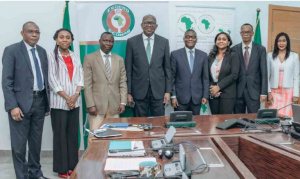
The African Development Bank (AfDB) will disburse $3.56 million (about CFAF 2.12 billion) in the form of a grant to strengthen the pharmaceutical industry sector in ECOWAS over the next two years. The facility, approved by the Bank's Board of Directors on 24 January 2022, was the subject of an agreement between the pan-African institution and the Commission of the Economic Community of West African States (ECOWAS), signed on January 23, 2022, in Abuja, as reported by Agence Ecofin.
These funds are part of the Pharmaceutical Industry Development Project in the ECOWAS region–a project that aims to support the implementation of regulations in the sector, including the application of free duty on pharmaceutical raw materials, packaging, and finished products under the ECOWAS Common External Tariff, a tool for facilitating intra-community trade.
The project also aims to establish "an effective regional pharmaceutical regulatory ecosystem by providing technical assistance and capacity building programs for regional drug regulatory authorities," according to the institution headed by Adesina Akinwumi.
Ultimately, the signatories want to increase the competitiveness of the pharmaceutical industry in the sub-region, by improving quality standards and products and ensuring that the region complies with the best practices relative to pharmaceutical products manufacturing and supply, at the global level.
"Local production of pharmaceuticals and biologicals has become an imperative and a regional priority as well as the provision of health care delivery services for which the support of the African Development Bank will help ECOWAS achieve its development objectives," said Mamadou Traore, ECOWAS Commissioner for Industry and Private Sector, who signed the MoU with the Development Bank.
With a total cost of $3.77 million, the project will be financed not only by the AfDB, but also by a contribution of $200,000 (cash) and $400,000 (in kind) from the ECOWAS Commission, and will be implemented by the West African Health Organization (WAHO).
Ayi Renaud Dossavi
Togolese government sets up a special office for road security amidst rising accidents
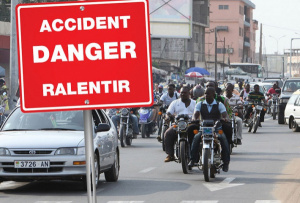
The government of Togo has established an office especially for promoting road safety, according to a statement issued by the ministers’ council on March 27, 2022. The National Road Safety Office (ONSR), as it is called, has a mission to “study, research, and implement all measures that could improve the safety of road users,” the statement reads.
The measures include preventing accidents, training drivers, raising their awareness, as well as improving emergency medical support.
The ONSR, according to Lomé, will reinforce strategies and programs aimed at tackling road insecurity in Togo.
The news is announced in a context where the increase in the number of road accidents is strongly deplored by the competent authorities, especially for motorcycles. Measures such as the mandatory wearing of helmets for passengers (motorcycles), the recent establishment of an Observatory of Land Transport (OTT), or the introduction of a category A driving permit or breathalyzer on the roads, had been considered.
In 2021, nearly 7,500 accidents were recorded on Togolese roads, resulting in 680 deaths.
Ayi Renaud Dossavi
Electricity for all: Tinga Fund gets CFA3 billion for pilot phase

The Tinga Fund, set up to boost access to electricity in Togo, will enter its pilot phase on April 1, 2022. The fund, which has a seed capital of CFA3 billion, was presented by Mila Aziable, minister of energy and mines, at the last Council of Ministers held on March 25.
The pilot phase of the facility will extend over nine months, deployed in the regions of Kara and Savanes. "The fund will allow about thirty-three thousand (33,000) households to be connected to electricity against the payment of an initial amount of one thousand (1,000) FCFA instead of an average cost of one hundred thousand (100,000) FCFA. The remaining access fees will be reimbursed over up to ten (10) years depending on household income," the government wrote in a statement issued after the council.
The project’s objective is to increase electrification rates in the Savanes and Kara regions to 31% (from 22%) and 50% (from 35%), respectively, over the next decade.
The Tinga Fund, let’s recall, was announced in November 2021, in line with the Togolese authorities' ambition to achieve universal access to electricity in the country by 2030.
Ayi Renaud Dossavi
BOAD and Togo team up to boost sports in schools and universities

The West African Development Bank (BOAD) and the Togolese Ministry of Sports and Leisure inked on March 24, 2022, a partnership framework agreement, through which both parties commit to promoting sports in schools and universities.
The convention, signed by Lidi Bessi-Kama, Minister of Sports, and Serge Ekué, President of BOAD, according to the Togolese official, aligns with his ministry’s ambition to foster the emergence of talent, as well as to channel the youth.
Additionally, Bessi-Kama praised the BOAD for believing "in the magic of sports and its ability to mobilize, unite and educate the youth to divert it from the scourges of terrorism, banditry, and dropping out, which undermine societies.”
For his part, Serge Ekué said the agreement was signed in line with BOAD's regional initiatives on the issue of youth.
Esaïe Edoh
Togolese fintech K-Pital Invest to take part in the BM Prime Capital Pitch Competition
K-Pital Invest, the Togolese fundraising platform set up by the Centre Urbain de Business et d'Entrepreneur (CUBE), an incubator based in Lomé, has been picked to participate in the BM Prime Capital Pitch Competition. The latter is a contest organized by New York-based venture capitalist BM Prime. It targets startups that operate in French-speaking Africa.
“We are pleased to announce that our fintech #KPITAL_INVEST #IK has been selected for the final round of the BM Prime Capital Pitch Competition, launched by BM Prime Capital a New York-based investment firm,” CUBE enthused.
BM Prime Capital is a hybrid venture capital/venture capital firm that sets up and supports companies in the U.S., and in particular, intends to act as a liaison to provide seed funding to technology startups in French-speaking African countries.
“For the Competition [BM Prime Capital Competition], we're keeping our fingers crossed. Nevertheless, whatever the result, it already means that there is potential in this project and that potential investors recognize it. This is already a victory,” said Urbain Amoussou, founder of CUBE.
Ayi Renaud Dossavi
Togolese former PM Gilbert Houngbo elected as the new head of ILO
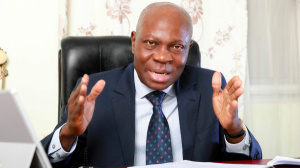
The Togolese Gilbert Fossoun Houngbo is the new Director-General of the International Labour Office (ILO). He was appointed on Friday, March 25, 2022, by the Governing Body of the institution. The appointment took place during a meeting in Geneva.
Houngbo, who currently heads the International Fund for Agricultural Development (IFAD), beat the French Muriel Penicaud in the second round of the elections, according to information received by Togo First.
Elected for the 2023-2027 term, the Togolese is the 11th Director-General of the ILO and the first African to hold this position. He will take office in October 2022, replacing the British Guy Ryder.
Gilbert Houngbo was Prime Minister of Togo from 2008 to 2012. With more than three decades of experience in international organizations (IOs), he held senior positions in the UN system, including UNDP, ILO, IFAD, and UN-Water.
Esaïe Edoh
Togolese parliament approves Togo’s adhesion to the UN convention on the Law of Sea
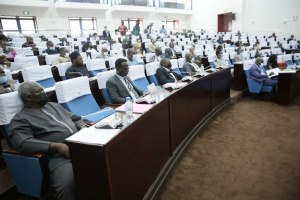
Last Tuesday, Togolese deputies voted, unanimously, for Togo's adhesion to the United Nations Convention on the Law of the Sea, on the conservation and management of fish stocks.
The law gives States rights to manage fisheries resources, situated within and beyond the exclusive economic zones.
“Togo aims to practice responsible fishing espousing the trilogy of conservation, sustainable exploitation, and management of stocks, without damaging the marine environment, while maintaining the integrity of marine ecosystems and minimizing the risk of long-term or irreversible effects of fishing operations,” said the elected representatives.
Togo’s adhesion to the convention should, according to the Minister of Maritime Economy and Fisheries, Edem Tengue, allow the country to further modernize its fisheries sector.
In 2021, let’s recall, Togo recorded a surge in artisanal fishing and fishery resources. Specifically, more than 4,000 t of fish were caught from the artisanal fishing port of Lomé (POPEL), up by almost 18% compared to the 3,450 t of 2020.
Esaïe Edoh
Togo to keep fertilizer subsidy this year, despite Ukraine crisis
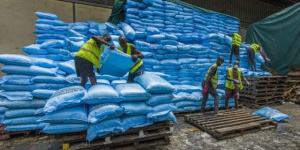
In Togo, the Ministry of Agriculture announced on March 24, 2022, that fertilizers would be subsidized during the 2022-2023 agricultural season. This is despite the global surge in input costs caused by the war in Ukraine.
“The government, aware of the issues and objectives it aims to achieve through its roadmap 2020-2025, particularly concerning improving yields and agricultural productivity, will take as far as possible, the necessary steps to mitigate the effects of this increase in prices to producers,” a note on the ministry’s website reads
To “cover all the needs of producers,” the Togolese authorities announced that they have ordered, “a considerable quantity” of fertilizer which is already being distributed in all regions of the country.
Committed to subsidizing fertilizer, Lomé added that it will tackle the speculative rush on the product and take measures to back law enforcement and security forces to stem the outflow of stocks at Togolese borders.
It should be noted that during the last two seasons, a 50 kg bag of fertilizer was sold at 12,500 CFA francs, thanks to the state subsidy.
Esaïe Edoh