

Togo First
Lomé hosts regional workshop on nuclear security and radioactive threats

Yesterday morning, a regional meeting focused on a strategy to tackle the risks posed by nuclear and other radioactive materials that are not subject to regulatory control was launched in Lomé. The meeting which regroups actors from seven countries will end on Friday, February 18.
Technically backed by the International Atomic Energy Agency, IAEA, the workshop should allow participating countries to have a military regime that takes into account all aspects of nuclear security.
“For sources that are used in the regulatory framework (for example, in hospitals, laboratories) of equipment that are registered and monitored, the security plan is known. But there is equipment or material that we do not know,” said the Chief Medical Officer, Associate Professor of Radiology and IAEA Focal Point in Togo. “This workshop will give us the tools to know how to prepare for possible scenarios involving these materials and equipment that are not listed,” he added.
The event will also include training to identify radioactive materials, interpret scientific data related to them and assess their radioactivity, towards ensuring nuclear and radiological security.
“By nuclear security, we mean those aspects that are related to all incidents, especially bad ones, that can occur while using certain equipment or certain sources of radioactive radiation. (...). Our objective is to be ready to respond when needed, and to prevent such incidents from occurring,” added the IAEA focal point.
According to Col. Djibril Mohaman, representing the Chief of Staff, every country should be concerned by nuclear security, especially with the growing global threat of terrorism.
Besides Togo, other countries participating in the workshop are Benin, Burundi, Comoros, Central African Republic, Congo and Guinea.
Togo: Over the past decade, the number of beneficiaries of the National Health Insurance Institute has doubled

From 209,000 in 2012, the number of beneficiaries of the health care services of the National Health Insurance Institute (INAM) has increased to 426,000 in 2021.
Over the period, services provided by the INAM almost tripled. Data from the institution shows that the number of consultations jumped to 405,000 from 137,000, while analyses stood at 482,000 on average per year.
Over the past nine years, the Institute has also strengthened its presence in the country, setting up six regional delegations, and 16 liaison offices in hospitals that receive many patients. Through these actions, the INAM aimed to raise awareness and advise people on the different contexts adapted to benefit from its services.
In its report, the institution, headed by Myriam Dossou-d'Alméida, indicates that it has signed agreements with public and private healthcare centers, analysis laboratories, medical imaging centers and pharmacies, to meet the expectations of the insured. By the end of 2021, the number of these contracted providers was approximately 1,500, compared to 953 when it began operations.
It should also be noted that, with the number of its beneficiaries swelling over the past decade, the INAM has overhauled its management tools. The number of benefit books, their volume and format have been reduced. An IT system was also put in place, followed a few years later by the dematerialization process, which allowed the health insurance management body to be distinguished by the International Social Security Association (ISSA).
Initially open only to public administration and parapublic employees, the health insurance scheme now covers several professions: senior citizens, volunteers, craftsmen, journalists, students and architects. At the same time, steps are being taken by the private sector to register its members. In the meantime, nearly 2,000 people have been registered.
It should be noted that while INAM is working to improve the quality of its services, it has been trusted with managing the Universal Health Insurance (UHI), a project falling under the government’s 2025 new roadmap.
Esaïe Edoh
Togo: the government inks MoU with teachers unions to end long years of disputes
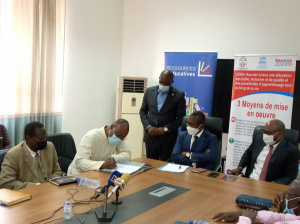
In Togo, the government and education stakeholders signed a memorandum of understanding this past weekend. The document will, hopefully, put an end to "the long years" of arm wrestling between the government and teachers who have been demanding better living and working conditions.
Essentially, the signing of this document shows the unanimity of the two parties on the 5 billion CFA francs provided by the government as an exceptional bonus for teachers over five years, or by 2025. They also agreed on a social truce for the same period, in which dialogue and consultation will be favored.
This agreement, the result of a long process of discussions, according to the signatories, is the culmination of the progress made in satisfying the demands and grievances of teachers as well as the reforms carried out in the education system.
According to the Minister of Public Service and Social Dialogue, Gilbert Bawara, it also demonstrates the ability of education sector actors to prioritize the interests of learners over their own. “All of us have demonstrated once again that when the general interest and a common cause require it, we can show surpassing and abnegation, and have an attitude and a spirit of responsibility,” he said.
Esaïe Edoh
Togo: KfW has injected more than CFA100 billion into local projects so far
The German Development Bank, KfW, has invested more than 102 billion CFA so far in Togo. The money was poured into seven projects spread in the following sectors: health, energy, decentralization, rural roads, technical and vocational education.
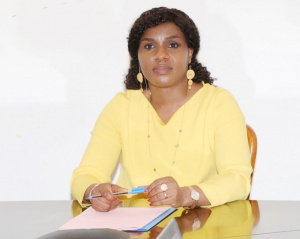
This was disclosed in the latest review of projects financed by the German Financial Cooperation in Togo, which was held virtually on March 10, as reported by the Togolese Presidency. The meeting was chaired by Ablamba Ahoéfavi Johnson (photo), Minister, Secretary-General of the Presidency of the Togolese Republic, in the presence of the Director of the Togo office of KFW, Sonja Wassermann.
“At the end of the meeting, both parties expressed their satisfaction with the positive results recorded and welcomed the dynamism of cooperation,” the government said.
For Togo, the review mainly helped it take stock of the implementation of the recommendations of the previous review (organized in November 2021), and the status of each project. It also was the occasion to align the country’s actions with the German partner “with the new dynamics of programming, implementation and monitoring and evaluation of public investments induced by the Government Roadmap 2020-2025,” the same source said.
Ayi Renaud Dossavi
MIATO II: Over 300 exhibitors expected

The second edition of the International Market of Crafts of Togo (MIATO) should start on March 23 and end on April 3. This edition should welcome more than 300 exhibitors, twice the number that attended the first edition.
The forecast was disclosed by the minister delegate in charge of technical education and handicrafts, during the council of ministers held last Monday, March 7.
The theme of the upcoming fair is “Crafts and competitiveness”. It aims to encourage more craftsmen to formalize and innovate, to make Togo more competitive in this industry, both regionally and internationally.
The first edition of the MIATO was held in 2019, between Oct. 25 and Nov 3. It brought together over 160 exhibitors and more than 150,000 visitors from a dozen countries. The event, which is supposed to be held twice every year, was postponed several times due to Covid-19.
Togo: Government adopts two new draft bills to oversee remote work and temporary jobs

After having worked two weeks ago on the conditions to which the right to strike is subjected, and the creation of a National Labor Council (CNT), the Council of Ministers that met last Monday has defined conditions governing remote and temporary work in Togo.
In this framework, two decrees were adopted–the first on the conditions and modalities related to remote work.
“Taking into account technological developments, international circumstances of all kinds, and in the application of the new labor code, this decree determines the principles, conditions, and procedures governing telework or remote work,” read the Council’s statement.
The text, adopted by the government, “provides a framework for adjusting ways of working when necessary, and technology allows it,” the document further indicates.
The second draft decree adopted sets the conditions related to temporary work. “This decree, taken per the provisions of the new labor code, is intended to set the conditions for the implementation of temporary work,” knowing that the contract of temporary work is a contract that binds a worker to a temporary business or work or a contract for workers’ supply.
This second bill, according to Lomé, is an update “which takes into account the emergence and development of companies and temporary businesses,” ensuring employees’, especially companies and temporary companies, “adequate legal protection.”
Togo: A little more than 2500 businesses were newly registered in January and February 2022

Last month, 1,278 businesses were freshly registered at the Center for Business Formalities (CFE) in Togo. This is 1.7% less than the 1,300 registered the previous month.
Thus, in January and February 2022, a total of 2,578 new businesses were set up in the country, down 7.2% compared to the 2,765 businesses registered over the first two months of 2021, with respectively 1,390 in January and 1,375 and February (-1%).
In further detail, in January-February 2022, 1,085 of the newly-created businesses were registered by Togolese citizens against 193 by foreigners. We also note that 904 businesses were registered by men and 374 by women.
Togo: More than 25,000 volunteering women were mobilized by the ANVT since its creation
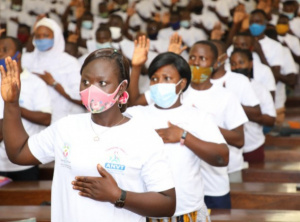
Over the past decade, the National Agency for Volunteerism in Togo (ANVT) has mobilized more than 25,000 women volunteers, about half of all volunteers enrolled over the period. “Since 2011, the ANVT has mobilized, for all its forms of volunteerism, 25,406 women (52%) of the total number of national volunteers mobilized. This day, which celebrates the rights of women, is the perfect opportunity to pay tribute to them,” the agency wrote in a publication released on March 8th.
Many eminent public figures also intervened on the same day. This includes President Faure Gnassingbé who urged concerned actors to “commit to building an egalitarian society.”
The ANVT (Ex Provonat), was established in 2011 under the supervision of the Ministry of Grassroots Development, Handicrafts, Youth and Youth Employment. Its mission is to promote and enhance the voluntary commitment to the development of the country.
Togo: The number of businesses started by women in 2021 was up 24%, compared to 2019

The number of businesses created by women in Togo, rose from 3,049 to 3,739 between 2019 and 2021, up about 24%, according to data from the Centre de formalités des entreprises (CFE) compiled by Togo First.
In detail, women created 3,049 businesses in 2019, which is 26% of the total registered at the CFE that year, knowingly 11,514. The following year, businesswomen created 3,426 firms, thus 11% more than in 2019, and 10% less than in 2020 when they created 3,739 businesses.
Combined, the number of businesses created by women over these three years stood at 10,214, out of 37,784 in total.
More women were able to start businesses because they could secure loans more easily, as indicated in a World Bank study titled “The benefits of gender: Unleashing the potential of women's entrepreneurship in Africa.” The report states that more than 70% of women entrepreneurs in Togo have borrowed money for their businesses. In Nigeria and South Africa, 60% and 45% of women entrepreneurs have sought and obtained credit respectively.
The same document emphasizes that Togo is the only country in the West African Economic and Monetary Union (WAEMU) where microenterprises run by women are more profitable than those run by men.
Esaïe Edoh
Togo: Over two billion CFA invested in the extension of the Niamtougou airport’s runway
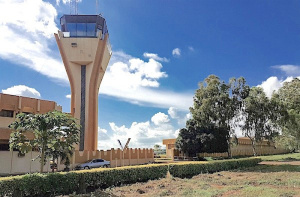
Rehabilitation works at the Niamtougou International Airport will begin soon, thanks to an investment of 2.2 billion CFA francs. The Director-General of the National Civil Aviation Agency (ANAC), Colonel Gnama Latta, disclosed the news on March 7, 2022.
In detail, these works will involve the airport’s runway from 2,500 m to 3,000 m, fencing the perimeter, and securing the terminal.
According to ANAC’s head, the works will help accelerate the project to open a State-owned airline that will service Niamtougou from Lomé.
They will also enable Togo’s second airport to meet international standards and serve as a base for exporting various cash crops like mango and tomato, grown in the area where it is located. There is also the tourism aspect, which the infrastructure should help boost.
Launched in 2010, the rehabilitation of Niamtougou’s airport aims to make “the platform a reference for airport logistics, especially for cargo traffic to hinterland countries.”
Esaïe Edoh